Creative Biolabs is offering the most comprehensive services for antibody development projects. With strict regulation and effective execution, we are dedicated to providing the most valuable solutions to complete your projects.
HighlightsCreative Biolabs is offering the most comprehensive services for antibody development projects. With strict regulation and effective execution, we are dedicated to providing the most valuable solutions to complete your projects.
HighlightsCreative Biolabs has established a broad range of platforms for developing novel antibodies or equivalents. These cutting-edge technologies enable our scientists to meet your demands from different aspects and tailor the most appropriate solution that contributes to the success of your projects.
HighlightsWith deep understanding in antibody-related realms and extensive project experience, Creative Biolabs offers a variety of references to help you learn more about our capacities and achievements, including infographic, flyer, case study, peer-reviewed publications, and all kinds of knowledge that can assist your projects. You are also welcome to contact us directly for more specific solutions.
HighlightsGet a real taste of Creative Biolabs, one of the most professional custom service providers in the world. We are committed to providing highly customized comprehensive solutions with the best quality to advance your projects.
HighlightsFor over two decades, Creative Biolabs has stood at the forefront of biotechnology, providing the global scientific community with unparalleled expertise and cutting-edge solutions. At Creative Biolabs, we have cultivated a state-of-the-art platform dedicated to the comprehensive analysis of Protein-Nucleic Acid Interactions (PNI). Our services are meticulously designed to provide deep, actionable insights into the affinity, kinetics, specificity, and functional consequences of these interactions. We empower researchers to move beyond qualitative observations to quantitative, high-resolution data, accelerating discovery pipelines and enabling groundbreaking science.
We offer a multi-faceted approach, combining classic methodologies with next-generation technologies to address any research question. Our platform is structured to provide maximum flexibility, from targeted, hypothesis-driven studies to large-scale, discovery-oriented screens.
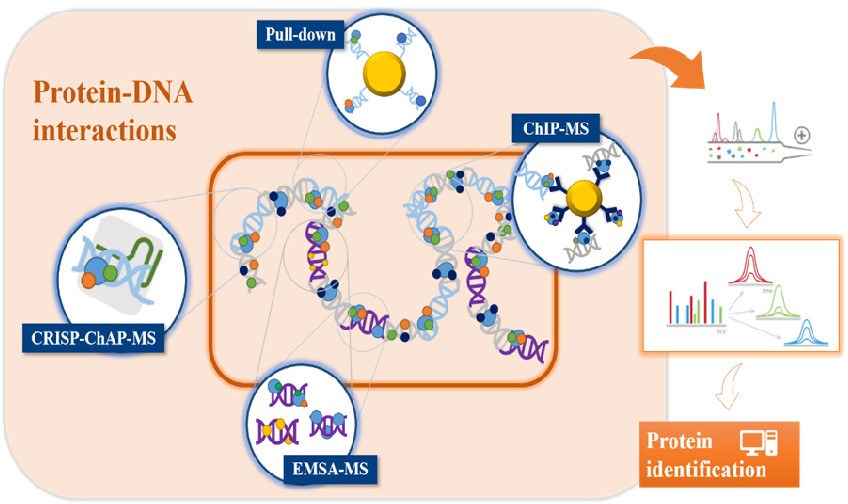 Fig. 1 Overview of the different protein-nucleic acid interaction detection approaches.1
Gain precise, real-time insights into the dynamic nature of PNI. These methods are ideal for accurately determining kinetic parametersand equilibrium constants without the need for fluorescent or radioactive labeling, which can interfere with molecular interactions.
| Technology | Principle & Applications | Key Advantages |
| Surface Plasmon Resonance (SPR) | Measures changes in refractive index near a sensor surface as molecules bind and dissociate. Ideal for kinetic and affinity determination of purified components. |
|
| Bio-Layer Interferometry (BLI) | Uses interference of white light to measure the thickness of the molecular layer on a biosensor tip. Excellent for high-throughput screening and kinetics. |
|
| Isothermal Titration Calorimetry (ITC) | Directly measures the heat released or absorbed during a binding event, providing a complete thermodynamic profile. |
|
Investigate PNI within the native cellular environment to capture physiologically relevant interactions, including the influence of cellular machinery and post-translational modifications.
| Service | Description & Applications | Creative Biolabs' Edge |
| Chromatin Immunoprecipitation (ChIP) & ChIP-seq | Identify the genomic locations where a specific protein (e.g., transcription factor, histone) binds in vivo. ChIP-qPCR validates binding at specific loci, while ChIP-seq provides a genome-wide map. |
|
| Crosslinking-Immunoprecipitation (CLIP) & CLIP-seq | A powerful technique to identify the specific RNA targets of an RNA-binding protein (RBP) in vivo. UV crosslinking creates a covalent bond at the site of interaction for precise mapping. |
|
| Yeast One-Hybrid (Y1H) / Three-Hybrid (Y3H) Systems | Reporter-based genetic assays to screen for protein-DNA (Y1H) or protein-RNA-protein (Y3H) interactions in a eukaryotic context. Ideal for large-scale library screening. |
|
Our portfolio includes a robust selection of established and scalable methods for validating interactions, screening inhibitors, and characterizing binding specificity.
| Assay | Description & Applications | Throughput |
| Electrophoretic Mobility Shift Assay (EMSA) | A gel-based method to detect protein binding to a labeled nucleic acid probe by observing a shift in electrophoretic mobility. Ideal for confirming interactions and studying binding specificity. | Low to Medium |
| DNA/RNA Pull-Down Assays | Uses a biotinylated nucleic acid probe to "pull down" its interacting proteins from a cell lysate or protein mixture, followed by identification via Western Blot or Mass Spectrometry. | Medium |
| Filter Binding Assays | A quantitative method where protein-nucleic acid complexes are retained on a nitrocellulose membrane while free nucleic acids pass through. Excellent for determining binding constants. | Medium to High |
| Protein-Nucleic Acid ELISA | An ELISA-based format for high-throughput screening of PNI. One interactor is immobilized on a plate to capture its binding partner, which is then detected with a specific antibody. | High |
Our services are tailored to support a diverse range of research and development objectives across multiple scientific disciplines.
Choosing Creative Biolabs means partnering with a team of seasoned experts committed to the success of your project. With over 20 years of dedicated experience, we deliver more than just data; we provide comprehensive solutions.
Creative Biolabs offers a fully integrated service portfolio to support every stage of your research. Explore our related services to seamlessly advance your project from concept to conclusion. Explore our full range of biomolecular interaction services here: Biomolecular Interaction based Binder Discovery
Other optional Protein-Nucleic Acid Interaction (PNI) Assay Services
Contact Us Today to discuss your project with one of our PNI experts or Request a Quote to get started. Let our two decades of expertise power your next discovery.
Q: With so many available techniques, how do I choose the right PNI assay for my research?
A: Choosing the optimal assay depends entirely on your scientific question. As a general guide:
Our experts are available for a free consultation to help you design the most effective and resource-efficient experimental plan.
Q: What materials do I need to provide to start a PNI project?
A: This varies by project, but typically you would need to provide one or more of the following:
Don't have these reagents? No problem. Creative Biolabs provides a seamless, integrated service pipeline. We can perform gene synthesis, recombinant protein expression, and custom antibody development as part of a comprehensive project package.
Q: My protein is difficult to express or has low stability. Can you still analyze its interactions?
A: Absolutely. Our team has over two decades of experience working with challenging proteins. We can employ several strategies, including:
Q: How does ChIP-seq differ from CLIP-seq?
A: Both are powerful immunoprecipitation-based techniques for mapping protein-nucleic acid interactions genome-wide, but they target different nucleic acids.
Q: What are the final deliverables for a PNI project?
A: We believe in providing comprehensive and transparent results. For every project, you will receive:
Q: How do I get a quote and what is the typical turnaround time?
A: The first step is to Contact Us. One of our technical specialists will schedule a no-obligation consultation to discuss your specific research goals and project requirements. Following this discussion, we will provide you with a detailed, customized proposal including a project timeline and pricing. Turnaround times are project-dependent and can range from a few weeks for straightforward in vitro assays to several weeks for complex, multi-stage projects like ChIP-seq analysis.
All listed services and products are For Research Use Only. Do Not use in any diagnostic or therapeutic applications.