"Creative Biolabs is committed to providing highly customized comprehensive solutions with the best quality to advance our global clients’ projects."
Precision Protease Substrate based Library Screening Service
Background Platform Workflow Application Deliverable Advantage Related Service FAQ Online Inquiry
Proteases, or peptidases, represent one of the largest and most functionally diverse families of enzymes, accounting for approximately 2% of the human genome. They act as molecular "scissors," executing precise proteolytic cleavage that regulates vital physiological processes, including blood coagulation, immune response, cell death (apoptosis), and signal transduction. However, the therapeutic and diagnostic potential of a protease is entirely dependent on its substrate specificity. At Creative Biolabs, we recognize that traditional methods of substrate identification are insufficient for the complexities of modern drug development. Our Protease Substrate based Library Screening Service provides a high-throughput, systematic approach to map the "degradome" of any target protease. By utilizing our proprietary Protease Substrate based phage screening platform, we empower researchers to discover optimal cleavage motifs with unprecedented speed and accuracy.
Discuss Your Project Today
The Necessity of Custom Protease Substrate Screening
Standard peptide substrates often fail to capture the full spectrum of a protease's subsite preferences. Custom protease substrate screening allows for the exploration of millions of sequence combinations, ensuring the discovery of motifs that exhibit high catalytic efficiency and stringent specificity.
Table 1. Comparison of Traditional vs. High-Throughput Substrate Discovery
|
Feature
|
Traditional Synthetic Peptides
|
Creative Biolabs High-Throughput Screening
|
|
Library Size
|
10 - 100 sequences
|
108 - 1011 sequences
|
|
Throughput
|
Low
|
Ultra-high
|
|
Specificity Mapping
|
Limited to known motifs
|
De novo discovery of novel motifs
|
|
Cost per Sequence
|
High
|
Extremely Low
|
|
Turnaround Time
|
Weeks
|
Days (Post-library construction)
|
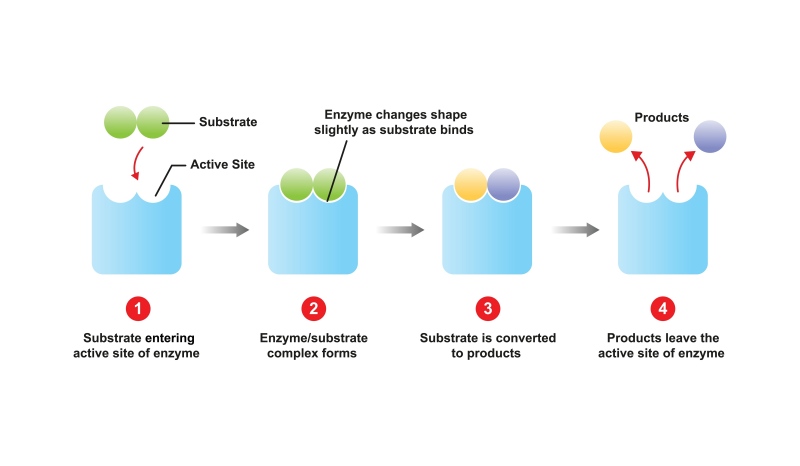 Fig. 1 Enzyme Activity in Substrate Science Design.
Our Cutting-Edge Protease Substrate based Phage Display Library Platforms
The Protease Substrate based Phage Display technology is the cornerstone of our screening services. In this system, potential substrate sequences are genetically engineered into the linker region between a phage coat protein and an affinity tag.
-
Mechanism: Phage particles are immobilized on a solid support via the affinity tag. Upon incubation with the target protease, phages containing susceptible substrate sequences are released into the supernatant due to cleavage.
-
Iterative Selection: These released phages are amplified in E. coli and subjected to subsequent rounds of selection under varying stringency conditions to enrich for the most efficient substrates.
-
Advantages: This Protease Substrate based phage screening platform enables the screening of libraries with a diversity exceeding 109, allowing for the identification of rare, highly specific cleavage sites.
Comprehensive Workflow of Custom Protease Substrate Screening
Phase I: Library Design and Construction
A robust Protease Substrate based Library is the foundation of success. We offer:
-
Randomized Libraries: Targeting 4-10 amino acid positions to explore total sequence space.
-
Focused Libraries: Based on known scaffolds or biological substrates to optimize existing leads.
-
Bio-orthogonal Tags: Incorporation of non-canonical amino acids for specialized detection.
Phase II: The Screening Process (Biopanning)
Utilizing our Protease Substrate Screening expertise, we execute a multi-step selection protocol:
-
Negative Selection: To remove substrates that are non-specifically cleaved by "off-target" proteases or background enzymes.
-
Positive Selection: Incubation with the target protease. We vary enzyme concentration and incubation time to select for high-affinity substrates.
-
Stringent Washing: Utilizing high-salt or detergent buffers to ensure only specific proteolytic events lead to phage recovery.
Phase III: NGS Integration and Bioinformatics
Unlike traditional methods that rely on Sanger sequencing of 50-100 clones, Creative Biolabs integrates Next-Generation Sequencing (NGS) into the Protease Substrate based phage screening platform.
-
Deep Mining: We sequence the entire pool after each round of selection.
-
Bioinformatic Analysis: Our proprietary algorithms generate heatmaps and "sequence logos" to visualize subsite preferences.
-
Motif Discovery: Identification of consensus sequences that may not be obvious through manual alignment.
Custom Protease Substrate Screening for Advanced Applications
Creative Biolabs doesn't believe in "one size fits all." We offer custom protease substrate screening tailored to specific therapeutic modalities.
Antibody-Drug Conjugates (ADCs) Linker Discovery
One of the most critical components of an ADC is the protease-cleavable linker. It must remain stable in systemic circulation but be rapidly cleaved by lysosomal proteases (like Cathepsin B) upon internalization. We screen for substrates that exhibit this binary "off/on" behavior.
Activatable Cell-Penetrating Peptides (ACPPs)
For precision imaging and therapy, we design ACPPs that remain "masked" until they encounter a specific protease overexpressed in the tumor microenvironment (e.g., MMP-2 or MMP-9).
Pro-enzyme and Pro-drug Activation
We help design sequences that can be used to engineer "pro-forms" of enzymes or drugs, ensuring activation only at the site of disease.
Technical Specifications & Data Deliverables
With each project, Creative Biolabs provides high-quality deliverables designed to support downstream research or development pipelines:
-
Detailed technical report with screening conditions, enzyme kinetics (if applicable), and hit identification
-
High-throughput sequencing data (raw and processed)
-
Enriched motif or cleavage site patterns visualized and annotated
-
Functional performance validation data (if requested)
-
Optional synthesis of cleavage reporters or conjugates for in vitro or in vivo testing
-
Suggestions for future applications, target confirmation, or optimization strategies
Whether you're exploring new protease targets, validating disease-specific activity, or engineering protease-activated payloads, Creative Biolabs' Protease Substrate Screening Services provide the foundation you need.
Why Choose Creative Biolabs for Protease Substrate Screening?
-
Unmatched Diversity: Our libraries reach a diversity of up to 1011.
-
Versatile Platforms: Choose from Phage, Yeast, Bacterial, or mRNA display.
-
Expert Consultation: Our PhD-level scientists provide guidance from library design to data interpretation.
-
Certified Quality: Rigorous QC for every library and screening campaign.
-
End-to-End Service: From protein expression/purification of your protease to final substrate validation.
Explore Our Comprehensive Services
Learn more about other Phage Display Library Screening Services:
Identifying the perfect substrate is a foundational step in unlocking the potential of protease-related research. Creative Biolabs combines the power of Protease Substrate based Phage Display, NGS technology, and decades of expertise to provide a custom protease substrate screening service that is fast, accurate, and highly specific.
Contact our technical team today to discuss how we can accelerate your protease substrate discovery program.
Contact Us Today for a Free Quote!
Frequently Asked Questions (FAQs)
-
Q: Can you screen for substrates of membrane-bound proteases?
A: Yes. We can utilize detergent-solubilized proteases, truncated soluble domains, or even cell-based screening platforms to accommodate membrane-bound targets.
-
Q: How many rounds of biopanning are usually required?
A: Most projects require 3 to 5 rounds of selection to reach sufficient enrichment of high-affinity substrates.
-
Q: Do you provide validation of the identified substrates?
A: Absolutely. We offer synthesis of the top candidate peptides and kinetic characterization using HPLC or fluorescence-based assays.
-
Q: Can I provide my own protease for the screening?
A: Yes, you can ship your target enzyme to us. Alternatively, our protein expression team can produce the protease for you in various systems (bacterial, yeast, or mammalian).
-
Q: What is the advantage of NGS over Sanger sequencing in this service?
A: NGS provides millions of data points, allowing for statistical analysis of the entire library evolution. This ensures that even "low-abundance but high-efficiency" substrates are captured, which Sanger sequencing would likely miss.
-
Q: Is it possible to screen for substrates that are cleaved at a specific pH?
A: Yes, we can tailor the buffer conditions (pH, ionic strength, co-factors) during the selection process to identify substrates optimal for specific microenvironments, such as the acidic lysosome or the tumor interstitium.
-
Q: What library formats do you offer for Protease Substrate based Library Screening?
A: We offer linear, constrained (cyclic), and branched peptide libraries. Cyclic libraries often provide higher stability and specificity.
-
Q: Can you perform counter-screening against multiple off-target enzymes?
A: Yes, we can perform simultaneous or sequential counter-screening against a panel of related proteases to ensure the highest possible specificity for your target.
-
Q: Are the results of the screening confidential?
A: All data and intellectual property generated during the project belong exclusively to the client. We maintain strict confidentiality agreements.
-
Q: Can these substrates be used for clinical diagnostics?
A: Our services and the resulting data are intended for research use only (RUO) and are not for use in clinical diagnostic procedures.
Reference
-
Ferreira, Graziele Cristina, et al. "Sunflower trypsin monocyclic inhibitor selected for the main protease of SARS-CoV-2 by phage display." Biological and Pharmaceutical Bulletin 47.11 (2024): 1813-1822. https://doi.org/10.1248/bpb.b24-00369