Creative Biolabs is offering the most comprehensive services for antibody development projects. With strict regulation and effective execution, we are dedicated to providing the most valuable solutions to complete your projects.
HighlightsCreative Biolabs is offering the most comprehensive services for antibody development projects. With strict regulation and effective execution, we are dedicated to providing the most valuable solutions to complete your projects.
HighlightsCreative Biolabs has established a broad range of platforms for developing novel antibodies or equivalents. These cutting-edge technologies enable our scientists to meet your demands from different aspects and tailor the most appropriate solution that contributes to the success of your projects.
HighlightsWith deep understanding in antibody-related realms and extensive project experience, Creative Biolabs offers a variety of references to help you learn more about our capacities and achievements, including infographic, flyer, case study, peer-reviewed publications, and all kinds of knowledge that can assist your projects. You are also welcome to contact us directly for more specific solutions.
HighlightsGet a real taste of Creative Biolabs, one of the most professional custom service providers in the world. We are committed to providing highly customized comprehensive solutions with the best quality to advance your projects.
Highlights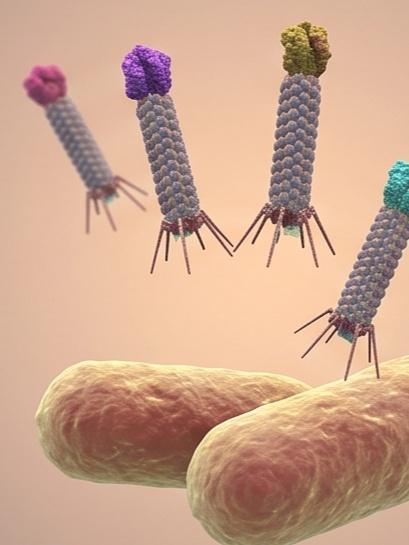
Proteolytic enzymes function as critical gatekeepers in diverse biological processes, coordinating regulatory cascades in normal cellular physiology and driving pathological transformations in chronic diseases. Because proteases dictate fates through specific bond cleavage rather than simple binding, identifying their preferred catabolic sequences is vital for developing targeted therapeutics, precision diagnostic probes, and selective chemical inhibitors. Traditional screening methods frequently struggle to differentiate between homologous enzymes that share closely related active sites, leading to off target cross reactivity.
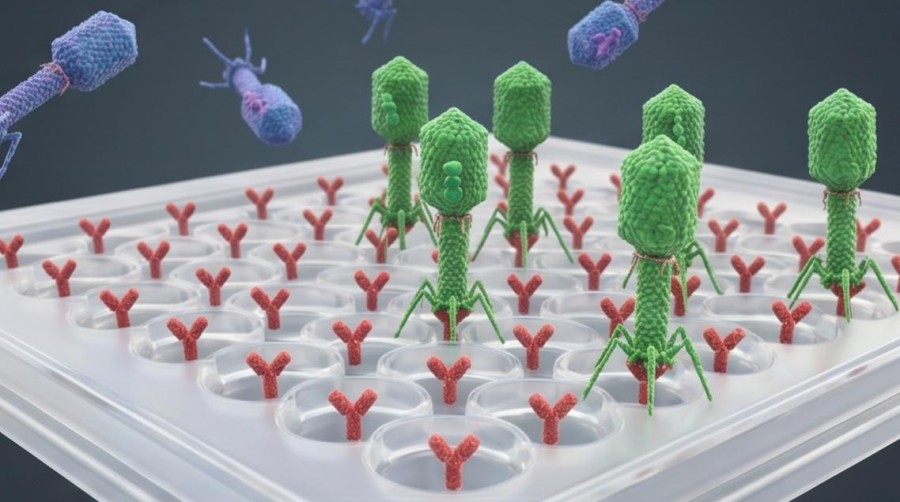
Protease substrate screening is a specialized operational variant of combinatorial biopanning where library enrichment is governed by catalytic turnover rather than static physical affinity. In a typical configuration, random peptide or macrocyclic sequences are displayed on the surface of bacteriophage particles, engineered as a bridge between an immobilization handle and the viral capsid protein.
The fundamental architecture of this system relies on a physical release mechanism to isolate functional sequences. The displayed library is fixed onto a stationary solid support, such as streptavidin coated magnetic beads, via an amino terminal affinity tag. When exposed to a target enzyme, only the phages presenting a susceptible peptide motif undergo amide bond cleavage. This catalytic event physically releases the specific viral particle from the solid support into the soluble phase. The liberated phages, carrying the genetic code for the successful substrate sequence inside their capsids, are collected and amplified in Escherichia coli. This system links the kinetic efficiency of enzyme substrate interaction directly to genetic enrichment, ensuring that the selection pressure isolates true catalytic targets.
Isolating highly selective substrates out of complex molecular populations requires a series of tightly regulated biochemical steps designed to maximize catalytic specificity and reduce background noise.

Catalytic selection platforms are highly valuable when working within complex enzyme families where traditional structural mapping fails to provide sufficient resolution.
Enzymes within the same family often share high sequence identity and overlapping structural topologies, yet they perform different biological functions. Panning libraries under strict kinetic pressure allows for the discovery of consensus sequences that distinguish closely related variants, such as separating fibroblast activation protein alpha from dipeptidyl peptidase 4.
For challenging enzyme targets with open or shallow active sites, linear peptides often lack sufficient affinity. This platform supports the integration of dual covalent warheads, such as acetylphenylboronic acid and alpha cyanoacrylamide, to target adjacent lysine and cysteine residues simultaneously, yielding highly potent, reversible covalent inhibitors.
Designing imaging agents that switch on specifically in disease microenvironments requires substrate linkers that respond exclusively to tumor associated proteases. This screening modality identifies sequence motifs that remain perfectly stable in healthy tissue but undergo rapid cleavage in malignant zones.
The sequences discovered through physical biopanning can be integrated with computational modeling tools to measure three dimensional spatial structures, predicting post translational modification risks, structural integrity, and structural mechanisms of action prior to large scale synthesis.
Creative Biolabs maintains an integrated technology platform designed to move protease projects from initial library design through to structural validation. Our workflow applies precise biochemical controls to isolate high specificity substrates and functional enzyme modulators through our specialized core Binder Discovery service network.
Structuring large genetic repertoires in multiple peptide and macrocyclic formats engineered with targeted chemical handles.
Executing custom catalytic panning campaigns that integrate progressive kinetic constraints and robust counter selection steps.
Discerning short bioactive peptide sequences and macrocyclic structures tailored for precise active site docking.
All listed services and products are For Research Use Only. Do Not use in any diagnostic or therapeutic applications.