Creative Biolabs is offering the most comprehensive services for antibody development projects. With strict regulation and effective execution, we are dedicated to providing the most valuable solutions to complete your projects.
HighlightsCreative Biolabs is offering the most comprehensive services for antibody development projects. With strict regulation and effective execution, we are dedicated to providing the most valuable solutions to complete your projects.
HighlightsCreative Biolabs has established a broad range of platforms for developing novel antibodies or equivalents. These cutting-edge technologies enable our scientists to meet your demands from different aspects and tailor the most appropriate solution that contributes to the success of your projects.
HighlightsWith deep understanding in antibody-related realms and extensive project experience, Creative Biolabs offers a variety of references to help you learn more about our capacities and achievements, including infographic, flyer, case study, peer-reviewed publications, and all kinds of knowledge that can assist your projects. You are also welcome to contact us directly for more specific solutions.
HighlightsGet a real taste of Creative Biolabs, one of the most professional custom service providers in the world. We are committed to providing highly customized comprehensive solutions with the best quality to advance your projects.
HighlightsThe isolation of high affinity ligands from expansive molecular populations represents a foundational pillar of biopharmaceutical development. Since the inception of combinatorial biology, phage display technology has provided a robust vehicle for linking genotype to phenotype, allowing for the rapid selection of functional single chain variable fragments (scFv), Fab fragments, and peptides. Among the diverse selection modalities available today, solid phase library screening remains the most classical and widely implemented methodology.
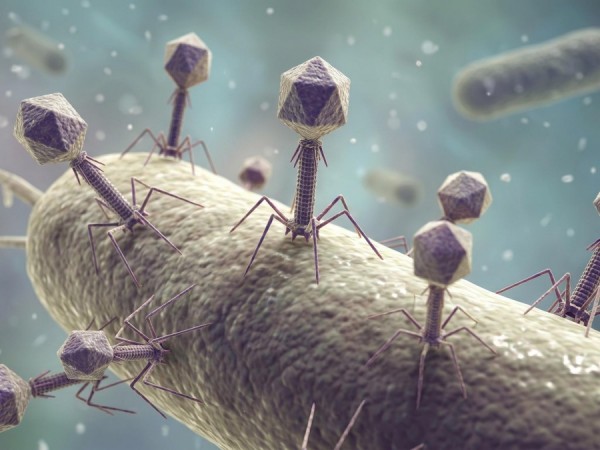
Solid phase screening, often referred to as conventional biopanning, is a heterogeneous selection method where the target molecule is fixed to a stationary surface. The procedure typically utilizes microtiter plates, specialized immunotubes, or affinity chromatography matrices as the solid support. A diverse phage display library is introduced to the immobilized target, initiating an iterative cycle designed to isolate rare binding clones through physical partitioning. The selection process is governed by a series of precise biochemical steps:
The purified or recombinant antigen is passively adsorbed or chemically conjugated to the solid medium, establishing a stable surface presentation.
The genetic repertoire is allowed to interact with the fixed target under defined buffering conditions, facilitating the formation of stable antigen-antibody complexes.
Unbound or weakly associated viral particles are removed through sequential washing steps, directly reducing the background noise of nonspecific clones.
Specifically bound phages are recovered using acidic buffers, alkaline solutions, or competitive native ligands. These eluted clones are then used to infect host Escherichia coli cells, enabling the amplification of the selected genetic sequences for subsequent selection cycles.
Typically, three to four rounds of this adsorption, elution, and amplification sequence are required to achieve significant enrichment of target specific clones, which are subsequently characterized via DNA sequencing and functional validation assays.
While alternative screening modalities have expanded the capabilities of phage display, the solid phase format remains highly effective under specific experimental parameters.
This methodology is ideally suited for campaigns where the antigen source is highly abundant and available in a recombinant, high purity format. Soluble extracellular domains, cytokines, and stable enzymes are optimal candidates.
When the initial library capacity is exceptionally large and the expected copy number of the target sequence is high, the simplicity of the solid phase interface allows for the rapid processing of massive structural diversity.
The straightforward layout of microtiter plates makes this approach the preferred choice for initial affinity screenings and high throughput clone validation via enzyme linked immunosorbent assay (ELISA).
For small molecules, carbohydrates, or synthetic chemical structures that can be easily conjugated to carrier proteins or solid surfaces, this method provides a stable and clean background for selection.
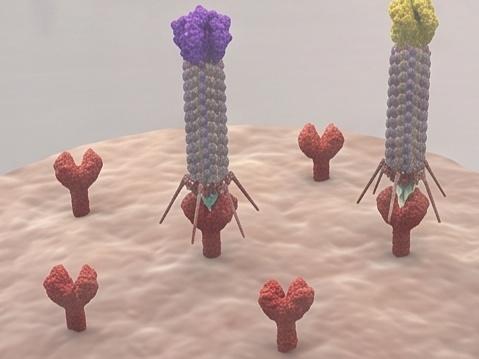
The enduring utility of solid phase selection stems from its balance of operational simplicity and precise physical control over the screening parameters.
As the most classical screening technique, the protocol is highly reproducible and requires minimal specialized equipment compared to cell sorting or live animal panning, reducing technical variability across selection cycles.
Researchers can modulate the affinity thresholds of the recovered clones by altering the density of the immobilized antigen or adjusting the composition of the washing buffer. Decreasing antigen density while increasing wash duration forces the system to select for subnanomolar binders.
The stationary nature of the target allows for sophisticated elution strategies. By introducing a soluble native ligand or receptor fragment, specific clones can be displaced in a competitive manner, ensuring that the recovered antibodies target biologically relevant, functional epitopes.
This format is compatible with Selective Infectious Phage (SIP) technology. By coupling the recovery of phage infectivity directly with target binding within the host cell system, researchers can minimize background binding and significantly enhance screening efficiency.
Creative Biolabs has engineered an advanced Phage Display Platform that optimizes the traditional solid phase protocol to overcome its historic limitations. One challenge of surface immobilization is the potential denaturation of sensitive epitopes when the protein binds to the matrix. Our platform mitigates this risk by employing gentle immobilization strategies, such as biotinylating and streptavidin capture, which maintain the native conformation of the target.
Our platform supports both manual high stringency panning and automated parallel selections, allowing us to process large multi target campaigns simultaneously. By implementing rigorous quality control checks on the input antigens and monitoring the output populations using next generation sequencing, we ensure that rare, high affinity clones are preserved and enriched through each successive round.
To support global research initiatives, Creative Biolabs provides a comprehensive suite of services focused on binder discovery based on phage display. Our workflow moves seamlessly from target validation to final clone characterization.
All listed services and products are For Research Use Only. Do Not use in any diagnostic or therapeutic applications.