Creative Biolabs is offering the most comprehensive services for antibody development projects. With strict regulation and effective execution, we are dedicated to providing the most valuable solutions to complete your projects.
HighlightsCreative Biolabs is offering the most comprehensive services for antibody development projects. With strict regulation and effective execution, we are dedicated to providing the most valuable solutions to complete your projects.
HighlightsCreative Biolabs has established a broad range of platforms for developing novel antibodies or equivalents. These cutting-edge technologies enable our scientists to meet your demands from different aspects and tailor the most appropriate solution that contributes to the success of your projects.
HighlightsWith deep understanding in antibody-related realms and extensive project experience, Creative Biolabs offers a variety of references to help you learn more about our capacities and achievements, including infographic, flyer, case study, peer-reviewed publications, and all kinds of knowledge that can assist your projects. You are also welcome to contact us directly for more specific solutions.
HighlightsGet a real taste of Creative Biolabs, one of the most professional custom service providers in the world. We are committed to providing highly customized comprehensive solutions with the best quality to advance your projects.
HighlightsScientists from Creative Biolabs are glad to present our exclusive service of T4 phage display library construction by fusing interest molecules to highly immunogenic outer capsid (HOC) with our elegant technology platform.
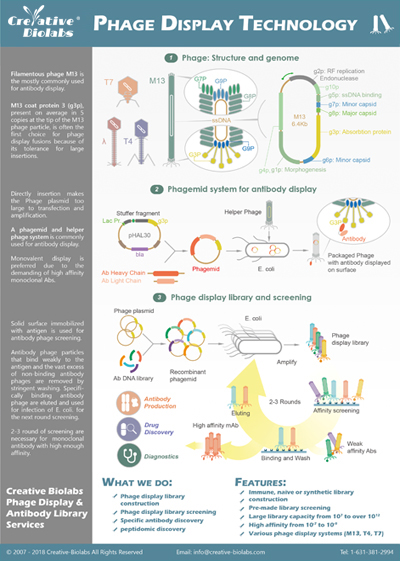
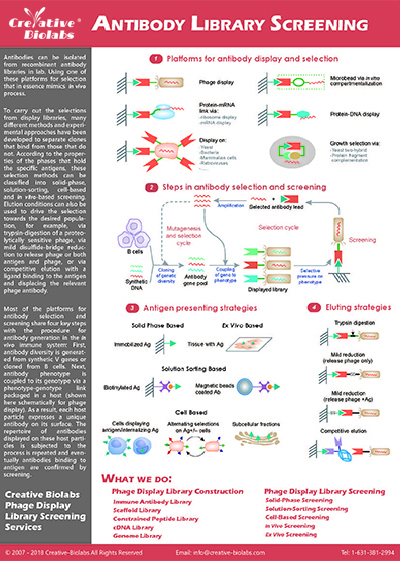
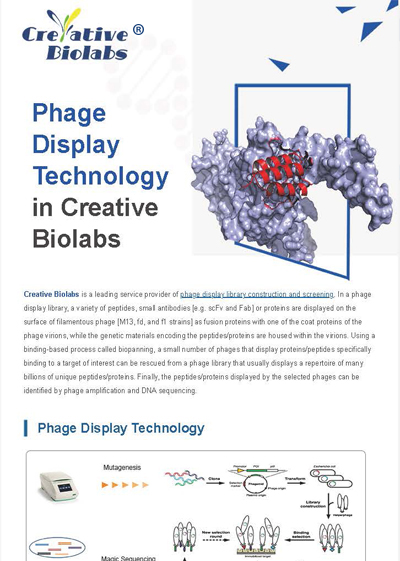
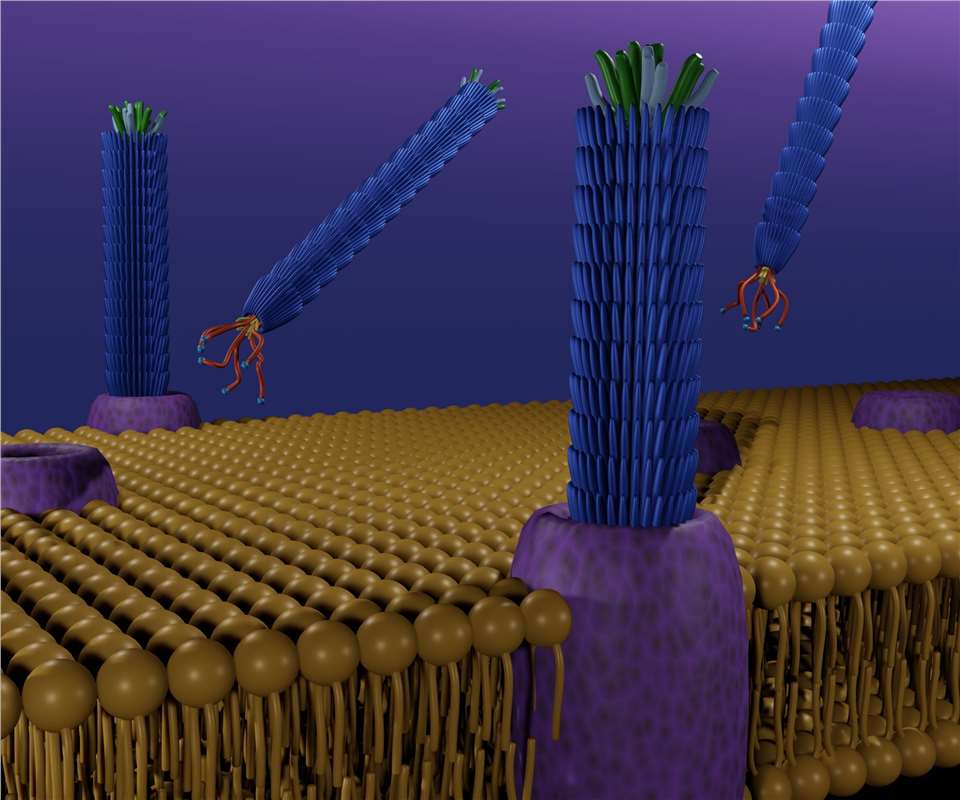
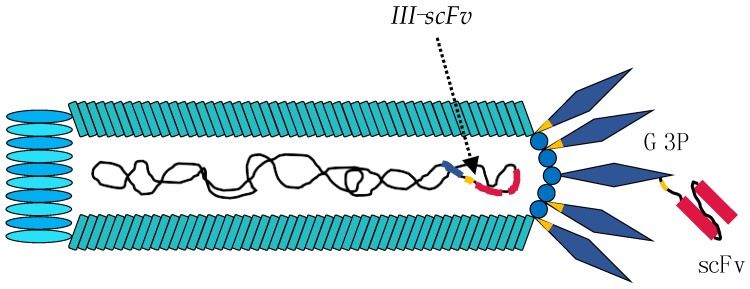
Phage display is one of the classic laboratory techniques for antibody engineering, protein-protein interaction analysis, epitope mapping, and so on. A foreign peptide, domain or protein is genetically fused to certain phage capsids and exhibited on the outer surface of the phage particles. Conventional filamentous phage display system meets drawbacks for display of large domains and full-length proteins mainly due to membrane secreting procedure as well as the impacts of recombinant capsids upon viral productivity and viability. However, bacteriophage T4, which features distinctly from M13 filamentous phage, provides a promising display platform to solve these problems.
T4 phage display employs two non-essential capsid proteins as fusion partners, HOC and SOC. HOC (highly immunogenic outer capsid) is a dumbbell-shaped monomer located at the center of each gp23 hexon, around 155 copies per phage. According to sequence analysis, HOC consists of three Ig-like domains and one C-terminal non-Ig domain, resulting in high immunogenicity even without adjuvant. HOC is unique to T4-like phage and is dispensable for capsid assembly. Unlike SOC, functional modules of HOC have not been clearly characterized. Yet there is one hypothesis that HOC could reversibly bind to host bacterial surfaces to enable better attachment during infection.
HOC makes a suitable vehicle for phage display in many aspects. The major advantages of T4 phage display on HOC over conventional phage display methods including but not limited to:
T4 phage display by fusing to HOC provides an excellent rich-binding platform which enables displaying large full-length proteins at high density. It has proved the great potential for scientific and pharmaceutical applications, particularly multicomponent vaccine design and cancer therapy. Various macromolecule complex has been successfully exhibited on HOC with intact structure and high copies. Our seasoned research teams in Creative Biolabs are able to generate HOC-fused antibody and peptide libraries satisfying every specific demand from clients, and we are glad to provide a one-stop solution based on different research goals. As one of the forward-looking scientific organization as well as a long-term market leader in the field of phage display and antibody manufacturing, Creative Biolabs guarantees our clients the highest quality and most competitive price.

Other optional T4 phage library construction service:
The Highly Immunogenic Outer Capsid (HOC) is a structural protein on the surface of the T4 bacteriophage, known for its strong immunogenic properties. In T4 phage display library construction, the HOC protein can be genetically modified to display foreign peptides or proteins, leveraging its high immunogenicity to enhance the visibility and immune response to the displayed peptides. This makes HOC an ideal platform for constructing phage display libraries aimed at identifying potent antigens and immune-reactive peptides.
The HOC protein is utilized in T4 phage display library construction by inserting DNA sequences encoding desired peptides or proteins into the gene encoding the HOC protein. This modification allows the peptides to be displayed prominently on the phage surface, taking advantage of the HOC protein's high immunogenicity. The resulting phage display library can then be screened against specific targets, such as immune cells or pathogen components, to identify peptides that elicit strong immune responses.
Using the HOC protein in T4 phage display library construction offers several advantages, primarily due to its high immunogenicity. This feature makes the displayed peptides more likely to be recognized by the immune system, which is especially valuable in vaccine development and immunotherapy research. Additionally, HOC allows for a robust and stable display of peptides, enhancing their interaction with biological targets and improving the efficiency of the selection process.
HOC-based T4 phage display differs from other display systems by providing a platform that emphasizes immunogenicity. Unlike other phage display systems that may focus on structural stability or peptide density, HOC-based display leverages the natural immune-reactive properties of the HOC protein. This makes it particularly effective for applications where immune response is a key factor, such as in the development of vaccines or immunotherapeutics.
HOC-based T4 phage display libraries are commonly used in vaccine development, where the identification of highly immunogenic peptides is crucial. They are also employed in the study of immune responses to various pathogens and in the development of immunotherapies. By screening the library against immune cells or pathogen-derived antigens, researchers can identify peptides that trigger robust immune reactions, which can then be used to design more effective vaccines or therapies.
In vaccine development, HOC-based T4 phage display libraries are used to identify antigenic peptides that can elicit strong immune responses. By leveraging the high immunogenicity of the HOC protein, these libraries can help identify peptides that are highly visible to the immune system, making them ideal candidates for vaccine development. The peptides selected from HOC-based libraries can be incorporated into vaccines to enhance their efficacy and provide better protection against pathogens.
The construction of an HOC-based T4 phage display library involves inserting DNA sequences encoding the desired peptides into the gene encoding the HOC protein. This genetic modification allows the peptides to be displayed on the surface of the phage, where they benefit from the HOC protein's immunogenic properties. The modified phage is then propagated in a bacterial host, producing a library of T4 phages, each displaying a different peptide on its HOC protein. This library can be screened against specific targets to identify immunogenic peptides.
The high immunogenicity of the HOC protein enhances screening outcomes by making the displayed peptides more likely to be recognized and responded to by the immune system. This increases the chances of identifying peptides that can trigger strong immune responses, which is particularly important in the development of vaccines and immunotherapies. The immunogenic properties of HOC help to ensure that the selected peptides are not only biologically relevant but also capable of eliciting the desired immune reaction.
Use the resources in our library to help you understand your options and make critical decisions for your study.

All listed services and products are For Research Use Only. Do Not use in any diagnostic or therapeutic applications.