Creative Biolabs is offering the most comprehensive services for antibody development projects. With strict regulation and effective execution, we are dedicated to providing the most valuable solutions to complete your projects.
HighlightsCreative Biolabs is offering the most comprehensive services for antibody development projects. With strict regulation and effective execution, we are dedicated to providing the most valuable solutions to complete your projects.
HighlightsCreative Biolabs has established a broad range of platforms for developing novel antibodies or equivalents. These cutting-edge technologies enable our scientists to meet your demands from different aspects and tailor the most appropriate solution that contributes to the success of your projects.
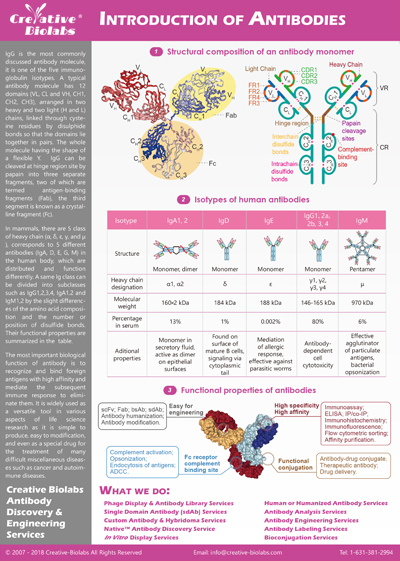
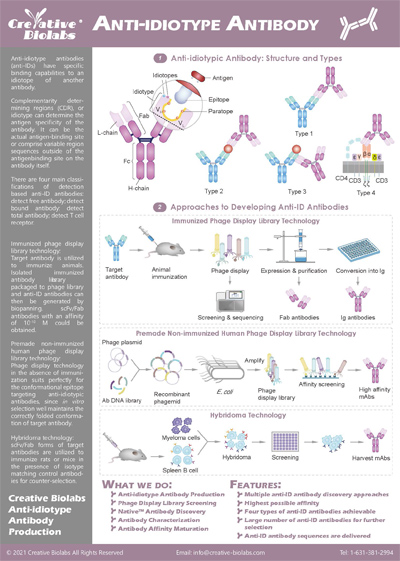
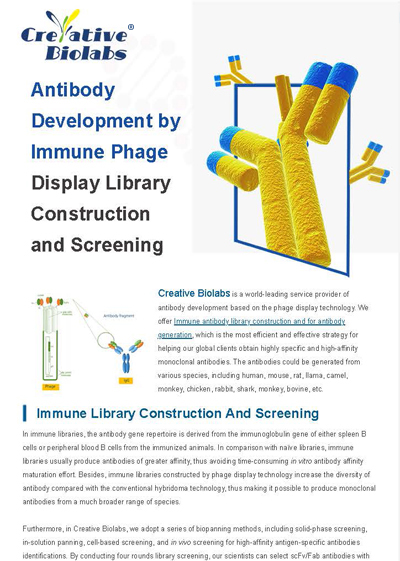
HighlightsWith deep understanding in antibody-related realms and extensive project experience, Creative Biolabs offers a variety of references to help you learn more about our capacities and achievements, including infographic, flyer, case study, peer-reviewed publications, and all kinds of knowledge that can assist your projects. You are also welcome to contact us directly for more specific solutions.
HighlightsGet a real taste of Creative Biolabs, one of the most professional custom service providers in the world. We are committed to providing highly customized comprehensive solutions with the best quality to advance your projects.
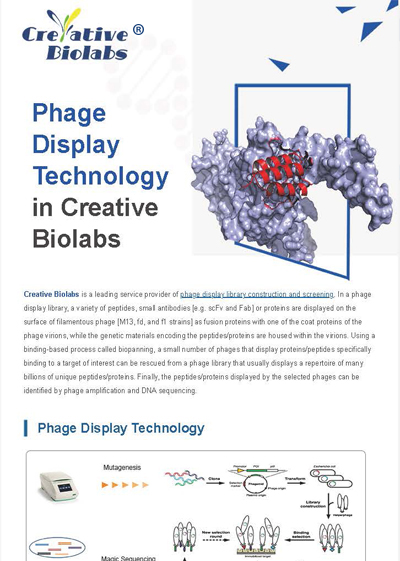
HighlightsPhage display has emerged as a cornerstone technology in molecular biology, enabling the presentation of peptides, proteins, and antibody fragments on the surface of bacteriophages. Since its inception in the 1980s, the method has profoundly impacted the fields of antibody engineering, vaccine design, and therapeutic development by enabling the selection of high-affinity binders from vast molecular repertoires. While M13 filamentous phage remains the most commonly used display system, it is not without its limitations, particularly concerning insert size constraints, secretion-dependent display mechanisms, and display density.
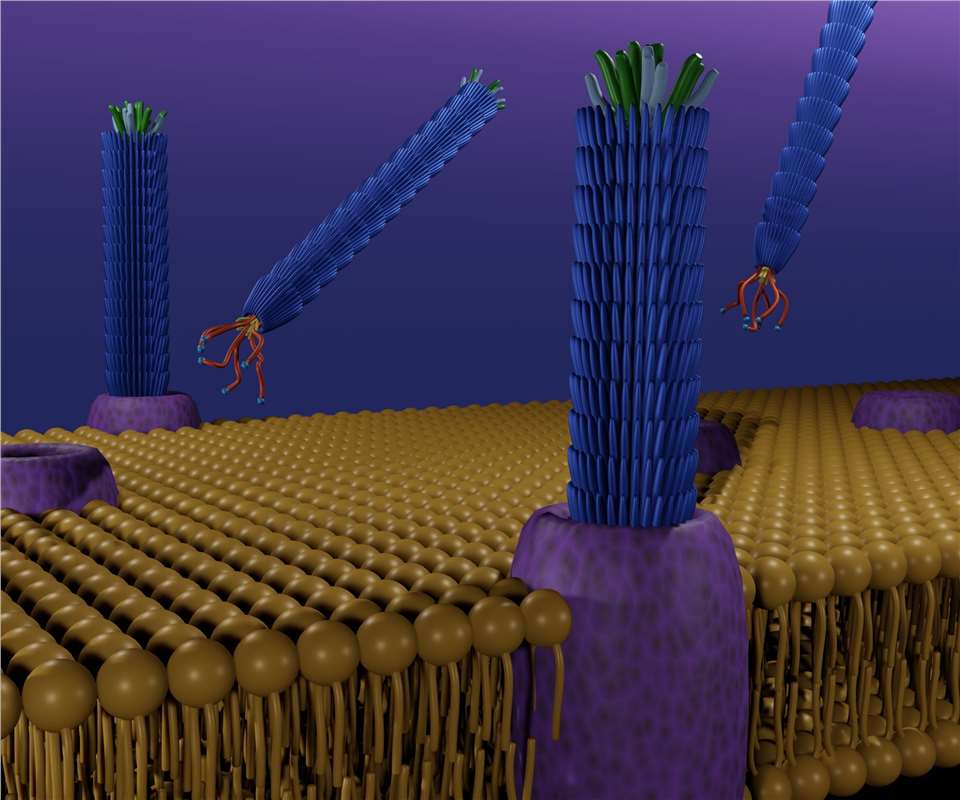
In contrast, the T4 bacteriophage offers a compelling alternative. As a member of the Myoviridae family, T4 possesses a large, double-stranded DNA genome housed within an icosahedral capsid and a complex tail structure. Its lytic replication cycle simplifies downstream recovery and avoids many of the bottlenecks seen in filamentous systems. Crucially, the T4 head contains two non-essential capsid proteins—Highly Immunogenic Outer Capsid (HOC) and Smaller Outer Capsid (SOC)—which can be genetically engineered to display foreign sequences at high density without compromising phage viability.
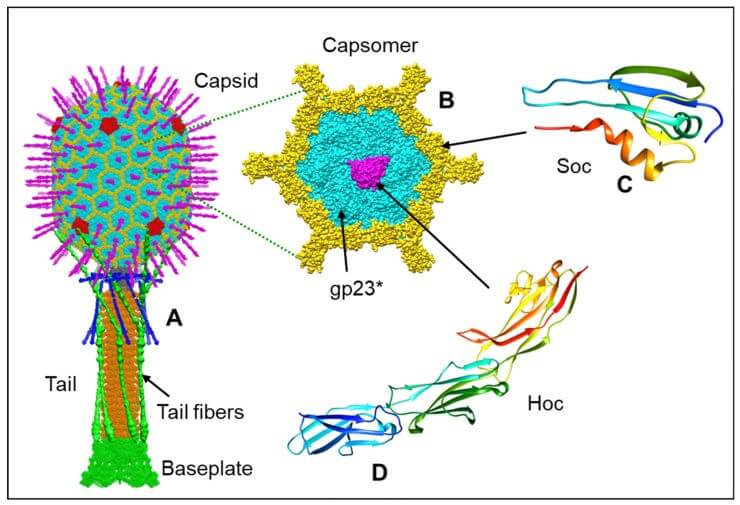 Fig.1 Structural model of bacteriophage T4 virion.1,3
These structural and functional characteristics make the T4 system particularly well-suited for applications that demand robust display capabilities, including multivalent vaccine development, epitope mapping, and the generation of novel biologics. At Creative Biolabs, we have harnessed the unique potential of the T4 platform to develop a comprehensive suite of T4 phage display services tailored to meet the evolving needs of modern biomedical research.
At Creative Biolabs, we provide end-to-end support for your T4 phage display projects, whether you're starting from scratch or need expert input on a specific stage. Our T4 Phage Display Library Construction Service includes the following key components:
We can help you create custom display libraries based on proteins, antibody fragments (such as scFvs or sdAbs), peptides, or even cDNA. Libraries can be constructed using either the HOC, SOC, or a combination of both, depending on your expression requirements.
The total library capacity can reach 108-1011, with an highly-effective diversity.
Researchers employed a metagenomic approach by introducing a soil-derived DNA library into Escherichia coli and subsequently challenging the host with lytic T4 phage. This screening strategy led to the identification of Brig1, a DNA glycosylase that confers resistance to T4 by excising α-glucosyl-hydroxymethylcytosine residues from the phage genome, thereby creating abasic sites that impair viral replication. Notably, homologues of Brig1 were found across multiple bacterial lineages, suggesting a conserved and widespread antiviral function. This study not only underscores the power of functional screens using T4 phage as a selective pressure but also highlights the untapped potential of unsequenced environmental DNA in revealing novel immune pathways. Such findings affirm the relevance of T4 phage display and screening systems as indispensable tools in the discovery of next-generation antimicrobial strategies.
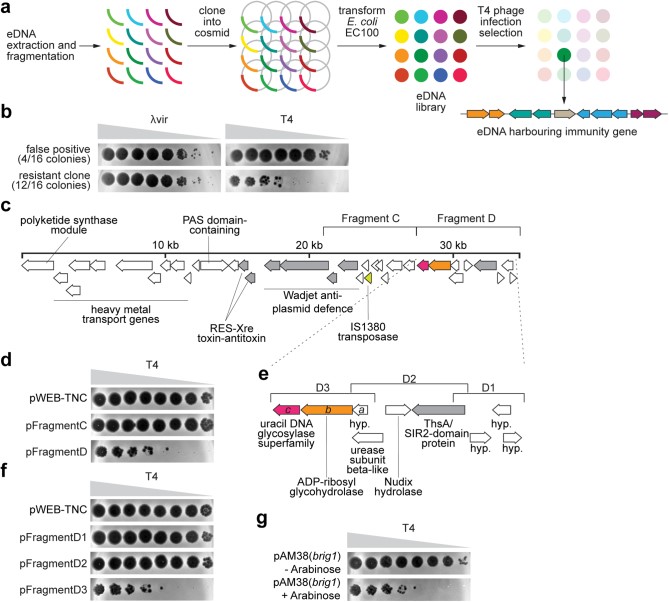 Fig.2 Selection of soil metagenomic DNA fragments that provide immunity against phage T4 in E. coli.2,3
What makes our T4 phage display system stand out? Here's why researchers around the world are turning to Creative Biolabs for their phage display needs:

With the ability to incorporate foreign sequences at both the N- and C-termini of HOC and SOC proteins, the T4 system supports a high density of displayed molecules, enabling better signal detection and increased selection pressure during panning.
Thanks to its larger genome and structural flexibility, T4 can accommodate larger inserts compared to M13, making it ideal for displaying full-length proteins or complex domains.
Need to co-display two distinct molecules? The HOC and SOC proteins allow for dual display, opening new avenues in multivalent vaccine design and protein interaction studies.
T4 follows a strictly lytic cycle, eliminating the membrane secretion process typical of filamentous phages. This allows for improved protein folding and reduces host cell toxicity.
Unlike M13, which is limited to E. coli strains with F pili, T4 can infect a wider range of bacterial strains, giving you more flexibility in experimental design.
Whether you need a small custom library or a high-throughput screening campaign, we can scale our services accordingly. Every project is tailored to your goals and timeline.
Custom Antibody Library Construction 
|
Custom Peptide Library Construction 
|
M13 Phage Library Construction 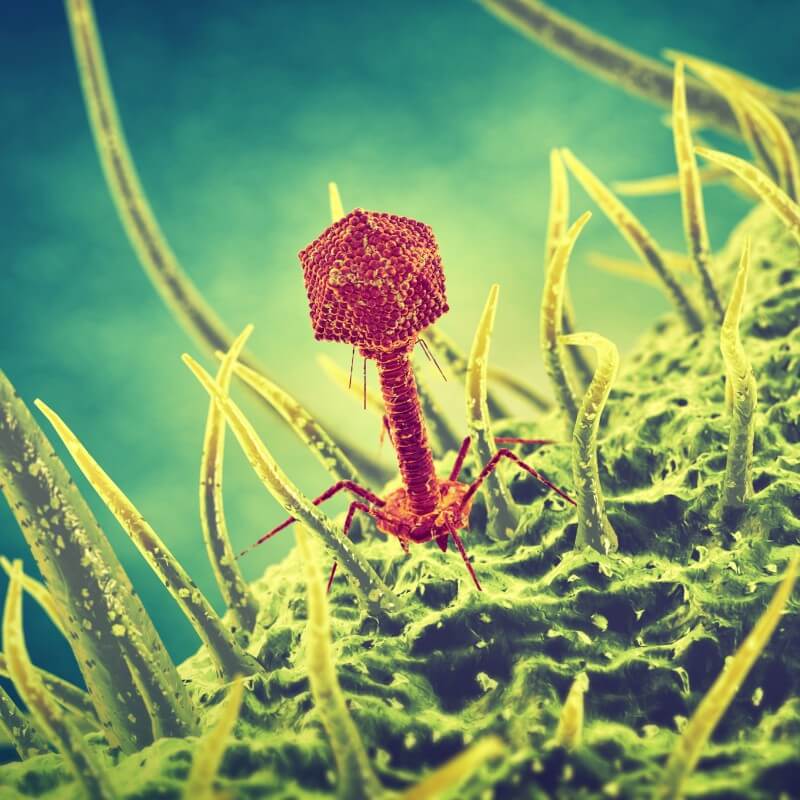
|
T7 Phage Library Construction 
|
cDNA Library Construction 
|
Genome Library Construction 
|
If you're looking to construct and display a library using the T4 phage system, we're here to help. Whether you're working with proteins, antibodies, or cDNA, our team at Creative Biolabs has the tools and expertise to tailor the library to your specific needs. Contact us and discuss how we can support your research goals with a customized T4 phage display solution.
Use the resources in our library to help you understand your options and make critical decisions for your study.

Reference
All listed services and products are For Research Use Only. Do Not use in any diagnostic or therapeutic applications.