
Liposomes are the pioneers of this field, characterized by one or more concentric lipid bilayers that fully enclose an aqueous core. This amphiphilic structure allows them to simultaneously encapsulate hydrophilic payloads within the core and hydrophobic payloads within the bilayer, offering unparalleled versatility for combination therapies.
Advanced Lipid based Delivery Solutions
In the pursuit of groundbreaking therapies, the journey from a promising molecule to a viable treatment often stalls at a single, formidable obstacle: targeted delivery. Protecting fragile nucleic acids and guiding therapeutics to their precise site of action are challenges that can make or break a project. Our Advanced Lipid-based Delivery Solutions help you accelerate therapeutic development and enhance drug efficacy through innovative liposomal and nanocarrier engineering techniques. We partner with researchers to transform your vision into reality, unlocking the full potential of your therapeutic candidates.
Click Here to View more about our Services
Lipid-based Delivery System
Advanced lipid-based delivery solutions are sophisticated nanocarriers, typically ranging from 20 nm to 1,000 nm in diameter, composed primarily of naturally occurring or synthetic lipids and cholesterol. These systems are classified into various formats, with Liposomes and Lipid Nanoparticles (LNPs) being the most clinically relevant.
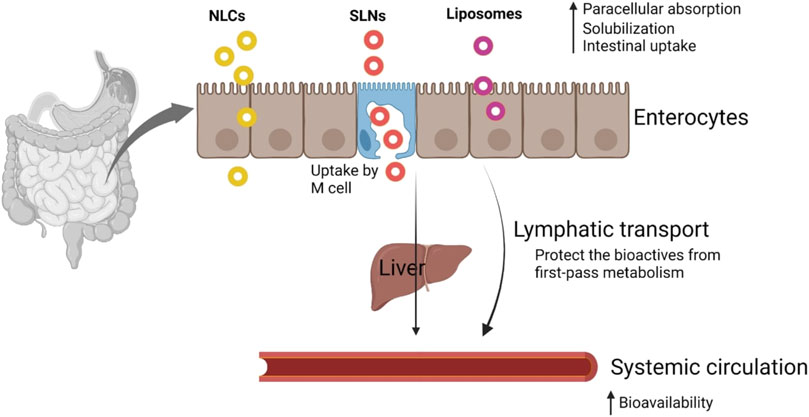 Fig.1 Transport mechanism of nanosized lipid-based delivery systems.1
Lipid Nanoparticles (LNPs)
Lipid Nanoparticles (LNPs), in contrast, often possess a more compact, non-bilayer internal structure, typically containing ionizable lipids crucial for nucleic acid delivery. The ionizable lipids remain neutral at physiological pH (around 7.4) but become positively charged in the acidic environment used during manufacturing (pH 4), facilitating efficient, electrostatically driven encapsulation of negatively charged nucleic acids (like mRNA or siRNA).
The primary function of these systems is to overcome biological barriers. Once internalized by the target cell (often via endocytosis), the acidic environment of the endosome protonates the ionizable lipids, destabilizing the carrier membrane and facilitating the crucial "endosomal escape," which releases the therapeutic cargo into the cell's cytoplasm where it can exert its effect. This mechanism is fundamental to the clinical success of LNP-based mRNA vaccines and siRNA therapies like Patisiran.
Beyond the established conventional Liposomes and advanced LNPs, the field of nanocarriers offers a vast and growing spectrum of specialized systems tailored for unique biological challenges. From elastic Transfersomes designed for enhanced skin penetration to bio-inspired Cubosomes and hybrid Nanostructured Lipid Carriers (NLCs), each system possesses distinct structural properties engineered to optimize drug absorption, improve bioavailability, and enable specific delivery routes, such as oral, transdermal, or ocular delivery.
Explore the complete range of lipid and polymer-based delivery systems below to find the perfect match for your most complex therapeutic payload.
Liposome Ethosomes Emulsomes Lipotomes Bilosomes Lipid nanoparticles
(LNPs) Transfersomes Nanoemulsion Polymersome Polymersomes Lipoplexes Niosomes Self-emulsifying Capsosome DectiSomes Solid Lipid Nanoparticles
(SLNs) Proliposomes Pickering emulsion Cerasomes Fliposomes Nanostructured Lipid
Carriers(NLCs) Transethosomes Cubosomes
Owing to the swift progress in liposomal formulations within both the scientific community and the industrial sector, a broad spectrum of liposome-based therapeutics has been authorized and employed in clinical practice. Below are some instances showing in the table.
| LNP Subgroup | Active Substance | Disease / Applications |
|---|---|---|
| Liposomes | Doxorubicin / daunorubicin | Cancer |
| Other anticancer agents | Cancer | |
| Paclitaxel | Cancer | |
| Amphotericin B | Visceral leishmaniasis | |
| Vaccine | Hav viral vaccine | |
| Verteporfin | Age-related macular degeneration | |
| Nanoemulsions | Etomidate | Anesthetics |
| Heparinoid | Superficial thrombophlebitis | |
| Ibuprofen | Pain relief | |
| Cyclosporin A | Immunosuppressants | |
| Ritonavir | Antiviral hiv-1 medicine in children | |
| Saquinavir | Antiviral hiv-1 medicine in adult | |
| Solid lipid nanoparticles | Mitoxantrone | Hepatocarcinoma |
| Doxorubicin | Hepatocarcinoma | |
| Oxiconazole | Tinea fungal infection | |
| Ulobetasol | Inflammation | |
| Sirna targeting transthyretin gene | Amyloidosis | |
| Nanostructured lipid carriers | Acitretin | Psoriasis |
| All-trans retinoic acids | Keratinization disorders | |
| Self-amplifying RNA | COVID-19 | |
| Elasomeran | Covid-19 | |
| Tozinameran | Covid-19 | |
| Lipid polymer hybrid nanoparticle | Docetaxel | Pancreatic cancer |
| Docetaxel | Lung cancer with kras mutation | |
| Docetaxel | Prostate cancer |
Key Applications in Modern Therapeutics
The versatility and clinical track record of advanced lipid-based delivery systems have made them indispensable tools across diverse therapeutic areas.
Gene Therapy and Vaccines
LNPs have revolutionized the field of nucleic acid therapeutics. They are the core technology enabling the rapid development and deployment of mRNA vaccines by protecting the fragile mRNA and ensuring its delivery to immune cells for antigen expression. Furthermore, LNPs are critical in delivering siRNA for gene silencing, and components of the CRISPR-Cas9 system for in vivo gene editing.
Oncology (Cancer Treatment)
Lipid nanocarriers significantly improve the therapeutic index of chemotherapeutic agents. Early examples like liposomal doxorubicin demonstrated the benefit of passive tumor targeting via the EPR effect, accumulating drug specifically in the leaky vasculature of tumor tissues while reducing systemic exposure and cardiotoxicity. Modern approaches incorporate active targeting ligands and stimuli-responsive lipids that release the drug only in response to tumor microenvironment cues (e.g., low pH or specific enzymes).
Targeted Immunotherapy
Lipid systems are utilized to precisely deliver tumor antigens or immunostimulatory agents (e.g., STING agonists) directly to antigen-presenting cells (APCs) within lymph nodes or tumor tissues. This localized delivery enhances the immune response, offering a potent strategy for developing personalized cancer vaccines and checkpoint blockades.
Diagnostics & Theranostics
By combining therapeutic agents with imaging agents (e.g., fluorescent dyes or magnetic nanoparticles) within a single lipid shell, these carriers create theranostic platforms. This allows for real-time monitoring of drug distribution and release kinetics in vivo, enabling more precise, personalized dosing and treatment management.
What We Can Offer: Comprehensive Targeted Delivery Services
Drug development projects frequently encounter barriers related to poor drug stability, low systemic bioavailability, and unacceptable off-target toxicity. Creative Biolabs' comprehensive platform directly addresses these core challenges by utilizing the versatility of lipid-based carriers, including conventional liposomes, advanced Lipid Nanoparticles (LNPs), and biomimetic systems. We offer a comprehensive portfolio of high-quality products to support your targeted drug delivery research.
We specialize in optimizing the four critical components of a successful delivery system: the lipid composition, the payload encapsulation efficiency, the surface modification (for targeting and stealth properties), and the manufacturing scalability. Our solutions allow clients to:
Protect Payloads
Encapsulate and shield sensitive therapeutic agents—whether small molecule drugs, peptides, or delicate nucleic acids (mRNA, siRNA, plasmid DNA)—from premature enzymatic degradation in the circulation.
Enhance Pharmacokinetics
Engineer carriers (e.g., through PEGylation) that achieve prolonged circulation times, increasing the likelihood of reaching the desired therapeutic site, such as tumor tissue via the Enhanced Permeability and Retention (EPR) effect.
Achieve Precision Targeting
Integrate specific ligands (antibodies, peptides, aptamers) onto the carrier surface to facilitate active targeting, ensuring high therapeutic concentrations in diseased cells while minimizing exposure to healthy tissues.
Ensure Scalability and Quality
Implement robust, reproducible, and scalable manufacturing techniques, including microfluidics, ensuring seamless transition from bench-scale R&D to clinical-grade production.
We deliver tailored formulations that meet specific drug profiles and clinical objectives, ensuring your therapeutic candidate moves efficiently through the pipeline.
FAQs
What is the primary difference between a classic liposome and a modern Lipid Nanoparticle (LNP) formulation?
Classic liposomes typically have a structure defined by one or more concentric lipid bilayers enclosing an aqueous space and are excellent for encapsulating both water-soluble and lipid-soluble drugs. Modern LNPs often feature a more solid, amorphous core, defined by a critical component—the ionizable lipid. This structural difference makes LNPs uniquely suited for the high-efficiency encapsulation and effective intracellular release of genetic material, such as mRNA and siRNA.
How are these delivery systems designed to avoid being cleared too quickly by the immune system?
The rapid clearance of nanocarriers by the Mononuclear Phagocyte System (MPS) is a significant challenge. This is overcome primarily through PEGylation, which involves grafting inert, hydrophilic polymer chains (Polyethylene Glycol) onto the carrier's surface. This coating creates a "stealth" layer that minimizes the adsorption of opsonin proteins, preventing recognition and uptake by macrophages, thereby extending the circulation half-life of the therapeutic agent.
When comparing different lipid-based carriers for a new oncology drug, what performance metrics are most critical?
For oncology, three metrics are paramount: Encapsulation Efficiency (EE) to ensure maximum drug load; Colloidal Stability in serum to prevent premature payload leakage before reaching the tumor site; and the ability to achieve Targeted Accumulation, often quantified by evaluating the Enhanced Permeability and Retention (EPR) effect or by confirming ligand-receptor specific binding kinetics on cancer cells.
Can these solutions be customized to deliver more than one therapeutic agent simultaneously?
Yes, one of the key advantages of nanocarriers, particularly liposomes, is their ability to co-deliver multiple therapeutic agents (e.g., a small molecule chemotherapy drug and an immune-stimulatory nucleic acid). This is achieved by exploiting the carrier's dual capacity—encapsulating hydrophilic agents in the aqueous core and hydrophobic agents within the lipid shell—allowing for synergistic combination therapies in a single, targeted formulation.
What are the main challenges associated with scaling up the manufacturing of nanocarriers from R&D to commercial batch sizes?
Scaling up presents challenges primarily related to maintaining product homogeneity and sterility. The critical aspects are ensuring consistency in particle size distribution and encapsulation efficiency across large batches. Utilizing advanced, continuous manufacturing technologies, such as controlled microfluidics and standardized tangential flow filtration (TFF) purification, is essential to achieve the necessary high quality, batch-to-batch reproducibility, and regulatory compliance.
Creative Biolabs is your trusted partner for navigating the complexities of therapeutic delivery. Our expertise in Advanced Lipid-based Delivery Solutions—from fundamental liposome design to cutting-edge LNP engineering and surface functionalization—ensures your sensitive payloads are protected, efficiently targeted, and successfully delivered. We provide the technical precision and scientific rigor necessary to translate promising concepts into clinical candidate.
Reference
- Mohite, Popat, et al. "Lipid-based oral formulation in capsules to improve the delivery of poorly water-soluble drugs." Frontiers in Drug Delivery 3 (2023): 1232012. Distributed under Open Access license CC BY 4.0, without modification. https://doi.org/10.3389/fddev.2023.1232012.
Our services are For Research Use Only. We do not provide services to individuals.
Online Inquiry