We offer an extensive selection of pre-made Module Delivery Systems, including liposomes, exosomes, LNPs, and polymeric nanoparticles. We also feature a variety of verified Targeted Modules, such as aptamers, functionalized lipids, targeted polymers, and various peptides, all prepared for your immediate use.
Peptide-Delivery System Conjugation Service for Active Targeting
Peptide-Based Conjugation Application What We Can Offer? Workflow Our Advantages Published Data FAQs
Are you currently facing challenges such as poor peptide stability, off-target toxicity, or inefficient cellular uptake in your drug development projects? Our cutting-edge Peptide-Delivery system Conjugation Services at Creative Biolabs help you overcome these hurdles and advance your therapeutic candidates. We achieve this by creating robust, targeted delivery systems through our innovative and controlled conjugation technologies. Our services are designed to enhance your molecules' efficacy, safety, and pharmacokinetics.
Peptide-Based Conjugation Solution
Peptide-delivery system conjugation represents a cornerstone of modern molecular medicine and drug discovery. While peptides are attractive as therapeutic agents due to their high specificity and low toxicity, their clinical application is often limited by poor pharmacokinetic properties, including rapid degradation by proteases and fast renal clearance. The strategy of conjugating peptides to a delivery system, such as a nanoparticle or liposome, is a proven method to overcome these inherent weaknesses. By leveraging the targeting capability of a peptide and the protective or functional properties of a delivery vehicle, these conjugates enable precise, efficient, and sustained delivery of therapeutic or diagnostic agents. This technology has paved the way for advanced therapies that can navigate complex biological environments, bypass cellular barriers, and accumulate at a desired site of action. The field is continuously advancing with innovations in conjugation chemistry and material science to ensure that the resulting conjugates are stable, well-defined, and highly effective.
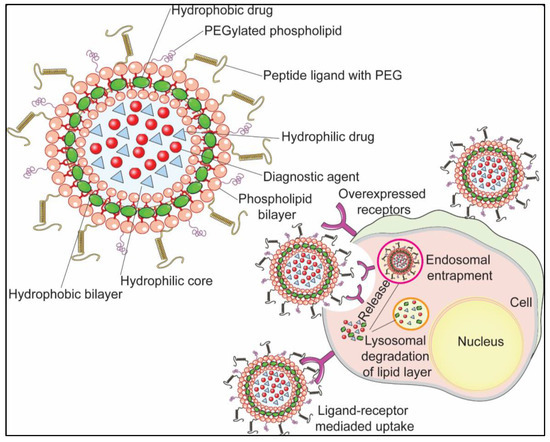 Fig.1 Schematic illustration showing the peptide-functionalized liposomal NDS acting on receptors overexpressed on the surface of cancer cells via targeted delivery.1,4
The success of a peptide-delivery system conjugate hinges on the choice of the conjugation strategy. Our expertise allows us to select the most suitable method for your specific project, ensuring the integrity of both the peptide and the delivery system. The two primary approaches are covalent and non-covalent conjugation.
-
Covalent Conjugation
This method involves the formation of a stable chemical bond between the peptide and the delivery system. Our capabilities include linking peptides to various carriers via robust bonds, such as pyridyl disulfide chemistry for attaching cysteine-terminated peptides to lipids for "smart liposomes." We also employ advanced techniques, like anhydride ring-opening, to prevent undesirable crosslinking when working with multifunctional polymers. This approach is ideal for creating highly stable and long-lasting conjugates. Our services can conjugate peptides to a wide range of delivery systems- Nanoparticles: We link peptides to the surface of polymeric or metallic nanoparticles to create targeted nanomedicines.
- Liposomes: Peptides are attached to the lipid bilayer, creating "smart" liposomes that can specifically recognize and bind to target cells.
- Polymers: We functionalize polymers with peptides to create targeted polymer-drug conjugates or hydrogels for controlled release applications.
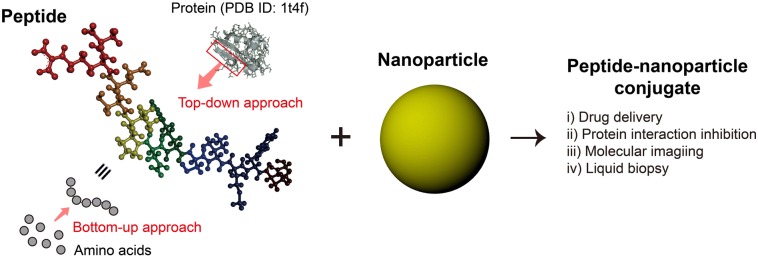 Fig.2 Peptides and their conjugation with nanoparticles.2,4
-
Non-Covalent Conjugation
For sensitive cargos, non-covalent strategies can be used to form stable complexes without the risk of chemically altering the molecule's biological activity. This is a common strategy with certain cell-penetrating peptides (CPPs) which rely on their amphipathic properties to form a complex with the cargo for cellular uptake.
Application
The applications of peptide-delivery system conjugates are vast and continue to grow, with a significant impact on targeted delivery and diagnostics.
- Targeted Drug Delivery: This is arguably the most prominent application, particularly in oncology. Peptide-drug conjugates (PDCs) and peptide-nanoparticle conjugates (PNCs) are engineered to specifically target and deliver cytotoxic drugs to cancer cells. This targeted approach minimizes systemic toxicity and increases the concentration of the therapeutic agent at the tumor site. The conjugates are designed to overcome biological barriers, such as the mononuclear phagocytic system (MPS) and drug efflux transporters, which can limit the effectiveness of conventional therapies.
- Imaging and Diagnostics: Peptide conjugates are crucial for developing advanced diagnostic tools. By conjugating peptides to fluorescent dyes, radioactive isotopes, or imaging nanoparticles, we can create molecular probes for in-vivo imaging. These probes can specifically bind to disease biomarkers, enabling early diagnosis and monitoring of disease progression with high precision (e.g., NIR, CT, PET imaging). Peptides are also used in diagnostic assays like lateral flow tests.
Contact Us About Bioconjugation Services
Table.1 Peptide–nanoparticle conjugates for efficient drug delivery.3,5
| Application | Peptide | Nanoparticle (NP) | Therapeutic Agents | |
|---|---|---|---|---|
| Name | Target | Type | ||
| Nuclear-target drug delivery | TAT | Target importin alpha and beta for intranuclear translocalization | Mesoporous Silica | Doxorubicin |
| Adenoviral NLS | Interact with nuclear pore complex for nuclear uptake | BSA-coated AuNP | Preliminary study (N/A) | |
| Adenoviral RME | For receptor mediated endocytosis into the cell | |||
| Adenoviral NLS | Targets nuclear pore complex for NP entrance into nucleus | AuNP | SiRNA | |
| Transdermal drug delivery | TAT | Assists with membrane disruption and cellular uptake | AuNP | pDNA |
| TD | Targets the Na+/K+-ATPase beta-subunit of the stratum corneum for enhanced skin permeability | Liposome | Vemurafenib | |
| TAT | Arginine groups in TAT bind stratum corneum and assist NP movement into epidermal layers | Nano lipid crystal NPs | Celecoxib | |
| Blood brain barrier drug delivery | G23 | Targets gangliosides GM1 and GT1b for the mediated transport of NPs across the BBB | Polymersome | Preliminary study (N/A) |
| LNP | Cell penetrating peptide for cellular uptake | DGL-PEG | pDNA | |
What We Can Offer?
Creative Biolabs is a leader in targeted drug delivery innovation. Our team of seasoned biologists, chemists, and engineers has more than two decades of combined experience in creating sophisticated delivery solutions. We provide a full range of products and services to support all of your research and development needs.
Ready-to-Use Products
Customized Services
Our personalized solutions allow us to develop tailored delivery systems and novel targeted modules from initial idea to final validation, precisely fitting your project's distinct specifications. This includes unique peptide synthesis and conjugation, along with optimizing delivery system characteristics for specific disease contexts.
Conjugation Services
Our extensive knowledge is applied to joining your chosen ligands to a variety of delivery platforms (nanoparticles, liposomes, polymers, etc.), ensuring stable and effective bonds.
Pre-Clinical Validation
We provide testing in both laboratory and living systems to evaluate the targeting efficiency, cellular uptake, biodistribution, and therapeutic efficacy of your conjugated systems.
Comprehensive Scientific Support
Collaborate with us to leverage our extensive scientific knowledge, cutting-edge facilities, and stringent quality control for your targeted delivery projects, from experimental design to data analysis.
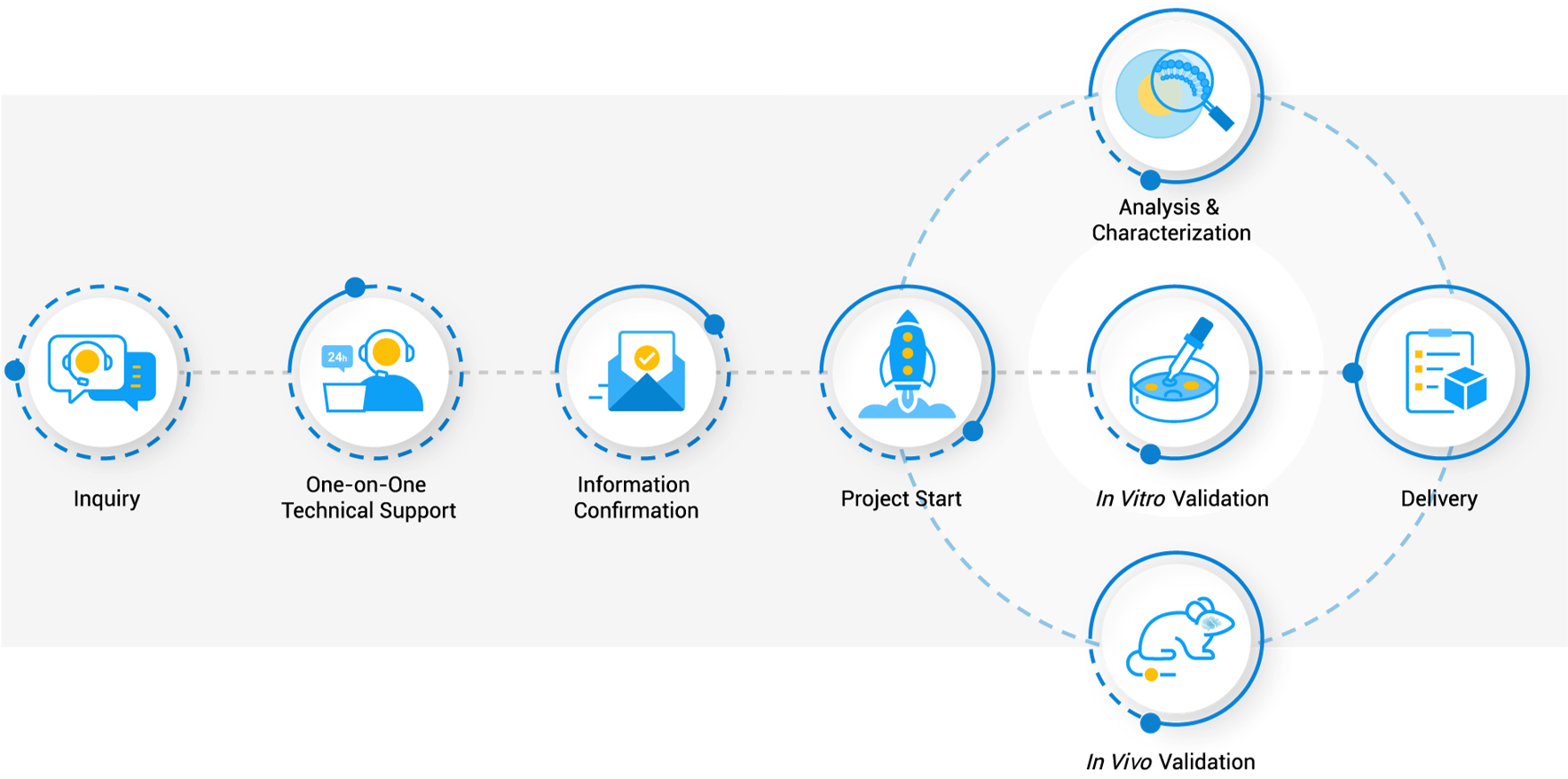
Workflow
Why Choose Us?
Opting for Creative Biolabs as a partner means selecting a path toward expedited drug innovation, improved treatment effectiveness, and a substantial decrease in unintended side effects. Our dedication to pioneering methods and maintaining scientific excellence guarantees that your therapeutic agents find their intended destinations with unmatched accuracy, paving the way for novel approaches to managing illness.
Proven Expertise
Our highly specialized team possesses deep scientific knowledge in both delivery systems and antibody conjugation, providing an integrated approach to your project.
Innovative Technology
We leverage state-of-the-art platforms and advanced conjugation techniques, such as click chemistry, to ensure optimal antibody orientation and maximum targeting efficiency.
Tailored Customization & Flexibility
We offer custom conjugation and delivery system optimization for your specific therapeutic goals, with flexible services that adapt to your unique project requirements.
Rigorous Quality & Reliability
Our commitment to scientific rigor ensures reliable, reproducible, and high-quality results for your critical projects, backed by rigorous quality control processes.
Published Data
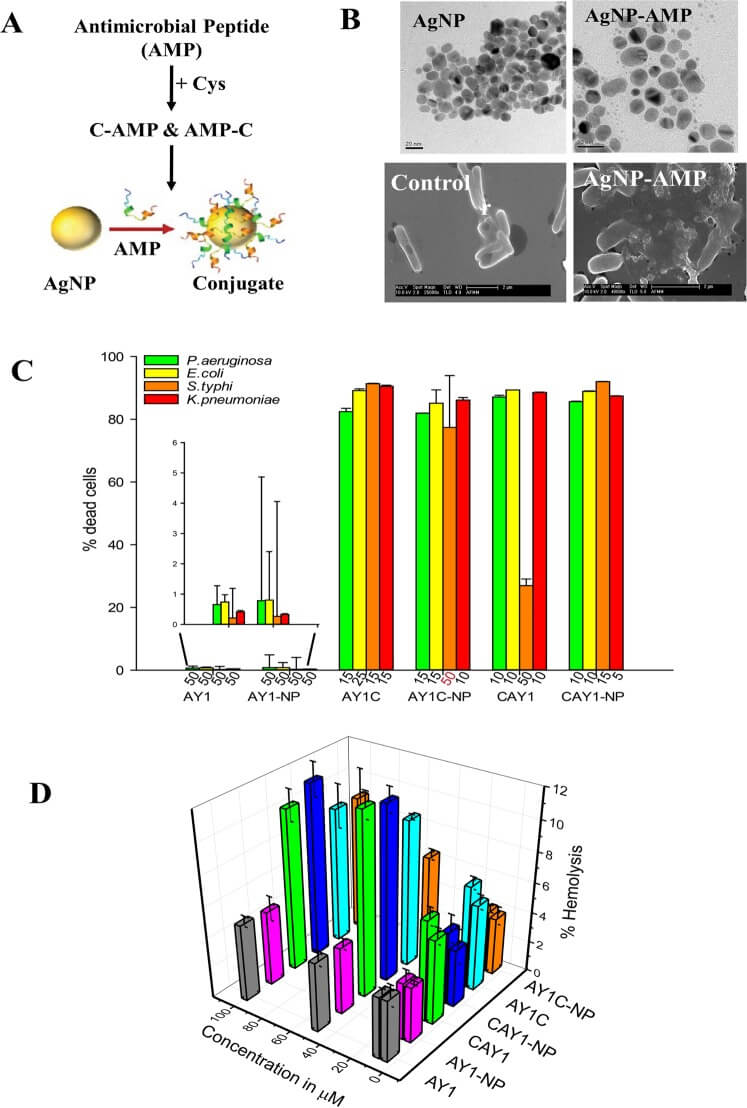 Fig.3 Design strategy of peptides and conjugation with sliver nanoparticle.3,5
A recent study demonstrates a powerful application of peptide-nanoparticle conjugation in the fight against multidrug-resistant bacteria. The researchers developed a novel antibacterial system by conjugating modified antimicrobial peptides with silver nanoparticles (AgNPs). To improve the binding affinity of the peptides to the AgNPs, a cysteine residue was strategically added to the parent peptide, creating C- and N-terminal tagged versions. The study's experiments showed that these cysteine-tagged nanoconjugates exhibited significantly enhanced antimicrobial activity, with minimum inhibitory concentration (MIC) values ranging from 5–15 μM, a substantial improvement over the 50 μM of the non-tagged peptides. NMR spectroscopy and molecular dynamics simulations revealed that this enhanced efficacy was due to a pore-forming mechanism in the bacterial membrane. Furthermore, in-cell NMR studies and dye-leakage assays confirmed the potent membrane-disruptive activity of the nanoconjugates. This published data underscores the potential of our conjugation methods to create highly effective and biocompatible nanomedicines.
FAQs
Q: What is the most effective conjugation strategy for my project?
A: The optimal strategy depends on the unique properties of your peptide, the delivery system, and your specific therapeutic goal. Key factors we consider include the location of functional groups, the desired stability of the conjugate, and the nature of your cargo. We recommend a consultation to collaboratively design the most effective approach tailored to your needs.
Q: How do you ensure the quality and reproducibility of your conjugated products?
A: We maintain a rigorous quality control process, utilizing advanced characterization techniques to analyze every conjugate. This includes methods like Gel Permeation Chromatography (GPC) to verify molecular weight and dispersity, and mass spectrometry to confirm the conjugation. Our commitment to scientific rigor ensures that you receive a high-quality, reproducible product for your critical projects.
Q: What types of molecules can be delivered using your services?
A: Our conjugation services are highly versatile and can facilitate the delivery of a wide range of therapeutic and diagnostic molecules. This includes small molecule drugs, nucleic acids (siRNA, mRNA), proteins, and imaging agents. The choice of delivery system and conjugation method is customized to suit the specific cargo you need to transport.
Q: How long does a typical custom conjugation project take to complete?
A: The timeline for a custom conjugation project can vary depending on its complexity, from the initial design and synthesis to final characterization. We work closely with our clients to establish realistic timelines and milestones, providing regular updates throughout the process to ensure timely completion.
Q: How does peptide-based targeted delivery compare to antibody-based methods?
A: Peptide-based systems offer distinct advantages over antibody-drug conjugates (ADCs), including lower production costs, smaller size, enhanced tissue penetration, and increased flexibility in conjugation chemistry. Peptides can also be designed to overcome specific biological barriers more effectively, offering a powerful and often more accessible alternative for targeted delivery.
At Creative Biolabs, we are committed to helping you navigate the complexities of targeted delivery and accelerate your research. Our Peptide-Delivery System Conjugation Services are backed by decades of experience and a passion for scientific excellence. We invite you to partner with us to transform your therapeutic and diagnostic concepts into reality.
Connect with our experts for project-specific consultation and detailed insights.
References
- Gaurav, Isha, et al. "Peptide-conjugated nano delivery systems for therapy and diagnosis of cancer." Pharmaceutics 13.9 (2021): 1433, DOI: 10.3390/pharmaceutics13091433.
- Jeong, Woo-Jin et al. "Peptide-nanoparticle conjugates: a next generation of diagnostic and therapeutic platforms?." Nano convergence vol. 5,1 38. 12 Dec. 2018, DOI:10.1186/s40580-018-0170-1.
- Pal, Indrani et al. "A Peptide-Nanoparticle System with Improved Efficacy against Multidrug Resistant Bacteria." Scientific reports vol. 9,1 4485. 14 Mar. 2019, DOI:10.1038/s41598-019-41005-7.
- Distributed under Open Access license CC BY 4.0, without modification.
- Distributed under Open Access license CC BY 4.0, this image is part of figure 2 from the original publication, without modification.
Our services are For Research Use Only. We do not provide services to individuals.
Online Inquiry