A comprehensive catalog of pre-formulated delivery systems (including various nanoparticles) and a selection of validated targeting modules such as aptamers and peptides.
Small Molecule-Drug Conjugate (SMDC) Service for Active Targeting
Overview Application What We Can Offer? Workflow Our Advantages Published Data FAQs
Are you facing challenges like systemic toxicity from potent payloads, limited tumor penetration, or difficulties in developing highly specific therapies? Creative Biolabs' SMDC solutions help you overcome these hurdles by enabling the precision delivery of therapeutic agents, accelerating your drug discovery process through advanced conjugation chemistry and innovative platform technologies.
Small Molecule-Drug Conjugates (SMDCs)
Small Molecule-Drug Conjugates (SMDCs) are a class of targeted therapeutics that selectively deliver highly potent cytotoxic agents to diseased cells, most notably cancer cells. Unlike Antibody-Drug Conjugates (ADCs) which use large antibodies as the targeting moiety, SMDCs utilize small molecules. This smaller size can offer several advantages, including improved tumor penetration and more efficient tissue distribution. The fundamental structure of an SMDC consists of three key components: a targeting ligand, a cytotoxic payload, and a linker connecting the two. The targeting ligand, often a peptide, folate, or other small molecule, binds to a receptor that is overexpressed on the surface of the target cell. Upon binding, the entire complex is internalized via endocytosis. Within the cell, the linker is cleaved by enzymes or changes in pH, releasing the payload at a high concentration directly inside the cell, where it can exert its therapeutic effect. This targeted mechanism significantly reduces the off-target toxicity often associated with conventional chemotherapy, leading to a wider therapeutic window and improved patient outcomes.
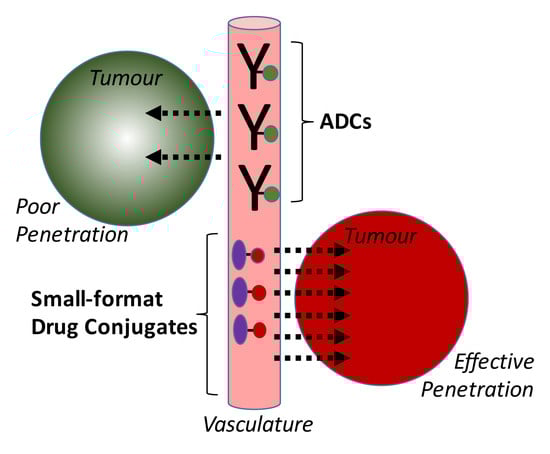 Fig.1 Comparison of antibody–drug conjugates (ADCs) and small-molecule drug conjugates (SMDCs) targeting Tumour.1,3
Targeting Ligands Linker Chemistry Cytotoxic Payloads
We provide a wide array of small-molecule ligands, including folate, PSMA, and peptide-based binders. All are validated for their high affinity and specificity to various receptors, allowing for precise targeting of different cell types and disease states. For instance, folate receptors are frequently overexpressed in epithelial cancers, making a folate ligand an ideal choice. In contrast, PSMA is a well-established target for prostate cancer. This strategic selection is crucial to ensure the conjugate accumulates at the intended location, maximizing therapeutic effects while sparing healthy tissue.
Contact Us About Bioconjugation Services
Application
The targeted delivery principle of SMDCs makes them a versatile tool with broad applications beyond oncology.
- Oncology: The primary use of SMDCs is in cancer therapy, selectively killing tumor cells by targeting receptors like PSMA and folate receptor- α. This leverages the tumor microenvironment to deliver potent agents with reduced systemic exposure, improving patient safety and efficacy in solid tumors.
- Inflammatory Diseases: SMDCs can be designed to target immune cells driving inflammatory responses, delivering immunosuppressants or anti-inflammatory drugs directly to the site of inflammation. This minimizes the broad side effects of conventional treatments and shows promise for conditions like rheumatoid arthritis.
- Infectious Diseases: This technology offers promise for delivering antiviral or antibacterial agents directly to infected cells. This can help overcome drug resistance by concentrating the therapeutic agent at the infection site and may reduce the high systemic doses often required.
- Autoimmune Diseases: SMDCs can selectively deplete or modulate the function of specific immune cell subsets, such as autoreactive T cells, responsible for autoimmune pathology. Conjugating a drug to a marker on these cells allows for a highly focused treatment that spares healthy immune cells.
What We Can Offer?
Creative Biolabs occupies a distinctive vanguard position in precision therapeutic conveyance advancement. Our cohort of specialized biologists, chemists, and engineers contributes over twenty years' aggregate expertise in engineering advanced solutions. We supply a spectrum of offerings customized for your exact requirements:
Ready-to-Use Products
Customized Services
Our bespoke service allows us to develop tailored delivery systems and novel targeted modules from concept to validation, precisely meeting your project's unique specifications. This includes custom aptamer/peptide synthesis, conjugation, and optimization for specific disease contexts.
Conjugation Services
Expertise in the precise and stable conjugation of selected ligands to various drug platforms.
Pre-Clinical Validation
Robust in vitro and in vivo testing to assess targeting efficiency, cellular uptake, biodistribution, and therapeutic efficacy.
Comprehensive Scientific Support
Partner with us to leverage our deep scientific knowledge, state-of-the-art facilities, and rigorous quality control for your targeted delivery projects, from experimental design to data analysis.
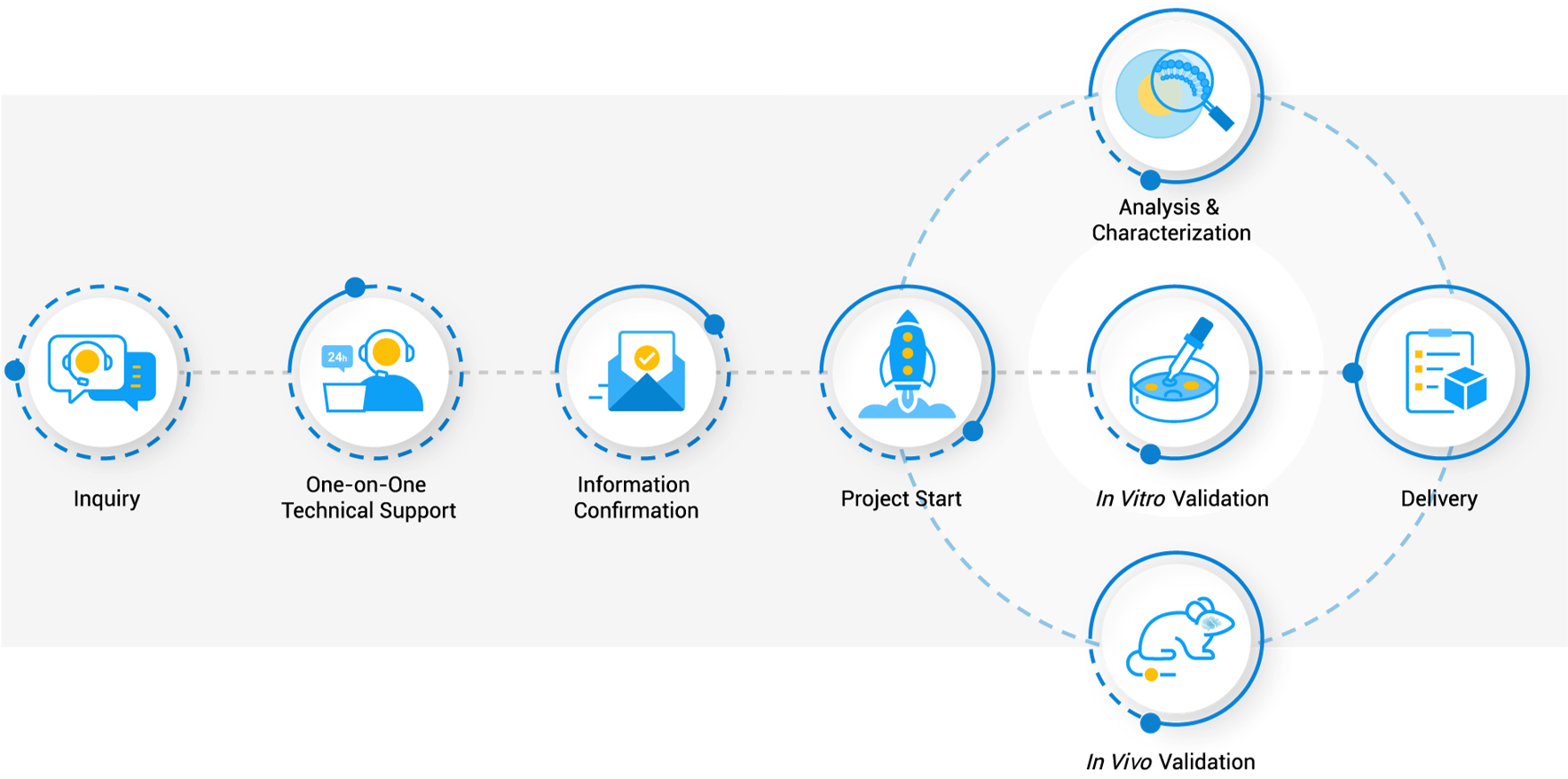
Workflow
Why Choose Us?
Partnering with Creative Biolabs means choosing a path to accelerated drug development, enhanced therapeutic efficacy, and a significant reduction in off-target effects. Our commitment to innovation and scientific excellence ensures that your therapeutic agents reach their intended targets with unprecedented precision, unlocking new possibilities for disease treatment.
Exceptional Expertise
Our team of specialized scientists holds a deep understanding of drug delivery systems and targeting module creation.
Pioneering Technology
We deploy cutting-edge platforms for module synthesis, conjugation, and analysis, ensuring you leverage the newest innovations.
Adaptive Customization
We offer personalized aptamer and peptide designs and optimize delivery systems to align with your specific therapeutic objectives.
Guaranteed Quality
Our commitment to strict scientific standards ensures consistent, high-quality results for your critical projects, validated by our Published Data.
Published Data
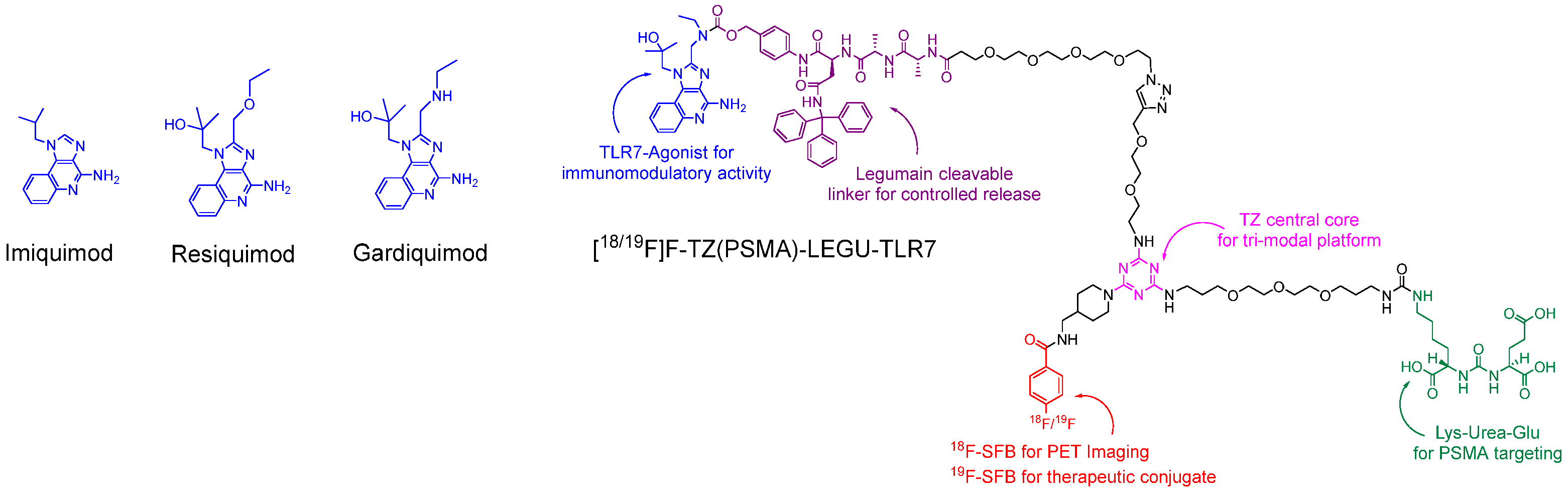 Fig.2 Structures of imidazoquinoline-derived TLR7 agonists and the structurally congruent T-SMPDCs documented herein.2,3
Recent research underscores a diagnostic-therapeutic small-molecule prodrug conjugate (T-SMPDC) platform's promise for precision cancer immunotherapy. The research focused on the synthesis and evaluation of a system designed to deliver a Toll-like Receptor 7 (TLR7) agonist, specifically gardiquimod (GARD), to tumor cells. The key innovation was the use of a legumain-cleavable linker, which is designed to remain stable in circulation but release the drug payload once internalized by the target cell and exposed to the acidic lysosomal environment. This delivery strategy seeks to reduce systemic toxicities.
The experimental design involved creating a chemically identical pair of T-SMPDCs: one was labeled with a radioactive isotope (18F) for PET imaging, and the other was a "cold" counterpart (19F) for therapy. This theranostic approach allows for the visualization of the tumor while the drug provides the therapeutic effect. The study's results demonstrated that the radioactive conjugate remained stable in human serum for up to four hours, and a competitive cell-binding assay confirmed that the PSMA-targeting moiety maintained its high affinity. The therapeutic conjugate exhibited an IC 50 of 134±37nM, which is consistent with similar compounds. These findings support the platform's potential for targeted delivery and suggest that it could be a promising strategy for immunomodulatory therapy in prostate cancer.
FAQs
Q: What are the key differences between a Small Molecule-Drug Conjugate (SMDC) and an Antibody-Drug Conjugate (ADC)?
A: The main difference lies in the targeting moiety. ADCs use large antibodies, which can have high specificity but may struggle with tumor penetration. SMDCs use small molecules, which can more readily penetrate solid tumors, potentially leading to better drug distribution within the target tissue.
Q: How do you ensure the SMDC remains stable in the bloodstream and only releases the payload at the target site?
A: The key is the linker. We design linkers that are highly stable under physiological conditions but are sensitive to specific triggers, such as enzymes or the low pH found within lysosomes of the target cells. This careful design ensures a controlled release, minimizing off-target effects.
Q: Can SMDCs be used for diseases other than cancer?
A: Yes, SMDCs are a highly versatile platform. While cancer is a primary application, the technology can be applied to any disease where a specific, overexpressed receptor or marker exists on the surface of the target cells. This includes inflammatory and infectious diseases.
Q: What is the benefit of a small molecule over an antibody for targeting?
A: Small molecules generally have a lower molecular weight than antibodies, which can allow for better diffusion into solid tumors and access to targets that might be difficult for larger molecules to reach. This can result in a more uniform drug distribution within the target tissue.
Q: What kind of data is needed to start a project on SMDC development?
A: To begin, it is helpful to have information on your therapeutic target, a potential small-molecule ligand, and the desired therapeutic payload. We can assist you in refining these choices and can even identify and validate novel targeting ligands based on your project's unique needs.
Creative Biolabs provides a comprehensive suite of services for the development of Small Molecule-Drug Conjugates. Our approach combines decades of expertise in targeted delivery with state-of-the-art technology to offer both off-the-shelf products and fully customized solutions. By partnering with us, you gain a dedicated team committed to accelerating your projects and achieving superior therapeutic outcomes.
Connect with our experts for project-specific consultation and detailed insights.
References
- Deonarain, Mahendra P et al. "Small-Format Drug Conjugates: A Viable Alternative to ADCs for Solid Tumours?." Antibodies (Basel, Switzerland) vol. 7,2 16. 31 Mar. 2018, DOI:10.3390/antib7020016.
- Debnath, Sashi et al. "Theranostic Small-Molecule Prodrug Conjugates for Targeted Delivery and Controlled Release of Toll-like Receptor 7 Agonists." International journal of molecular sciences vol. 23,13 7160. 28 Jun. 2022, DOI:10.3390/ijms23137160.
- Distributed under Open Access license CC BY 4.0, without modification.
Our services are For Research Use Only. We do not provide services to individuals.
Online Inquiry