Exosome Development Services for Targeted Drug Delivery
The future of medicine depends on our ability to deliver treatments with pinpoint accuracy. While conventional delivery systems struggle with biological barriers, off-target effects, and payload instability, extracellular vesicles—especially exosomes—offer a revolutionary breakthrough. At Creative Biolabs, we draw on over two decades of expertise to transform this potential into practice, delivering a comprehensive platform for Exosome-based Delivery System Development.
The Power of a Natural Nanocarrier
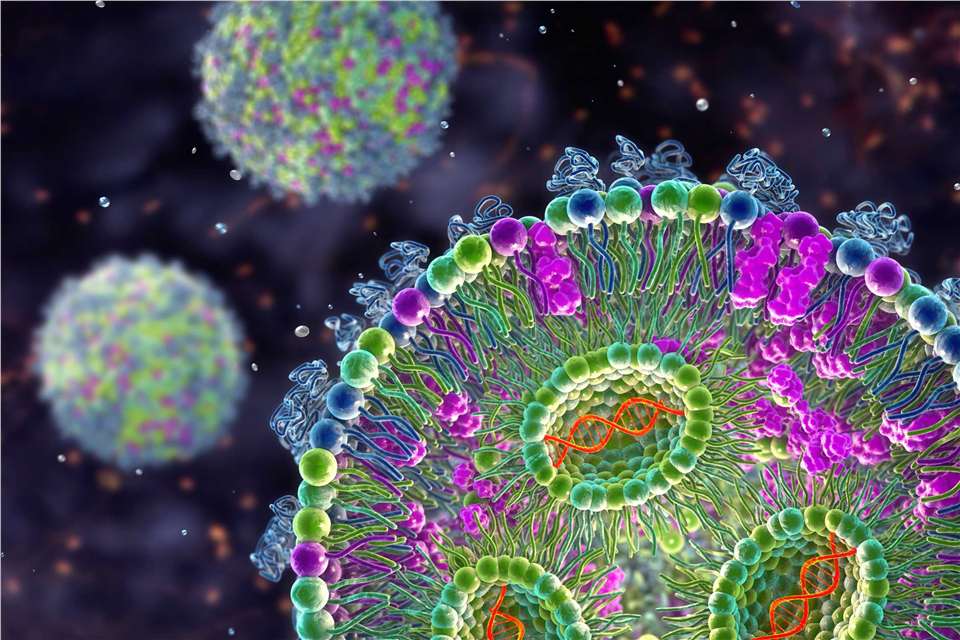
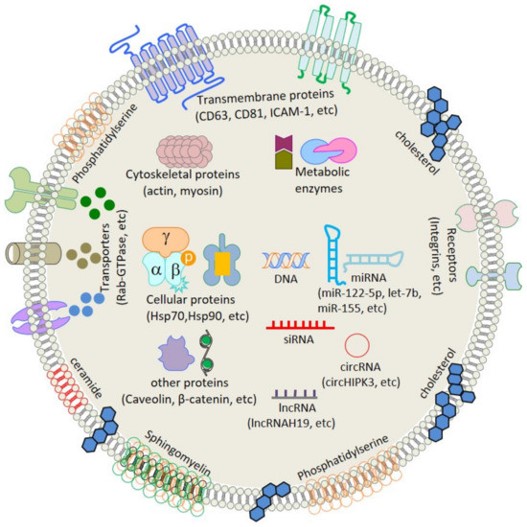 Fig. 1 Schematic diagram of the structure of
exosomes.1
Fig. 1 Schematic diagram of the structure of
exosomes.1
Exosomes are lipid-bilayer nanoparticles secreted by cells, playing a vital role in intercellular signaling. Typically 30–150 nm in size, they transport diverse molecular cargo, including proteins, lipids, and nucleic acids (e.g., mRNA, miRNA, DNA). Due to their natural biocompatibility and transport efficiency, exosomes are uniquely suited to serve as nanocarriers in cutting-edge drug delivery platforms.
Unlike synthetic delivery vehicles, exosomes possess inherent biological advantages that make them a superior choice for drug delivery:
One-Stop Solution for Exosome Development
Our services are built on a robust, modular platform that combines module delivery systems with targeted modules. This approach allows for unparalleled customization and flexibility, ensuring your exosome delivery system is optimized for your specific therapeutic payload and target.

Our service ensures the isolation of highly pure and functional exosomes from a diverse range of sources. This service is ideal for basic research, biomarker discovery, and preparing starting material for downstream applications.
Sample Sources
We handle challenging and diverse samples, including cell culture supernatants, serum, plasma, cerebrospinal fluid, ascites, pleural effusion, urine, and various tissue samples.
Key Methods
We employ gold-standard techniques such as differential ultracentrifugation, size exclusion chromatography (SEC), and precipitation-based methods to achieve high purity and yield.
Quality Control
Each isolated batch undergoes rigorous quality control using a suite of analytical tools to ensure consistency and biological integrity.
Deliverables
A high-purity, functional exosome suspension accompanied by a detailed QC report.





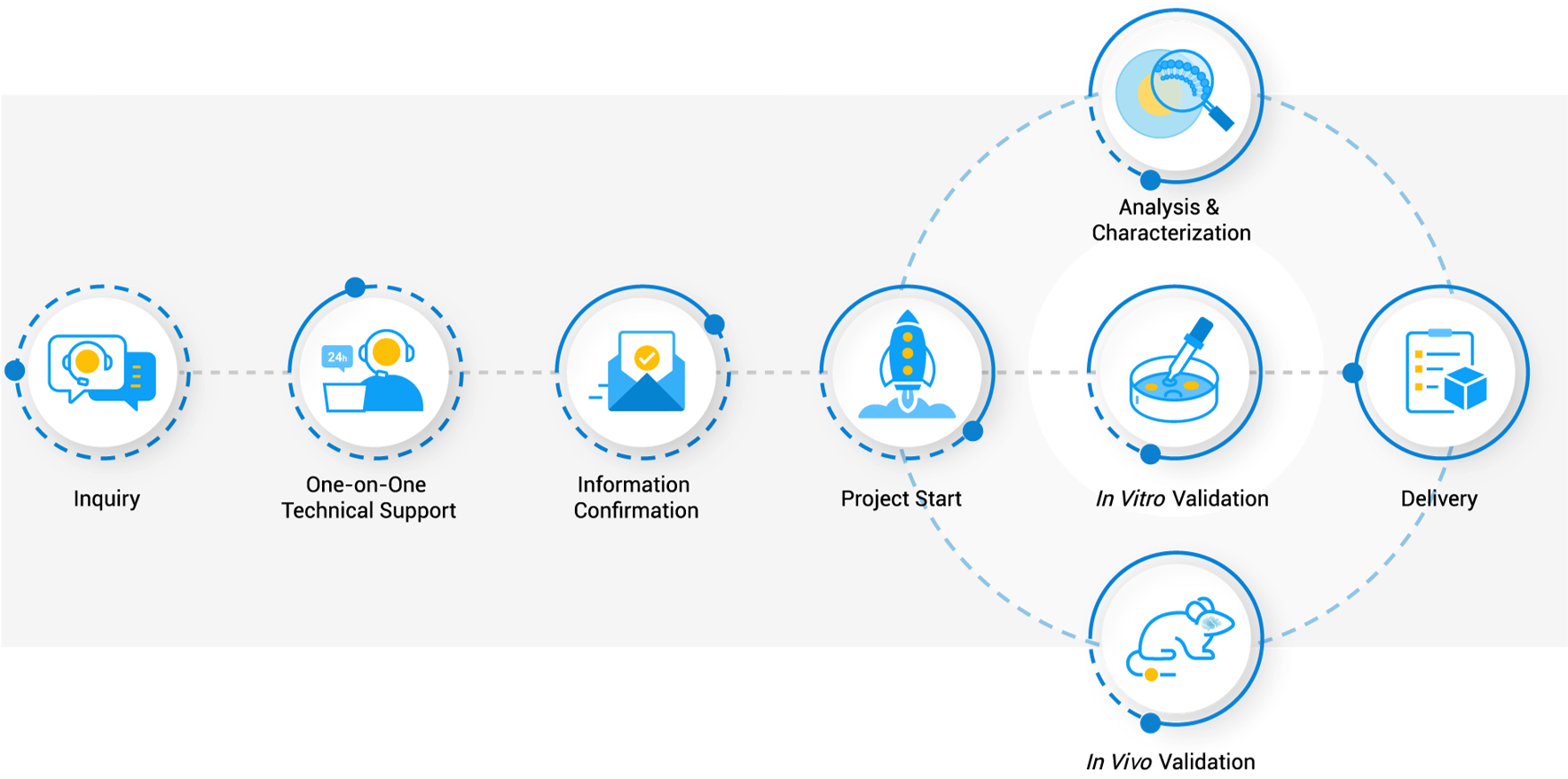
Workflow
Applications of Exosomes in Modern Research
Creative Biolabs' exosome-based delivery systems are transforming therapeutic research across multiple disciplines, providing a powerful tool to address complex biological challenges.
- Gene Therapy: Exosomes serve as a natural vehicle for the precise delivery of nucleic acid therapeutics, enabling targeted gene silencing and expression for the treatment of genetic disorders and cancers.
- Tissue Regeneration: By carrying proteins and growth factors, exosomes can stimulate cellular proliferation and differentiation, promoting the repair and regeneration of damaged tissues.
- Drug Delivery: Exosomes are ideal for delivering a wide array of payloads, from small molecules to complex biologics, to specific cells or organs, enhancing efficacy and reducing systemic toxicity.
- Oncology: Enabling targeted delivery of therapeutics to tumor cells, reducing systemic toxicity, and improving treatment outcomes.
- Vaccine Development: Exosome-based vaccines can present antigens in a native, highly immunogenic form, eliciting a robust and targeted immune response.
- Disease Diagnosis: The molecular cargo within exosomes can serve as a biomarker for various diseases, offering a non-invasive approach to early detection and diagnosis.
Why Choose Creative Biolabs for Your Exosome Research?
Unrivaled Expertise
With over two decades of experience in biotechnology, we have the scientific knowledge to navigate the complexities of exosome-based therapeutics.
Tailored, Collaborative Approach
We are not a one-size-fits-all vendor. Our services are fully customizable, and we work as a true partner to design and execute a project plan that meets your specific research goals.
Proprietary Technology
Our advanced, in-house platforms for exosome engineering and high-throughput screening give you a competitive advantage in a rapidly evolving field.
Rigorous Quality Control
Every step of our process is underpinned by stringent QC protocols, ensuring the reliability, consistency, and reproducibility of your results.
Empower your research with a platform that is smarter, more precise, and more effective. Creative Biolabs is ready to help you unlock the full potential of exosome-based therapeutics. Our team is ready to discuss your specific needs and develop a customized plan that aligns with your research goals. Please reach out to our specialists to learn how our exosome solutions can help you achieve your next breakthrough.
Related Services
Nucleic Acid Synthesis Services
Related Products
Complementing our comprehensive service offerings, Creative Biolabs provides a portfolio of high-quality products designed to streamline your research and development workflows. Our products are developed with the same scientific rigor and quality standards as our services, ensuring reliable performance and consistent results for your in-house experiments.
| Product Name | Description | Inquiry |
|---|---|---|
| Exosome Standards | A range of characterized exosome standards (e.g., derived from milk, plasma, HEK293T cells, MSCs, and NK cells) for method validation, quantification, and quality control. | |
| Exosome Labeling Dyes | High-purity fluorescent dyes and labeling reagents designed for robust and stable in vitro and in vivo tracking of exosomes. | |
| Exosome Preservation Solution | An optimized solution for long-term storage of isolated exosomes, preserving their morphology, biological activity, and cargo integrity. | |
| Lysis Buffer | A specialized buffer formulated for the efficient and complete lysis of exosomes to extract proteins, lipids, and nucleic acids for downstream analysis. | |
| Exosome Extraction Kits | User-friendly kits for rapid and efficient isolation of exosomes from various biological fluids and cell culture media |
FAQs
What is the typical turnaround time for a project?
Project timelines vary based on complexity, but our streamlined workflow ensures efficient delivery.
What types of payloads can be loaded into exosomes?
Our platform is versatile and can efficiently encapsulate a vast range of payloads, including small molecule drugs, nucleic acids (siRNA, mRNA, DNA plasmids), proteins, and peptides.
How do you ensure the quality of the exosomes?
We employ a multi-step quality control process, including Nanoparticle Tracking Analysis (NTA) to measure size and concentration, Transmission Electron Microscopy (TEM) for morphological analysis, and Western Blotting for the detection of exosome-specific markers.
Can you provide animal studies for in vivo validation?
Yes, we offer comprehensive in vivo validation services. We can design and execute animal studies to evaluate the biodistribution, targeting efficiency, and therapeutic efficacy of your engineered exosome system.
Can samples be stored at low temperature before extracting exosomes?
Yes. For optimal preservation of exosomes, samples such as plasma, serum, or cell culture supernatant should be stored at −80°C. Repeated freeze-thaw cycles should be avoided as they can compromise exosome integrity and yield.
Will dead cells during the cell culture process affect the extraction of exosomes?
Yes, the dead or dying cells release other types of extracellular vesicles and cellular debris that can contaminate the exosome sample, reduce purity, and potentially alter experimental results.
Reference
- Jan, Arif Tasleem, et al. "Expedition into exosome biology: a perspective of progress from discovery to therapeutic development." Cancers 13.5 (2021): 1157. https://doi.org/10.3390/cancers13051157. Distributed under an Open Access license CC BY 4.0, without modification.