
Our bespoke service allows us to develop tailored VDC systems from concept to validation, precisely meeting your project's unique specifications. This includes custom VLP engineering, drug conjugation, and optimization for specific disease contexts.
Virus-Like Drug Conjugate (VDC) Development Service
Overview Solution Application What We Can Offer? Workflow Our Advantages Published Data FAQs
Are you currently facing challenges with targeted drug delivery, including limited specificity, off-target toxicity, and suboptimal therapeutic indices? Creative Biolabs' Virus-Like Drug Conjugates (VDC) can help you solve these problems through our advanced VLP engineering and proprietary conjugation technologies. We enable the precise delivery of potent therapeutics to their intended targets, opening new possibilities for effective and safer treatments.
Virus-Like Drug Conjugates (VDC)
Virus-Like Drug Conjugates (VDCs) represent a cutting-edge approach to targeted drug delivery, leveraging the natural structure and stability of Virus-Like Particles (VLPs). VLPs are self-assembling protein shells that mimic the outer structure of a virus but are completely devoid of genetic material, making them non-infectious. This empty capsid serves as an ideal nanocarrier, offering a high-capacity and stable platform for conjugating and delivering therapeutic agents. The VLP's surface can be chemically modified with targeting ligands, such as antibodies or peptides, to specifically recognize receptors on the surface of diseased cells, such as those found on tumors. Once internalized by the target cell, the VLP disassembles, releasing its cytotoxic payload to exert its therapeutic effect, all while minimizing exposure to healthy tissues.
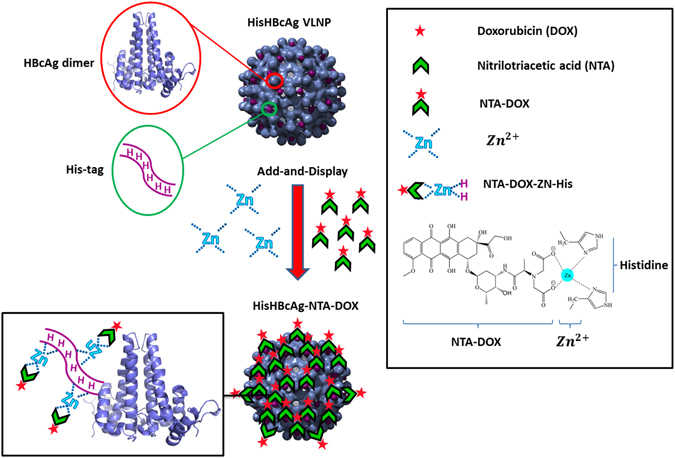 Fig.1 Add-and-Display methodology for non-covalent doxorubicin tethering on His-tagged viral nanoparticles.1,3
Our Virus-Like Drug Conjugates (VDC) Solution
VDCs can be engineered in several ways to suit specific therapeutic needs. At Creative Biolabs, we focus on core components of the VDC solution:
- VLP Design and Selection: The choice of virus-like particle (VLP) is crucial for a successful VDC. We meticulously select and engineer VLPs based on your project's specific requirements, considering factors such as size, surface topology, stability, and immunogenicity. We work with a variety of VLP sources, including bacteriophages for their robust stability and ease of production, as well as plant viruses and mammalian viruses, each offering unique structural properties and production advantages. This allows us to select and engineer the optimal VLP for your specific application.
- Targeting Ligand Integration: We can precisely integrate various targeting ligands onto the VLP surface. These can include peptides, aptamers, or antibodies that possess high affinity and specificity for markers on diseased cells. This strategic placement ensures the VDC specifically recognizes and binds to its intended target, minimizing off-target effects.
- Payload Loading and Encapsulation: Depending on the nature of the therapeutic payload (hydrophobic vs. hydrophilic, small molecule vs. nucleic acid), we utilize different methods to either encapsulate the drug within the VLP's core or conjugate it to the surface. Our advanced technologies ensure high drug-loading capacity and stable encapsulation, protecting the payload until it reaches the target cell.
- Conjugation Strategy: The method of attaching the therapeutic payload to the VLP is critical for a successful VDC. We utilize proprietary conjugation technologies to ensure precise and stable attachment. This includes advanced methods like click chemistry and maleimide-thiol reactions. Furthermore, we design and utilize specialized chemical linkers for controlled drug release. These linkers can be either cleavable (responsive to specific triggers like the low pH of endosomes or intracellular enzymes) or non-cleavable (for payloads that must remain attached to the VLP to function). This precise engineering ensures that the drug is only activated where it is needed most, maximizing efficacy and safety.
- Comprehensive Characterization and Optimization: Every VDC we develop undergoes rigorous characterization to confirm its integrity, drug-to-particle ratio, and targeting efficiency. We employ a range of analytical techniques to assess physical properties, and we perform in vitro and in vitro studies to optimize performance, biodistribution, and safety before moving to the next stage of your project.
Application
The ability of VDCs to specifically and efficiently deliver a high concentration of a therapeutic payload makes them a versatile platform for a wide range of applications.
- Oncology: The most prominent application is in targeted cancer therapy, where VDCs deliver potent chemotherapeutic agents directly to tumor cells. This strategy substantially mitigates whole-body toxicity and adverse reactions common with conventional chemotherapy.
- Autoimmune Diseases: VDCs can be engineered to deliver immunomodulatory agents with precision, offering a promising avenue for treating autoimmune conditions by targeting specific immune cells.
- Vaccines: The VLP's structural properties make it an excellent platform for vaccine development, as it can be used to present antigens to the immune system in a highly effective manner.
- Enhanced Drug Delivery: Their large carrying capacity, stability, and customizable targeting capabilities make VDCs an ideal solution for delivering a variety of therapeutic agents with greater specificity and control.
Contact Us About Bioconjugation Services
What We Can Offer?
Creative Biolabs commands a vanguard nexus in directed therapeutic delivery progress. Our team of expert biologists, chemists, and engineers brings over two decades of collective experience in developing sophisticated delivery solutions. We provide diverse solutions to advance your initiatives:
Custom VDC Services
Conjugation Services
Our expertise in proprietary conjugation technologies enables the precise attachment of selected therapeutic agents to VLP platforms, ensuring high drug-to-particle ratios and maximum stability.
Pre-Clinical Validation
We provide comprehensive in vitro and in vitro testing services to assess the targeting efficiency, cellular uptake, biodistribution, and therapeutic efficacy of your VDC.
Comprehensive Scientific Support
Partner with Creative Biolabs to leverage our deep scientific knowledge, state-of-the-art facilities, and rigorous quality control for your targeted delivery projects, from experimental design to data analysis.
Workflow
Why Choose Us?
Partnering with Creative Biolabs means choosing a path to accelerated drug development, enhanced therapeutic efficacy, and a significant reduction in off-target effects. Our commitment to innovation and scientific excellence ensures that your therapeutic agents reach their targets with unprecedented precision, unlocking new possibilities for disease treatment.
Proven Expertise
Our team of highly specialized biologists, chemists, and engineers possesses deep scientific knowledge in drug delivery systems and VDC development, ensuring a collaborative and successful partnership.
Innovative Technology
We leverage state-of-the-art platforms for VLP synthesis, conjugation, and characterization, giving your project a technological edge.
Tailored Customization & Flexibility
We offer customized VLP and drug conjugation design, optimizing the VDC to meet your specific therapeutic goals.
Rigorous Quality & Reliability
Our commitment to scientific rigor and extensive quality control measures ensures reliable, reproducible, and high-quality results for your critical projects, backed by Published Data.
Published Data
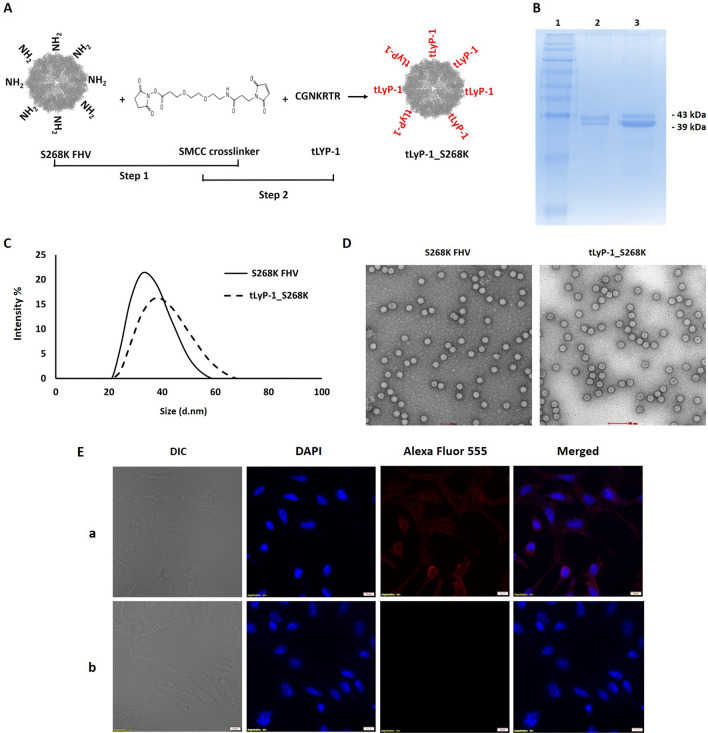 Fig.2 Bioconjugation of tumor-targeting peptide tLyP-1 to Flock House virus VLPs.2,3
An article details the development of a "smart" viral nano-vehicle for the targeted delivery of hydrophobic drugs. The researchers engineered a virus-like particle (VLP) from the non-mammalian Flock House Virus (FHV) and conjugated a tumor-homing peptide, tLyP-1, to its surface. A PEG-based bifunctional linker affixed the peptide while concealing the VLP from immunological detection. The engineered VLP was then used to encapsulate the chemotherapeutic drugs doxorubicin and ellipticine. The study's results demonstrated that this novel VDC could successfully encapsulate and specifically deliver these drugs to breast cancer cells. The in vitro assays confirmed that the drug release was gradual and responsive to the acidic pH of the endosomes, suggesting a controlled release mechanism. While the free drug exhibited faster initial cell death, the VDC-encapsulated drug also effectively triggered apoptosis, but with a slight delay attributed to its controlled release. This research highlights the potential of VDCs as a platform for targeted cancer therapy with reduced off-target toxicity and controlled drug delivery.
FAQs
Q: How does a VDC differ from an Antibody-Drug Conjugate (ADC)?
A: VDCs and ADCs both use a targeted approach, but they differ in their core component. ADCs use an antibody for targeting, while VDCs use a virus-like particle (VLP). The VLP can often offer a larger surface area for drug conjugation, potentially leading to a higher drug-to-carrier ratio and greater drug payload delivery to the target cell.
Q: Are Virus-Like Drug Conjugates safe since they are derived from viruses?
A: VDCs are based on virus-like particles (VLPs), which are protein shells that are structurally similar to a virus but are completely non-infectious. They do not contain any genetic material and cannot replicate. They are designed to be a safe and stable delivery platform.
Q: What kind of drugs can be conjugated to a VDC?
A: VDCs are highly versatile and can be conjugated with a wide range of therapeutic agents, including small molecule drugs, peptides, and even nucleic acids. The specific drug payload depends on the therapeutic goal of the project.
Q: How do you ensure the VDC will only target the intended cells?
A: The VLP is engineered to display specific targeting ligands on its surface. These ligands, such as peptides or aptamers, are chosen for their high affinity and specificity to receptors expressed on the surface of the target cells. This precise engineering ensures that the VDC selectively binds to and is internalized by the desired cell population.
Q: What are the key advantages of using a VDC over other drug delivery methods?
A: Key advantages include high drug payload capacity, exceptional stability in circulation, the ability to fine-tune the release mechanism of the drug, and a high degree of customization for different targeting strategies. These attributes synergistically yield enhanced efficacy and improved safety profiles for therapeutics.
At Creative Biolabs, our commitment is to provide innovative solutions that meet your research and development needs. We are confident that our VDC platform can help you overcome your drug delivery challenges and accelerate your path to discovery.
Connect with our experts for project-specific consultation and detailed insights.
References
- Biabanikhankahdani, Roya et al. "A Simple Add-and-Display Method for Immobilisation of Cancer Drug on His-tagged Virus-like Nanoparticles for Controlled Drug Delivery." Scientific reports vol. 7,1 5303. 13 Jul. 2017, https://doi.org/10.1038/s41598-017-05525-4
- Ghosh, Sukanya, and Manidipa Banerjee. "A smart viral vector for targeted delivery of hydrophobic drugs." Scientific reports vol. 11,1 7030. 29 Mar. 2021, https://doi.org/10.1038/s41598-021-86198-y
- Distributed under Open Access license CC BY 4.0, without modification.
Our services are For Research Use Only. We do not provide services to individuals.
Online Inquiry