
Creative Biolabs is offering the most comprehensive services for antibody development projects. With strict regulation and effective execution, we are dedicated to providing the most valuable solutions to complete your projects.
HighlightsCreative Biolabs is offering the most comprehensive services for antibody development projects. With strict regulation and effective execution, we are dedicated to providing the most valuable solutions to complete your projects.
HighlightsCreative Biolabs has established a broad range of platforms for developing novel antibodies or equivalents. These cutting-edge technologies enable our scientists to meet your demands from different aspects and tailor the most appropriate solution that contributes to the success of your projects.
HighlightsWith deep understanding in antibody-related realms and extensive project experience, Creative Biolabs offers a variety of references to help you learn more about our capacities and achievements, including infographic, flyer, case study, peer-reviewed publications, and all kinds of knowledge that can assist your projects. You are also welcome to contact us directly for more specific solutions.
HighlightsGet a real taste of Creative Biolabs, one of the most professional custom service providers in the world. We are committed to providing highly customized comprehensive solutions with the best quality to advance your projects.
HighlightsIn the rapidly evolving landscape of biotherapeutics, Bispecific Antibodies (BsAbs) have emerged as a revolutionary class of drugs, offering the ability to engage two different epitopes or targets simultaneously. However, the structural complexity of these "dual-action" molecules presents unique challenges for bioanalytical development, particularly in pharmacokinetics (PK) and anti-drug antibody (ADA) assays. At Creative Biolabs, we leverage over 20 years of expertise to provide industry-leading Bispecific Antibody recognized Anti-Idiotypic Antibody Discovery services, ensuring the development of highly specific tools required for your clinical and non-clinical pipelines.
An Anti-Idiotypic Antibody (Anti-ID) is an antibody that binds specifically to the variable region (idiotype) of another antibody—in this case, the therapeutic BsAb. Because BsAbs are engineered with multiple binding domains (e.g., scFv, Fab, or VHH) and unique linkers, the demand for Bispecific Antibody specific Anti-Idiotypic Antibody generation has surged. These reagents are the "gold standard" for:
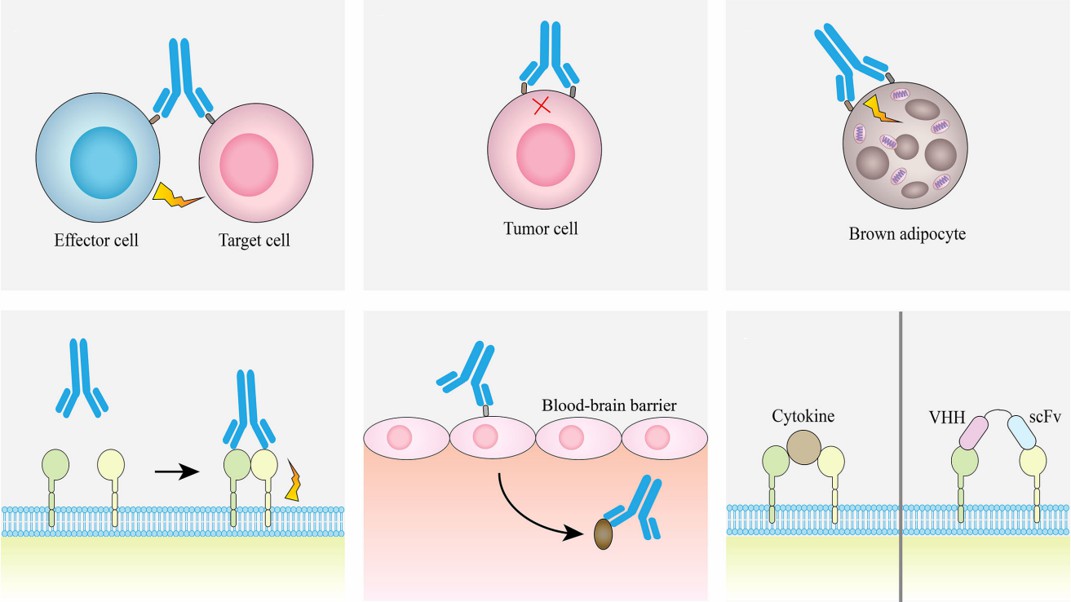 Fig. 1 Examples of mechanisms of action of BsAbs.1
The production of bis-functional and specific anti-idiotypic antibodies requires a sophisticated strategy that accounts for the multifaceted nature of the parent drug. Unlike monospecific antibodies, a BsAb possesses two distinct paratopes. Depending on the assay requirements, Creative Biolabs employs four primary screening strategies:
These antibodies are designed to recognize only one of the two binding arms of the BsAb. We utilize a rigorous negative selection process against the other arm to ensure zero cross-reactivity. This is essential for studying the individual binding dynamics of a bispecific molecule.
The most complex type of Bispecific Antibody specific Anti-Idiotypic Antibody generation, these reagents recognize the unique conformational epitope formed by the junction or the simultaneous presence of both variable domains. These are ideal for "Active Drug" PK assays, as they only bind when the BsAb is intact and functional.
These bind to the framework regions of the variable domains without interfering with the drug's target-binding ability. They are often used to detect "Total" drug levels in a sample, regardless of whether the drug is bound to its target.
For BsAbs using novel scaffolds, we can develop Anti-IDs that specifically target the engineered linker or the specific geometric arrangement of the molecule.
Creative Biolabs does not believe in a "one-size-fits-all" approach. We utilize multiple cutting-edge platforms to guarantee the success of BsAb-binding Anti-ID Antibody projects.
Our phage display platform is the cornerstone of our anti-idiotypic antibody production. By utilizing massive human, mouse, or rabbit antibody libraries, we can perform in vitro selection (biopanning) that allows for:
For projects requiring high-affinity monoclonal antibodies, our optimized hybridoma platform offers robust BsAb-binding anti-idiotypic antibody production. We utilize specialized immunization protocols, including "Decoy Immunization," where the host immune system is desensitized to common IgG regions, focusing the response entirely on the BsAb idiotypes.
Using single B cell screening platform, we can screen thousands of individual B cells from immunized animals (Rabbit or Mouse) to find rare clones that possess the exact specificity needed for bis-functional and specific anti-idiotypic antibodies production.
Navigating the complexities of Bispecific Antibody recognized Anti-Idiotypic Antibody Discovery requires more than just standard antibody services; it requires a deep understanding of protein engineering.
Creative Biolabs offers a comprehensive suite of services to support your entire antibody drug development program. Explore our related offerings:
For more information or to request a quote for your Bispecific Antibody recognized Anti-Idiotypic Antibody Discovery project, please contact our expert team today.
Reference
All listed services and products are For Research Use Only. Do Not use in any diagnostic or therapeutic applications.








