Creative Biolabs is offering the most comprehensive services for antibody development projects. With strict regulation and effective execution, we are dedicated to providing the most valuable solutions to complete your projects.
HighlightsCreative Biolabs is offering the most comprehensive services for antibody development projects. With strict regulation and effective execution, we are dedicated to providing the most valuable solutions to complete your projects.
HighlightsCreative Biolabs has established a broad range of platforms for developing novel antibodies or equivalents. These cutting-edge technologies enable our scientists to meet your demands from different aspects and tailor the most appropriate solution that contributes to the success of your projects.
HighlightsWith deep understanding in antibody-related realms and extensive project experience, Creative Biolabs offers a variety of references to help you learn more about our capacities and achievements, including infographic, flyer, case study, peer-reviewed publications, and all kinds of knowledge that can assist your projects. You are also welcome to contact us directly for more specific solutions.
HighlightsGet a real taste of Creative Biolabs, one of the most professional custom service providers in the world. We are committed to providing highly customized comprehensive solutions with the best quality to advance your projects.
Highlights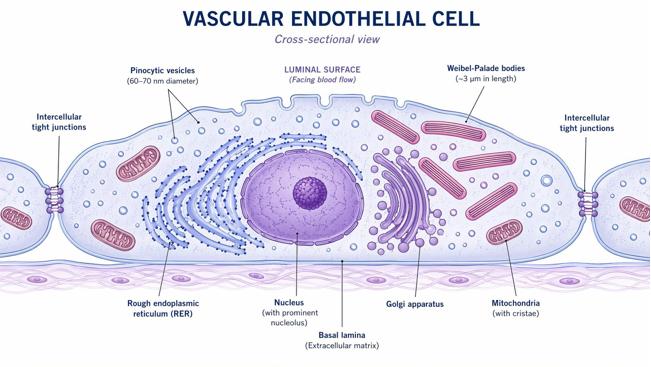
Anti-endothelial cell antibodies (AECA) represent a heterogeneous group of circulating autoantibodies that target antigens expressed on the surface of, or associated with, vascular endothelial cells. First described in the early 1970s, these antibodies were initially identified in human sera using indirect immunofluorescence on rat kidney endothelial cells. Unlike antibodies directed against a single molecular entity, AECA comprise a diverse repertoire that recognizes multiple endothelial determinants. This heterogeneity reflects their involvement in a spectrum of physiological and pathological processes. In healthy individuals, naturally occurring AECA are detectable and are thought to contribute to vascular homeostasis by exerting anti-inflammatory and antithrombotic effects. Conversely, under pathological conditions, AECA are strongly implicated in vascular inflammation, endothelial dysfunction, and tissue injury. Creative Biolabs has established a robust technology platform dedicated to AECA research, providing standardized detection, functional characterization, and custom agonistic antibody development services to support both basic and translational studies.
The biological relevance of AECA extends across both physiological homeostasis and disease pathogenesis, making them particularly compelling subjects for basic and translational research.
In pathological settings, AECA exert profound effects on endothelial cell biology. These antibodies can activate endothelial cells through various signaling pathways, leading to upregulated expression of adhesion molecules including VCAM-1, ICAM-1, and E-selectin. This activation promotes the secretion of chemokines and proinflammatory cytokines such as IL-6 and IL-8, establishing a proinflammatory milieu that recruits circulating leukocytes. Additionally, AECA can induce antibody-dependent cellular cytotoxicity, trigger endothelial apoptosis, and activate coagulation cascades, contributing to thrombus formation and vascular injury.
The clinical relevance of AECA is underscored by their detection in numerous immune mediated disorders. Systematic investigations have revealed AECA positivity rates of 40.6% in vasculitis patients, 44.4% in rheumatoid arthritis, and 25.5% in autoimmune nephropathies. Furthermore, elevated AECA titers correlate with indicators of disease severity, including renal function impairment and cytopenias. These observations highlight the potential utility of AECA as mechanistic probes for understanding disease pathogenesis and as candidate biomarkers for monitoring disease activity.
Intriguingly, natural AECA present in healthy individuals may serve distinct physiological functions. Emerging evidence suggests that these naturally occurring antibodies could exert anti-inflammatory and antithrombotic effects, potentially contributing to the maintenance of vascular homeostasis and endothelial integrity.
AECA serve as critical probes to dissect the molecular mechanisms of vascular injury and autoimmune pathogenesis, enabling researchers to model endothelial activation cascades in vitro.
Given their association with disease activity and organ involvement, AECA are being evaluated as serum based biomarkers for diagnosis, prognosis, and therapeutic monitoring.
AECA can be employed to interrogate endothelial cell surface receptors, intracellular signaling networks, and functional responses such as barrier integrity and nitric oxide production.
By identifying the specific endothelial antigens recognized by pathogenic AECA, investigators can uncover novel targets for anti-inflammatory and vasculo-protective drug development.
Multiple methodologies are utilized for AECA detection and characterization. Selection of the appropriate technique depends on the experimental question and sample type.
| Method | Principle | Key Features |
| Cell-based ELISA | Quantitative binding to fixed human umbilical vein endothelial cell (HUVEC) monolayers | High throughput, reproducible, suitable for screening |
| Flow Cytometry | Detection of AECA binding to viable endothelial cells | Preserves native antigen conformation, allows multiparametric analysis |
| Immunofluorescence | Visualization of antibody binding on cell or tissue sections | Classic method, useful for localization studies |
| Western Blotting | Identification of specific target antigens separated by molecular weight | Resolves antigen diversity, complements functional assays |
Creative Biolabs integrates these platforms to deliver comprehensive characterization, combining cellular assays with proteomic approaches to ensure data reliability and biological relevance.

Creative Biolabs offers a comprehensive suite of services designed to support AECA research from initial detection through functional characterization and target identification. Our integrated approach ensures continuity across the research workflow, enabling efficient progression from discovery to validation.
 Anti-Endothelial Cell Antibody Detection Service
Comprehensive detection using cell ELISA, flow cytometry, immunofluorescence, and Western blotting platforms. Customizable to accommodate diverse sample types and research objectives.
AECA Functional Characterization Service
Assessment of AECA effects on endothelial cell activation, adhesion molecule expression, cytokine and chemokine secretion, and cytotoxicity profiles.
AECA Target Antigen Identification Service
Advanced proteomics and immunoprecipitation approaches to identify specific endothelial cell surface antigens recognized by AECA.
Custom Antibody Development for Endothelial Targets
Generation of monoclonal and polyclonal antibodies against endothelial cell specific antigens to support research and assay development.
Endothelial Cell Based Assay Development
Custom assay design and optimization using primary or immortalized endothelial cells for drug screening, mechanistic studies, and functional evaluation.
Our integrated service model provides researchers with a seamless pathway from initial AECA detection to comprehensive functional characterization and target identification. By consolidating these capabilities within a single trusted provider, we help accelerate research timelines while maintaining data quality and experimental consistency.
All listed services and products are For Research Use Only. Do Not use in any diagnostic or therapeutic applications.