Creative Biolabs is offering the most comprehensive services for antibody development projects. With strict regulation and effective execution, we are dedicated to providing the most valuable solutions to complete your projects.
HighlightsCreative Biolabs is offering the most comprehensive services for antibody development projects. With strict regulation and effective execution, we are dedicated to providing the most valuable solutions to complete your projects.
HighlightsCreative Biolabs has established a broad range of platforms for developing novel antibodies or equivalents. These cutting-edge technologies enable our scientists to meet your demands from different aspects and tailor the most appropriate solution that contributes to the success of your projects.
HighlightsWith deep understanding in antibody-related realms and extensive project experience, Creative Biolabs offers a variety of references to help you learn more about our capacities and achievements, including infographic, flyer, case study, peer-reviewed publications, and all kinds of knowledge that can assist your projects. You are also welcome to contact us directly for more specific solutions.
HighlightsGet a real taste of Creative Biolabs, one of the most professional custom service providers in the world. We are committed to providing highly customized comprehensive solutions with the best quality to advance your projects.
HighlightsPharmacokinetic (PK) assays define the absorption, distribution, metabolism, and excretion (ADME) of a therapeutic antibody, providing critical data for dose selection and safety assessment. At the heart of these vital ligand-binding assays (LBAs) are anti-idiotypic antibodies (anti-IDs), the specialized reagents that enable accurate quantification of your drug candidate in biological matrices. For over two decades, Creative Biolabs has been at the forefront of recombinant antibody technology. We are your trusted partner in developing high-affinity, high-specificity anti-idiotypic antibodies tailored for robust and reproducible PK assays. Our comprehensive service combines cutting-edge discovery platforms with the deep expertise of our veteran scientists to accelerate your journey from preclinical research to market approval.
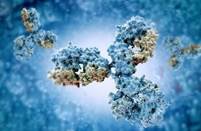
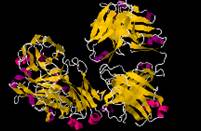
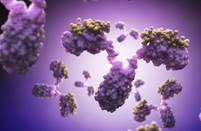
An idiotope is a unique set of antigenic determinants (epitopes) located within the variable region of antibody therapeutic. An anti-idiotypic antibody is a specialized antibody that specifically binds to the idiotope of your drug, acting as a "surrogate" for the drug's target. This unique specificity makes anti-IDs indispensable tools for PK assays, as they can detect the therapeutic antibody with minimal interference from other components in the biological sample.
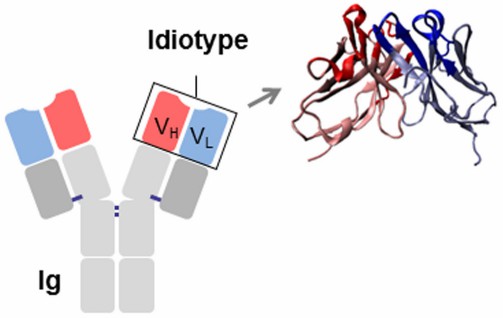 Fig.1 Antibody idiotope.1
The quality of your anti-ID directly dictates the performance of your PK assay. A superior anti-ID must exhibit:
Creative Biolabs offers a multi-platform, fully customizable discovery service to generate the ideal anti-ID reagents for your PK studies. We develop three main categories of anti-IDs, each designed for a specific assay format and purpose.
This is the most common type of anti-ID used in PK assays to measure the total drug concentration. In this format, a pair of non-competing anti-IDs binds to two distinct idiotopes on the therapeutic antibody, forming a "bridge." This format is highly sensitive and specific.
These highly specialized anti-IDs recognize a "neo-epitope" formed only when the therapeutic antibody is bound to its target. They are essential for understanding the drug's mechanism of action and pharmacodynamics (PD).
These anti-IDs bind to an idiotope outside of the drug's antigen-binding site (paratope). This allows them to bind to the drug regardless of whether it is free or bound to its target.
We harness an unparalleled suite of technologies to ensure the anti-IDs we develop meet the highest standards of performance and reliability.
| Technology Platform | Description & Advantages | Best For |
| Anti-ID Antibody Discovery | Our proprietary, optimized B-cell sorting and screening platform. It combines unique immunization strategies with high-throughput selection to rapidly identify high-affinity anti-ID candidates. | Rapid discovery of highly specific monoclonal antibodies with diverse epitope coverage. |
| Phage Display Library | We utilize our extensive, high-capacity immune and naive antibody libraries to pan for anti-IDs with exceptional affinity and specificity. This platform is ideal for developing antibodies against challenging targets and allows for fine-tuning of antibody characteristics. | Generating fully human or humanized anti-IDs; isolating binders to specific neo-epitopes; rapid affinity maturation. |
| Hybridoma Technology | A refined approach to the classic method. Our optimized immunization protocols (including cell-based and DNA immunization) and high-throughput screening ensure the selection of stable, high-producing hybridoma clones for a consistent, long-term supply of monoclonal anti-IDs. | Robust, cost-effective generation of high-quality murine and rabbit monoclonal antibodies for PK and ADA assays. |
| Single B-Cell Sorting | Using leading-edge systems, we can screen tens of thousands of individual plasma B cells in days, not months. This allows us to directly isolate the B cells producing the highest-affinity antibodies and recover their variable region genes for recombinant production. | Ultra-fast discovery of rare antibodies with desired functional properties, ensuring monoclonality from day one. |
All our anti-ID candidates undergo rigorous characterization using state-of-the-art analytical techniques, including ELISA, Surface Plasmon Resonance (SPR, such as Biacore systems), and Bio-Layer Interferometry (BLI, such as Octet systems), to provide you with comprehensive data on affinity, kinetics, and specificity.
Phase 1: Project Consultation & Strategy Design
Our PhD-level experts consult with you to understand your therapeutic, your target, and your specific PK assay requirements.
Phase 2: Immunogen Preparation & Immunization
We prepare the therapeutic antibody immunogen and design a custom immunization strategy using our diverse animal models (mouse, rat, rabbit, chicken, alpaca).
Phase 3: Antibody Discovery & Screening
We apply the chosen platform (Phage Display, Hybridoma, etc.) to generate a large panel of anti-ID binders.
Intensive screening via ELISA and other methods to identify high-affinity, specific candidates.
Phase 4: In-depth Characterization
Lead candidates are expressed, purified, and subjected to rigorous characterization (Affinity measurement by SPR/BLI, specificity testing, epitope binning).
Phase 5: PK Assay Feasibility & Pair Selection
For bridging assays, we perform comprehensive pair-wise testing to identify the optimal capture-detection pair.
We conduct preliminary PK assay development to confirm the utility of the selected anti-IDs.
Phase 6: Deliverables & Reporting
You receive your high-quality anti-idiotypic antibodies (monoclonal or polyclonal) along with a detailed report containing all characterization data and development protocols.
Creative Biolabs offers a comprehensive suite of services to support your entire antibody drug development program. Explore our related offerings:
Ready to develop the critical reagents for your next breakthrough therapeutic? Contact our team of experts today to discuss your project and receive a complimentary proposal.
Q: What is the difference between a monoclonal and a polyclonal anti-ID for a PK assay?
A: Polyclonal anti-IDs are a heterogeneous mixture of antibodies that can provide a strong signal and are faster to develop. However, they suffer from batch-to-batch variability. Monoclonal anti-IDs, derived from a single B-cell clone, offer unparalleled specificity and a renewable, consistent supply, making them the gold standard for regulated PK assays. Creative Biolabs strongly recommends monoclonal anti-IDs for long-term clinical development programs.
Q: What material do I need to provide to start a project?
A: Typically, we require 1-5 mg of your therapeutic antibody. We may also require the target antigen if you need drug-target complex-specific antibodies. Our team will provide a detailed list based on your project's scope.
Q: How do you ensure the anti-IDs are specific to my drug?
A: Our screening process involves extensive counter-screening against pooled human serum, purified human IgG, and isotype-matched control antibodies to eliminate any matrix-reactive or non-specific binders.
Q: What is the typical timeline for developing a monoclonal anti-ID pair for a PK assay?
A: The timeline can vary depending on the chosen platform, but our advanced hybridoma and single B-cell cloning platforms can deliver characterized lead candidates in as little as 3-4 months.
All listed services and products are For Research Use Only. Do Not use in any diagnostic or therapeutic applications.