Creative Biolabs is offering the most comprehensive services for antibody development projects. With strict regulation and effective execution, we are dedicated to providing the most valuable solutions to complete your projects.
HighlightsCreative Biolabs is offering the most comprehensive services for antibody development projects. With strict regulation and effective execution, we are dedicated to providing the most valuable solutions to complete your projects.
HighlightsCreative Biolabs has established a broad range of platforms for developing novel antibodies or equivalents. These cutting-edge technologies enable our scientists to meet your demands from different aspects and tailor the most appropriate solution that contributes to the success of your projects.
HighlightsWith deep understanding in antibody-related realms and extensive project experience, Creative Biolabs offers a variety of references to help you learn more about our capacities and achievements, including infographic, flyer, case study, peer-reviewed publications, and all kinds of knowledge that can assist your projects. You are also welcome to contact us directly for more specific solutions.
HighlightsGet a real taste of Creative Biolabs, one of the most professional custom service providers in the world. We are committed to providing highly customized comprehensive solutions with the best quality to advance your projects.
HighlightsSkeletal and cardiac muscles constitute a significant portion of total body mass and are central to numerous metabolic and physiological functions. However, delivering therapeutic agents—ranging from small molecules to gene therapy vectors—specifically to muscle tissue remains a formidable challenge in modern biopharmaceutics. Non-specific distribution often leads to sub-therapeutic concentrations at the target site and undesired systemic side effects. Creative Biolabs, a global leader in phage display technologies with over 20 years of expertise, offers a premier Muscle Targeting In Vivo Phage Library Screening Service. By leveraging the physiological complexity of a living organism, our platform identifies high-affinity, muscle-homing peptides that can bypass biological barriers, ensuring your therapeutic payload reaches its destination with surgical precision.
Unlike traditional in vitro biopanning against purified proteins or cultured cells, in vivo phage display screening captures the "real-world" interaction between the phage library and the vascular endothelium, interstitial matrix, and myocyte membranes within the functional muscle architecture.
| Feature | In Vitro Screening | In Vivo (Creative Biolabs) |
| Microenvironment | Artificial/Simplified | Native Physiological Context |
| Biological Barriers | Absent (No blood flow/clearance) | Present (Reflects actual PK/PD) |
| Target Relevance | Isolated Antigens | Complex Multicellular Tissue |
| Success Rate | Moderate (May fail in animal models) | High (Pre-validated in living systems) |
| Specificity | High for ligand, low for tissue | Superior tissue-specific homing |
We utilize diverse phage libraries (M13, T7, or T4) displaying billions of unique peptide sequences (linear, cyclic, or constrained). Our proprietary Next-Gen Muscle Homing Technology (NG-MHT) integrates high-throughput screening with deep sequencing to identify candidates that others might miss.
Our workflow is designed to maximize enrichment while minimizing "noise" from non-specific binding.
We offer a variety of high-diversity libraries (>1010 unique clones), including:
The library is injected intravenously into the chosen animal model. During the circulation phase, phages interact with the muscle vasculature and cellular receptors.
| Round | Focus | Objective |
| Round 1 | Initial Capture | Broad identification of phages with muscle affinity. |
| Round 2 | Specificity Enhancement | Increased stringency; removal of phages sequestered by the Reticuloendothelial System (RES). |
| Round 3 | Internalization/Penetration | Selection for peptides that not only bind but enter the muscle cells (Internalizing Phage). |
Unlike traditional plaque counting, we employ NGS-based profiling to track the enrichment of thousands of clones simultaneously, ensuring that rare but highly effective candidates are not lost.
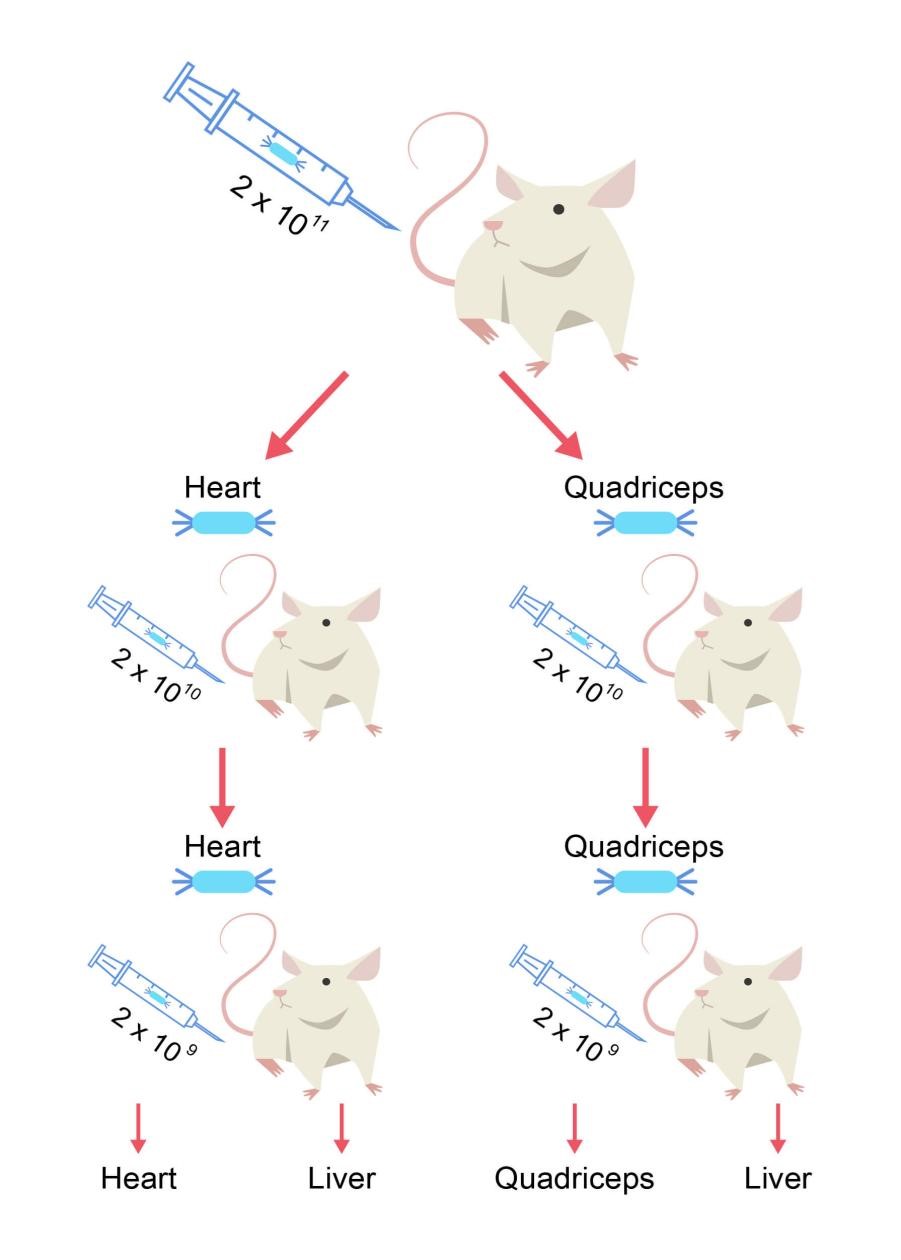 Fig. 1 Screening for peptides aiming at muscle targeting.
One of the primary challenges in In Vivo Phage Library Screening is the natural sequestration of phages by the Reticuloendothelial System (RES), primarily the liver and spleen. At Creative Biolabs, we employ advanced "pre-adsorption" strategies where the library is first exposed to non-target tissues or circulation-blocking agents to minimize background noise. This ensures that the phages recovered from muscle are truly tissue-specific rather than just "sticky" variants.
Muscle tissue is highly vascularized, but the endothelium of muscle capillaries is distinct from that of the brain or lungs. Our In Vivo Phage Display for Muscle targets these unique molecular "zip codes"—receptors or membrane proteins expressed specifically on the luminal surface of the muscle vasculature.
By utilizing AI-assisted bioinformatics, we can now provide a "heat map" of peptide distribution. Instead of just identifying what binds to muscle, we quantify how much less it binds to the heart vs. skeletal muscle, providing a level of granularity essential for precision medicine.
To further your research, consider our integrated In Vivo Phage Library Screening Services modules:
Learn more about other Phage Display Library Screening Services:
Creative Biolabs is dedicated to accelerating your musculoskeletal research. Our Muscle Targeting In Vivo Phage Library Screening Service provides the high-resolution data needed to turn a systemic drug into a precision-guided therapeutic.
Contact our experts today to design your customized in vivo screening project.
Reference
All listed services and products are For Research Use Only. Do Not use in any diagnostic or therapeutic applications.