Creative Biolabs is offering the most comprehensive services for antibody development projects. With strict regulation and effective execution, we are dedicated to providing the most valuable solutions to complete your projects.
HighlightsCreative Biolabs is offering the most comprehensive services for antibody development projects. With strict regulation and effective execution, we are dedicated to providing the most valuable solutions to complete your projects.
HighlightsCreative Biolabs has established a broad range of platforms for developing novel antibodies or equivalents. These cutting-edge technologies enable our scientists to meet your demands from different aspects and tailor the most appropriate solution that contributes to the success of your projects.
HighlightsWith deep understanding in antibody-related realms and extensive project experience, Creative Biolabs offers a variety of references to help you learn more about our capacities and achievements, including infographic, flyer, case study, peer-reviewed publications, and all kinds of knowledge that can assist your projects. You are also welcome to contact us directly for more specific solutions.
HighlightsGet a real taste of Creative Biolabs, one of the most professional custom service providers in the world. We are committed to providing highly customized comprehensive solutions with the best quality to advance your projects.
HighlightsIn the era of precision medicine, the ability to deliver therapeutic agents specifically to tumor sites while sparing healthy tissues remains the "Holy Grail" of oncology. Creative Biolabs, with over two decades of deep-rooted expertise in phage display technology, offers a world-leading Tumor Targeting In Vivo Phage Library Screening Service. Unlike traditional in vitro biopanning, which often fails to account for the complex physiological barriers of a living organism, our In Vivo Phage Library Screening platform identifies "homing" peptides and antibodies that can navigate the circulatory system, extravasate from blood vessels, and penetrate the dense tumor microenvironment (TME) to bind specific vascular or cellular markers.
Traditional panning methods often result in candidates that show high affinity in a test tube but perform poorly in animal models due to rapid clearance, non-specific binding, or inability to cross the endothelial barrier. In Vivo Phage Display for Tumor targeting circumvents these issues by using the animal's own vascular system as the "selective pressure."
Table 1. In Vitro vs. In Vivo Phage Display Screening
| Feature | In Vitro Screening | In Vivo Phage Library Screening |
| Environment | Controlled, static (plates/cells) | Dynamic, physiological (living animal) |
| Complexity | Low | High (includes TME, blood flow, clearance) |
| Target Accessibility | Direct access to purified antigens | Real-world accessibility (vascular/interstitial) |
| Biodistribution Data | None | Real-time mapping of phage distribution |
| Clinical Relevance | Moderate | High (predicts therapeutic potential) |
We have revolutionized Tumor Targeting In Vivo Phage Library Screening by integrating NGS. Instead of analyzing a few dozen clones, we track the enrichment of millions of sequences across different organs simultaneously. This allows for:
Creative Biolabs provides a vast array of high-diversity libraries (1013 cfu), including:
Our screening strategies are designed to target specific components of the TME:
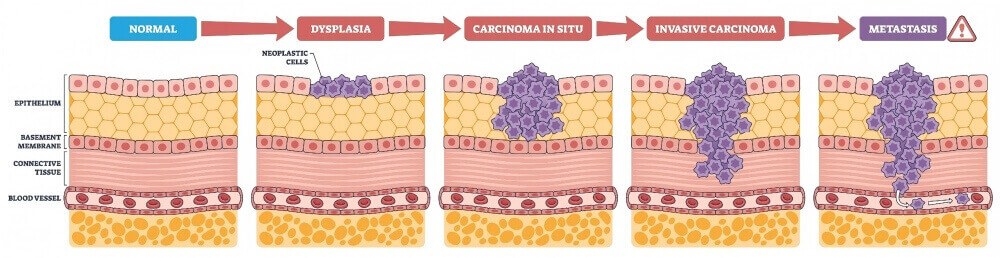 Fig. 1 Tumor progression manifestations.
The process of In Vivo Phage Display is a sophisticated orchestration of molecular biology and animal surgery.
A high-diversity phage library is intravenously injected into a tumor-bearing animal model.
The phages circulate through the systemic blood flow. During this time, they encounter various physiological barriers. Only those displaying "homing" ligands will bind to the tumor's unique vascular signatures or extravasate into the tumor mass.
To eliminate non-specifically bound or circulating phages, the animal is perfused with saline. The tumor and various control organs (heart, liver, spleen, etc.) are then harvested. Phages are recovered from the tissue homogenates.
The recovered phages are amplified in E. coli and used for subsequent rounds of injection. Typically, 3-5 rounds are required to achieve significant enrichment of tumor-specific binders.
Post-screening, candidates are validated via:
The peptides and antibodies discovered through our In Vivo Phage Display for Tumor platform serve as the foundation for various therapeutic modalities:
As an industry leader for 20 years, Creative Biolabs offers unparalleled depth in In Vivo Phage Library Screening.
To further your research, consider our integrated In Vivo Phage Library Screening Services modules:
Learn more about other Phage Display Library Screening Services:
Choosing the right partner for In Vivo Phage Library Screening is critical for the success of your drug development program. At Creative Biolabs, we combine world-class animal facilities, proprietary library technologies, and a team of PhD-level scientists to deliver results that move your project from the bench to the clinic.
Contact us today to discuss your Tumor Targeting In Vivo Phage Library Screening project.
Reference
All listed services and products are For Research Use Only. Do Not use in any diagnostic or therapeutic applications.