
Creative Biolabs is offering the most comprehensive services for antibody development projects. With strict regulation and effective execution, we are dedicated to providing the most valuable solutions to complete your projects.
HighlightsCreative Biolabs is offering the most comprehensive services for antibody development projects. With strict regulation and effective execution, we are dedicated to providing the most valuable solutions to complete your projects.
HighlightsCreative Biolabs has established a broad range of platforms for developing novel antibodies or equivalents. These cutting-edge technologies enable our scientists to meet your demands from different aspects and tailor the most appropriate solution that contributes to the success of your projects.
HighlightsWith deep understanding in antibody-related realms and extensive project experience, Creative Biolabs offers a variety of references to help you learn more about our capacities and achievements, including infographic, flyer, case study, peer-reviewed publications, and all kinds of knowledge that can assist your projects. You are also welcome to contact us directly for more specific solutions.
HighlightsGet a real taste of Creative Biolabs, one of the most professional custom service providers in the world. We are committed to providing highly customized comprehensive solutions with the best quality to advance your projects.
HighlightsAutoantibodies are an important cause of autoimmune diseases. However, its specific pathogenic mechanism is still unknown to us. Therefore, studying and testing autoantibodies helps us to further understand autoimmune diseases and, at the same time, further increases the possibility of treating autoimmune diseases. Based on our rich field experience and advanced technology platform, Creative Biolabs provides comprehensive services to support custom agonistic antibody and agonistic autoantibody discovery.
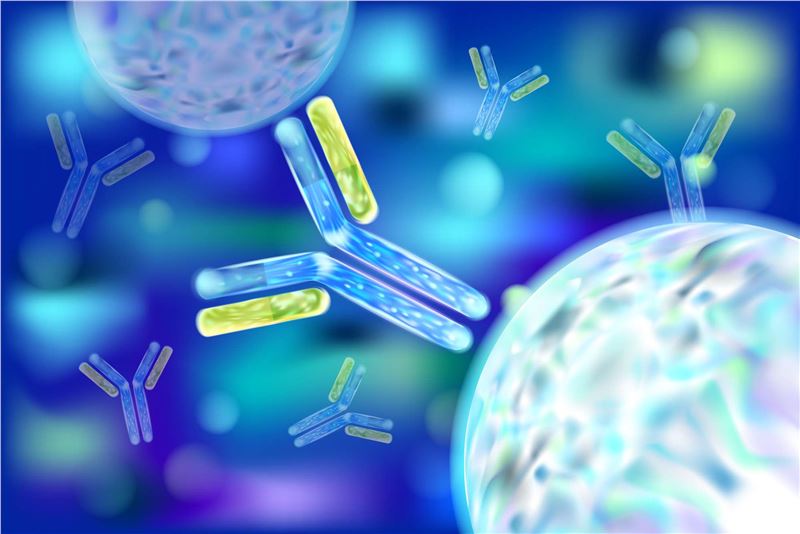 Fig 1. Antibodies.
Autoantibodies are antibodies produced by B cells against their own tissues, organs, cells, and cellular components that react against their own tissues or organs. Autoantibodies are categorized into organ-specific and organ-nonspecific autoantibodies, which can be directed against intracellular or extracellular components. Organ-specific antibodies are directed against specific tissue or organ antigenic components, leading to organ-specific autoimmune diseases such as insulin-dependent diabetes mellitus due to anti-insulin antibodies and Hashimoto's thyroiditis due to anti-thyroid microsomal antibodies. Organ non-specific antibodies are directed against the nucleus or plasma of cells and can react against all tissues and organs, causing systemic autoimmune diseases, such as systemic lupus erythematosus (SLE), rheumatoid arthritis (RA), and systemic sclerosis (SSc), which, in turn, can lead to secondary kidney damage.
The growth, development, and survival of the human body are maintained by an intact autoimmune tolerance mechanism, and a normal immune response is protective and defensive, i.e., it does not react against its own tissues and components. At the same time, the immune system does not overreact to substances in the environment (e.g., food) that do not pose a threat. Once the integrity of the self-tolerance is compromised and the immune system fails to recognize its own substances, the body sees its own tissues and components as "foreign" and produces autoantibodies in an autoimmune response. Once autoantibodies exceed a certain level, autoimmune diseases will be triggered. Antibodies are produced by the immune system when foreign proteins or other substances, especially disease-causing bacteria, enter the body and are used in the immune response to destroy harmful foreign substances. The reasons for the production of autoantibodies are not fully understood. On the one hand, it may be that some of the same molecular structures exist between disease-causing antigens (bacteria, viruses, etc.) and their own components, and an immune response that cross-reacts with the self-antigens occurs; on the other hand, it may be that certain infections denature the self-antigens and the immune system produces autoantibodies against these exposed new antigens.
Studies have found that many agonistic autoantibodies are strongly associated with disease. Anti-endothelial cell antibodies are associated with vascular endothelial damage in vasculitis and a variety of rheumatic diseases, such as leukoaraiosis, granulomatous polyangiitis, SLE, SSc, and Henoch-Schönlein purpura nephritis (HSPN). Antibody titers correlate with disease activity. Anti-platelet-derived growth factor receptor (PDGFR) antibodies are important autoantibodies. Anti-PDGFR antibodies induce the proliferation and migration of human pulmonary vascular smooth muscle cells in vitro. Anti-angiotensin II type 1 receptor (AT1R) antibody is also an important kind of autoantibody. Studies have shown that anti-AT1R antibodies in various cell types induce biological responses associated with the pathophysiology of vascular diseases, and are important targets for the treatment of related diseases. Endothelin-1 type A receptor (ETaR) belongs to the endothelin receptor group of the G protein-coupled receptor (GPCR) 1 family. Endothelin-1 receptor (ET-1R) regulates cell proliferation, survival, motility, angiogenesis, cytoskeletal changes, and drug resistance. Anti-ETaR antibodies are one of many autoantibodies found to be associated with allograft dysfunction. Studies have shown that anti-ETaR antibodies can activate their target receptors and affect signaling pathways. By gaining insight into the role of these autoantibodies, efforts to detect and remove these pathogenic autoantibodies or to block their action will offer promising therapeutic possibilities.
Autoantibody Discovery by Phage Display
Anti-endothelial Cells Antibody (AECA) Introduction
Anti-PDGFR Antibody Introduction
Anti-AT1R Antibody Introduction
Anti-ETaR Antibody Introduction
Creative Biolabs has a wealth of knowledge and experience in custom agonistic antibodies. We would be happy to share with you our knowledge and experience in agonistic autoantibody discovery by phage display.
All listed services and products are For Research Use Only. Do Not use in any diagnostic or therapeutic applications.








