Creative Biolabs is offering the most comprehensive services for antibody development projects. With strict regulation and effective execution, we are dedicated to providing the most valuable solutions to complete your projects.
HighlightsCreative Biolabs is offering the most comprehensive services for antibody development projects. With strict regulation and effective execution, we are dedicated to providing the most valuable solutions to complete your projects.
HighlightsCreative Biolabs has established a broad range of platforms for developing novel antibodies or equivalents. These cutting-edge technologies enable our scientists to meet your demands from different aspects and tailor the most appropriate solution that contributes to the success of your projects.
HighlightsWith deep understanding in antibody-related realms and extensive project experience, Creative Biolabs offers a variety of references to help you learn more about our capacities and achievements, including infographic, flyer, case study, peer-reviewed publications, and all kinds of knowledge that can assist your projects. You are also welcome to contact us directly for more specific solutions.
HighlightsGet a real taste of Creative Biolabs, one of the most professional custom service providers in the world. We are committed to providing highly customized comprehensive solutions with the best quality to advance your projects.
HighlightsThe immune system is activated when foreign objects, such as viruses and bacteria, enter the body or when cells in the body decline, die, or become diseased. The activation of the immune system starts to remove "foreign particles" without over-activating the immune system and harming the normal cells of the body. Immune checkpoints are inhibitory pathways in the immune system that are regulated by ligand/receptor interactions. It plays an important role in maintaining autoimmune tolerance and in regulating the duration and magnitude of a vital immune response so that the immune system does not damage normal tissues. Immune checkpoint agonists synergistically stimulate protein signaling and are able to temporally and intensely enhance the immune response of immune cells to pathogens. As research has progressed, it has become clear that immune checkpoint agonists have an important role to play in areas such as tumor therapy. Based on our rich field experience and advanced research platform, Creative Biolabs provides comprehensive services to support custom agonistic antibodies and checkpoint agonistic antibodies.
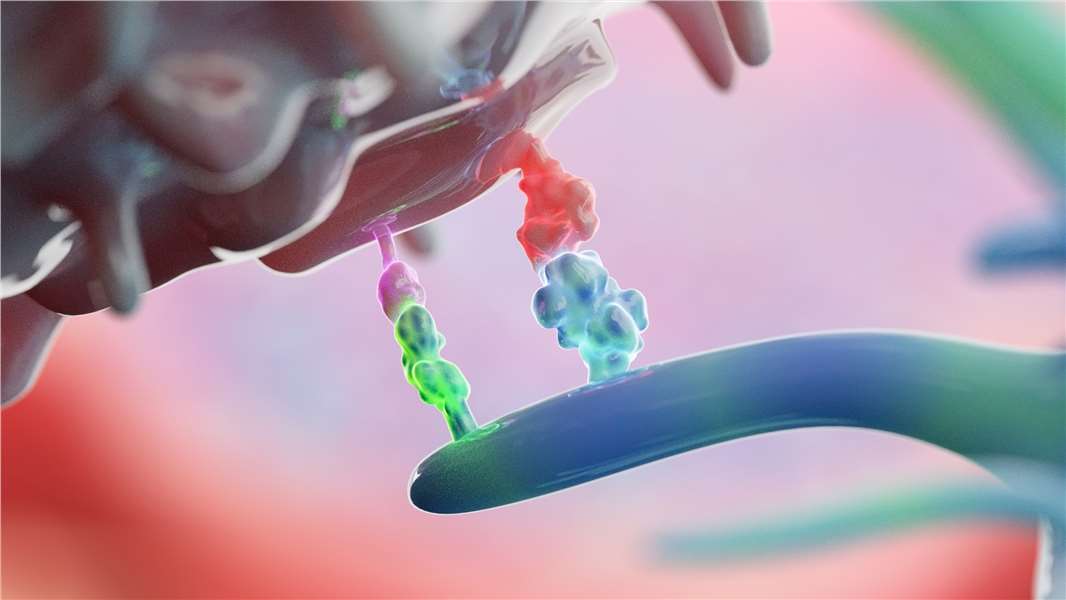 Fig 1. Immune checkpoint molecules.
Currently, many pharmaceutical companies lay out a pipeline of immune checkpoint-based antibody drug development. They play an important role in areas such as immune diseases and tumor therapy. For example, B7-CD28 (Cluster of Differentiation 28) is a popular target. B7 family members are important co-stimulatory molecules, belong to the immunoglobulin family, and consist of structurally related cell surface protein ligands. B7 can bind to the receptor CD28 on lymphocytes and regulate immune responses through co-stimulatory and co-inhibitory signaling. The current development of the anti-B7-CD28 family agonistic antibody has progressed significantly over the past decade. TNFRSF is a large and functionally diverse family of receptors with associated structures that mediate a range of immune and non-immune cellular functions. Of the 29 receptors known to belong to this family, six act primarily as immune co-stimulatory factors, namely CD40, OX40, 4-1BB (CD137), CD27, GITR (glucocorticoid-induced TNFR-associated protein), and CD30. Other family members, such as DR3 (death receptor 3), TNFR1, TNFR2, LTβR (lymphotoxin β receptor), and HVEM (herpesvirus entry mediator), also have the potential for immune co-stimulation. Six co-stimulatory receptors, such as CD40, can be expressed in many types of immune cells, including T cells, B cells, natural killer (NK) cells, and antigen-presenting cells (APCs) and can drive immune cell function, proliferation, and survival. The death receptor is another subclass of TNFRSF that can also mediate immune activity under certain circumstances. Overall, the anti-TNFR-SF agonistic antibody is a very promising candidate for tumor therapy. Stimulators of interferon genes, also known as STING, are members of a family of transmembrane proteins responsible for regulating the immune response in mammals. Studies have shown that STING can produce type I interferon (IFN) in response to an infection to activate innate immunity to a variety of pathogens, including different species of viruses, bacteria, and parasites. Scientists hypothesize that it can be expressed in many cell types, such as T cells, dendritic cells (DCs), and macrophages. In addition, the STING pathway or type I IFN profile has been associated with T cell responses to different types of tumor cells in preclinical or clinical trials. Therefore, several anti-STING agonistic antibodies, such as c-di-GMP and c-di-AMP, have been developed to enhance strong immune responses in patients or animal models. In addition, there are anti-IL2 agonist antibodies, which have likewise demonstrated powerful therapeutic effects in tumor therapy and are potential tumor treatment modalities.
More Details on Checkpoint Agonistic Antibody Discovery by Phage Display
Anti-TNFR-SF Agonistic Antibody Introduction
Anti-B7-CD28 Family Agonistic Antibody Introduction
Anti-IL-2 Agonistic Antibody Introduction
Anti-STING Agonistic Antibody Introduction
Creative Biolabs has a wealth of knowledge and experience in phage display. We would be happy to share with you our knowledge and experience in agonistic antibody discovery and checkpoint agonistic antibody discovery.
All listed services and products are For Research Use Only. Do Not use in any diagnostic or therapeutic applications.