
Creative Biolabs is offering the most comprehensive services for antibody development projects. With strict regulation and effective execution, we are dedicated to providing the most valuable solutions to complete your projects.
HighlightsCreative Biolabs is offering the most comprehensive services for antibody development projects. With strict regulation and effective execution, we are dedicated to providing the most valuable solutions to complete your projects.
HighlightsCreative Biolabs has established a broad range of platforms for developing novel antibodies or equivalents. These cutting-edge technologies enable our scientists to meet your demands from different aspects and tailor the most appropriate solution that contributes to the success of your projects.
HighlightsWith deep understanding in antibody-related realms and extensive project experience, Creative Biolabs offers a variety of references to help you learn more about our capacities and achievements, including infographic, flyer, case study, peer-reviewed publications, and all kinds of knowledge that can assist your projects. You are also welcome to contact us directly for more specific solutions.
HighlightsGet a real taste of Creative Biolabs, one of the most professional custom service providers in the world. We are committed to providing highly customized comprehensive solutions with the best quality to advance your projects.
Highlights
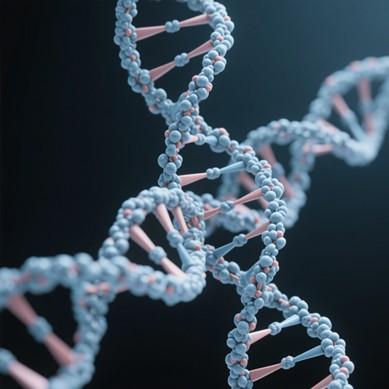
The Lambda phage is a temperate bacteriophage of Escherichia coli characterized by its sophisticated 48.5 kb double stranded DNA (dsDNA) genome and a complex head and tail morphology. Unlike filamentous phages that undergo secretion through the bacterial membrane, Lambda phage assembly occurs entirely within the host cytoplasm.This intracellular maturation is the cornerstone of its utility in display technology.
The Lambda genome is strategically organized into three functional clusters:
 The Left hand Region
Responsible for the structural components, including the packaging and assembly of the DNA into the prohead.
The Central Region
Contains genes for lysogeny maintenance and non essential regions that can be replaced with large exogenous DNA inserts without compromising the phage's structural integrity.
The Right hand Region
Orchestrates DNA replication and the eventual lysis of the host cell.
In a Lambda phage display system, exogenous peptides or proteins are typically fused to either the gpV (tail) or gpD (capsid) proteins. The gpV protein forms the tubular tail consisting of 32 hexameric disks; its C terminal domain is non essential and can accommodate the insertion of foreign sequences. Alternatively, the gpD protein, an 11 kDa capsid protein, acts as a stabilizer for the phage head. Because the D protein is added to the capsid during the final stages of maturation, it serves as a highly accessible scaffold for displaying large, folded proteins on the exterior of the virion.
The shift toward Lambda phage display is driven by several technical advantages that address the limitations of the pIII/pVIII M13 systems.

At Creative Biolabs, our M13 phage display platform is built upon decades of expertise in antibody engineering, protein science, and phage biology. We understand that each discovery project presents unique technical challenges; therefore, our platform is designed to offer flexibility, robustness, and scalability across a wide range of binder discovery applications.
Our platform integrates advanced bioinformatics, rational library design, and optimized phage display workflows to support efficient presentation and selection of antibodies, peptides, and engineered protein binders. Through careful construct engineering and host optimization, we ensure reliable display performance while minimizing selection bias and maintaining library integrity.
To maximize discovery success, we employ a rigorous quality control pipeline, including library characterization based on NGS, to verify library diversity, representation, and sequence quality prior to screening. This driven approach enables informed selection strategies and improves the efficiency of downstream enrichment and affinity maturation.
Together, these capabilities provide a highly controlled and reproducible M13 phage display environment, empowering our clients to efficiently identify and optimize high performance binders for therapeutic, diagnostic, and research applications.
Creative Biolabs offers a comprehensive suite of services designed to accelerate drug discovery and diagnostic development. Our core expertise lies in M13 phage display–based binder discovery, supporting antibody, peptide, and protein engineering from initial library design through lead optimization and affinity maturation.
We design and construct high quality M13 phage display libraries, including naïve, immune, synthetic formats. Library architectures are tailored to specific requirements, enabling efficient presentation of antibody fragments, peptides, and engineered protein domains with robust diversity and display stability.
Utilizing high throughput biopanning strategies, we identify high affinity binders against various targets, including whole cells, membrane proteins, and small molecules.
Our platform is optimized for the selection of scFv, Fab, and single domain formats with superior folding characteristics.
We design and screen cyclic or linear peptide libraries for targeting specific protein interfaces.
We apply selective pressure during the panning process to isolate binders that remain functional under extreme thermal or chemical conditions.
For therapeutic applications like endosomal escape or tumor microenvironment targeting, we develop binders that exhibit conditional binding kinetics.
Creative Biolabs remains at the vanguard of bacteriophage research, providing the scientific community with the tools necessary to decode complex biological interactions. Whether you are developing the next generation of neutralizing antibodies or seeking a novel peptide binder, our Phage Display System provides the robustness and versatility your research demands.
Overcome Your Display Challenges.
Accelerate Your Binder Discovery.
All listed services and products are For Research Use Only. Do Not use in any diagnostic or therapeutic applications.








