Phage Display Systems in Biotechnology
Introduction T4 Phage λ Phage M13 Phage T7 Phage Selection
Introduction to Phage Display Systems
Phage surface display of peptides or proteins makes phage display a strong in vitro tool for protein interaction studies and biomolecule design. This procedure involves integrating a gene that encodes the desired protein into the phage genome which leads to expression of the fusion protein on the phage's outer coat. The phage display technology facilitates high-throughput identification of peptides, proteins, and antibodies that specifically attach to target molecules from extensive molecular libraries.
Phage display systems have brought transformative changes to biotechnology by enabling advances in therapeutic antibody development as well as vaccine development and the generation of novel proteins. Researchers use phage surface-displayed peptides and proteins to rapidly pinpoint functional molecules suitable for therapeutic use. The technology enables scientists to find disease-specific antibodies and identify peptide-based therapeutic candidates while screening for enzyme inhibitors. Phage display technology has hastened the identification of monoclonal antibodies and biologics which leads to quicker and more effective pharmaceutical development. Through its development of new functional materials, this platform becomes essential in creating targeted therapies while advancing diagnostics and material science.
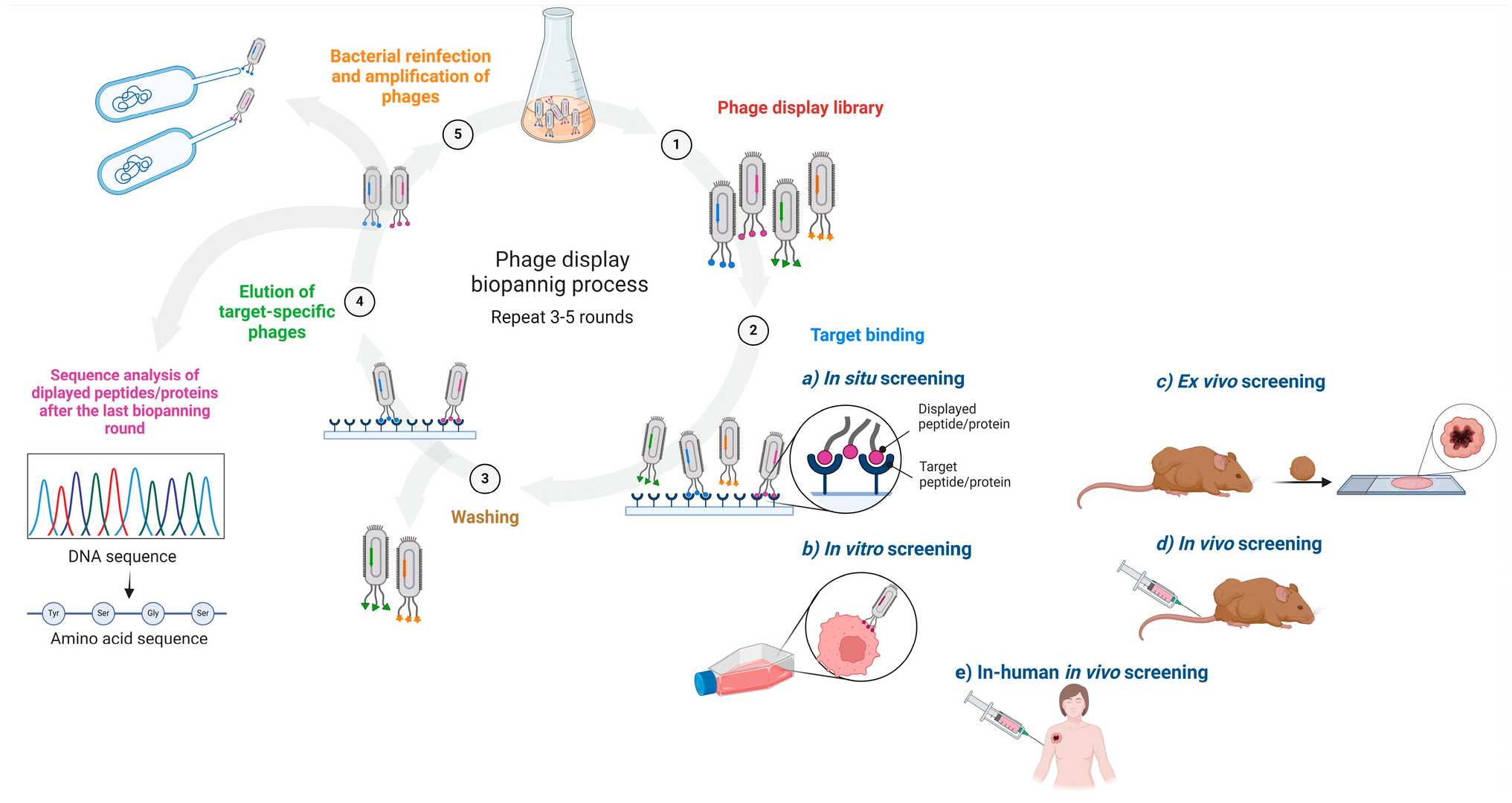 Fig. 1 Schematic of an affinity-driven process in which phage-displayed libraries are screened against a variety of targets and target-specific phage-displayed (poly)peptides (e.g., novel cancer ligands) are subsequently identified.1, 4
Different types of bacteriophages function as the basis for phage display technology which enables peptides or proteins to be displayed on their surfaces. Diverse bacteriophages exhibit distinct characteristics along with specific applications and advantages. Below is a detailed exploration of the main types of phage display systems: T4, λ, M13, and T7.
Characteristics of T4 Phage Display System
T4 bacteriophage is a relatively large containing double-stranded DNA which specifically infects Escherichia coli bacteria. The phage acts as a lytic agent while its complex structure encompasses a head section along with tail and baseplate components. Its large genome size enables the T4 phage to display various peptides and proteins on its surface.
-
Genome Size: 169 kb
-
Structure: Icosahedral capsid with a tail structure
-
Infection Mechanism: A phage kills its infected bacterial host by following a lytic lifecycle pattern.
-
Display Mechanism: Researchers incorporate the gene responsible for the protein or peptide under study into structural protein genes
like the major coat protein gene to generate a surface-exposed fusion protein on the phage.
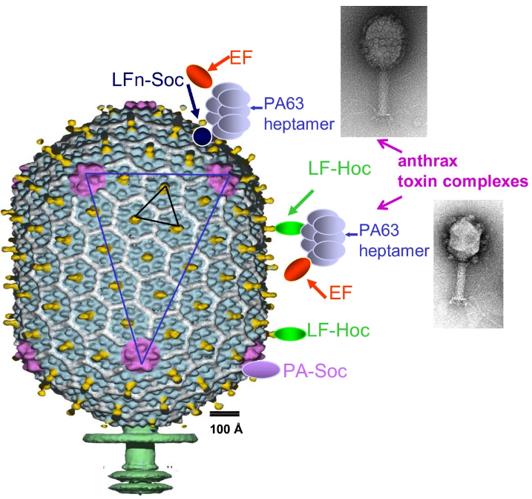 Fig. 2 In vitro display of antigens on bacteriophage T4 capsid.2
Advantages of T4 Phage Display System
-
Large Protein Insertion: The extensive genome of T4 allows for larger proteins and peptides to be displayed which makes it particularly suitable for studying complex molecular interactions.
-
Stable and Robust: T4 phages maintain their stability across diverse conditions which allows for their effective storage and handling over extended periods.
-
Strong Binding Affinity: T4 phages are effective for generating high-affinity interactions with antibodies which produces dependable outcomes for binding studies.
Applications of T4 Phage Display System
-
Antibody Engineering: The T4 phage display technique remains a standard approach used by scientists to create antibodies targeting antigens associated with cancer and autoimmune diseases.
-
Protein-Protein Interaction Studies: The technique enables scientists to study interactions between large proteins and their complexes which are essential for cellular signaling and molecular biology research.
-
Peptide Ligand Screening: Scientists employ T4 phage display system in high-throughput screening procedures to identify peptide library ligands which bind to proteins or cellular receptors.
Characteristics of λ Phage Display System
The λ phage serves as a temperate bacteriophage which targets E. coli cells. The λ phage displays two life cycles that give scientists enhanced power to regulate its replication process. Researchers frequently utilize λ phage in recombinant DNA technology due to its well-understood genetic structure.
-
Genome Size: 48.5 kb
-
Structure: The λ phage possesses a linear DNA genome with tail fibers designed for host attachment.
-
Lifecycle: The λ phage uniquely integrates into the host genome through lysogeny which facilitates its maintenance and replication over extended durations.
-
Display Mechanism: The process for displaying peptides or proteins on the phage surface involves their fusion with the gene that encodes one of the phage structural proteins, typically the major coat protein.
Advantages of λ Phage Display System
-
High Flexibility: Researchers have developed λ phage systems to serve multiple applications because of their high adaptability which includes the construction of peptide and protein libraries.
-
Controlled Replication: Researchers benefit from phage systems which allow them to manage replication and lifecycle since this feature enables precise control of gene expression levels required for scientific experiments.
-
Efficient for DNA Packaging: λ phage demonstrates excellent capabilities for DNA packaging and this feature makes it ideal for developing extensive recombinant protein libraries.
Applications of λ Phage Display System
-
Peptide Screening: Researchers frequently use λ phage systems to perform screenings on peptide libraries with the aim of discovering drugs that interact with receptor targets or protein biomarkers.
-
Functional Genomics: The technique of λ phage display enables researchers to study protein functions in biological systems through high-throughput functional screening methods.
-
Protein Engineering: This technique enables scientists to modify proteins which leads to the creation of novel biocatalysts or bioactive compounds.
Characteristics of M13 Phage Display System
The bacteriophage M13 exists as a filamentous structure with its distinct extended and flexible form. Unlike other bacteriophages M13 stands out because it contains single-stranded DNA and maintains a much lengthier lifecycle. M13 bacteriophage efficiently displays peptides and proteins through its display system with exceptional efficiency.
-
Genome Size: 6.4 kb
-
Structure: Filamentous, single-stranded DNA
-
Lifecycle: M13 maintains a persistent infection cycle which preserves the host bacterium and enables the phage to propagate continuously over time.
-
Display Mechanism: The phage surface displays peptides or proteins through fusion to genes that encode major coat proteins like the pVIII protein.
Advantages of M13 Phage Display System
-
High Display Stability: M13 offers a stable surface display, which is crucial for the analysis of peptide and protein libraries over extended periods.
-
Ease of Production: The production process of M13 phage allows easy scalability which makes it appropriate for extensive applications.
-
Versatility: This system supports antibody selection and vaccine development applications while allowing the display of diverse peptides and proteins.
Applications of M13 Phage Display System
-
Antibody Engineering: The M13 system functions as the foundational platform to construct a range of therapeutic phage antibody libraries that target multiple antigens.
-
Vaccine Development: Through epitope screening of pathogens M13 phage display technology produces peptide-based vaccines for immune response activation.
-
Peptide Screening: Through high-throughput peptide screening techniques scientists find new enzyme inhibitory peptides that act as receptor ligands and drug delivery agents.
Characteristics of T7 Phage Display System
T7 phage is a lytic bacteriophage that infects E. coli. It is a smaller phage compared to others like T4 and M13 and is commonly used for applications that require rapid results.
-
Genome Size: 40 kb
-
Structure: Icosahedral, with a distinct tail structure for host interaction
-
Lifecycle: Lytic (phage causes the death of the host bacterium following infection)
-
Display Mechanism: T7 phage display utilizes the pVIII major coat protein to present the recombinant peptide or protein on the phage surface.
Advantages of T7 Phage Display System
-
Rapid Growth and High Yield: The rapid lifecycle of T7 phage enables quick propagation which results in a high production rate of recombinant phages.
-
Efficient Protein Production: T7's efficient protein production makes it an optimal choice for creating extensive libraries that can be used in screening processes.
-
Small Genome: The manageable size of T7's genome makes it perfect for experiments with smaller proteins or peptides due to its compatibility with manipulation.
Applications of T7 Phage Display System
-
Biomarker Discovery: Scientists apply T7 phage in biomarker research since it presents peptides effectively for identifying proteins linked to diseases.
-
Drug Discovery: The high-throughput drug screening method enables the discovery of small molecules and peptides that bind to enzyme inhibitors and drug targets.
-
Protein-Protein Interaction Studies: Biological research uses T7 phage display as a method to analyze protein-protein interactions and discover new binding partners.
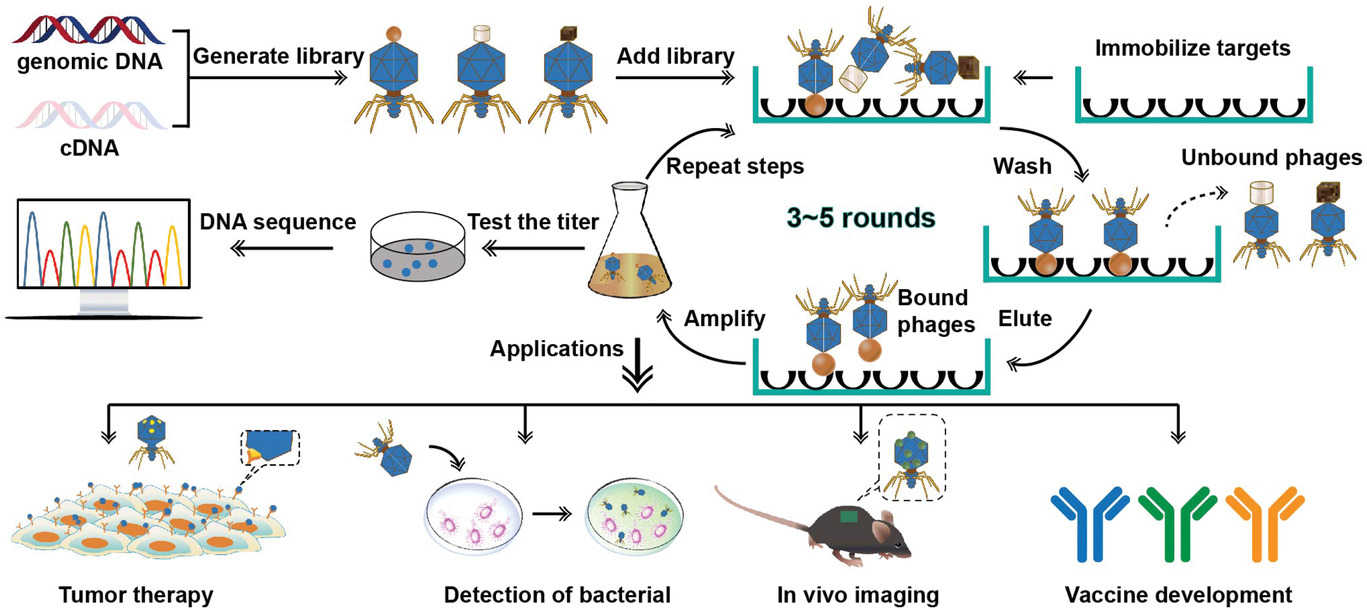 Fig. 3 Use of a T7 phage based library to select targeting peptides for different biomedical applications.3, 4
Selecting the Right Phage for Display Systems
The ideal phage display system depends on multiple factors which include the specific application requirements, the molecular size of peptides or proteins to be displayed and the output desired by the researcher. This comparative table serves as a guide through the decision-making process.
Table 1. Comparison of Phage Types
|
Phage Type
|
Genome Size
|
Lifecycle
|
Display Capacity
|
Advantages
|
Common Applications
|
|
T4
|
169 kb
|
Lytic
|
Large
|
High stability, large protein display
|
Antibody engineering, protein interaction
|
|
λ
|
48.5 kb
|
Temperate
|
Medium
|
Flexible, controlled replication
|
Peptide screening, protein engineering
|
|
M13
|
6.4 kb
|
Chronic
|
Small-Medium
|
Easy to produce, stable display
|
Vaccine development, peptide screening
|
|
T7
|
40 kb
|
Lytic
|
Small
|
Rapid growth, high yield
|
Drug discovery, biomarker discovery
|
Selecting the right phage for a display system requires consideration of several factors.
-
Target Protein Size: Phages such as T4 are needed for larger proteins because their larger genome size permits the inclusion of bigger proteins.
-
Application Type: The M13 and T7 phages are common choices for antibody and peptide screening because they provide high stability and efficient display capabilities.
-
Phage Lifecycle: The choice of lytic (T4, T7) or temperate (λ) lifecycle impacts the choice depending on the required experimental control.
-
Display Capacity: If high-affinity binding and diverse libraries are needed, phages with large genomes like T4 are preferable.
References
-
Brišar, Nuša, Katja Šuster, and Andrej Cör. "Preparation of Phage Display cDNA Libraries for Identifying Immunogenic Tumor Antigens: Challenges in Functional cDNA Presentation and Approaches to Overcoming Them." Viruses 16.12 (2024): 1855.
-
Rao, Venigalla B., and Lindsay W. Black. "Structure and assembly of bacteriophage T4 head." Virology journal 7 (2010): 1-14. Distributed under Open Access license CC BY 2.0, without modification.
-
Yue, Hui, et al. "T7 phage as an emerging nanobiomaterial with genetically tunable target specificity." Advanced Science 9.4 (2022): 2103645.
-
Distributed under Open Access license CC BY 4.0, without modification.
All listed services and products are For Research Use Only. Do Not use in any diagnostic or therapeutic applications.