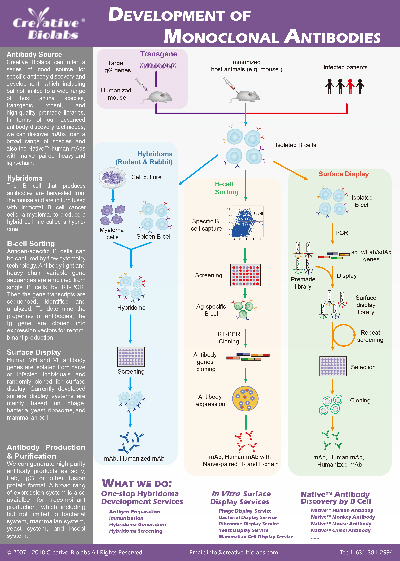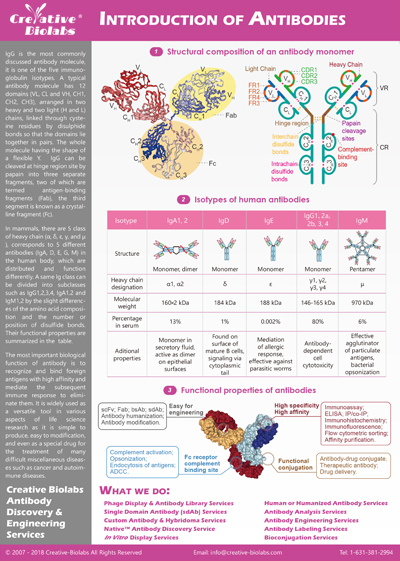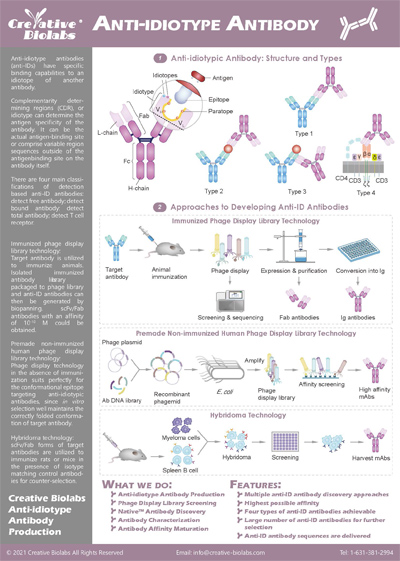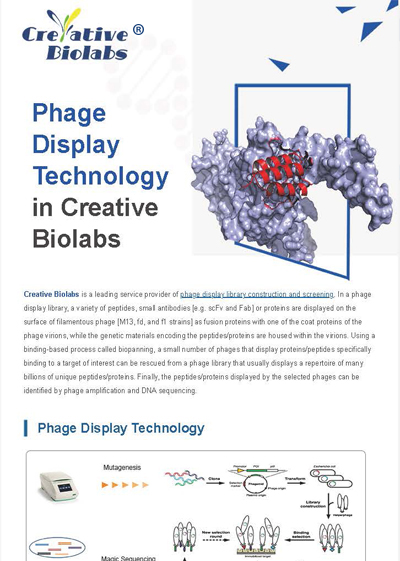
Creative Biolabs is offering the most comprehensive services for antibody development projects. With strict regulation and effective execution, we are dedicated to providing the most valuable solutions to complete your projects.
HighlightsCreative Biolabs is offering the most comprehensive services for antibody development projects. With strict regulation and effective execution, we are dedicated to providing the most valuable solutions to complete your projects.
HighlightsCreative Biolabs has established a broad range of platforms for developing novel antibodies or equivalents. These cutting-edge technologies enable our scientists to meet your demands from different aspects and tailor the most appropriate solution that contributes to the success of your projects.
HighlightsWith deep understanding in antibody-related realms and extensive project experience, Creative Biolabs offers a variety of references to help you learn more about our capacities and achievements, including infographic, flyer, case study, peer-reviewed publications, and all kinds of knowledge that can assist your projects. You are also welcome to contact us directly for more specific solutions.
HighlightsGet a real taste of Creative Biolabs, one of the most professional custom service providers in the world. We are committed to providing highly customized comprehensive solutions with the best quality to advance your projects.
Highlights
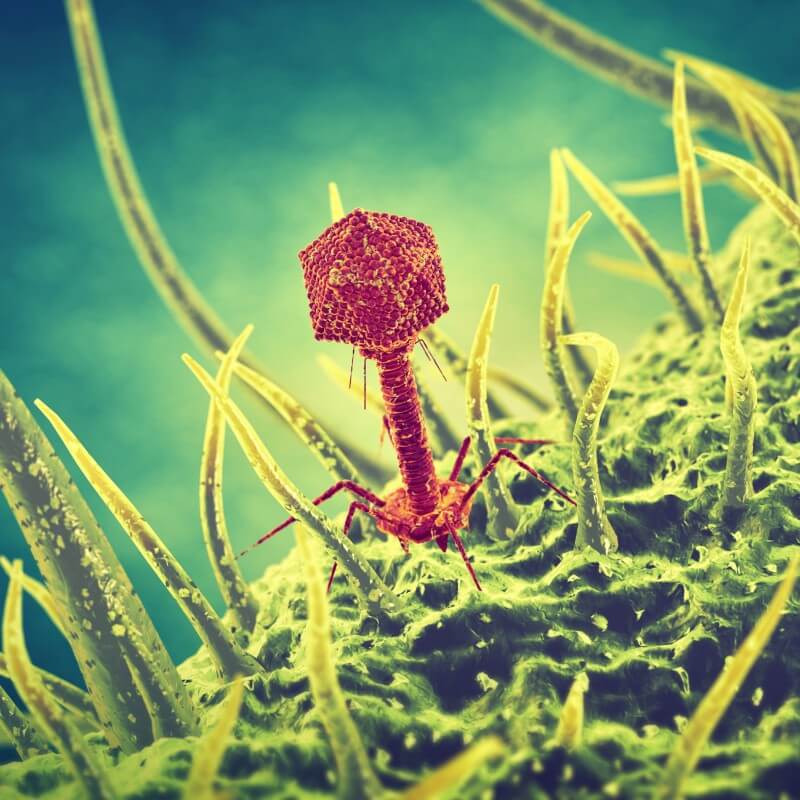
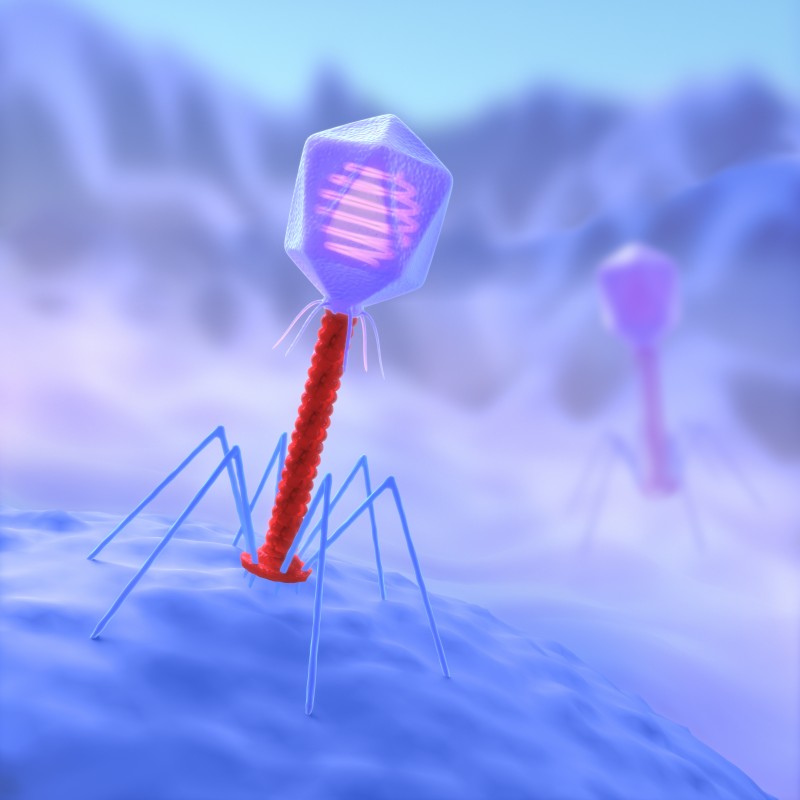
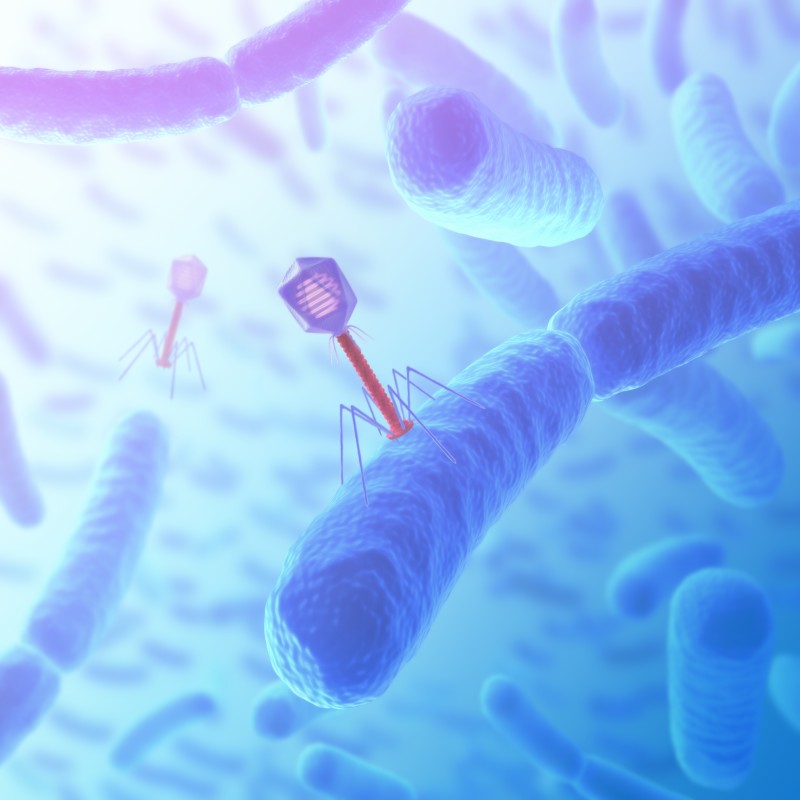
Building genomic libraries with lambda phage has changed how we approach large-scale genomic studies. It merges the reliable nature of bacteriophage with advanced molecular engineering. Lambda phage, a temperate bacteriophage of Escherichia coli, is uniquely suited for genome library construction due to its ability to package DNA fragments up to 50 kb—nearly triple the capacity of plasmid-based systems. Its dual lytic and lysogenic life cycles further enhance utility: in the lytic phase, rapid virion assembly enables high-throughput library production, while lysogeny allows stable integration of recombinant DNA into host genomes for long-term storage.
A critical advantage of lambda phage lies in its cos sites—12-base cohesive termini that facilitate precise in vitro packaging of exogenous DNA into pre-assembled capsids. This mechanism bypasses host recombination pathways, minimizing bias and preserving genomic integrity. For instance, libraries derived from Streptococcus pneumoniae have identified novel antigenic epitopes by screening convalescent sera, demonstrating the platform's utility in vaccine development.
Despite its versatility, lambda phage library construction faces challenges, including fragment size bias and host compatibility. Innovations such as size-selection agarose gels and E. coli host strains with suppressed restriction-modification systems now mitigate these limitations. Furthermore, integration with next-generation sequencing (NGS) validates library completeness, while lyophilization with cryoprotectants ensures long-term stability. As synthetic biology demands increasingly robust genomic resources, lambda phage libraries stand poised to accelerate discoveries in metagenomics, synthetic pathway engineering, and precision medicine.
Build Powerful Libraries. Connect With Our Team.
Integrating deep knowledge of lambda phage with cutting-edge automated systems, Creative Biolabs crafts bespoke solutions to meet diverse genomic research needs.

Extract high-purity, high-molecular-weight DNA from your samples (tissue, blood, or environmental sources). We fragment the DNA into 15–25 kb segments optimized for lambda phage packaging.
Clone DNA fragments into lambda phage arms using restriction enzyme digestion and T4 ligase. Our pre-engineered lambda vectors ensure efficient recombination and large insert capacity.
We use in vitro methods to enclose recombinant DNA within the protein shells of lambda phage, creating infectious particles. Amplify the library in E. coli hosts to achieve titers >109 PFU/mL.
Verify library integrity through plaque assays, insert size checks, and sequencing of randomly selected clones. Optional NGS validation confirms genome-wide coverage.
Tailor libraries for specific needs:
Drive Discovery Forward. Schedule a Call Today.
Researchers investigating ovine luteinizing hormone beta (LH-β)—a pivotal reproductive regulator—constructed a high-complexity genomic library using lambda gt10 vectors to map its promoter architecture. Biopanning identified a novel 1,224 bp upstream regulatory region, with 503 bp exhibiting no homology to existing databases. Crucially, luciferase assays revealed this uncharacterized segment boosted promoter activity by 12-fold compared to the conserved proximal region, suggesting a dominant enhancer-like function. Analysis predicted 23 transcription factor binding motifs, including two palindromic sequences (17/18 bp) unique to ruminants, potentially mediating species-specific reproductive signaling. The study's success hinged on lambda phage's capacity to preserve large genomic fragments (>15 kb), enabling seamless cloning of intact regulatory domains—a feat unattainable with plasmid or BAC systems. In addition to redefining LH-β regulation, this study validates lambda phage libraries as indispensable tools for pinpointing cryptic regulatory elements within complex genomes, especially for non-model organisms. Such precision underscores how our lambda phage-based services empower researchers to decode transcriptional landscapes with nucleotide-level resolution, accelerating discoveries in endocrinology and beyond.
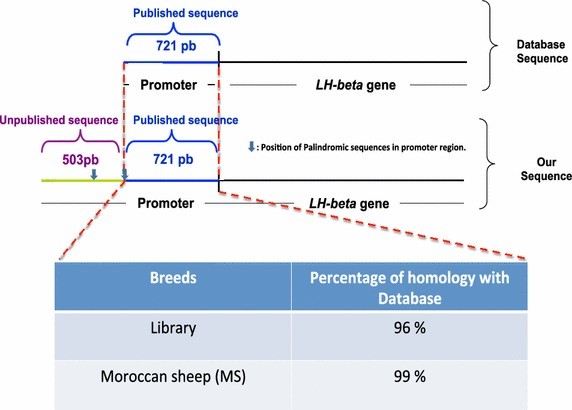 Fig.2 Cloned the LH-β gene from a sheep genomic library by constructing lambda phage.1
Optimize Your Research. Talk to Our Experts.

Accommodate DNA fragments up to 50 kb—ideal for capturing gene clusters, regulatory regions, and repetitive elements.
Achieve >90% recombinant rates through optimized ligation stoichiometry and cos site-mediated packaging.
Process 1 μg to 1 mg of input DNA with linear scalability, ensuring consistency across research and industrial projects.
Access bioinformatics pipelines for sequence annotation, host compatibility guidelines, and troubleshooting protocols.
Lambda phage-based genome libraries bridge classical molecular biology and modern genomics, offering unparalleled resolution for decoding complex genomes. With applications spanning infectious disease research, synthetic biology, and environmental microbiology, Creative Biolabs empowers researchers to explore genomic dark matter with precision. Whether identifying novel pathogens or engineering synthetic gene circuits, lambda phage libraries provide the foundational tools for groundbreaking discovery.
Transform Ideas into Data. Request Expert Support.
Accelerate Breakthroughs. Partner With Our Scientists.
Use the resources in our library to help you understand your options and make critical decisions for your study.

Reference
All listed services and products are For Research Use Only. Do Not use in any diagnostic or therapeutic applications.