Creative Biolabs is offering the most comprehensive services for antibody development projects. With strict regulation and effective execution, we are dedicated to providing the most valuable solutions to complete your projects.
HighlightsCreative Biolabs is offering the most comprehensive services for antibody development projects. With strict regulation and effective execution, we are dedicated to providing the most valuable solutions to complete your projects.
HighlightsCreative Biolabs has established a broad range of platforms for developing novel antibodies or equivalents. These cutting-edge technologies enable our scientists to meet your demands from different aspects and tailor the most appropriate solution that contributes to the success of your projects.
HighlightsWith deep understanding in antibody-related realms and extensive project experience, Creative Biolabs offers a variety of references to help you learn more about our capacities and achievements, including infographic, flyer, case study, peer-reviewed publications, and all kinds of knowledge that can assist your projects. You are also welcome to contact us directly for more specific solutions.
HighlightsGet a real taste of Creative Biolabs, one of the most professional custom service providers in the world. We are committed to providing highly customized comprehensive solutions with the best quality to advance your projects.
HighlightsIn the intricate landscape of drug discovery and molecular targeting, the transition from in vitro cell cultures to in vivo animal models often presents a "valley of death" where promising candidates fail due to the loss of physiological relevance or excessive biological complexity. Creative Biolabs offers a sophisticated Ex Vivo Phage Library Screening service, providing a robust bridge that maintains the architectural integrity of organs while offering the controllability of a laboratory environment. Our ex vivo phage screening platform leverages the power of bacteriophage display to identify high-affinity ligands (peptides, antibodies, or scaffolds) that bind to specific cell types within their native tissue context. Unlike standard cell-based panning, our ex vivo phage display approach preserves the extracellular matrix (ECM), cell-cell interactions, and the spatiotemporal distribution of receptors, ensuring that the identified hits are highly translatable to clinical applications.
The biological fidelity of ex vivo phage library selection offers unparalleled advantages:
Table 1. Comparison of Screening Modalities
| Feature | In Vitro (Cell Culture) | Ex Vivo (Tissue/Organ) | In Vivo (Animal) |
| Physiological Relevance | Low | High | Very High |
| Complexity Control | Easy | Moderate | Difficult |
| Tissue Microenvironment | Absent | Preserved | Fully Integrated |
| Bioavailability Insight | None | Partial | High |
| Cost-Efficiency | High | High | Low |
Creative Biolabs has pioneered a customized ex vivo phage screening workflow that integrates cutting-edge micro-perfusion systems and AI-driven bioinformatics. Our platform is compatible with various phage systems, including M13, T7, and T4, tailored to the specific requirements of the project.
We maintain a vast repository of Ex Vivo Phage Libraries, including:
The success of ex vivo phage library screening hinges on the health of the tissue. We utilize oxygenated physiological buffers and temperature-controlled perfusion chambers to ensure the proteomic landscape of the tissue remains unchanged during the incubation period.
Our experts employ a multi-step selection process:
Table 2. Key Technical Parameters of our Service
| Parameter | Specification |
| Phage Systems | M13, T7, T4, λ phage |
| Library Diversity | 108 to 1012 individual clones |
| Tissue Types | Biopsy, Whole Organ, Sliced Tissue (Vibratome) |
| Analysis Method | NGS, ELISA, Sanger Sequencing, LC-MS/MS |
| Validation Capability | Immunohistochemistry (IHC), SPR/BLI, In Vivo Imaging |
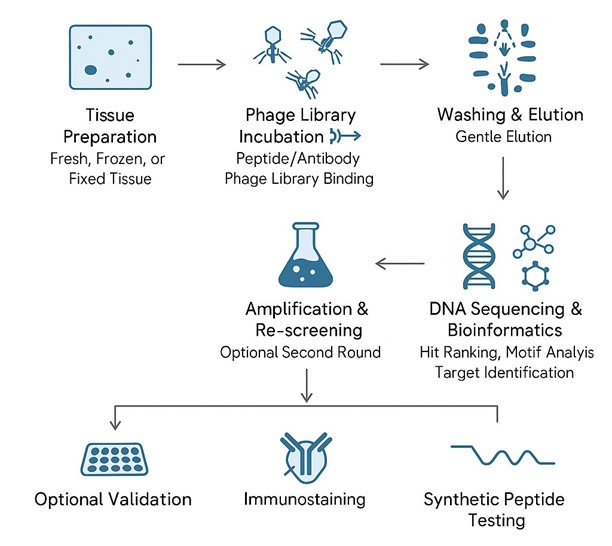 Fig. 1 Procedure for ex vivo phage display selection.
Our customized ex vivo phage screening services have been instrumental in several high-impact research areas:
With over two decades of experience, Creative Biolabs is more than a service provider; we are your scientific partner. Our Ex Vivo Phage Library Screening service is backed by:
Learn more about other Phage Display Library Screening Services:
Ready to elevate your drug discovery program with our Ex Vivo Phage Library Screening? Our experts are available to discuss your specific project requirements and design a customized ex vivo phage screening strategy that meets your goals.
Reference
All listed services and products are For Research Use Only. Do Not use in any diagnostic or therapeutic applications.