Exosome-Hybrid Liposome Development Service for Targeted Drug Delivery
Exosome-liposome hybrids represent a paradigm shift, merging the biocompatibility and natural tropism of extracellular vesicles with the high loading capacity and engineering flexibility of synthetic liposomes. This synergistic approach addresses critical challenges in pharmacokinetics, such as immune clearance and endosomal trapping. At Creative Biolabs, we leverage our proprietary Modular Delivery Systems platform to engineer high-purity, stable hybrid nanovesicles, positioning us as the premier partner for accelerating your advanced drug delivery programs from discovery to preclinical validation.
Start Your Exosome-Hybrid Liposomes Project
The Science of Hybrid Nanovesicles
Understanding the Building Blocks: Liposomes vs. Exosomes
To fully understand the strategic advantage of hybrid technology, it is essential to analyze the distinct characteristics of its constituent components. By integrating the robust engineering of synthetic liposomes with the inherent biological sophistication of exosomes, we create a superior delivery modality that addresses the limitations of monotherapies.
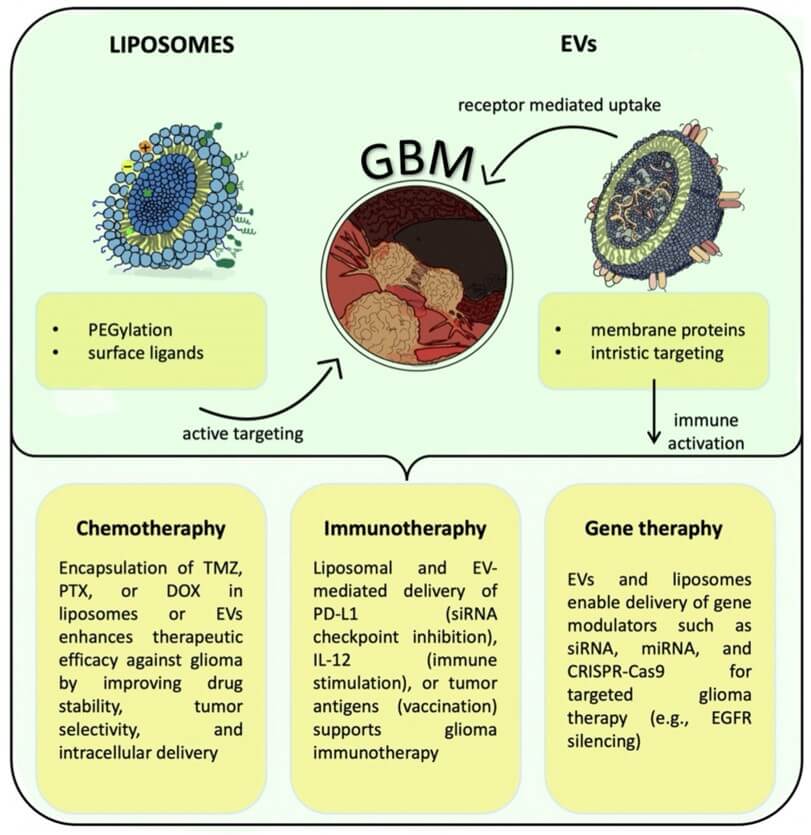 Fig. 1 Schematic overview of liposome- and EV-based drug delivery strategies
in glioma therapy.1,3
Liposomes (Synthetic Capacity)
Clinically established nanocarriers with highly tunable properties for high-efficiency drug loading. However, they often lack intrinsic targeting abilities and face rapid immune clearance without extensive modification.
Exosomes (Biological Stealth)
Natural extracellular vesicles equipped with unique surface proteins for immune evasion and cell-specific targeting. Despite these advantages, their clinical application is currently hindered by loading difficulties and production scalability.
Table 1. Comparative Overview of Liposomal and Exosomal Characteristics
| Feature | Liposomes (Synthetic) | Exosomes (Biological) |
|---|---|---|
| Encapsulation Efficiency | High & Tunable (Active/Passive Loading) | Limited & Heterogeneous (Endogenous Constraints) |
| Circulatory Stability | Variable (Requires Steric Stabilization/PEGylation) | High (Intrinsic Stability in Physiological Fluids) |
| Targeting Mechanism | Passive (EPR) or Ligand-Conjugated Active Targeting | Intrinsic Homing (Surface Adhesion Proteins/Integrins) |
| Tissue Penetration | Limited; Dependent on Particle Size & Charge | Enhanced; Superior Cellular Uptake & Transcytosis |
| Immunogenicity Profile | Moderate (Risk of ABC Phenomenon) | Low (Immune Evasion via CD47/"Self" Markers) |
| Manufacturing Scalability | High (Established cGMP Processes) | Challenging (Yield & Purification Hurdles) |
By combining these two, we aim to retain the high payload capacity of the liposome while inheriting the sophisticated navigation skills of the exosome.
Unlocking Synergistic Potential with Exosome-Hybrid Liposomes
Exosome-Hybrid Liposomes (often termed hybrid exosomes) are engineered nanovesicles that synergize the structural robustness of synthetic liposomes with the biological functionality of natural exosomes. This hybrid platform is designed to resolve the "trade-off" dilemma in nanomedicine—balancing drug loading efficiency with biological targeting.
Payload Encapsulation: Overcomes the loading limitations of native exosomes by leveraging the high encapsulation volume and gradient loading capabilities of liposomes.
The creation of stable hybrids involves precise membrane fusion techniques to ensure distinct lipid bilayers merge into a single entity while preserving biological activity:
- Freeze-Thaw Fusion: Uses controlled temperature cycling to temporarily disrupt lipid membranes, promoting spontaneous fusion and facilitating the encapsulation of hydrophilic cargo.
- Co-Extrusion: Forces the mixture of exosomes and liposomes through nano-sized polycarbonate membranes, ensuring uniform particle size and thorough lipid mixing.
- Incubation & Sonication: Utilizes mild physical methods or prolonged incubation to facilitate membrane reorganization without damaging sensitive surface proteins.
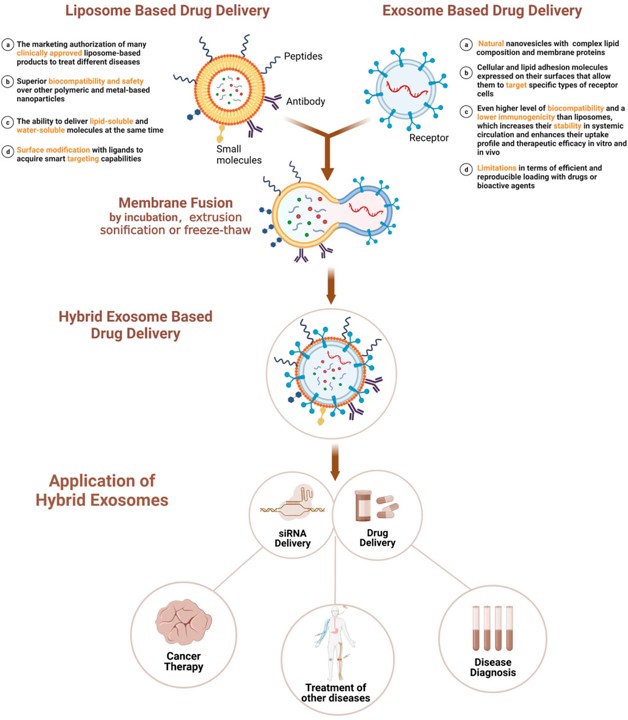 Fig. 2 Membrane fusion-based hybrid exosome preparation and applications.2,3
Key Features
- Optimized Payload Capacity: Overcomes the loading limitations of native exosomes by leveraging the high encapsulation volume and gradient loading capabilities of liposomes.
- Immune Cloaking: Retains essential exosomal surface markers (e.g., CD47), effectively evading the Reticuloendothelial System (RES) to extend circulation half-life.
- Biological Homing: Inherits natural tropism for crossing strict biological barriers, such as the Blood-Brain Barrier (BBB) and achieving deep tumor penetration.
- Structural Stability: The synthetic lipid component confers enhanced colloidal stability, addressing the aggregation and storage challenges often associated with pure biological vesicles.
Validating Hybrid Integrity through Precision Characterization
Distinguishing true hybrids from simple mixtures is critical for predicting therapeutic efficacy. We employ a rigorous analytical suite to definitively prove membrane fusion and ensure structural fidelity.
Assesses size distribution and PDI to ensure hybrids fall within the optimal therapeutic window (100–200 nm) and are free from aggregation.
Monitors surface charge to confirm the integration of synthetic lipids and ensure stability against flocculation in biological fluids.
Provides direct visual confirmation of spherical integrity and the formation of a unified lipid bilayer, distinguishing hybrids from separate vesicles.
Verifies the preservation of key exosomal markers (CD63, CD81, CD9) post-fusion, ensuring immune evasion and targeting capabilities remain intact.
End-to-End Exosome-Hybrid Liposomes Solutions
Creative Biolabs provides specialized CRO services tailored to the unique challenges of biomimetic formulation. We go beyond standard protocols to offer customized, engineered solutions.
We provide a robust supply chain for the critical biological component of your hybrid system, ensuring purity and functional integrity.
- Flexible Extraction Methodologies: We utilize protocols tailored to yield and purity requirements, including ultracentrifugation (UC), kits, and immunomagnetic bead separation.
- Comprehensive Sample Compatibility: Our platform processes exosomes from a vast array of biological matrices: cell culture supernatants, serum/plasma, cerebrospinal fluid (CSF), urine, saliva, milk, ascites, pleural effusions, and tissue homogenates.
- Extended Research Services: Beyond isolation, we support downstream applications with exosome tracking/labeling, RNA sequencing & PCR, multi-omics analysis, and functional assays (uptake, migration, proliferation).
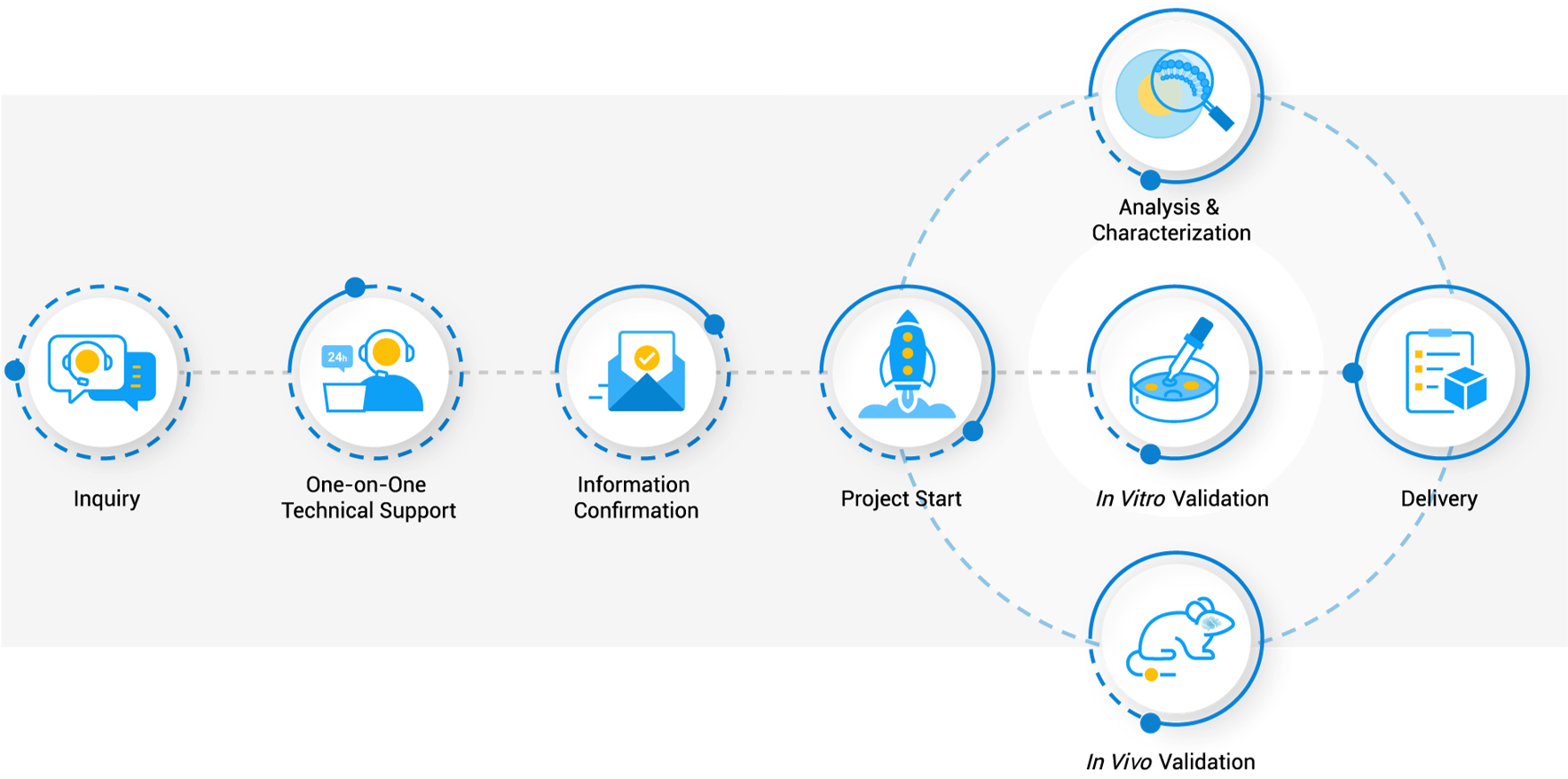
Workflow
Therapeutic Applications of Hybrid Systems
Our hybrid technology is versatile, specifically engineered to address high-value targets where conventional delivery fails.
- Crossing the Blood-Brain Barrier (BBB): Our hybrids utilize exosomal surface proteins (e.g., Rabies Viral Glycoprotein) to facilitate receptor-mediated transcytosis, effectively ferrying neurotrophic factors or siRNA into the brain for Alzheimer's and Parkinson's research.
- Precision Immuno-Oncology: Hybrids penetrate dense tumor stroma more effectively than standard liposomes. Their "immune silent" nature allows for the delivery of STING agonists or chemotherapeutics directly to myeloid cells within the tumor, activating a potent immune response.
- Advanced Gene Editing (CRISPR/Cas9): We incorporate pH-sensitive fusogenic lipids into the hybrid structure. This promotes rapid endosomal escape upon cellular uptake, releasing the CRISPR-Cas9 RNP complex into the cytoplasm before lysosomal degradation can occur.
Why Choose Creative Biolabs?
Proprietary Fusion Technology
Our optimized fusion protocols achieve high encapsulation efficiency while preserving critical exosomal proteins, a balance that competitors often struggle to maintain.
Modular "Plug-and-Play" Flexibility
We don't force a "one-size-fits-all" solution. We mix and match our library of Targeted Modules (ligands, peptides) with specific lipid formulations to suit your unique therapeutic index.
Scalability-First Approach
Unlike academic labs, we utilize scalable isolation (TFF) and fusion (extrusion) methods from Day 1, ensuring your formulation is ready for future GMP transition and animal studies.
Every batch is rigorously tested (NTA, TEM, Western Blot, FRET) to prove hybrid integrity, giving you confidence that you are working with a true hybrid and not just a mixture of separate vesicles.
Expert Scientific Partnership
Direct access to PhD-level scientists with specialized expertise in lipid nanotechnology and extracellular vesicle biology.
Creative Biolabs is dedicated to overcoming the most persistent challenges in drug delivery. By combining the biological sophistication of exosomes with the engineering power of liposomes, our Exosome-Hybrid Liposomes Development Service offers a superior pathway to clinical success. Whether you need enhanced stability, improved targeting, or higher drug loads, our modular platform provides the solution.
Related Services & Products
Related Services

Related Products
| Product Name | Description | Inquiry |
|---|---|---|
| Exosome Isolation Kits | Optimized for high-yield isolation from serum/plasma, urine, saliva, emulsions, and tissue samples. | |
| Exosome Labeling Kits | High-efficiency membrane labeling dyes (RKH67 Green, RKH26 Red) for tracking and uptake studies | |
| Exosome Standards | Lyophilized standards derived from various cellular sources (e.g., HEK293, MSCs) and plant exosomes. | |
| Hybrid-Ready Liposomes | Prefabricated fusogenic liposomes optimized for efficient mixing with exosomes. | |
| Functionalized Lipids | Activated lipids for surface modification, including DSPE-PEG-Biotin, DSPE-PEG-MAL, and DSPE-PEG-NHS. |
FAQs
How does the hybrid system differ specifically from a standard PEGylated liposome?
Unlike standard liposomes, hybrids incorporate native membrane proteins from exosomes. This confers biological properties such as immune evasion (via CD47) and specific cellular tropism, which synthetic liposomes lack.
Is the fusion process destructive to the exosome surface proteins?
We utilize mild fusion protocols (optimized freeze-thaw or extrusion) that are strictly validated to retain key surface markers (CD63, CD81, CD9) and biological functionality.
Can you scale up the production for in vivo animal studies?
Absolutely. Our workflow is designed to scale from milliliter optimization batches to liter-scale production suitable for rodent or non-human primate studies.
Do you offer lyophilization for hybrid formulations?
Yes, we develop custom lyophilization cycles. This ensures the hybrids remain stable as a powder, preserving PDI and cargo retention upon reconstitution.
References
- Fraczek, Wiktoria, et al. "Liposomes and Extracellular Vesicles as Distinct Paths Toward Precision Glioma Treatment." International Journal of Molecular Sciences 26.14 (2025): 6775. https://doi.org/10.3390/ijms26146775.
- Liu, Anqi, et al. "Research progress in membrane fusion-based hybrid exosomes for drug delivery systems." Frontiers in bioengineering and biotechnology 10 (2022): 939441. https://doi.org/10.3389/fbioe.2022.939441
- Distributed under Open Access license CC BY 4.0, without modification.