Creative Biolabs is offering the most comprehensive services for antibody development projects. With strict regulation and effective execution, we are dedicated to providing the most valuable solutions to complete your projects.
HighlightsCreative Biolabs is offering the most comprehensive services for antibody development projects. With strict regulation and effective execution, we are dedicated to providing the most valuable solutions to complete your projects.
HighlightsCreative Biolabs has established a broad range of platforms for developing novel antibodies or equivalents. These cutting-edge technologies enable our scientists to meet your demands from different aspects and tailor the most appropriate solution that contributes to the success of your projects.
HighlightsWith deep understanding in antibody-related realms and extensive project experience, Creative Biolabs offers a variety of references to help you learn more about our capacities and achievements, including infographic, flyer, case study, peer-reviewed publications, and all kinds of knowledge that can assist your projects. You are also welcome to contact us directly for more specific solutions.
HighlightsGet a real taste of Creative Biolabs, one of the most professional custom service providers in the world. We are committed to providing highly customized comprehensive solutions with the best quality to advance your projects.
HighlightsIn the rapidly evolving landscape of drug discovery and proteomics, the ability to isolate high-affinity ligands from vast combinatorial pools is the cornerstone of success. At Creative Biolabs, we have spent over two decades perfecting the Solid-Phase Strategy based Library Screening process. This approach, centered on the immobilization of target molecules onto a functionalized solid support, remains the gold standard for high-throughput discovery due to its robustness, reproducibility, and ease of automation. Our Solid-Phase Strategy based Phage Screening Platform leverages proprietary modifications in surface chemistry and elution kinetics to identify rare functional variants that traditional methods often overlook. Whether you are seeking monoclonal antibodies, functional peptides, or synthetic scaffolds, our solid-phase library screening protocols are engineered to deliver precision results.
The fundamental principle of Solid-Phase Strategy Screening involves the physical sequestration of a target (antigen, receptor, or small molecule) onto a solid matrix. This matrix acts as the "anchor" during the iterative rounds of biopanning.
The success of any Solid-Phase Strategy based Library project begins with the orientation and density of the immobilized target. Unlike solution-phase methods, solid-phase screening allows for the precise control of the microenvironment. We utilize several advanced immobilization techniques:
By fixing the target in space, we can manipulate the stringency of the wash buffer—adjusting pH, ionic strength, and detergent concentration—to drive the selection toward candidates with slow koff rates. This is a critical advantage of our Solid-phase library screening service, as it allows for the empirical determination of binding stability under flow or static conditions.
At the heart of our service is the Solid-Phase Strategy based Phage Screening Platform. While phage display is a mature technology, Creative Biolabs has integrated Next-Generation Sequencing (NGS) and AI-driven bioinformatics to transform it into a "Smart Screening" system.
Table 1. Platform Capabilities
| Feature | Description |
| Library Diversity | Over 1013 unique clones in our proprietary M13, T7, and lambda phage libraries. |
| Multi-Host Compatibility | Optimized for E. coli strains supporting high-titer amplification. |
| Surface Versatility | Screening on immunotubes, 96-well plates, magnetic beads, or functionalized chips. |
| Detection Sensitivity | Integrated ELISA and SPR validation for real-time affinity tracking. |
Our workflow is designed to minimize non-specific binding while maximizing the recovery of high-affinity leads:
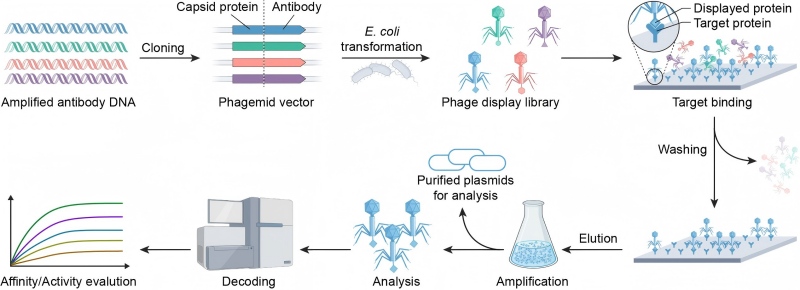 Fig. 1 Schematic representation of phage display technology.1
Creative Biolabs does not believe in a "one-size-fits-all" approach. We employ several specialized Solid-Phase Strategy based Library Screening techniques to address complex biological targets.
For targets such as whole-cell surfaces or complex tissue extracts, we utilize a subtractive Solid-Phase Strategy Screening method. By first exposing the library to "control" cells or non-target proteins immobilized on a separate solid phase, we deplete the pool of common binders, leaving behind only those specific to the unique epitopes of interest.
In our solid-phase phage display protocols, we can utilize light-activated or enzyme-triggered elution. This ensures that only phages bound to specific functional sites are recovered, significantly reducing the "noise" typically found in standard acid-elution methods.
Our Solid-Phase Strategy based phage screening platform is fully compatible with robotic workstations. This allows for the simultaneous screening of hundreds of targets, a necessity for large-scale genomic or proteomic projects. The use of magnetic beads allows for 3D interaction kinetics while maintaining the ease of separation characteristic of solid-phase strategies.
Understanding when to use Solid-Phase Strategy based Library Screening is vital for project success. Below is a comparative analysis based on our 20 years of empirical data.
Table 2. Comparison of Solid-Phase and Solution-Phase Screening Strategies
| Parameter | Solid-Phase Strategy | Solution-Phase (Liquid-Phase) Strategy |
| Target Accessibility | One side fixed; may mask certain epitopes. | Full 360-degree accessibility. |
| Throughput | Extremely high; plate-based. | Moderate; limited by separation steps. |
| Automation Potential | Excellent; compatible with ELISA robots. | Good; requires magnetic or centrifugal separation. |
| Affinity Selection | Best for high-density, high-avidity leads. | Superior for fine-tuning KD in the pM range. |
| Background Noise | Can be higher due to plastic binding. | Generally lower. |
| Protocol Complexity | Straightforward and robust. | Complex (requires biotinylation/capture). |
While solution-phase screening has its merits, the Solid-Phase Strategy based Library Screening remains the preferred choice for initial "deep dives" into diverse libraries where speed and robustness are prioritized.
The versatility of the Solid-Phase Strategy based Phage Display makes it indispensable across multiple sectors:
From VHH to scFv and Fab fragments, we utilize solid-phase library screening to identify therapeutic candidates. Our platforms have successfully yielded antibodies against GPCRs, ion channels, and cytokine receptors.
We design and screen specialized peptide libraries (linear, cyclic, or constrained) to find bioactive peptides that can serve as enzyme inhibitors, targeting moieties for drug delivery, or diagnostic reagents.
By immobilizing transition-state analogs, we use Solid-Phase Strategy Screening to evolve enzymes with enhanced catalytic properties or altered substrate specificity.
Creative Biolabs provides comprehensive documentation and ready-to-use outputs. Standard deliverables include:
Deliverables can be customized to fit publication, diagnostic, or therapeutic development requirements.
With two decades of leadership, Creative Biolabs offers more than just a service; we offer a partnership. Our Solid-Phase Strategy based Library Screening Service is backed by:
Learn more about other Phage Display Library Screening Services:
The Solid-Phase Strategy based Library Screening Service at Creative Biolabs represents the perfect synergy of classical biophysics and modern high-throughput technology. Our commitment to quality, combined with our 20+ years of domain expertise, ensures that your drug discovery journey is built on a solid foundation.
Reference
All listed services and products are For Research Use Only. Do Not use in any diagnostic or therapeutic applications.