
Creative Biolabs is offering the most comprehensive services for antibody development projects. With strict regulation and effective execution, we are dedicated to providing the most valuable solutions to complete your projects.
HighlightsCreative Biolabs is offering the most comprehensive services for antibody development projects. With strict regulation and effective execution, we are dedicated to providing the most valuable solutions to complete your projects.
HighlightsCreative Biolabs has established a broad range of platforms for developing novel antibodies or equivalents. These cutting-edge technologies enable our scientists to meet your demands from different aspects and tailor the most appropriate solution that contributes to the success of your projects.
HighlightsWith deep understanding in antibody-related realms and extensive project experience, Creative Biolabs offers a variety of references to help you learn more about our capacities and achievements, including infographic, flyer, case study, peer-reviewed publications, and all kinds of knowledge that can assist your projects. You are also welcome to contact us directly for more specific solutions.
HighlightsGet a real taste of Creative Biolabs, one of the most professional custom service providers in the world. We are committed to providing highly customized comprehensive solutions with the best quality to advance your projects.
HighlightsIn the complex landscape of biologic drug development, a precise understanding of pharmacokinetics (PK) is fundamental to success. Accurately measuring the total concentration of a therapeutic antibody—including free, partially bound, and fully antigen-bound forms—provides a complete picture of its behavior in vivo. At Creative Biolabs, we leverage over two decades of immunoassay expertise to offer a premier TOTAL Antibody Recognized Anti-Idiotypic Antibody (Anti-ID Ab) Discovery Service. Our bespoke anti-ID antibodies are the cornerstone of robust, reliable, and drug-tolerant ligand-binding assays (LBAs) essential for your preclinical and clinical research.
An anti-idiotypic antibody is a specialized antibody that recognizes the unique idiotopes within the variable region of another antibody—in this case, your therapeutic antibody drug. Within PK assays, anti-ID antibodies are classified based on their binding characteristics.
Non-blocking anti-idiotypic antibodies are the gold standard for total antibody quantification. These antibodies bind to an idiotope outside the drug's antigen-binding site (paratope). This crucial feature allows them to detect the therapeutic antibody regardless of whether it is circulating freely or bound to its target antigen.
This comprehensive measurement is vital for:
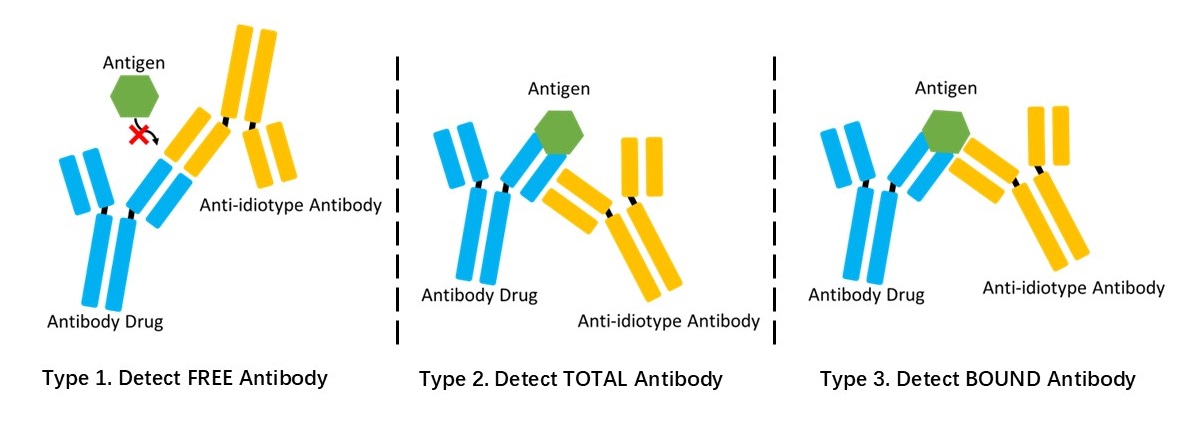 Fig. 1 Types of anti-idiotypic antibody.
Creative Biolabs offers a One-Stop Solution for anti-idiotypic antibody development, integrating cutting-edge technologies with seasoned scientific experience to deliver reagents of the highest quality.
Developing a robust PK assay for novel biologics like antibody-drug conjugates (ADCs), bispecific antibodies (BsAbs), and cell therapies (e.g., CAR-T) presents significant analytical hurdles.
| Challenge | Impact on PK Assay | Creative Biolabs' Solution |
| Target Interference | Circulating endogenous targets can mask the drug, leading to an underestimation of total drug concentration. | Development of highly specific, non-blocking anti-ID antibodies that are insensitive to the presence of the target. |
| Complex Drug Formats | BsAbs and ADCs have multiple binding sites and complex structures, requiring highly specific reagents. | Strategic immunization and screening campaigns to generate anti-IDs recognizing unique regions of the drug molecule. |
| Drug Tolerance | High circulating drug concentrations can saturate assay reagents, limiting the dynamic range. | Selection of high-affinity anti-ID pairs that create a "drug-tolerant" sandwich ELISA format. |
| CAR-T Persistence Monitoring | Measuring the expansion and persistence of CAR-T cells in vivo requires reagents that specifically detect the CAR construct. | Generation of anti-ID antibodies targeting the unique scFv region of the CAR, serving as a surrogate for cell quantification. |
Your biologic drug deserves a PK assay built on a foundation of excellence. Partner with Creative Biolabs to generate the critical anti-idiotypic antibody reagents that will drive your program forward with confidence and clarity.
To further support your drug development program, explore our other specialized anti-idiotypic antibody services:
Contact us today to discuss your project with one of our anti-idiotypic antibody specialists.
Q1: What species can you use to generate anti-ID antibodies?
A: We routinely generate anti-ID antibodies in mice, rats, and rabbits. We also have experience with chickens and llamas (for VHH discovery) to meet specific project requirements, such as avoiding cross-reactivity with certain human isotypes.
Q2: How do you ensure the anti-ID antibody is non-blocking?
A: We employ a competitive screening process. During the screening phase, we test the ability of our candidate antibodies to bind to the drug antibody both in the presence and absence of its target antigen. Clones that bind equally well under both conditions are selected as non-blocking candidates.
Q3: What is the typical affinity of your anti-ID antibodies?
A: We consistently deliver anti-ID antibodies with affinities (KD) in the low nanomolar to picomolar range, as measured by Surface Plasmon Resonance (SPR) or Bio-Layer Interferometry (BLI).
Q4: Can you develop a matched pair of anti-ID antibodies for a sandwich ELISA?
A: Yes. A key part of our service is to perform epitope binning and pairing assays to identify two compatible, non-competing anti-ID antibodies that can be used as capture and detection reagents in a robust sandwich LBA for total drug measurement.
All listed services and products are For Research Use Only. Do Not use in any diagnostic or therapeutic applications.








