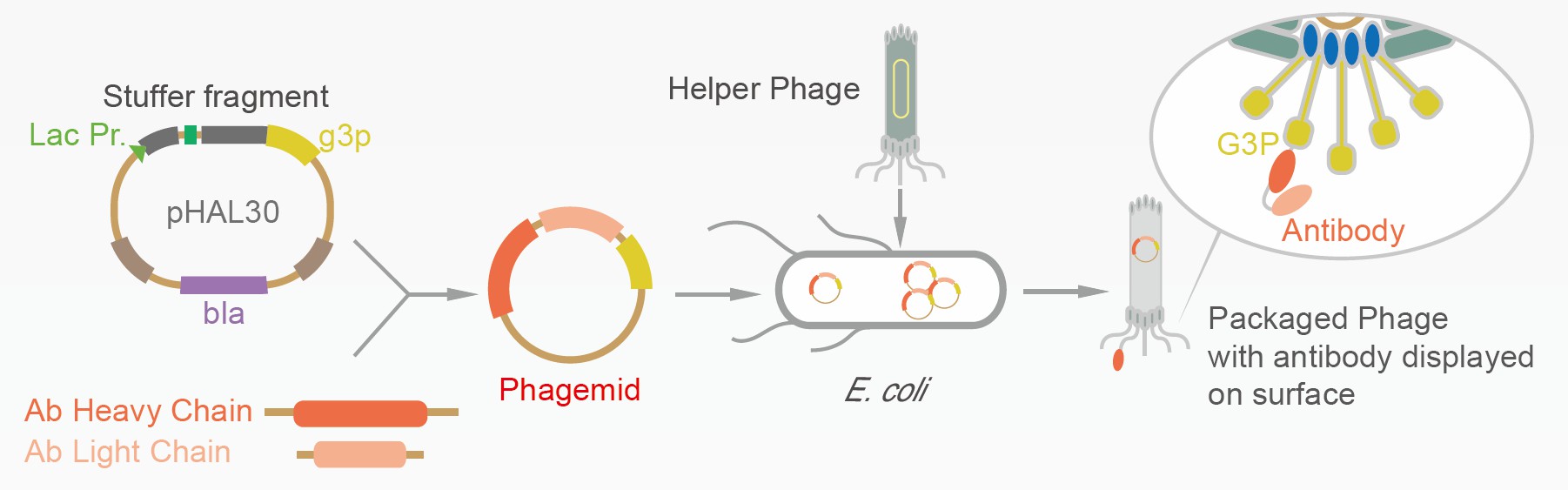
Solution-Sorting Strategy based Library Screening Service
Introduction Our Services Workflow Deliverables Platform Customer Review Advantages FAQ Resources
Introduction: Dynamic Binding Discovery Through Fluid-Phase Precision
Solution-Sorting Screening: Isolate Binders for Soluble Targets in Complex Environments
-
Application: Screen phage libraries for binders that target soluble proteins or peptides in solution.
-
Problem Solved: Overcomes challenges in identifying binders for soluble targets like cytokines, growth factors, and other biomolecules that cannot be immobilized.
In the evolving landscape of ligand discovery, flexibility and relevance to physiological conditions have never been more important. At Creative Biolabs, we understand that traditional immobilized-target methods, while effective, sometimes fall short in mimicking the complexity of real-world biological systems. Our solution-sorting strategy-based library screening Service offers a fluid-phase approach that maintains the native conformation of target molecules and ensures the selection of binders with functional relevance.
Leveraging our expertise in phage display technology, Creative Biolabs delivers high-quality, solution-phase screening for academic institutions, biotech startups, and pharmaceutical companies looking to accelerate therapeutic antibody discovery, peptide engineering, and beyond. Our solution-sorting workflow maintains biological integrity while offering high throughput, reliability, and specificity—all powered by Creative Biolabs' rigorous scientific standards.
Why In-Solution?
-
Preserves native conformation and transient epitopes
-
Minimizes avidity and surface bias
-
Ultra-low antigen consumption
-
Compatible with fragile, rare, or complex targets (small molecules, PTMs, membrane proteins)
What We Offer: Flexible Screening Designed for Native Target States
Creative Biolabs' Solution-Sorting Strategy is built to suit a wide range of targets that are not easily immobilized or risk denaturation when fixed to solid supports. We offer customized screening campaigns for:
-
Soluble proteins (enzymes, cytokines, receptors)
-
Protein complexes in near-native state
-
Aggregation-prone or conformationally sensitive targets
-
Oligonucleotide and aptamer discovery
-
Peptide-mimetic ligands and antibody fragments (scFvs, Fabs)
Our service also includes consultation on buffer conditions, target preparation, and selection stringency to help you design an optimal solution-phase screening campaign tailored to your research goals. Reach out with your interest.
Stepwise Process: Navigating Discovery in a Native-Like Environment
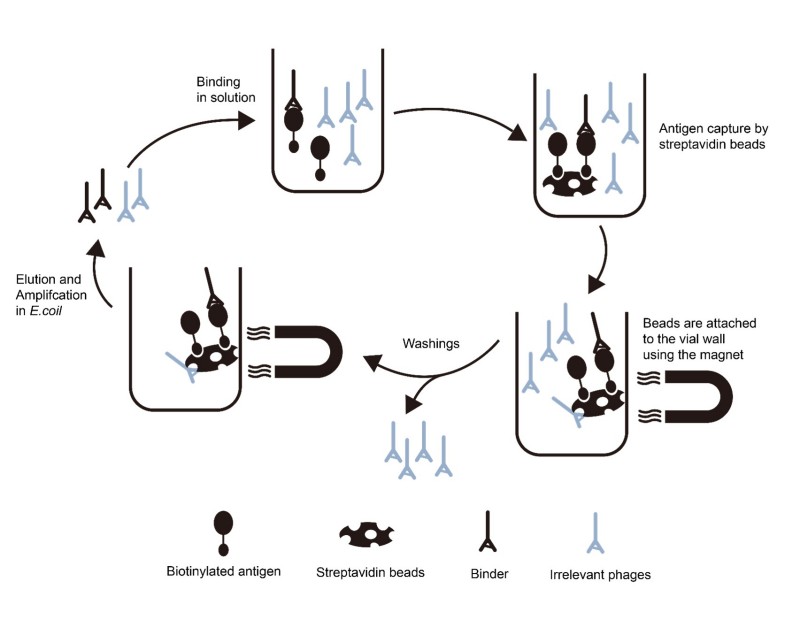
Our solution-sorting phage screening workflow follows a streamlined, but highly adaptable, multi-round selection process that ensures enrichment of high-affinity binders.
1. Target and Library Preparation
-
Preparation of soluble target under native-like buffer and selection of compatible, high-quality phage display library.
-
Ensure biological relevance and stable target conformation.
-
Preserves target integrity and maximizes binding fidelity.
2. Solution-phase Incubation
-
Phage library is incubated with the soluble target in suspension.
-
Promote natural, 3D molecular interactions.
-
Mimics in vivo binding conditions for realistic binder selection.
3. Separation of Bound and Unbound Phage
-
Unbound and weakly bound phage are removed using optimized separation (e.g., filtration or magnetic pull-down).
-
Isolate only specific, strong binders.
-
Enhances specificity and reduces background noise.
4. Elution of Enriched Phage
-
Bound phage are eluted via pH shift, mild acid, or competitive ligand.
-
Recover high-affinity phage clones.
-
Maintains phage infectivity and binding diversity.
5. Amplification and Quality Control
-
Eluted phage pools are amplified in E. coli and assessed for titer and enrichment.
-
Maintain library diversity for subsequent rounds.
-
Reliable amplification ensures high-quality selection output.
6. Subsequent Rounds of Panning
-
2–4 iterative rounds with stricter washing and lower target concentration.
-
Enrich high-affinity, specific binders.
-
Progressive selection refines binder quality.
7. Clone Screening and Characterization
-
Monoclonal phage ELISA, sequencing, and binding analysis (optional NGS).
-
Identify and validate top-performing clones.
-
Comprehensive profiling of binder specificity and affinity.
8. Candidate Selection for Downstream Use
-
Final selection based on specificity, affinity, and functional relevance.
-
Provide optimized candidates for R&D applications.
-
Ready-to-use leads for diagnostic, therapeutic, or research use.
Fig.1 Workflow of solution-phase phage library screening. (Creative Biolabs Original)
What You Receive: From Hits to Candidates
Upon completion of your screening campaign, Creative Biolabs provides:
-
Detailed experimental workflow summary
-
Data on phage enrichment and selection stringency
-
Binding data (e.g., ELISA or BLI) for top-ranked clones
-
DNA sequences of enriched phage candidates
-
Optional subcloning of scFvs or peptides
-
Technical consultation for next-step development (e.g., affinity maturation)
Customized deliverables such as large-scale clone expression or peptide synthesis are also available upon request.
Platform Spotlight: Expanding Your Screening Horizon with Creative Biolabs
At Creative Biolabs, our solution-sorting platform is only one of several innovative strategies we offer for advanced phage display screening. While this method is ideal for identifying ligands that bind soluble targets in a native-like environment, we recognize that different research goals call for diverse approaches. That's why Creative Biolabs also provides a full suite of complementary screening options:
By combining these platforms, Creative Biolabs provides an unmatched range of screening tools adaptable to nearly any target or biological context.
Hear from Our Partners: Success in Solution
Case 1: Discovery of Binders for a Low Molecular Weight Target Case 2: Epitope-Specific VHH Discovery for N/C-Termini Case 3: Peptide Discovery for a Difficult-to-Express Protein Target
The Challenge: A client needed to identify antibody fragments that bind to a small molecule drug (~1 kDa). Immobilizing the target directly would sterically hinder its surface area, making it impossible to screen for functional binders.
|
Project Hurdle
|
Our In-Solution Strategy
|
|
Small Target Size: Direct immobilization is ineffective and blocks binding sites.
|
Biotin-Conjugate & Bead Capture: The small molecule target was biotinylated, allowing it to interact with our phage library in its native state in solution.
|
|
High Background Risk: Non-specific binding of phage to plastic surfaces.
|
Magnetic Bead Pulldown: Phage-target complexes were efficiently captured using streptavidin-coated magnetic beads and subjected to stringent washing.
|
-
Key Results & Data Highlights:
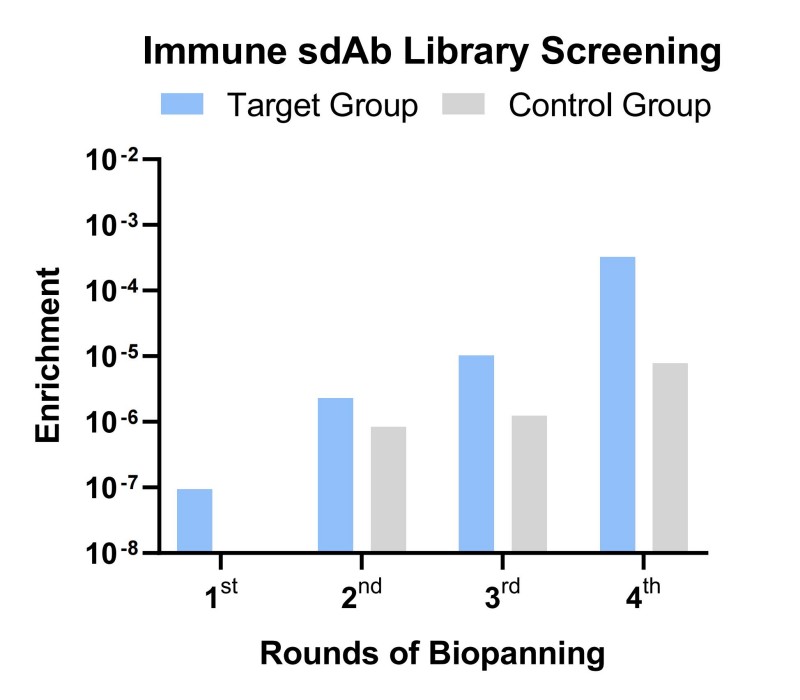
Our strategy successfully bypassed the limitations of solid-phase screening. The data clearly demonstrated strong enrichment and the identification of high-specificity binders.
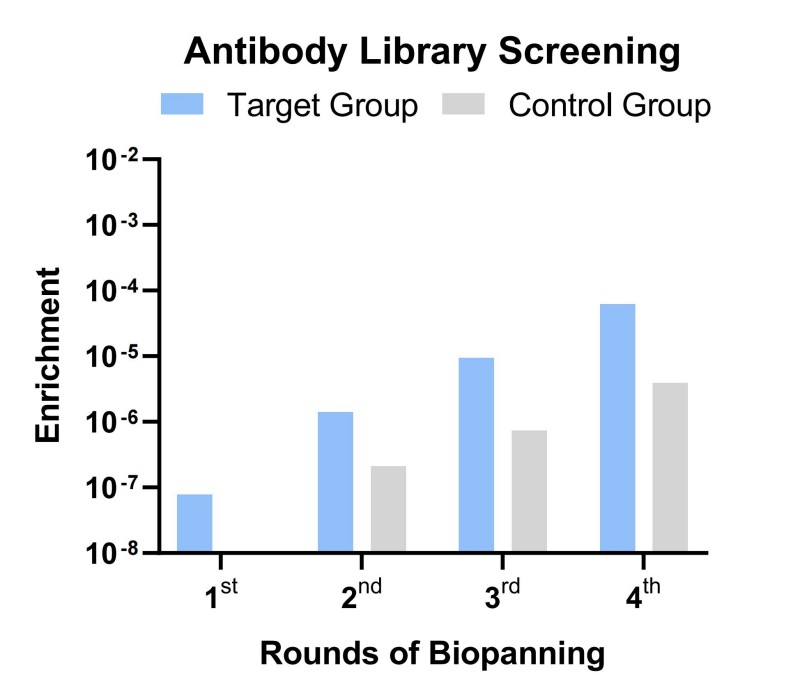
Successful enrichment of specific binders.
|
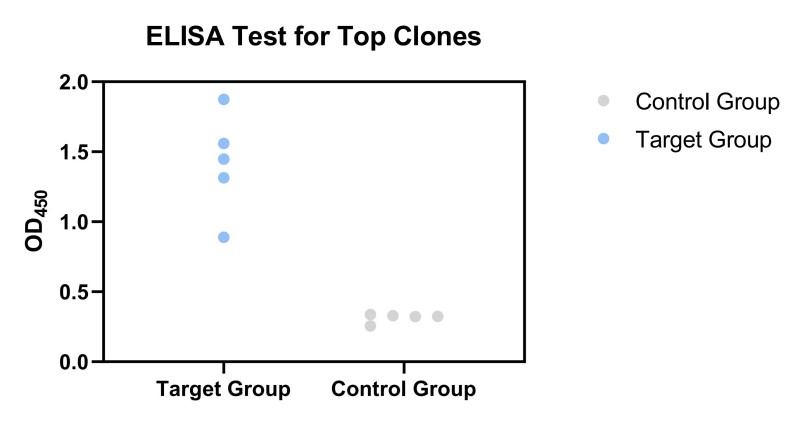
Top clones showed strong binding to the target molecule.
|
-
DELIVERABLE 1: A final list of multiple unique antibody fragment sequences with high affinity (low nanomolar range).
-
DELIVERABLE 2: Comprehensive validation data confirming high specificity and functional relevance for downstream applications.
The Challenge: A client required VHH antibodies that specifically recognize the N-terminus of a target. This is critical for developing orientation-specific diagnostic or therapeutic tools.
|
Project Hurdle
|
Our In-Solution Strategy
|
|
Specific Epitope Masking: Termini would be hidden in a random-orientation screen.
|
Site-Specific Target Presentation: Used biotinylated peptides exposing only the N-terminus.
|
|
Risk of Cross-Reactivity: Needed to ensure binders were exclusively specific.
|
Parallel & Counter-Screening: Performed parallel panning and then counter-screened positive clones against the opposite terminus peptide to eliminate cross-reactivity.
|
Key Results & Data Highlights:
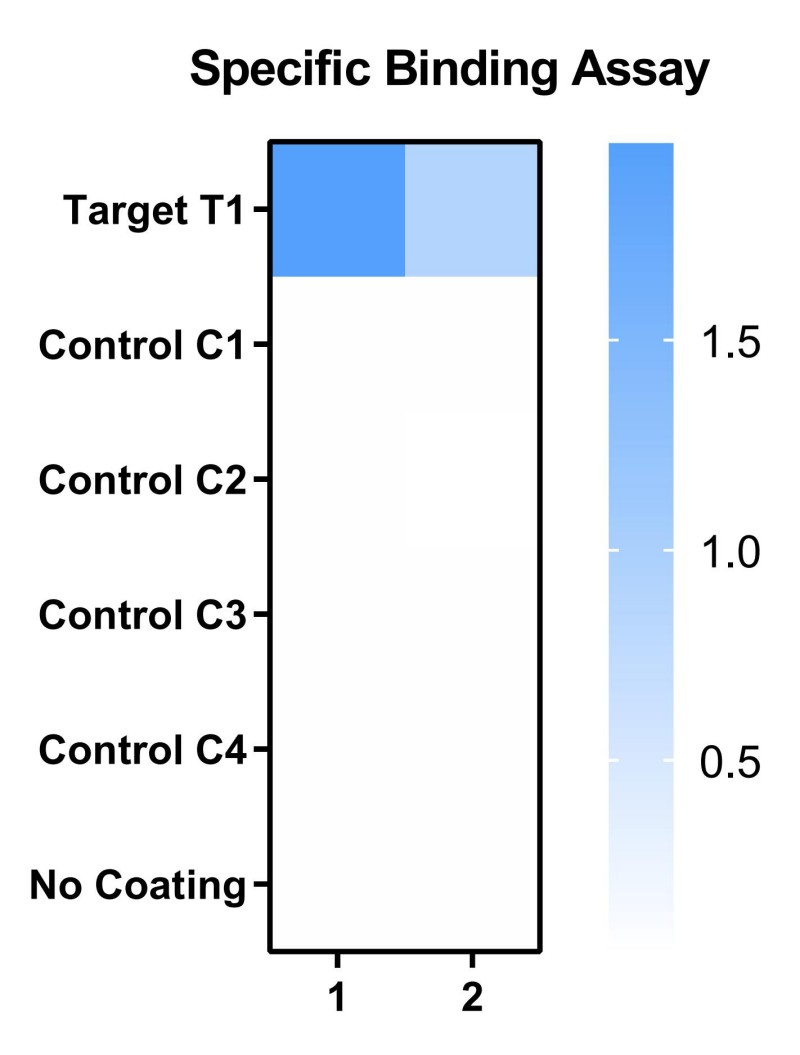
We successfully developed two highly specific VHH antibodies. The data confirms strict epitope-exclusivity, a result unachievable with standard methods.

Enrichment (N-Terminus).
|

Specificity & Cross-Reactivity ELISA.
|
-
DELIVERABLE 1: 2 unique VHHs for the N-terminus.
-
DELIVERABLE 2: Full sequence and characterization data demonstrating less cross-reactivity.
A client's protein target was extremely difficult to express, resulting in microgram-level yields. They needed to identify peptide binders without exhausting their precious material on a conventional screening campaign.
|
Project Hurdle
|
Our In-Solution Strategy
|
|
Precious, Limited Material: Insufficient target protein for coating plates.
|
Microscale In-Solution Reaction: Our protocol required only micrograms of biotinylated target, conserving over 90% of the material compared to solid-phase methods.
|
|
Time-Consuming Process: Client needed diverse leads quickly.
|
NGS-Powered Discovery: We combined efficient panning with Next-Generation Sequencing (NGS) to deeply mine the enriched pools for a wide diversity of potential binders after only three rounds.
|
Key Results & Data Highlights:
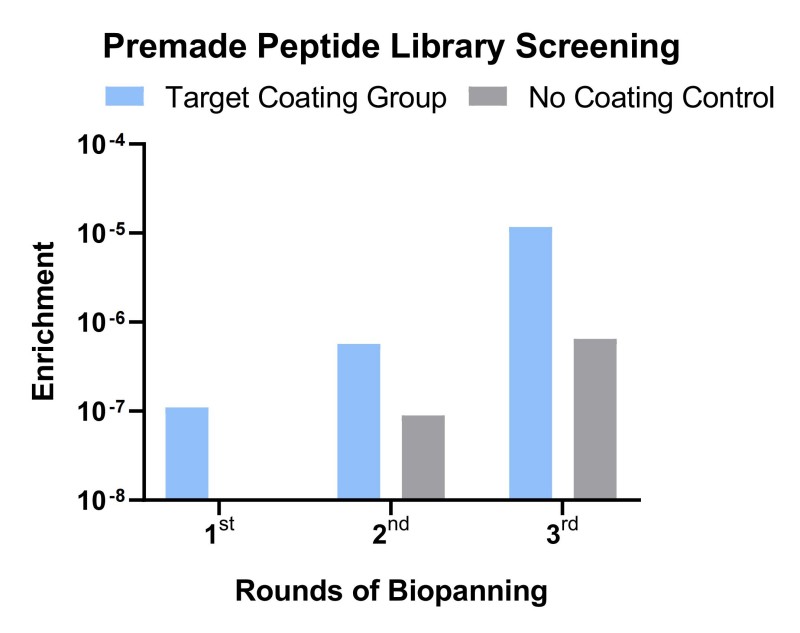
Our resource-efficient approach delivered a rich dataset of high-confidence peptide candidates in record time, saving the client invaluable time and resources.

Good Enrichment using limited target samples.
|

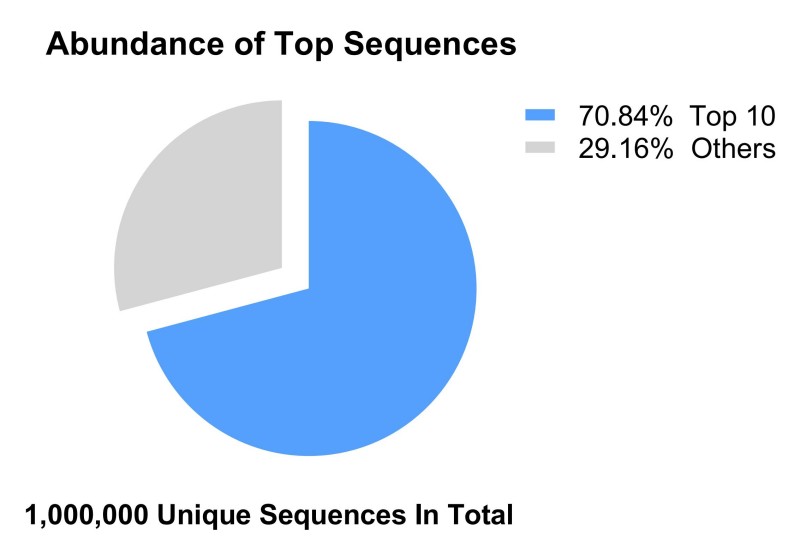
Obtained Top 10 enriched peptides.
|
-
DELIVERABLE 1: An NGS-generated, rank-ordered list of peptides with full sequence and abundance data.
-
DELIVERABLE 2: Synthesized top peptide candidates for client-side validation.
Why Creative Biolabs: Science-First, Partner-Focused
We understand that choosing the right partner for your screening needs is essential. Creative Biolabs' reputation is built on:
-
Expert-led project consultation with Ph.D.-level scientists
-
Tailored protocols to accommodate difficult or fragile targets
-
High-fidelity libraries with vast diversity and application-specific formats
-
Transparent communication from project start to final report
-
Strict QC standards and reproducible results
|
With Creative Biolabs, you're not just outsourcing a screening service—you're collaborating with a research partner who is committed to your success.
Creative Biolabs' Solution-Sorting Strategy based Library Screening Service empowers your research with physiologically relevant results and reliable discovery outcomes. Whether you are investigating novel ligands, screening therapeutic peptides, or exploring hard-to-handle targets, Creative Biolabs provides the precision and scientific expertise you can trust. Contact us today to discuss your screening goals. Together, we'll discover what's next.
Common Questions: Clarifying the Process
-
Q: What kinds of targets are suitable for solution-phase screening?
A: Soluble proteins, receptors, enzymes, and even nucleic acid-protein complexes are suitable. Targets must be stable in solution and available in sufficient quantity and purity. Creative Biolabs offers optional protein expression and purification services if needed.
-
Q: Can solution-sorting be used for membrane proteins?
A: It's best suited for soluble targets, but Creative Biolabs can help adapt strategies such as liposome-incorporated or membrane scaffold protein-stabilized proteins when needed.
-
Q: What if my target is available only in small amounts?
A: Creative Biolabs can optimize library input and amplification cycles to minimize target consumption while still achieving meaningful enrichment.
-
Q: Can I combine solution-sorting with in vivo validation later?
A: Absolutely. Many clients start with solution-sorting for initial enrichment and follow with in vivo screening for biological relevance.
-
Q: How is non-specific binding minimized in solution-based screening?
A: We employ buffer systems optimized for each target, including competitor proteins (e.g., BSA or irrelevant IgG), and adjust incubation times and salt concentrations to minimize background binding.
-
Q: What information do I need to provide to initiate a project?
A: We require details about the target (sequence, structure, tags), any known epitopes, the preferred library type, and the intended downstream application. A discovery consultation is always included to align on goals.
Resources
Use the resources in our library to help you understand your options and make critical decisions for your study.

Videos Podcasts Infographic Flyer Articles
All listed services and products are For Research Use Only. Do Not use in any diagnostic or therapeutic applications.