CreStab™ Technology based Antibody Aggregation Prevention Service
With years of experience in therapeutic antibody development, Creative Biolabs provides a wide range of analytical services to help our customers understand their therapeutic monoclonal antibody candidates in terms of physicochemical properties, biological activity, affinity, and purity. At present, we introduce mAb aggregation prevention as part of the antibody characterization and analysis service portfolio. We have developed a novel technology, CreStab™, to reduce the aggregation of mAb, which is expected to improve the stability of human antibodies.
Characterization of Monoclonal Antibody Aggregates
Therapeutic monoclonal antibodies (mAb) represent the most important protein-based biological drugs. Like all other protein therapeutics, mAb therapeutics may undergo various degradation processes during production, formulation, storage, and transportation. The presence of aggregates is undesirable because they cause loss of activity, reduced solubility, and increased undesirable immunogenicity. Therefore, during the development and production of mAb therapeutics, characterizing mAb aggregates is critical for process development and quality control.
Discover how we can help - Request a consultation.
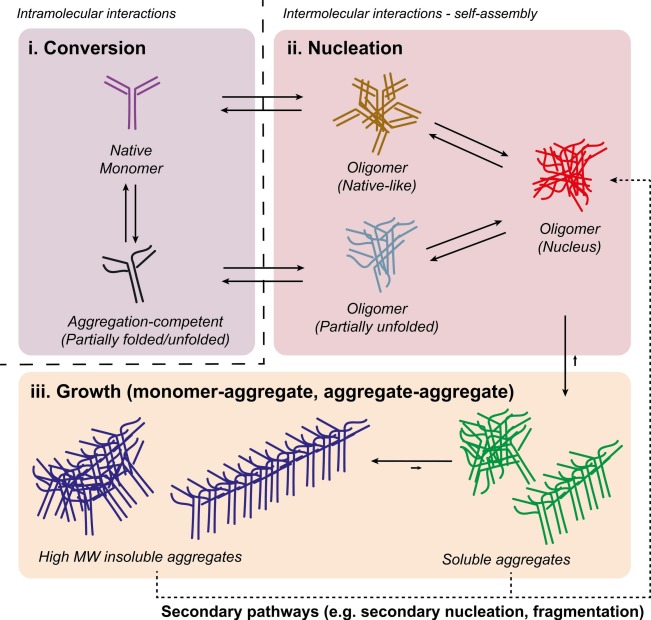 Fig.1 Schematic illustration of the molecular events in protein aggregation.1, 3
What We Can Offer
Blocking Nucleation
We target the molecular weak points that initiate the aggregation cascade. By neutralizing aggregation-prone regions (APRs) in the CDRs, CreStab™ significantly elevates the energy barrier required for partial unfolding and subsequent nucleation, effectively preventing the aggregation process from starting.
Enabling High-Concentration Formulation
We solve the stability crisis associated with high protein density needed for low-volume, subcutaneous (SC) injection products. CreStab™-modified mAbs maintain solution stability and low viscosity even at concentrations exceeding 150 mg/mL.
Enhancing Manufacturability
We mitigate aggregation risk introduced during upstream and downstream bioprocessing (shear stress, thermal fluctuations, freeze-thaw cycles), translating directly to higher batch consistency, reduced reprocessing costs, and maximized final yield.
How Creative Biolabs' CreStab™ Technology Can Assist Your Projects
CreStab™ technology optimizes amino acids at specific positions within the complementarity-determining region (CDR) of antibodies to obtain fully human antibodies with completely increased stability and reduced tendency to aggregate, which still retain all the characteristics required for therapeutic use. This technology has been validated by improving the stability of many currently available therapeutic antibodies and drug candidates while maintaining binding and other critical functions.
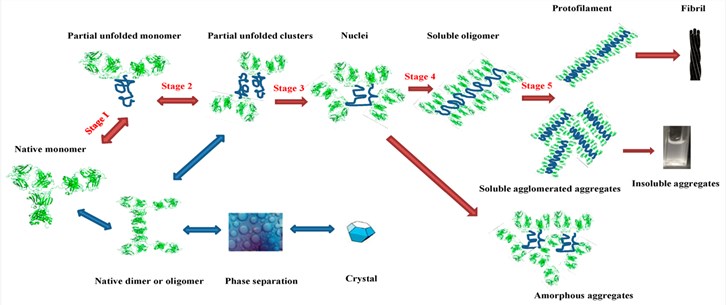 Fig.2 Schematic representation of the protein aggregation process and the possible intermediates involved.2, 3
Applications of CreStab™ Technology

Universal Application Across All Antibodies
CreStab™ can be used in all antibodies being developed to improve properties and reduce future production and commercial risks.

Rescue for Challenging Candidates
CreStab™ can also improve antibodies that would otherwise fail to meet manufacturability requirements.
Versatile Format Compatibility
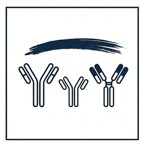
CreStab™ can be directly applied to a variety of antibody formats, including fragments, bispecific antibodies, and full-length IgG monoclonal antibodies.

Rapid Implementation & Phage Display Compatibility
CreStab™ can be quickly implemented and tested using highly predictive methods and can be applied to phage display libraries.
For further details, please don't hesitate to get a quote today.
Customer Reviews
-
Critical for SC Development
CreStab™ facilitated our transition to subcutaneous delivery by enabling a stable formulation. Traditional methods failed to stabilize the hydrophobic patches in the Fab domain at that concentration, but the CDR optimization worked perfectly. - Dr. C***n E***y. -
Highly Predictive & Time-Saving
The upfront molecular dynamics simulation provided a highly accurate prediction of instability, which allowed us to avoid weeks of failed experimental trials. We integrated the CreStab™ modifications directly into our phage display library selection, ensuring our final candidate was stable from the start. - Mr. F***k G***t.
FAQs
How does CreStab™ compare to standard formulation screens (e.g., using polysorbates or arginine)?
Standard formulation screens are empirical; they try to mask aggregation by adjusting the environment. CreStab™ is a rational engineering solution that removes the propensity to aggregate from the molecule itself by optimizing the CDR sequence. This provides inherent, long-term stability that holds up under severe stress where excipients often fail, especially for high-concentration needs.
Will optimizing the CDRs affect the antibody's binding affinity or specificity to the target antigen?
No. Our process is designed with a binding constraint lock. We utilize sophisticated in silico tools to model the exact residue-level contribution to binding versus stability. Substitutions are chosen precisely to neutralize aggregation potential while rigorously retaining the original binding characteristics. Final candidates are always validated using high-resolution kinetic assays (SPR/BLI).
How to Contact Us
By employing rational engineering to build stability into the CDR sequence, we provide biopharma clients with assets characterized by low immunogenicity risk, high batch consistency, and the crucial ability to be formulated for high-concentration, subcutaneous delivery. Please feel free to contact us for more information about our services.
Related Services
Reference
- Pang, Kuin Tian et al. "Understanding and controlling the molecular mechanisms of protein aggregation in mAb therapeutics." Biotechnology advances vol. 67 (2023): 108192. https://doi.org/10.1016/j.biotechadv.2023.108192
- Li, Wei et al. "Antibody Aggregation: Insights from Sequence and Structure." Antibodies (Basel, Switzerland) vol. 5,3 19. 5 Sep. 2016. https://doi.org/10.3390/antib5030019
- Distributed under an Open Access license CC BY 4.0, without modification.
 Download our brochure