Focus on deep sequencing to detect activating point mutations, amplifications, and structural rearrangements (fusions) in known and novel oncogenes.
Learn More →Comprehensive Oncogene & Tumor Suppressor Profiling Services for Oncology Research
Creative Biolabs provides high-resolution molecular intelligence essential for advanced oncology research and pre-clinical development. We provide deep multi-omics data (genomics, transcriptomics, TME analysis) to identify and validate novel therapeutic targets and resistance mechanisms. Clients gain a complete, actionable molecular blueprint that enhances the efficacy signals in their discovery programs, significantly accelerating the path from bench science to translational breakthroughs.
Introduction What We Can Offer Workflow Why Creative Biolabs Customer Reviews FAQs Related Services Contact Us
Mapping Oncogenic and Tumor Suppressor Interactions
Cancer progression is fundamentally driven by the dual dysfunction of activating oncogenes (e.g., MYC) and deactivating tumor suppressor genes (TSGs, e.g., TP53). Our profiling service provides the deep genomic and transcriptomic analysis required to map the complex interplay of these drivers, which govern critical signaling pathways like PI3K/AKT/mTOR and Wnt/β-catenin. This comprehensive view is essential for understanding tumor heterogeneity, predicting drug response, and validating molecular mechanisms against the latest scientific findings.
Reach out to our team to discuss the specific sensitivity metrics for your research, request a consultation.
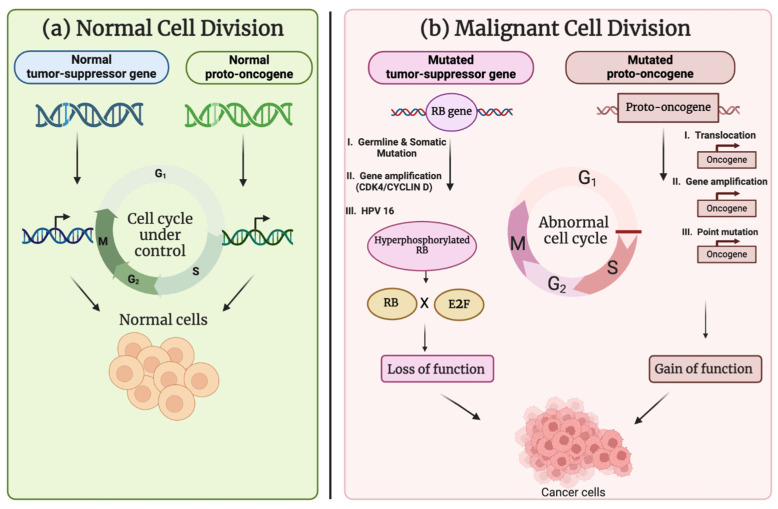 Fig.1 The interplay between oncogenes and tumor-suppressor genes.1
What We Can Offer
Creative Biolabs offers specialized modules tailored to distinct research needs, all built upon our foundational multi-omics platform:
Oncogene Profiling Services
Tumor Suppressor Gene Profiling Services
Specialized analysis for identifying loss-of-function events, including deep deletions, large insertions/deletions, loss of heterozygosity (LOH), and epigenetic silencing markers.
Learn More →MicroRNA–Oncogene/Tumor Suppressor Interaction Analysis Service
Investigates the regulatory role of non-coding RNA, mapping crucial miRNA-mRNA interactions that impact the expression and function of key oncogenes and TSGs.
Learn More →Integrated Oncogene–Tumor Suppressor Signature & Risk Score Modeling Service
Utilizes AI/ML to combine multiple genomic and transcriptomic inputs into a unified predictive signature for prognosis, survival, or drug response risk stratification.
Learn More →Oncogene–Tumor Suppressor Interaction Network Visualization Analysis Service
Provides detailed, interactive network maps illustrating the functional relationships and co-dependencies between altered oncogenes and TSGs within a specific tumor cohort.
Learn More →How We Can Assist Your Project
Highlights
Target Validation
We provide the necessary contextual genomic background—including co-mutations in TSGs like STK11 and oncogenes like KRAS - to predict compound efficacy and define polygenic drug dependencies before committing to costly research stages.
Mechanism of Action (MoA) Elucidation
By quantifying global gene expression changes (transcriptomics), we can dynamically monitor a therapeutic agent's effect, for example, validating the curcumin-mediated reactivation of tumor suppressor genes like ARHGEF12 in colon cancer inhibition.

Resistance Pathway Mapping
Through longitudinal profiling of tissue and liquid biopsy samples, we pinpoint secondary driver mutations and bypass mechanisms that lead to acquired resistance, facilitating the rapid design of rational combination therapies.
Research Cohort Refinement
Our multi-variant reports allow for the precise stratification of research groups, linking specific genomic signatures (e.g., alterations in CDKN2A/B and TP53) to predictable biomarker response rates under various treatments, thereby optimizing late-stage research design.
We encourage you to contact us to review your specific project requirements.
Customer Reviews
-
Validation Support
Using Creative Biolabs’ services in our drug resistance research has significantly improved our ability to design functional validation experiments. The detailed reports on acquired resistance pathways directly supported the design of targeted gene-editing strategies for knockout and knock-in models, streamlining our preclinical validation phase dramatically. - Dr W**u S**z. -
Sensitive MRD Detection
The application of Creative Biolabs' services within our longitudinal therapeutic response investigations has demonstrably facilitated the early, high-sensitivity detection of minimal residual disease (MRD) molecular markers. Furthermore, the seamless integration of liquid biopsy techniques precisely quantifies minute concentrations of ctDNA. - Prof. J**n H**g
FAQs
How does Creative Biolabs' service compare to basic research panels?
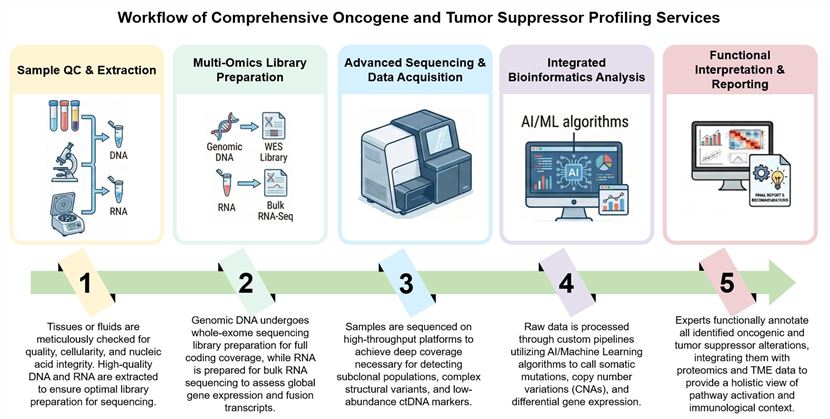
Basic research panels are typically limited to a few hundred "hotspot" genes, often missing critical non-coding regions, complex structural variants, and the necessary depth for detecting subclonal mutations or MRD markers in liquid biopsies. Our service uses whole-exome sequencing and integrates comprehensive TSG analysis, offering a dramatically more complete molecular picture.
Can your profiling service truly handle the low abundance of biomarkers in liquid biopsy samples?
Yes, the liquid biopsy module within our profiling service is specifically optimized for high sensitivity. We utilize high-depth sequencing and proprietary bioinformatics algorithms to accurately detect low-frequency circulating analytes, such as ctDNA and cell-free RNA, which are essential for the identification of early molecular markers and monitoring resistance evolution.
Related Services
Spatial Metabolomics Service for Metabolic Heterogeneity Research
This advanced service provides unprecedented insight into the functional landscape of the Tumor Microenvironment (TME) by assessing the spatial distribution of both metabolites and proteins.
Learn More →Tumor Metabolic Microenvironment Analysis Services
This specialized service utilizes advanced stable isotope tracing and flux analysis to quantify the dynamic consumption and production of key metabolites within the TME.
Learn More →How to Contact Us
At Creative Biolabs, we understand that precision is paramount. Our lead generation commitment is simple: We provide the deepest, most accurate genomic intelligence available, enabling you to make breakthroughs faster. Contact our lead scientist today for a complimentary consultation and tailored proposal.
Reference
- Singh, Sajal Raj et al. "Exploring the Genetic Orchestra of Cancer: The Interplay Between Oncogenes and Tumor-Suppressor Genes." Cancers vol. 17,7 1082. 24 Mar. 2025. Distributed under an Open Access license CC BY 4.0, without modification. https://doi.org/10.3390/cancers17071082
 Download our brochure
Loading case studies...
Online Inquiry