Creative Biolabs utilizes genomic analysis and drug screening to identify biomarkers and resistance mechanisms. We validate combination therapies through rigorous correlation analysis to optimize targeted cancer treatments.
Learn More →DDR-Checkpoint Network Modeling Service for Cell Cycle
Creative Biolabs provides a sophisticated "digital twin" environment for your drug discovery program, allowing for the precise simulation of how candidate molecules interact with the integrated DNA damage response (DDR) and cell cycle checkpoint machinery. By modeling the intricate crosstalk between repair sensors and mitotic "switches", such as the Plk1-p53 axis or ATM/ATR-mediated Chk1/2 signaling, we provide robust evidence of target engagement and phenotypic outcomes before you commit to expensive in vivo studies.
Background What We Can Offer Workflow Publication Why Choose Us FAQs Customer Review Related Services Contact Us
The Systems Biology of DDR-Checkpoint Dynamics
Genome integrity is maintained through a seamless, multi-scale integration of DDR pathways and cell cycle checkpoints. Extensive scientific studies have established that genes possessing dual functionality in these pathways, known as DDR-checkpoint genes (DCGs), serve as superior indicators of therapeutic response compared to traditional isolated markers. Creative Biolabs leverages these sophisticated insights to model rewired networks in cancer cells, providing drug developers with a high-fidelity roadmap to navigate the complexity of genome survival mechanisms. Our modeling goes beyond simple pathway mapping by simulating the temporal flux of protein interactions, allowing for the identification of specific vulnerabilities that emerge only under therapeutic stress. By integrating systems biology with predictive kinetics, we enable a deeper understanding of how cellular surveillance systems adapt, ensuring your discovery efforts are grounded in rigorous, mechanistic evidence.
Comprehensive Solutions
Creative Biolabs delivers a multifaceted suite of modeling solutions designed to cover the entire spectrum of DDR and cell cycle regulation.
High-Fidelity Crosstalk Modeling
We specialize in mapping the complex regulatory loops between DNA repair pathways and checkpoint kinases. Our expertise includes modeling specific axes to predict how specific mutations alter the threshold for mitotic entry and exit.
Stochastic Agent-Based Simulations
Moving beyond simple population averages, we offer individual cell-level modeling. This allows for the simulation of heterogeneous responses within a tumor, helping you understand why specific sub-populations develop resistance to DDR-targeted therapies.
Pan-Cancer Dependency Integration
We offer integrated analysis with global cancer dependency databases. By cross-referencing our simulation results with thousands of cancer cell line profiles, we identify the exact genetic "sweet spots" where your drug is most likely to induce synthetic lethality.
Predictive Sensitivity & Toxicity Profiling
Our service includes the dual modeling of both malignant and healthy cell cycles. This enables us to predict the therapeutic index of your lead compounds by simulating DNA damage thresholds in normal tissue vs. tumor tissue.
Custom Kinetic Assay Development
We can design and simulate custom kinetic assays to monitor real-time protein phosphorylation flux and cell cycle progression in response to your proprietary inhibitors.
Bridge the Gap Between Theory and Discovery Success — Explore Our Modeling Solutions
Workflow
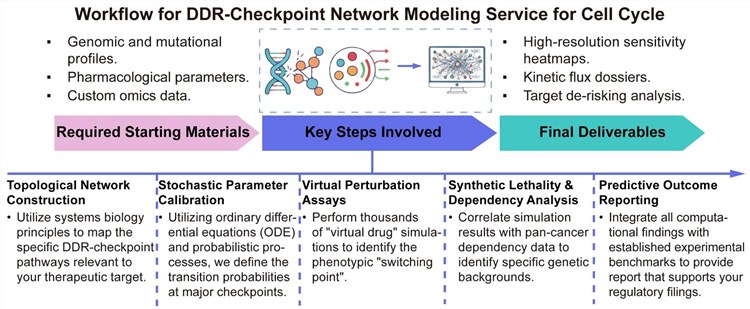
Creative Biolabs employs a rigorous, multi-stage computational pipeline designed to transition from raw biological data to high-confidence therapeutic predictions.
Publication
This study investigates the prognostic role of DDR-related genes with cell cycle checkpoint function (DCGs) in lung adenocarcinoma (LUAD). A 4-gene signature (PLK1, PLK2, PRKDC, NBN) was developed and validated, effectively stratifying patients into high- and low-risk groups. The model predicts overall survival, immune activity, and chemoradiotherapy responsiveness, providing a potential tool for prognosis evaluation and personalized treatment strategies in LUAD.
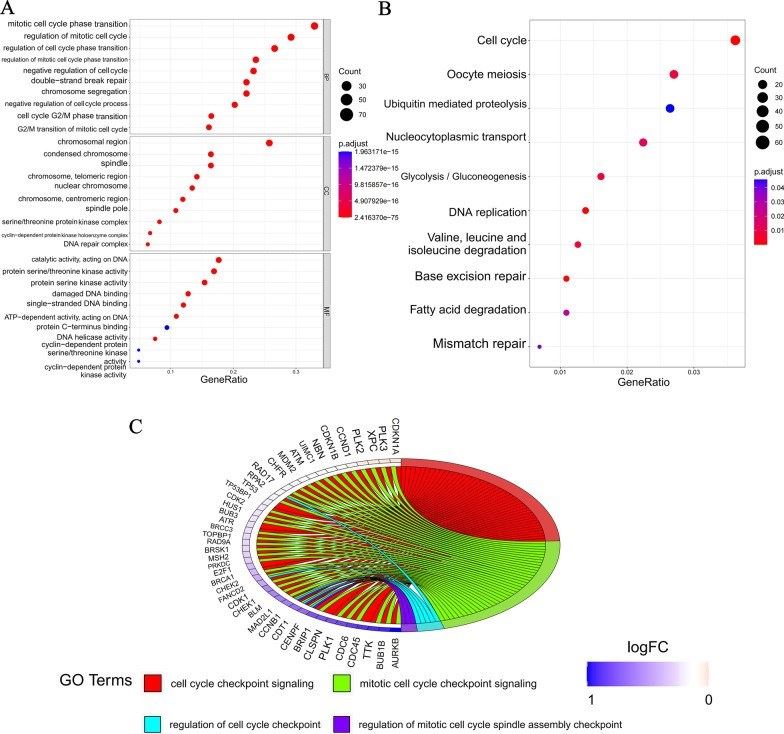 Fig.1 Role of DDR-related genes in cell cycle checkpoint function.1
Why Choose Us?
Choosing Creative Biolabs means gaining access to a unique convergence of computational excellence and biological expertise that is unmatched in the industry. Our platform is built on over two decades of dedicated oncology research and is continuously validated against real-world data involving major repair inhibitors. Unlike standard bioinformatics providers that rely on static datasets, we offer dynamic agent-based modeling (ABM) that accounts for individual cell heterogeneity. This ensures your results capture the nuances of rare resistant clones rather than being buried in deceptive population averages. We provide high-fidelity simulations that bridge the gap between initial hits and viable leads, allowing you to prioritize compounds based on mechanistic proof. Our multi-scale approach transforms complex multi-omic noise into a clear, actionable roadmap for your discovery program.
Transform Your Data into Actionable Discovery — Get a Detailed Project Quote
FAQs
Can Creative Biolabs predict responses to rare or "undruggable" mutations?
Yes. By integrating structural biology insights with mutational data, we can model the functional impact of rare p53 variants or secondary mutations on the G2/M threshold, providing clarity on therapeutic windows.
How does your stochastic modeling approach differ from traditional HTS?
High-throughput screening (HTS) identifies if a compound works in a specific assay, but our modeling reveals how and why. Creative Biolabs provides the mechanistic rationale required for regulatory documentation and helps identify potential resistance pathways early.
Is transcriptomic data sufficient for a high-quality model?
While multi-omic integration (transcriptomics + proteomics) is ideal, Creative Biolabs utilizes robust Bayesian inference to fill data gaps, ensuring that even mRNA-only datasets can be used to build a functional, predictive model.
Customer Review
-
Unprecedented Accuracy
The ODE-based flux data provided by Creative Biolabs matched our in vitro phosphorylation results with remarkable precision. This modeling significantly improved our understanding of G2/M checkpoint escape in resistant clones. - Dr. Ar** S -
Efficient Target Validation
Moving from static gene signatures to the dynamic ABM simulations offered by Creative Biolabs facilitated our target prioritization in lung adenocarcinoma. It is a game-changer for predicting population-level resistance. - Prof. M** L
Related Services
DNA Damage Response (DDR) Cell based Assay Service
Creative Biolabs delivers DDR cell-based assays to quantify DNA lesions and identify modulators of ATM/ATR/PARP. We analyze repair kinetics to evaluate drug sensitivity and resistance mechanisms.
Learn More →How to Contact Creative Biolabs
Creative Biolabs offers a comprehensive, data-driven approach to mapping the most critical surveillance networks within the cell cycle. Our DDR-checkpoint network modeling service delivers the scientific rigor and predictive accuracy required to transform promising lead compounds into discovery successes.
Connect with Our Team to Design Your Custom Modeling Project Today.
Reference
- Li, Quan, et al. "The DDR-related gene signature with cell cycle checkpoint function predicts prognosis, immune activity, and chemoradiotherapy response in lung adenocarcinoma." Respiratory research 23.1 (2022): 190. Distributed under Open Access license CC BY 4.0, without modification. https://doi.org/10.1186/s12931-022-02110-w
 Download our brochure
Loading case studies...
Online Inquiry