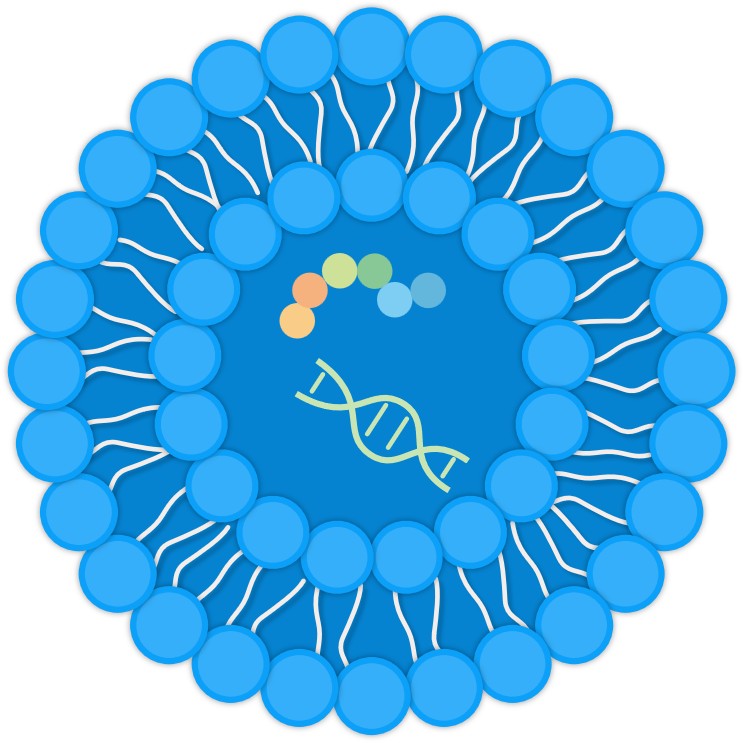
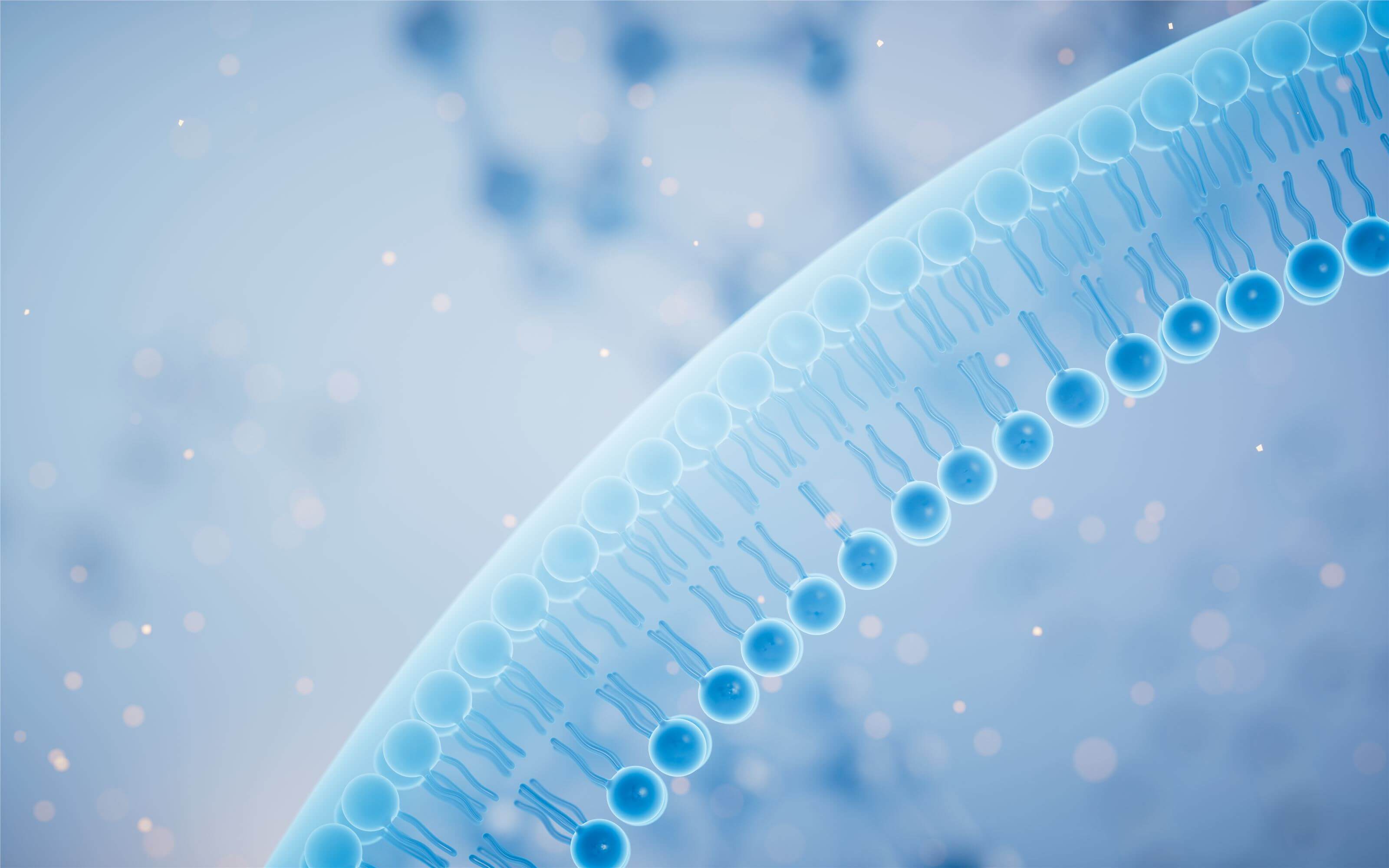
The lipid bilayer shield protects sensitive molecules, such as mRNA and siRNA, from enzymatic degradation in the circulation.
Enhanced Permeability & Retention (EPR) driven Liposome Development Services
The bottleneck in modern therapeutics is not discovery, but delivery. Effective clinical translation demands nanocarriers that can bypass biological barriers, protect sensitive payloads like nucleic acids, and selectively target disease sites to maximize the therapeutic index. Creative Biolabs' conventional liposomes development services provide the foundational delivery platform required to solve these challenges, ensuring high stability, superior encapsulation, and optimal in vivo performance.
Start Your Custom Liposome Project
Background
The Enduring Value of Conventional Liposomes
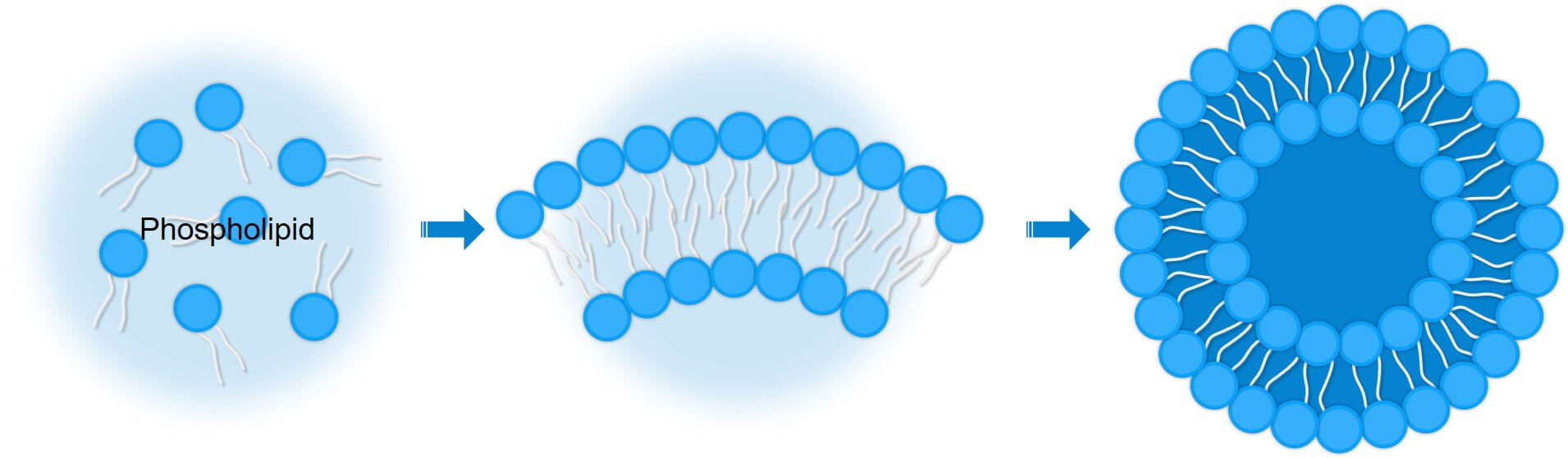
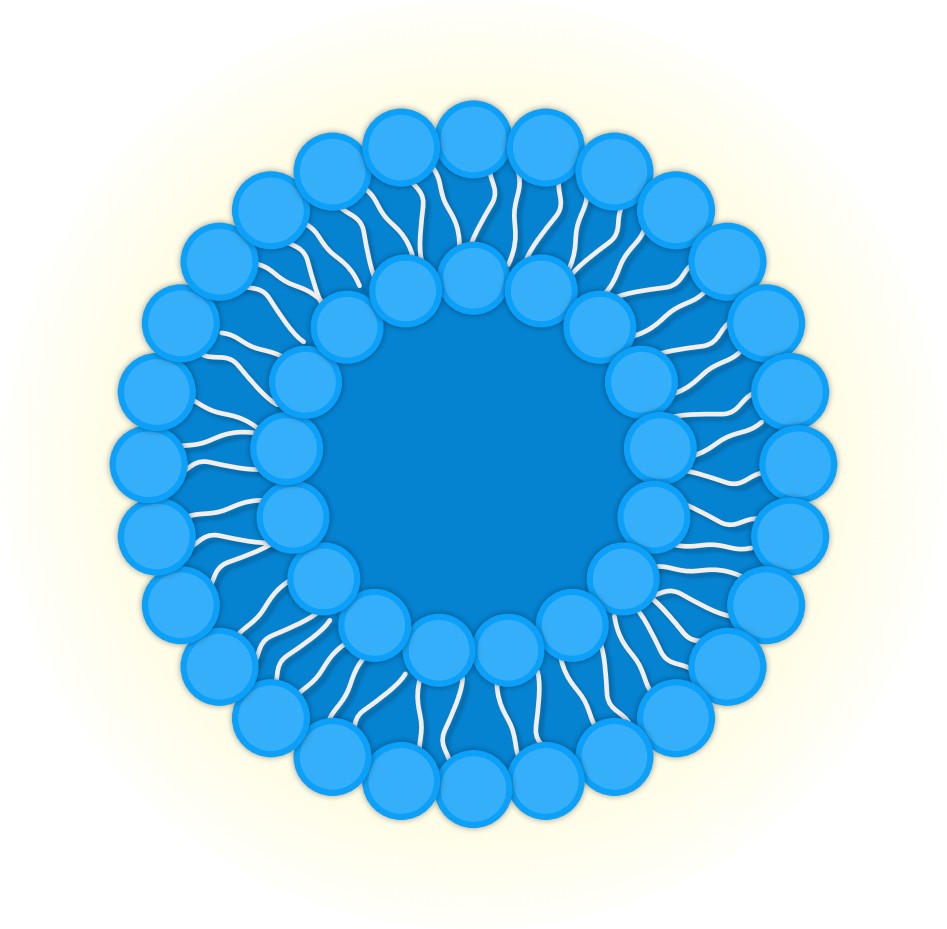
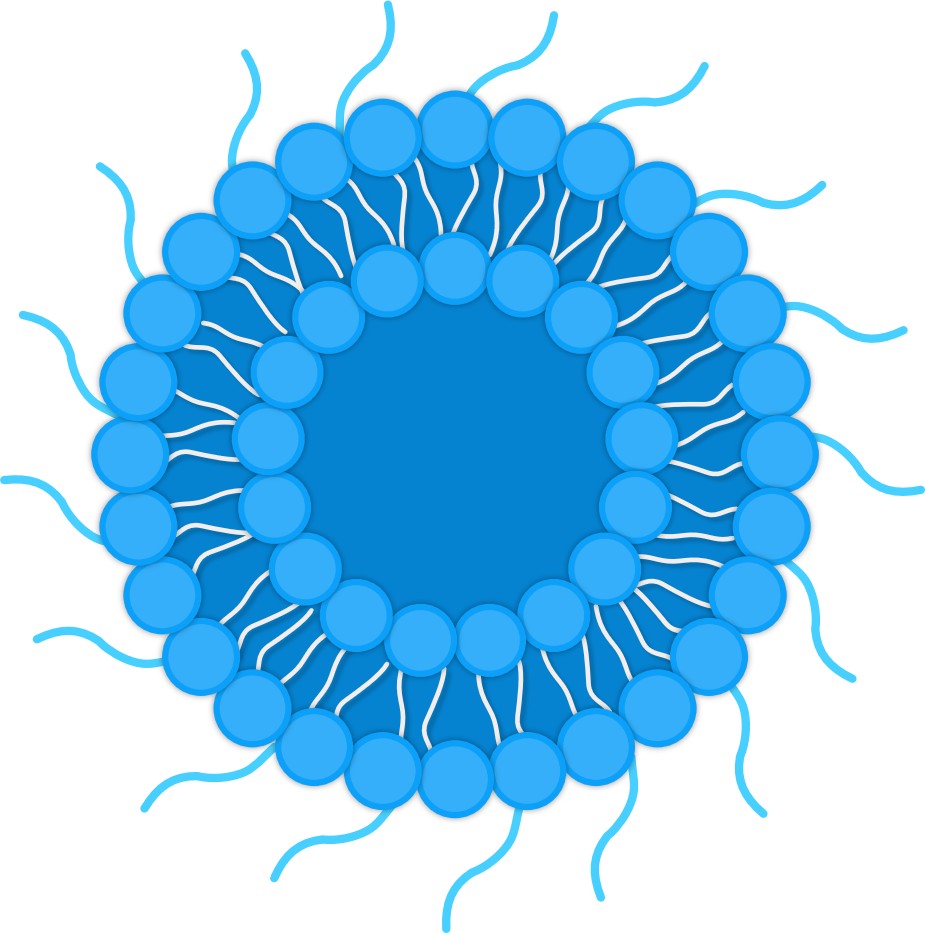
Conventional liposomes are nanovesicles composed primarily of a phospholipid bilayer and often stabilized with cholesterol. Their versatile structure allows them to encapsulate a wide range of therapeutic payloads: hydrophilic drugs are secured within the aqueous core, while lipophilic drugs are integrated into the lipid membrane.
Our focus is on controlling the critical quality attributes that translate to successful in vivo performance:
Enhanced Drug Protection
Improved Pharmacokinetics
Liposomes fundamentally alter the drug's biodistribution profile, prolonging circulation time and improving the therapeutic window.
Passive Targeting via EPR Effect
In disease states like cancer, liposomes preferentially accumulate at the target site by capitalizing on the Enhanced Permeability and Retention (EPR) effect, significantly increasing local drug concentration.
Reduced Toxicity
By minimizing drug exposure to non-target tissues, we significantly reduce the off-target effects and systemic toxicity often associated with conventional free-drug administration.
Rational Liposome Formulation Development
This crucial starting phase establishes the fundamental stability and architecture of liposome, tailored to the cargo's unique properties. Key considerations include:
- Payload Compatibility Screening: Determining the optimal lipid-to-drug ratio based on the cargo's pKa, hydrophobicity, and molecular size to maximize initial loading.
- Smart Lipid Selection: Precise selection of phospholipids, charge-modulating lipids, and cholesterol concentration to control membrane rigidity and stability.
- Loading Strategy Design: Developing high-yield Active Loading protocols (e.g., pH gradient, sulfate gradient) for small molecules or passive encapsulation methods for large biologics.
Creative Biolabs' Precision and Customization Expertise
Successful liposome development requires rigorous control over physical and chemical parameters. Our 20+ years of experience ensures your formulation is optimized for your specific application, drug substance, and route of administration.
We offer full customization and precise control across all formulation parameters:
| Customization Parameter | Description | Technical Focus |
|---|---|---|
| Lipid Composition | Selection of optimal natural or synthetic phospholipids (e.g., PC, PG, PS) and stabilizing agents (Cholesterol) to achieve desired membrane rigidity and charge. | Membrane fluidity, stability, and in vivo fate. |
| Vesicle Size Control | Precise modulation of size from small unilamellar vesicles (SUVs) to large unilamellar vesicles (LUVs), critical for optimal EPR effect and RES avoidance. | Particle Size, Polydispersity Index (PDI). |
| Encapsulation Efficiency (EE) | Optimization of loading methods (passive or active loading) to maximize the amount of therapeutic payload sequestered within the liposome. | High-efficiency drug loading for cost and therapeutic efficacy. |
| Surface Charge (Zeta Potential) | Fine-tuning the surface charge to control interactions with biological components and to prevent aggregation during storage and formulation. | Formulation stability and cellular uptake mechanisms. |
Unmatched Lipid Formulation Library
The therapeutic success of a liposome is defined by its precise chemical composition. Creative Biolabs provides access to an unparalleled library of high-purity lipids, allowing our clients and internal experts to select specific lipids and finely adjust the lipid ratio to engineer the exact physiochemical properties required for optimal performance. This granular control is essential for fine-tuning critical quality attributes (CQAs) like surface charge, membrane fluidity, and payload compatibility.
Brain PC, Egg PC, Heart PC, Soy PC, Others
HSPC, HEPC, DLPC, DMPC, DPPC, DSPC, DBPC, Others
DOPC, DLPC, POPC, Others
DOTAP, DSTAP, Others
DOPG, DSPG, DSPS, DOPS, Others
Cardiolipin, Sterol-Modified Phospholipids, Sphingolipids, Ether Lipids, Sterols, Others
Proven Preparation Techniques
Achieving a high-performance liposome requires selecting the appropriate preparation methodology. Each technique offers distinct advantages concerning scalability, size control, and drug loading mechanism. Creative Biolabs employs both traditional and advanced manufacturing methods to ensure the optimal characteristics (size, PDI, EE) for your specific application.
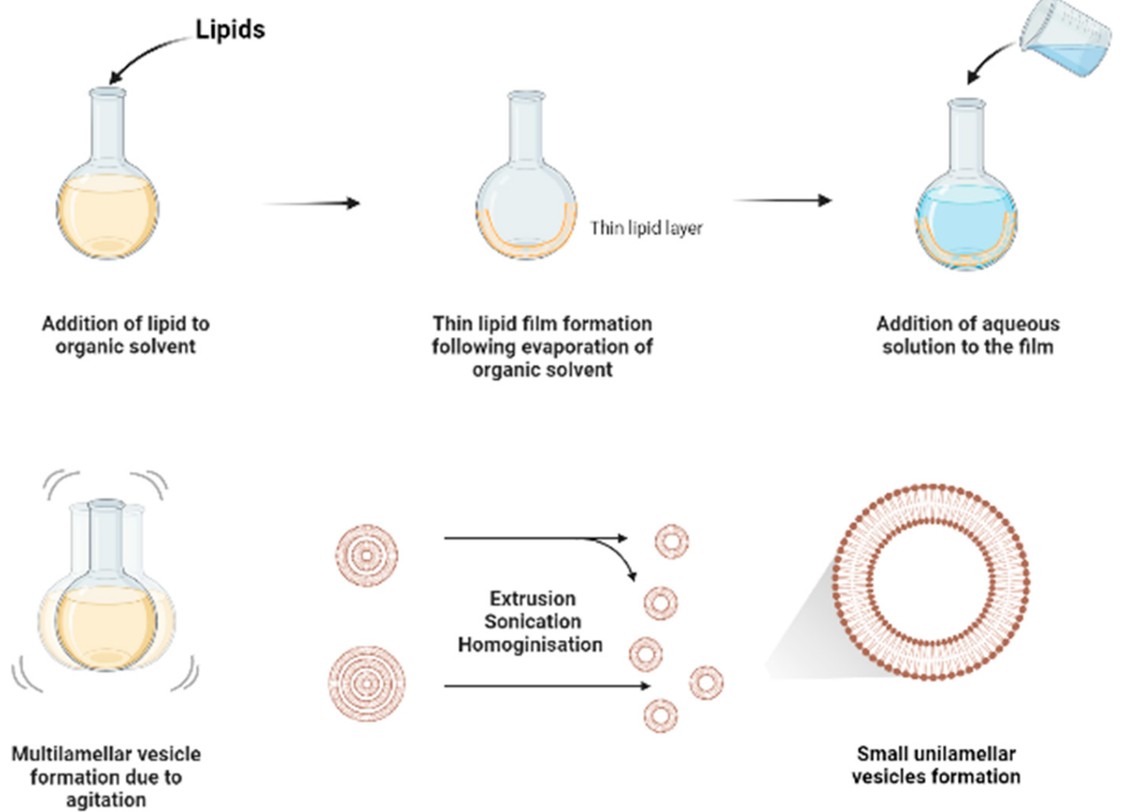 Fig. 1 Schematic diagram of thin film hydration method.1
| Formulation Techniques | Advantages | Disadvantages |
|---|---|---|
| Thin film hydration | Simple and straightforward process. Used for different kinds of lipid mixtures. | Difficult to scale up. Low entrapment efficiency for water soluble drugs. Forms large vesicles with large size range. Time-consuming. |
| Ethanol injection | Reproducible, rapid and simple to use. | Difficult to remove all ethanol as it forms azeotrope with water. |
| Ether injection | Results in a concentrated liposomal suspension with improved entrapment efficiency. | Inadequate mixing can result in heterogeneous liposomes. Potential nozzle blockage. |
| Reverse Phase Evaporation | Simple process. Good encapsulation efficacy. Allows the encapsulation of small, large and macromolecules. | Requires large amount of organic solvent. Not suitable for fragile molecules like peptides. Time-consuming. |
| Detergent removal | Good control of particle size. Simple process. Homogenous product. | Produces low liposomal concentration. Lipophilic drugs have Low entrapment efficiency. Time consuming. |
| Microfluidic | Simple process. Allows particle size control. | Difficult to remove the organic solvent. Produces small amount of product. |
Specialized Conventional Liposome Solutions
Creative Biolabs provides both custom formulation and off-the-shelf products across the full spectrum of conventional liposome requirements. Whether you require a tailored development service or a ready-to-use liposome with specific lipid compositions and proportions, we provide solutions optimized precisely for your payload and application needs:
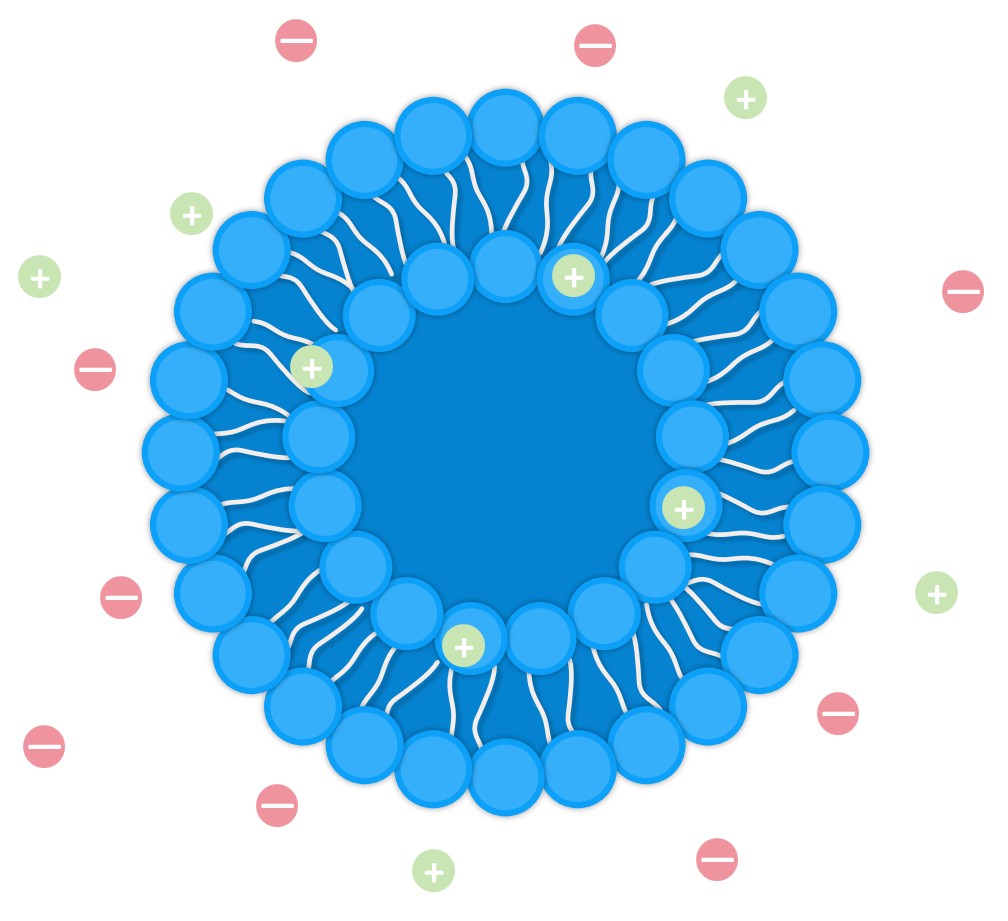
We offer a full range of charge-specific liposomes, where surface charge (Zeta Potential) is precisely controlled for stability and optimal cellular interaction:
Neutral Liposomes
Standardized formulations using neutral lipids like SPC (Soybean Phosphatidylcholine), often combined with cholesterol, offering adjustable particle size and high systemic compatibility.
Anionic Liposomes
Formulations incorporating anionic lipids such as Phosphatidylserine (PS) or Phosphatidylglycerol (PG), designed for enhanced interaction with specific cell membranes and specialized in vivo targeting.
Cationic Liposomes
Designed for high-efficiency binding and delivery of negatively charged Nucleic Acids (e.g., mRNA, DNA plasmids) through enhanced electrostatic interaction.
Workflow
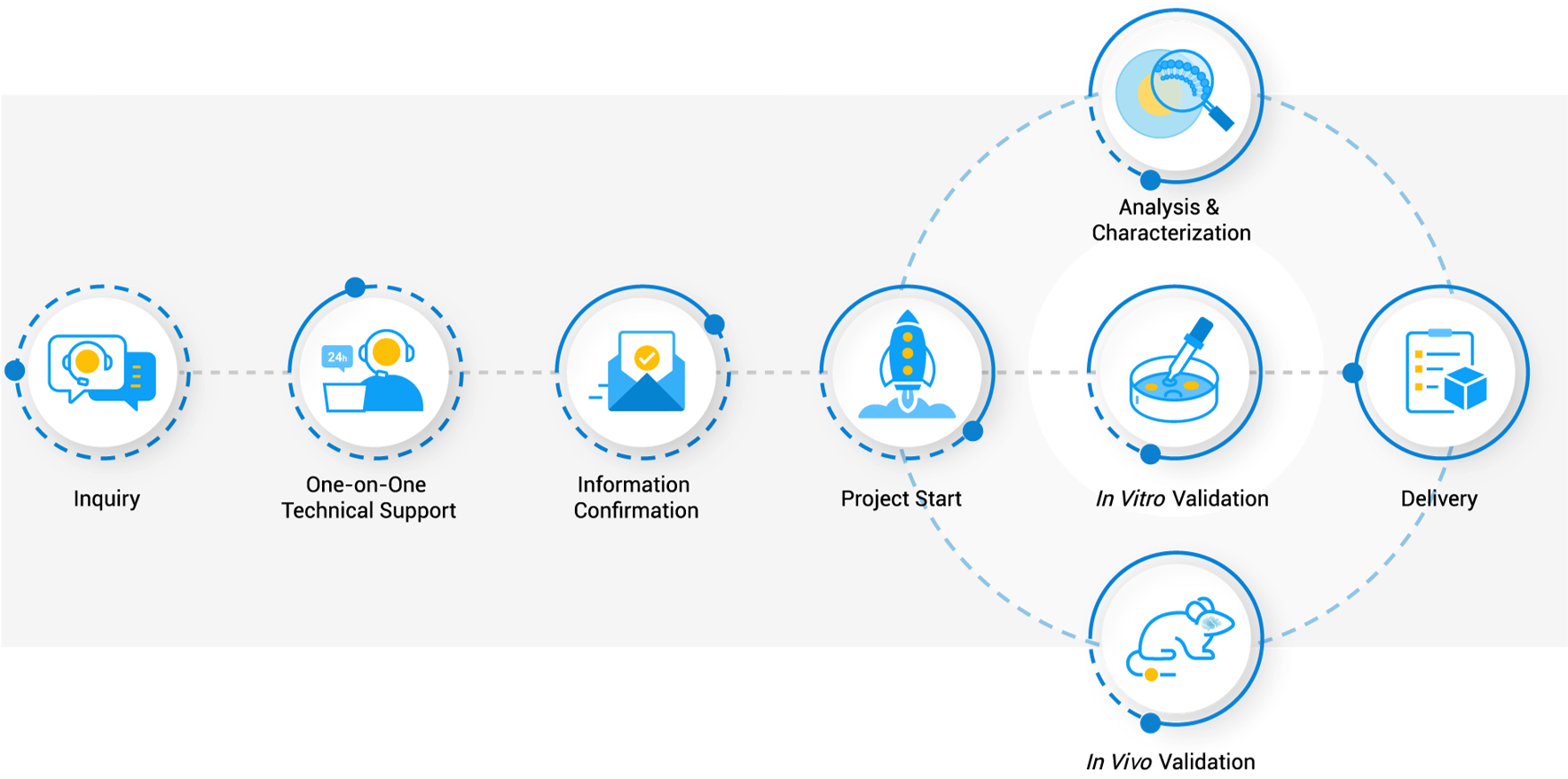
Translating Nanocarrier Versatility into Therapeutic Efficacy
Conventional liposomes are essential Module Delivery Systems for a diverse array of therapeutic modalities. Our services are tailored to address the unique challenges presented by each payload:
- Nucleic Acids: Encapsulation of mRNA, siRNA, shRNA, and ASOs for stability, delivery to immune cells, and effective cellular internalization.
- Small Molecule Drugs: Optimizing the pharmacokinetics and biodistribution of existing chemotherapeutic or antimicrobial agents (e.g., reducing cardiotoxicity).
- Proteins & Peptides: Protecting sensitive biologicals from denaturation and clearance while improving bioavailability.
- Advanced Therapeutics: Delivering novel modalities like protein degraders to ensure effective intracellular concentrations
Why Choose Creative Biolabs?
Creative Biolabs is dedicated to providing the tools and expertise required to accelerate your research. When you choose our Conventional Liposome Development Services, you gain a partner committed to scientific excellence and operational efficiency.
Authority & Experience
Over 20 years of focused expertise in drug delivery systems.
Scalability
Seamless transition from lab-bench development to high-volume production, ensuring reliable scale-up for preclinical readiness.
Quality Guarantee
Utilization of validated, state-of-the-art platforms for precise control over liposome size and purity, providing the reliable manufacturing quality you require.
Collaborative Approach
Our consultative model ensures that the final formulation is perfectly aligned with your therapeutic goal—setting the foundation for future generations of targeted delivery systems.
With two decades of specialized experience, Creative Biolabs is the industry leader in precision Conventional Liposome Development. We provide scalable, quality-guaranteed formulations engineered for optimal therapeutic index. Contact our expert team today to accelerate your drug delivery research and solve your most complex payload challenges.
Related Services
FAQs
What is the primary difference between passive and active drug loading in liposomes?
Passive loading involves drug encapsulation during the initial liposome formation process, often resulting in lower efficiency for hydrophilic drugs. Active loading (e.g., using pH or sulfate gradients) occurs after the liposomes are formed, utilizing specialized conditions to drive high concentrations of certain APIs into the aqueous core, often achieving much higher Entrapment Efficiency.
Why is controlling the Polydispersity Index (PDI) so critical for liposomes?
PDI is a measure of the size distribution homogeneity. A low PDI (typically < 0.2) is critical because a heterogeneous population (high PDI) leads to unpredictable pharmacokinetics, inconsistent biodistribution, and unreliable cellular uptake, which are major obstacles to successful clinical translation.
How do conventional liposomes achieve passive targeting, such as the EPR effect?
The EPR effect relies on the liposome's size (ideally 100–200 nm). Tumor vasculature is often leaky, allowing these nanocarriers to extravasate and accumulate in the tumor interstitial space. Conversely, the dense, healthy tissue vasculature prevents their entry, leading to localized accumulation.
Can Creative Biolabs help me scale up my current research-grade liposome formulation?
Absolutely. Our core competency includes process optimization and Production Scaling. We validate your research-scale formulation on pilot-scale equipment (often using advanced Microfluidics) and provide the necessary documentation and data to ensure a smooth, reproducible transition to large-scale manufacturing.
What types of stability testing do you offer for the final liposomal formulation?
We perform comprehensive stability assessments, including accelerated and real-time stability studies, monitoring for changes in Particle Size, PDI, EE, and Zeta Potential under various storage conditions, including post-lyophilization stability.
Reference
- Al Badri, Yaqeen Nadheer, et al. "Conventional Liposomal Formulation Methods." Encyclopedia. Web. 12 May, 2023. https://doi.org/10.3390/pharmaceutics15010294. Distributed under Open Access license CC BY 4.0, without modification.
Our services are For Research Use Only. We do not provide services to individuals.
Online Inquiry