Peptide modified Liposome Development Service for Targeted Drug Delivery
Delivering therapeutics to specific physiological targets is a major challenge in modern medicine. Creative Biolabs addresses this by providing Professional Peptide-modified Liposomes Development Services. By coupling our advanced modular delivery systems with high-affinity peptide ligands, we transform passive carriers into precision-guided vehicles.
Start Your Peptide-modified Liposomes Project
The Science of Peptide-modified Liposomes
Peptide-mediated Targeted Drug Delivery Strategies
Targeted drug delivery leverages specific ligand-receptor interactions to concentrate therapeutics precisely at the site of disease. In the field of peptide-mediated targeting, two distinct strategies are commonly employed to facilitate this precision transport:
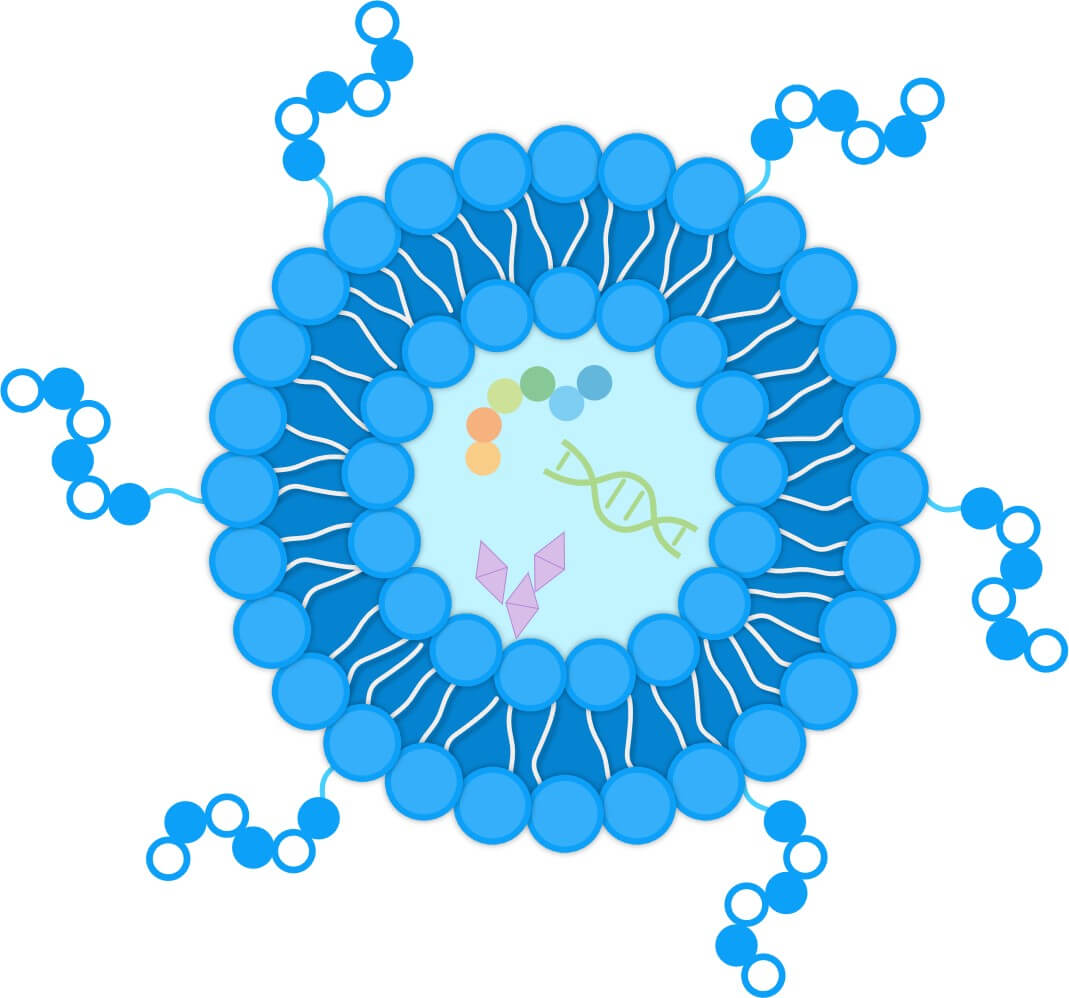
This advanced strategy involves attaching peptides to the surface of a liposome carrier. Single liposome can encapsulate thousands of drug molecules (high payload capacity) and protect sensitive cargo (like mRNA or CRISPR complexes) from enzymatic degradation, while the surface peptides drive specific cellular uptake.
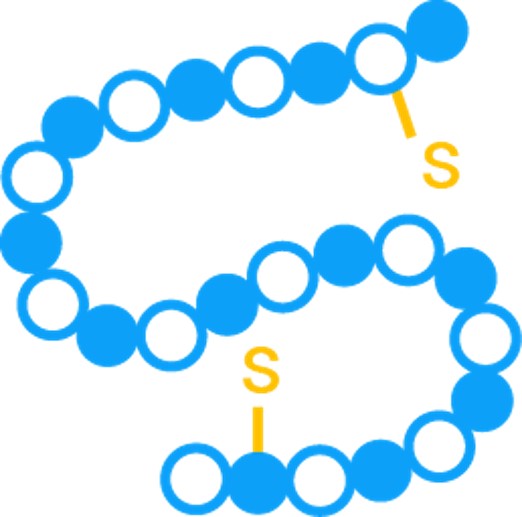
This strategy involves the covalent attachment of a specific peptide directly to a therapeutic molecule, often utilizing a cleavable linker to facilitate drug release upon cellular entry. This approach is widely recognized for its efficacy in the targeted delivery of small molecule drugs.
Principles of Peptide-Conjugated Liposomes
Peptide-conjugated liposomes combine the structural versatility of lipid vesicles with the specificity of protein ligands. The principle relies on ligand-receptor interaction: surface-engineered peptides bind to specific receptors overexpressed on target cells (e.g., tumor cells or the blood-brain barrier).
Key Advantages:
- Enhanced Specificity: Differentiating between diseased and healthy tissue.
- Active Cellular Uptake: Triggering receptor-mediated endocytosis to pull the entire cargo into the cell.
- Endosomal Escape: Utilizing pH-sensitive peptides to disrupt endosomes and release cargo into the cytoplasm.
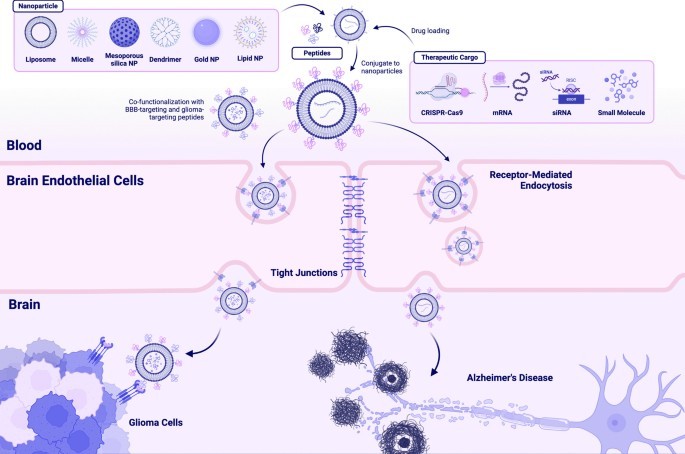 Fig. 1 Peptide-functionalized nanoparticles (NPs) for targeted therapeutic delivery across the blood–brain barrier (BBB).1
Functional Peptide Categories
The development of peptide-coupled liposomes relies on selecting specific peptide classes to overcome distinct biological barriers. From homing ligands that ensure precise tissue accumulation to cell-penetrating sequences that facilitate membrane translocation, our extensive library empowers researchers to engineer smart delivery vehicles that actively navigate to and enter their target cells.
Cell-Penetrating Peptides (CPPs)
Short peptides that facilitate the translocation of payloads across the plasma membrane, enabling efficient intracellular delivery.
Homing Peptides (HPs)
Peptides that bind specifically to receptors overexpressed on the surface of target cells (e.g., tumor cells) or vasculature, ensuring site-specific accumulation.
Cell-Penetrating Homing Peptides (CPHPs)
Dual-function peptides that possess both specific tissue-targeting capabilities and the ability to penetrate cell membranes, enhancing deep tissue penetration.
Nuclear Localization Signal Peptides (NLS)
Specific sequences that direct the transport of the payload from the cytoplasm into the nucleus, critical for gene editing applications.
Below is a summary of common peptide types and their disease targets.
| Application | Peptide Receptor / Target | Specific Peptides |
|---|---|---|
| Solid Tumors (General) | Integrins (αvβ3, αvβ1, α1β5) | RGD,ATN-161, Cyclic RGD |
| Brain Tumors (Glioma) | LRP1 (Low-density lipoprotein receptor) | Angiopep-2 |
| Breast Cancer | HER2 receptors | AHNP, KCCYSL, LTVSPWY |
| Gene Therapy (General) | Cell Membrane Phospholipids | TAT, (Arg)9 |
| Prostate Cancer | PSMA (Prostate-specific membrane antigen) | PSMA-specific peptides |
| Nuclear Therapy | NLS receptor | SV40, GKKRSKV, KSRKRKL |
Premier Peptide-Liposome Engineering Services
We offer a comprehensive suite of services designed to navigate the complexities of peptide chemistry and liposome formulation. Our solutions are tailored to leverage peptide-mediated targeted delivery for your specific application.
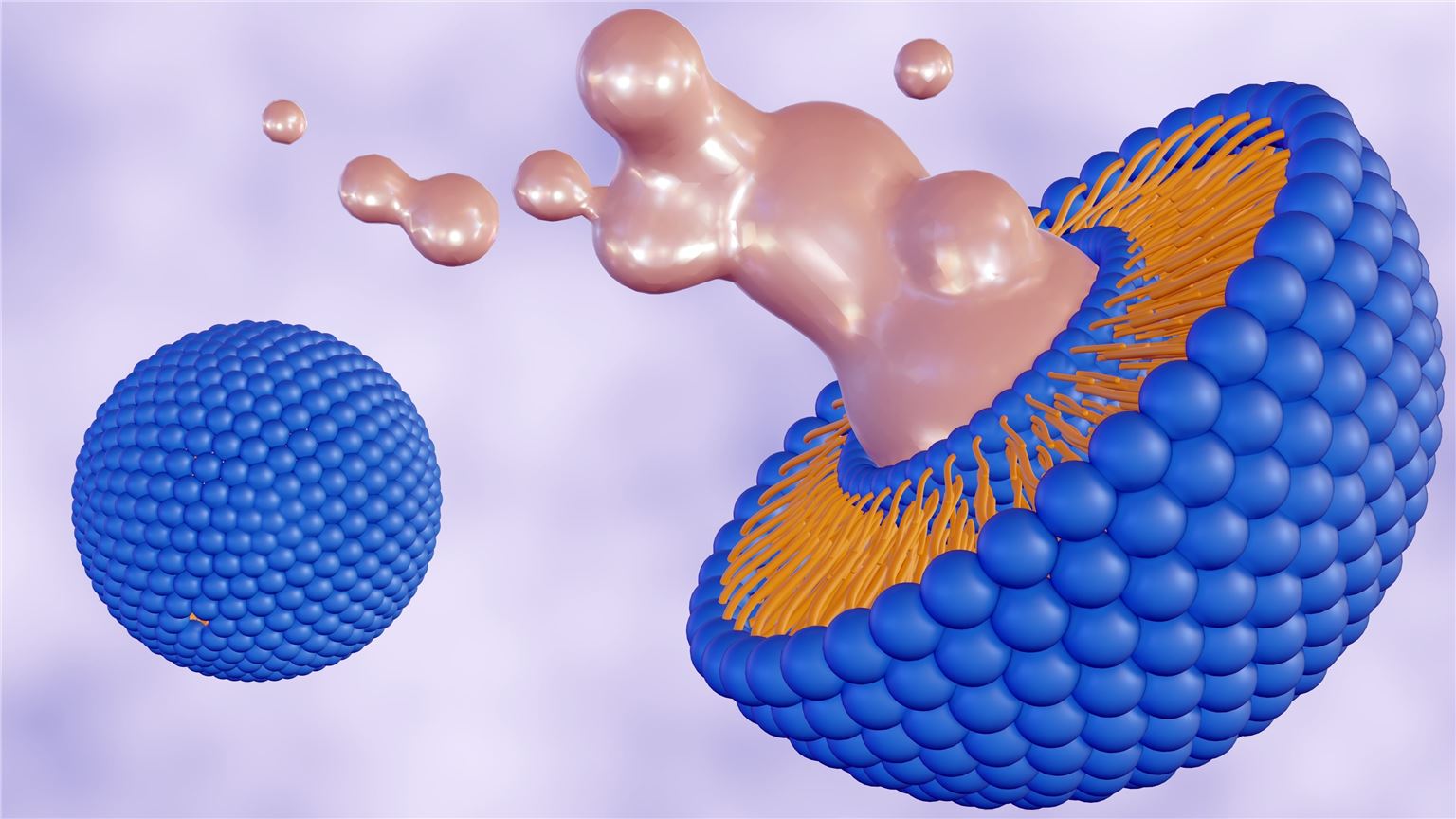
We provide high-purity synthesis services for linear, cyclic, and modified peptides, specifically designed with functional handles for seamless liposome attachment.
- Purity & QC: All peptides are purified via HPLC (>95%) and verified by Mass Spectrometry to ensure conjugation efficiency.
- Specialized Modifications: Capabilities include cyclization for stability, phosphorylation, and fluorescent labeling (e.g., FITC, Cy5) for cellular tracking.
- Functional Handles: Incorporation of C-terminal Cysteines or specific linkers to facilitate Thiol-Maleimide or Click Chemistry coupling.
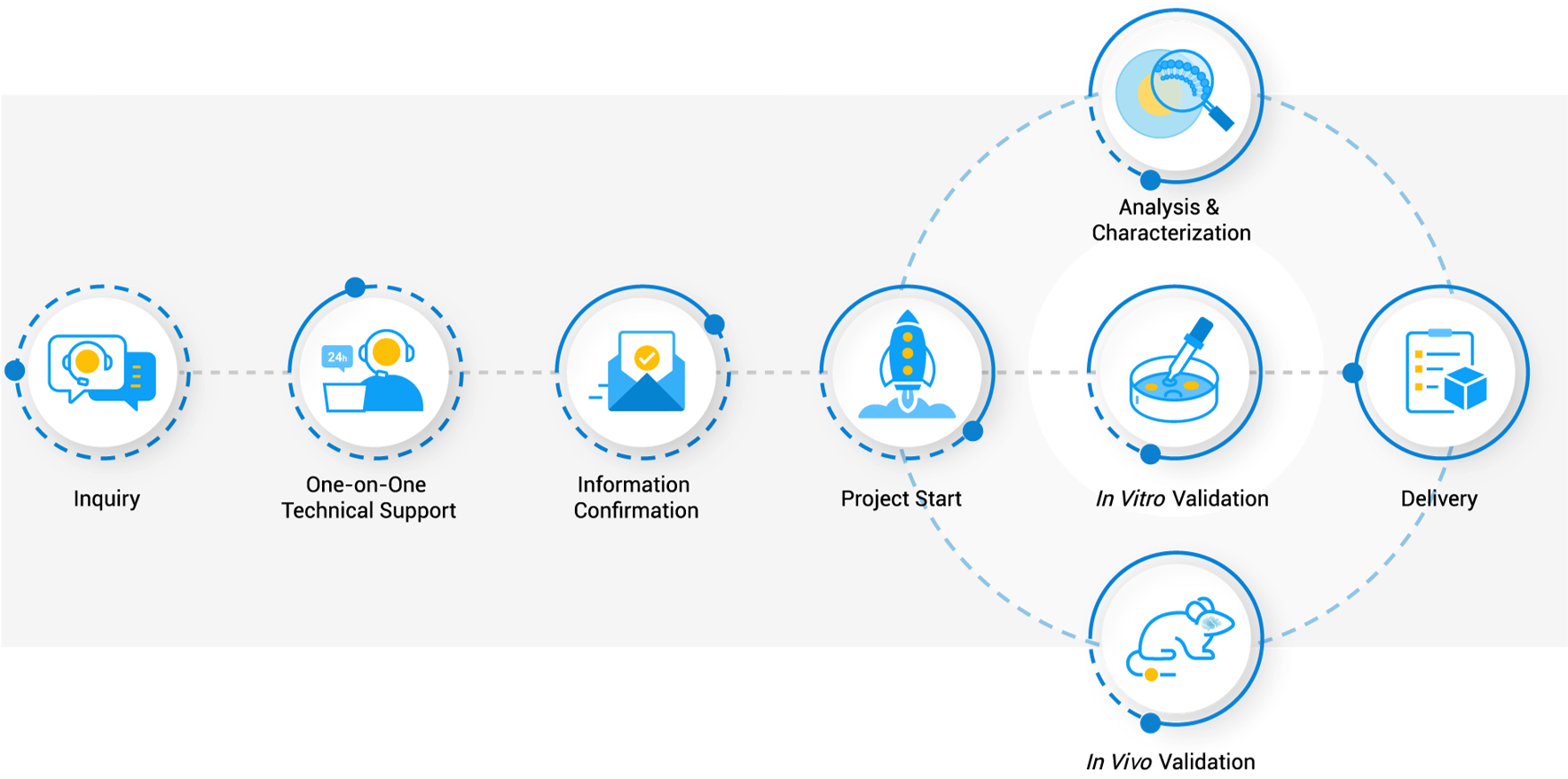
Workflow
Revolutionizing Research with Peptide-modified Liposomes
Our advanced peptide-coupled liposome platforms are driving innovation in critical therapeutic areas.
- Precision Oncology and Tumor Targeting We utilize tumor-homing peptides to deliver chemotherapeutics specifically to integrin-overexpressing cancer cells. This peptide-mediated targeted delivery minimizes damage to healthy tissue and enhances the accumulation of drugs at the tumor site.
- Non-Invasive Brain Drug Delivery Overcoming the Blood-Brain Barrier (BBB) is a primary challenge in neurology. Our formulations employ BBB-shuttling peptides (like Angiopep-2) to facilitate the receptor-mediated transcytosis of neuroprotective agents for Alzheimer's and Parkinson's research.
- Next-Generation Gene Editing For CRISPR/Cas9 and mRNA therapeutics, intracellular access is mandatory. We engineer liposomes with Cell-Penetrating Peptides (CPPs) and fusogenic peptides to ensure efficient endosomal escape, releasing the genetic payload directly into the cytoplasm.
Why Choose Creative Biolabs?
Expertise in Conjugation Chemistry
We master various coupling strategies (Thiol-Maleimide, Amine-NHS, Click Chemistry) to ensure stable and active peptide-coupled liposomes.
High-Fidelity Targeting
Our optimization protocols ensure the proper orientation of peptides on the liposome surface, preserving their binding affinity to biological receptors.
Scalable Manufacturing
We offer seamless scalability from milligram-scale pilot batches for in vitro studies to gram-scale production for preclinical animal models.
Integrated Stability Solutions
Our lyophilization services provide a robust, long-term storage solution for peptide-modified formulations, solving common instability issues.
Creative Biolabs stands at the forefront of targeted drug delivery, offering robust, scalable, and scientifically rigorous Peptide-Modified Liposomes Development Services. By combining our deep expertise in lipid chemistry with advanced peptide engineering, we empower researchers to navigate complex biological barriers and unlock the full therapeutic potential of their compounds.
Related Services & Products
Related Services
Related Products
| Product Name | Description | Inquiry |
|---|---|---|
| Lipid-Protein Conjugation Kit (Universal) | A versatile kit designed for the efficient conjugation of antibodies, peptides, and proteins to lipid surfaces. | |
| Targeted Peptides | High-affinity peptide sequences (e.g., RGD, GE11) pre-validated for specific receptor binding. | |
| Fluorescent Peptides | Peptides labeled with FITC, TAMRA, or Cyanine dyes for imaging and cellular tracking studies. | |
| Biotinylated Peptides | Peptides modified with biotin for easy detection (Streptavidin) or affinity purification. | |
| Cell-penetrating Peptides | Sequences like TAT and (Arg)9 designed to facilitate transport across cell membranes. |
FAQs
Can you conjugate my proprietary peptide sequence?
Yes, absolutely. We can synthesize your custom peptide sequence in-house or work with a peptide you provide, ensuring strict confidentiality and IP protection.
Do you offer lyophilization for peptide-modified liposomes?
Yes, we highly recommend lyophilization for long-term stability. We develop custom cryoprotectant cycles to ensure the particles retain their size and encapsulation efficiency upon reconstitution.
What types of linkers do you use?
We primarily use PEG linkers of various molecular weights (PEG2000, PEG5000) to extend circulation time and provide steric flexibility for the peptide to access its receptor. We can also use cleavable linkers for triggered release.
How much material do I need to provide for a pilot study?
For a standard pilot study, we typically require 10-20 mg of your therapeutic payload. However, we can work with smaller quantities for high-value compounds.
What is the shelf-life of the final product?
Liquid formulations are typically stable for 2-4 weeks at 4°C. Our lyophilized formulations remain stable for 6-12 months at -20°C or -80°C.
Reference
- Tang, Sophia, Emily L. Han, and Michael J. Mitchell. "Peptide-functionalized nanoparticles for brain-targeted therapeutics." Drug Delivery and Translational Research (2025): 1-20. https://doi.org/10.1007/s13346-025-01840-w. Distributed under Open Access license CC BY 4.0, without modification.