Antigen Processing & Immune Checkpoint-Exposure Impact Analysis Service
Creative Biolabs delivers strategic molecular roadmaps designed to overcome tumor immune evasion. Our core solution is the targeted reversal of immune evasion mechanisms by pinpointing the exact failure point in the antigen processing and presentation (APP) pathway. Clients gain essential, non-obvious deliverables, including high-resolution mapping of major histocompatibility class (MHC) I/II downregulation, transporter-associated with antigen processing (TAP) transporter dysfunction, and oncoprotein-mediated pathway interference. This detailed analysis maximizes your therapeutic strategy by identifying and validating novel targets that restore effective anti-tumor immunity.
The Immunological Bottleneck: Why ICIs Fail
The success of PD-1/PD-L1 blockade hinges on cytotoxic T lymphocytes (CTLs) recognizing tumor antigens via MHC I molecules. The seminal mechanism of adaptive immune evasion is the tumor's disruption of this vital pathway. Tumor cells deploy sophisticated tactics, including the loss of antigenicity and, most crucially, MHC I downregulation, effectively rendering them "invisible" to CD8+ T cells. Furthermore, tumors often exhibit dysfunctional antigen processing machinery (APM), with altered expression of components like the TAP transporter or immunoproteasome subunits. The therapeutic benefit of immune checkpoint inhibitors (ICIs) is therefore proportional to the efficiency of the tumor's APP pathway.
Strategic Research Solutions
Mechanism-of-Resistance Definition
We move beyond descriptive classifications (PD-L1 positive) to provide a precise, mechanistic diagnosis. By integrating genomic/proteomic data, we define the exact molecular scar (e.g., loss of TAP1 expression or silencing of immunoproteasome subunits) causing the APP defect. This deep understanding guides intervention.
Rational Target Selection
We facilitate the design of combination therapies by identifying the specific defective component (e.g., ERAP enzyme, epigenetic modifier). We pinpoint the small molecule or biologic required to restore MHC I presentation when combined with an ICI.
Superior Biomarker Development
We generate high-confidence, APP-based biomarkers, notably our quantitative APM signature score. This score synthesizes multi-omic data to predict responsiveness to checkpoint blockade with significantly higher accuracy than traditional metrics.
Do you know the precise molecular scar driving resistance in your cohort? Speak with a Creative Biolabs specialist to map your mechanism today.
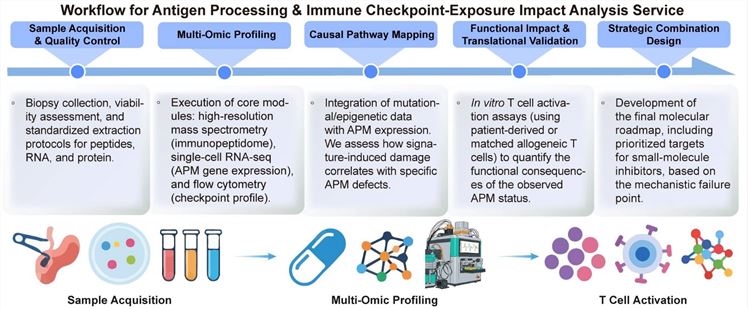
Workflow: Comprehensive & Transparent Molecular Roadmap
Our service is structured to provide a comprehensive and detailed explanation of the molecular mechanisms driving immune evasion, suitable for visualization as a clear, professional flowchart.
Publication
This review examines how defects in the antigen processing and presentation machinery enable tumors to evade immune detection. It highlights that such defects are a major mechanism of primary and acquired resistance to ICI therapy, limiting its efficacy. The authors argue that modulating intracellular antigen processing—particularly targeting enzymes like ERAP1/ERAP2—represents a promising combinatorial strategy to enhance tumor immunogenicity and improve patient responses to cancer immunotherapy.
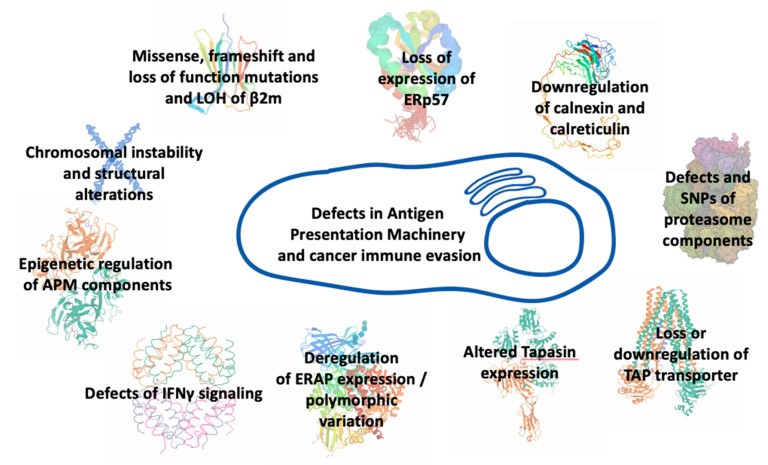 Fig.1 Molecular defects in the antigen presentation machinery underlie immune evasion by tumors. 1
Why Choose Us?
Creative Biolabs stands apart by focusing rigorously on the causality of immune evasion, definitively measuring the actual MHC I peptide load—the single most important metric for T cell recognition—which RNA-only services cannot provide. Our key advantage is the unparalleled multi-omic integration of high-resolution mass spectrometry (to quantify peptide output) with single-cell RNA-seq (to identify expression faults). This integration allows us to tackle complex challenges like viral oncogene-driven cancers. Our proprietary APM signature score provides APP-based biomarker superiority, predicting response to checkpoint blockade with superior resolution compared to conventional tumor mutational burden (TMB) or PD-L1. This delivers deep mechanistic intellectual property (IP) by defining precise, factor-driven mechanisms of immune evasion, enabling novel target identification.
Experience the Creative Biolabs Advantage - Get a Quote Today
FAQs
How does this service provide better predictive power than existing biomarkers like TMB and PD-L1?
By defining the efficiency of the entire APP pathway (our APM signature score) and validating it with functional T cell assays, we reveal the functional bottleneck that TMB and PD-L1 miss, leading to superior stratification accuracy.
What is the minimal sample requirement for the multi-omic profiling, and are there special handling precautions?
We generally require a minimum of 2-3 matched fresh/frozen biopsies for comprehensive multi-omic analysis. Proper cryopreservation is critical, as peptide integrity is paramount. Our specialists can provide detailed sample handling protocols upon consultation to ensure sample quality.
How does Creative Biolabs definitively determine the specific "carcinogenic factor" driving the APP dysregulation?
We use advanced bioinformatics to map mutational signatures and epigenetic changes to known etiological agents. For example, a UV-exposed tumor exhibits a distinct DNA damage signature that can be linked to the subsequent transcriptional silencing of APM components.
Customer Review
-
Deep Mechanistic IP
Using service in our research has significantly facilitated the identification of specific, actionable small molecule targets that directly reverse APP failure. We now target the mechanism of evasion, not just the checkpoint. – J**n* R****r -
Translational Validation
Using Creative Biolabs' service in our research has improved linking our molecular expression data to a functional biological outcome via the in vitro T cell activation assays, which was essential for progressing our drug candidate. – Pl H*n
Related Services
To fully leverage the mechanistic data provided by the antigen processing and immune checkpoint-exposure impact analysis service, Creative Biolabs offers several complementary services:
Neoepitope Identification Service
Creative Biolabs drives neoantigen discovery by combining a unique, comprehensive sequencing portfolio and proprietary bioinformatics algorithms for effective anti-tumor vaccine development in immuno-oncology.
Learn More →Immunogenicity Prediction Services
Creative Biolabs offers sensitive immunogenicity assessment technology (SIAT) for in silico and in vitro screening of biologics, effectively quantifying anti-drug antibodies (ADAs) and evaluating pharmacokinetic/pharmacodynamic safety risks.
Learn More →How to Contact Creative Biolabs
The future of oncology success is built on understanding the complex mechanisms of tumor immune evasion. Our service for carcinogenic factor analysis provides the necessary high-resolution, multi-omic data to move beyond observational biomarkers and implement truly rational, personalized combination strategies. Partner with Creative Biolabs to define the molecular scars, fix the immunological bottleneck, and unlock the full cytotoxic potential of your therapeutic candidates.
Reference
- Mpakali, A., and E. Stratikos. "The Role of Antigen Processing and Presentation in Cancer and the Efficacy of Immune Checkpoint Inhibitor Immunotherapy." Cancers (Basel) 13.1 (2021). Distributed under Open Access license CC BY 4.0, without modification. https://doi.org/10.3390/cancers13010134
 Download our brochure