Spatial Metabolomics Service for Metabolic Heterogeneity Research
Spatial metabolomics, a branch of metabolomics, offers a unique perspective by assessing the spatial distribution of metabolites within tissues or cells. This technique delves into the complex network of small molecules, revealing their concentrations and interactions across different cellular regions. By visualizing the metabolic heterogeneity, researchers can gain a deeper understanding of metabolic processes, enabling them to make informed decisions in the development of innovative therapeutic strategies.
Workflow of Spatial Metabolomics
The workflow of spatial metabolomics is a carefully orchestrated process that delivers valuable insights into cellular metabolism. It consists of the following key steps:
1. Sample Preparation
Sample preparation involves the collection and preservation of tissue or cell samples. Creative Biolabs offers a wide range of options, ensuring that the selected method suits the research objectives.
2. Imaging
High-resolution imaging techniques are employed to capture spatial data, providing the foundation for subsequent analysis.
3. Data Acquisition
Advanced mass spectrometry and imaging platforms collect data at high spatial resolution, generating information-rich datasets.
4. Data Analysis
Sophisticated bioinformatics tools are used to process and analyze the data, revealing the spatial distribution of metabolites.
5. Metabolic Profiling
Metabolic profiling identifies and quantifies a diverse range of metabolites, facilitating a comprehensive understanding of the cellular metabolic landscape.
6. Spatial Mapping
Spatial mapping visualizes the distribution of metabolites within the cellular landscape, highlighting metabolic heterogeneity.
Our Spatial Metabolomics Service
At Creative Biolabs, we are at the forefront of spatial metabolomics, offering an array of services to unlock the metabolic secrets hidden within cancer cells. Our team of experts combines decades of experience in cancer immunotherapy with cutting-edge spatial metabolomics techniques to provide comprehensive insights.
- Multi-Omics Integration
Our service integrates spatial metabolomics with other 'omics' data, such as genomics and proteomics, to offer a holistic understanding of cancer biology. This comprehensive approach allows for the identification of key metabolic pathways and potential targets for cancer immunotherapy.
- High-Resolution Imaging
We employ state-of-the-art imaging techniques, including mass spectrometry-based technologies and advanced microscopy, to visualize the spatial distribution of metabolites. This enables us to pinpoint metabolic hotspots, assess metabolic gradients, and understand how cancer cells adapt to their environment.
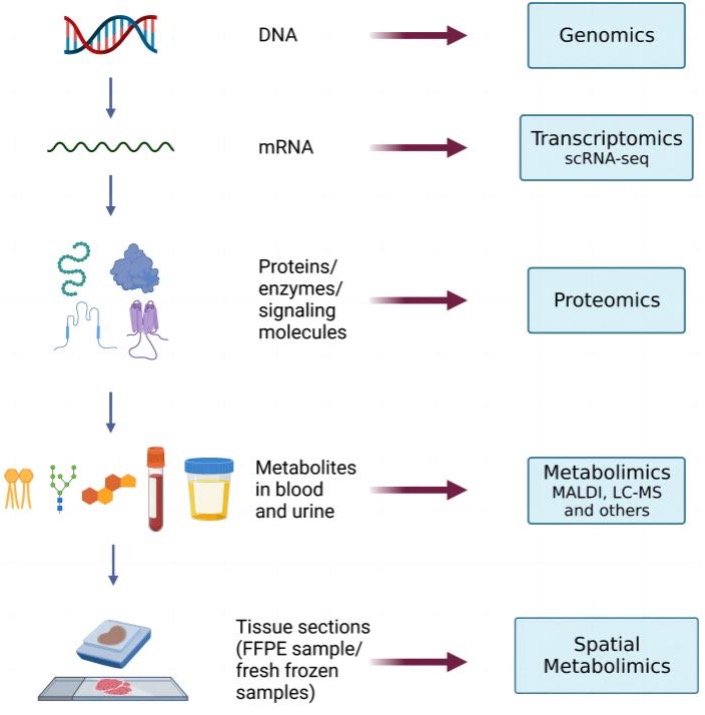 Figure 1 Manufacturing flow for the final spatial metabolic images from the tumor samples. (Zheng, 2023)
Applications of Spatial Metabolomics
Spatial metabolomics holds immense potential across a range of applications in cancer immunotherapy research:
1. Biomarker Discovery
Identifying spatial metabolic signatures can lead to the discovery of novel biomarkers, aiding in patient stratification and personalized treatment strategies.
2. Drug Development
Understanding the metabolic heterogeneity within tumors can guide the development of targeted therapies and combination treatment approaches.
3. Immune Response Assessment
Spatial metabolomics helps assess the metabolic status of immune cells within the tumor microenvironment, facilitating the optimization of immunotherapy approaches.
4. Tumor Microenvironment Analysis
By revealing the metabolic interactions within the tumor microenvironment, spatial metabolomics enables a deeper understanding of tumor progression and immunosuppressive mechanisms.
Please contact us for detailed information and deeper communication to learn how we can be involved in your projects.
Reference
- Zheng, Ye, et al. "Spatial metabolomics in head and neck tumors: a review." Frontiers in Oncology 13 (2023): 1213273. Distributed under Open Access license CC BY 4.0, without modification.
 Download our brochure