Environmental Stress-Epigenetic Alteration Profiling Service
Creative Biolabs offers precise, high-resolution insights into how environmental and occupational stressors (e.g., chemical pollutants, dietary factors, radiation)—the exposome—fundamentally alter gene regulation to initiate disease. Our core deliverables provide the mechanistic evidence required for next-generation drug and biomarker development. We strategically shift the focus from irreversible genetic damage to correctable epigenetic marks (DNA methylation, histone modification). This approach reveals the initial molecular events in disease etiology, enabling the development of therapeutic agents that target and reverse detrimental epigenetic changes.
Foundation of Discovery: Introduction to Environmental Stress–Epigenetic Alteration Profiling
Epigenetic profiling is the systematic study of heritable changes in gene expression that occur without altering the underlying DNA sequence. These marks—primarily DNA methylation, histone modifications, and non-coding RNA expression—serve as a critical interface between the environment and the genome, acting as a molecular memory of exposure. Carcinogens, such as those linked to bladder cancer, often drive tumor initiation through non-genotoxic (KC4) mechanisms like chronic oxidative stress (ROS), which rapidly induces changes in the DNA methylome. Understanding these specific, reversible alterations is vital for designing preemptive and targeted therapies against complex diseases.
Strategic Medical and Research Solutions
Mechanistic Insights for Toxicology and Risk Assessment
Creative Biolabs identifies low-dose, nongenotoxic (KC4) carcinogenicity by mapping differential methylation regions (DMRs). We pinpoint ROS-induced epigenetic changes, providing critical mechanistic detail for robust risk modeling.
Accelerating Epi-Drug Development and Validation
We discover and validate reversible epigenetic targets (e.g., methylation status of tumor suppressor promoters), providing the molecular foundation for synthesizing and testing novel DNMT or HDAC inhibitors. This approach streamlines therapeutic pipelines designed to reverse environmentally induced diseases.
Establishing Biomarkers for Preemptive Medicine
We focus on establishing robust, blood-based epigenetic biomarkers that reliably signal disease risk (cancer, autoimmunity) long before clinical symptoms, revolutionizing patient stratification and early intervention.
High-Resolution Immune and Inflammatory Profiling
We mechanistically link specific environmental triggers to chronic inflammation or loss of self-tolerance by analyzing chromatin accessibility (ATAC-seq) and ncRNA changes in precise immune cell populations (T and B cells), providing a functional map of epigenetic deregulation.
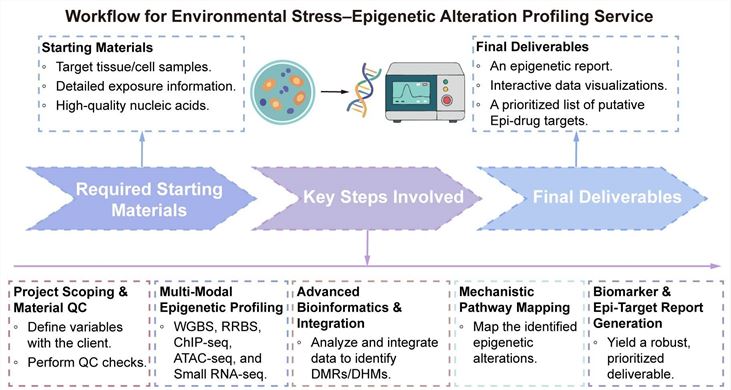
Workflow for Comprehensive Epigenetic Profiling
Our workflow is designed for transparency and scientific rigor, ensuring clients receive highly reliable and statistically sound data suitable for immediate application.
Publication
This review article delineates the pivotal role of reversible epigenetic alterations—including DNA methylation, histone modifications, and RNA epigenetics—in cancer pathogenesis. It comprehensively discusses the development and clinical application of epigenetic inhibitors, highlighting combination therapies to overcome resistance. Finally, it explores the integration of multi-omics and artificial intelligence to translate these discoveries into biomarkers and strategies for precision oncology, aiming for improved diagnosis and personalized treatment.
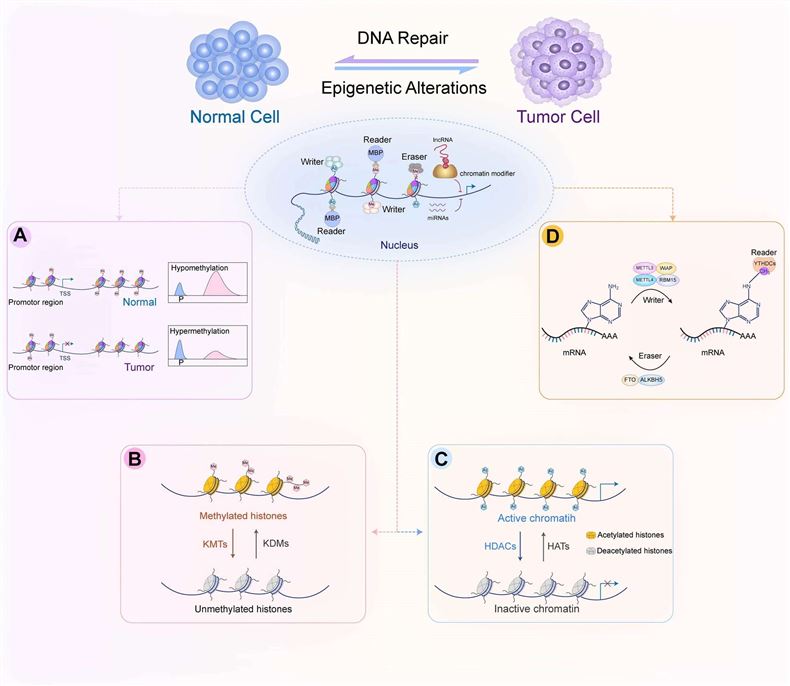 Fig.1 Epigenetic mechanisms driving carcinogenesis. 1
Why Choose Us?
Creative Biolabs stands apart through its commitment to mechanistic depth and therapeutic applicability, offering the unique advantage of seamless, integrated multi-modal epigenetic analysis. We are a leading provider offering the critical capability of simultaneous, correlated analysis across all three key epigenetic pillars: DNA methylation, histone modification, and non-coding RNA. This integration guarantees the detection of complex regulatory mechanisms. Our data analysis protocols are specifically tuned to prioritize pharmacologically reversible marks, which significantly accelerates the transition into preclinical validation of Epi-drugs. Leveraging over 20 years of experience and proprietary bioinformatics for precision, we deliver quality data suitable for regulatory submissions and detect subtle, low-abundance epigenetic signatures of exposure.
Experience the Creative Biolabs advantage in precision epigenomics - Get a quote today to discuss your specific targets.
FAQs
What sample types can Creative Biolabs accept for this service, particularly if my input material is limited?
We are equipped to handle a wide spectrum of sample types, including challenging materials like formalin-fixed, paraffin-embedded (FFPE) tissues, fresh or frozen biopsies, PBMCs, and sorted primary cell populations.
How is your multi-modal epigenetic approach better than just running standard gene expression (RNA-seq)?
While RNA-seq captures the effect (mRNA level), our multi-modal profiling captures the cause—the stable, upstream epigenetic mark (DNA methylation or chromatin state) that dictates whether a gene is active or silenced.
We need to correlate environmental exposure with autoimmune risk. Can your service help identify novel markers in T-cells?
Absolutely. Our service is precisely designed to profile both chromatin accessibility (via ATAC-seq) and repressive histone marks in specific immune cell subsets, such as T-cells and B-cells.
Customer Review
-
Chromatin Accessibility Mapping
Using Creative Biolabs' service in our research has significantly improved the mechanistic linkage between environmental pollutants and innate immune activation, giving us a clear pathway for intervention. - Dr. Js*Sth -
Epi-Target Prioritization
Using Creative Biolabs' service in our research has facilitated the discovery and validation of specific, reversible DNMT inhibitor targets in lung tissue, far surpassing the resolution achieved with standard microarray approaches. – Prof. E**a G****n
Related Services
Creative Biolabs offers several complementary services that should be considered alongside your epigenetic alteration profiling project to achieve complete success:
Targeted Protein Degradation Service
Creative Biolabs' TPD assay service accelerates the identification of novel therapeutics by exploiting the cellular ubiquitin-proteasome system (UPS) to remove previously "undruggable" proteins.
Learn More →B Cell-based Microarray Assay
Creative Biolabs offers comprehensive B-cell-based microarray assays for cancer epitope analysis, using in situ synthesis and spotting techniques to screen patient sera and rapidly identify high-reactivity epitope peptides.
Learn More →How to Contact Creative Biolabs
Creative Biolabs' environmental stress–epigenetic alteration profiling service delivers the highest resolution, integrated view of the epigenome available, translating complex environmental exposure into validated biomarkers and actionable therapeutic targets. Partner with us to accelerate your research in oncology, immunology, and toxicology with confidence and precision.
Reference
- Yu, X., et al. "Cancer epigenetics: from laboratory studies and clinical trials to precision medicine." Cell Death Discov 10.1 (2024): 28. Distributed under Open Access license CC BY 4.0, without modification. https://doi.org/10.1038/s41420-024-01803-z
 Download our brochure