G1/S Transition Activation Analysis Service
Creative Biolabs offers a multi-layered analytical platform designed to deconstruct the "proliferative engine" of cancer cells. We provide a functional roadmap that characterizes how specific carcinogenic factors or candidate molecules manipulate the G1/S restriction point. By moving beyond traditional endpoints, we help you identify novel therapeutic windows in checkpoint-compromised tumors, such as small-cell lung cancer (SCLC) and triple-negative breast cancer (TNBC). Our expertise ensures that your data is grounded in the latest scientific breakthroughs, from the exploitation of E2F hyperactivation to the induction of ATR-dependent cell death.
The Critical Significance of G1/S Dysregulation
The G1/S transition serves as the "point of no return," where carcinogenic factors subvert regulators like RB1, CDK8/19, UBR5, and AKT to drive uncontrolled growth. Creative Biolabs maps these activation signatures to identify therapeutic vulnerabilities. We exploit CDK8/19 inhibition to force premature S-phase, triggering lethal ATR-dependent cell death. Additionally, we analyze UBR5-mediated Rb degradation and E2F hyperactivation, which can paradoxically induce apoptosis. By quantifying AKT/FOXO1 signaling integration, we precisely define how specific factors accelerate transition kinetics, transforming molecular subversion into actionable clinical insights.
High-End Analytical Technologies
Our service is meticulously designed to provide actionable intelligence for every stage of your drug discovery or carcinogenic research program:
Mapping Non-Canonical Activation Trajectories
We identify how carcinogenic factors bypass the standard CDK4/6-Cyclin D relay. This includes characterizing the AKT/FOXO1 signaling switch and the de-repression of Cyclin D1, providing a detailed view of how metabolic and survival signals are integrated into the G1/S machinery.
RxL-Motif Specificity & Interaction Profiling
Using proprietary interaction assays, we map the conserved "RxL" hydrophobic patches on cyclins. This is critical for clients developing macrocyclic peptides or small molecules that aim to disrupt cyclin-substrate binding rather than simple kinase activity.
Rb Concentration & Stability Analysis
Leveraging recent discoveries in protein dynamics, we quantify UBR5-mediated Rb degradation. We determine if your factor triggers the premature destruction of hypo-phosphorylated Rb, effectively lowering the entry barrier for S-phase independently of CDK phosphorylation.
Induction of Premature G1/S Transition
We offer specialized assays to monitor the "over-driving" of the cell cycle. By inhibiting CDK8/19 subunits of the Mediator complex, we can force cells into a premature S-phase to induce a lethal ATR-dependent DNA damage response (DDR), creating a potent synthetic lethal strategy for high-expression tumors.
Neomorphic Complex Identification
Our platform detects the formation of non-standard complexes, such as Cyclin B–CDK2, in G1/S checkpoint-compromised cells. Identifying these neomorphic drivers allows you to exploit vulnerabilities that lead directly to mitotic catastrophe.
Contact our team of specialists today to discuss how our G1/S transition activation analysis service can provide the definitive insights your research demands.
Workflow
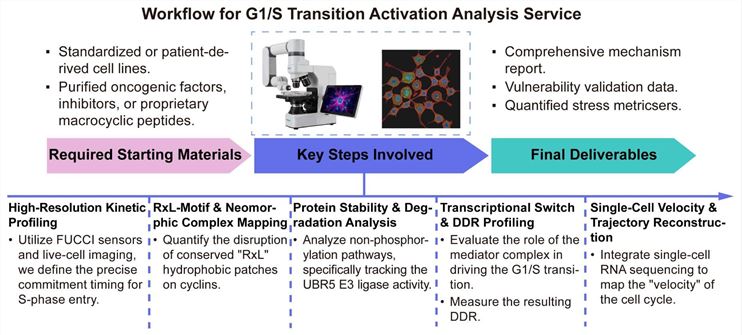
Our workflow is designed to provide a seamless transition from raw biological materials to high-impact mechanistic insights.
Publication
This study investigates the role of KCTD12 in breast cancer progression. The authors demonstrate that KCTD12 expression is significantly downregulated in tumor tissues and cell lines, and its low levels correlate with poor patient survival. Functionally, KCTD12 downregulation promotes cancer cell proliferation and tumorigenesis in vitro by accelerating the G1/S phase transition. Mechanistically, this effect is mediated through the activation of the AKT/FOXO1 signaling pathway, leading to altered expression of key cell cycle regulators.
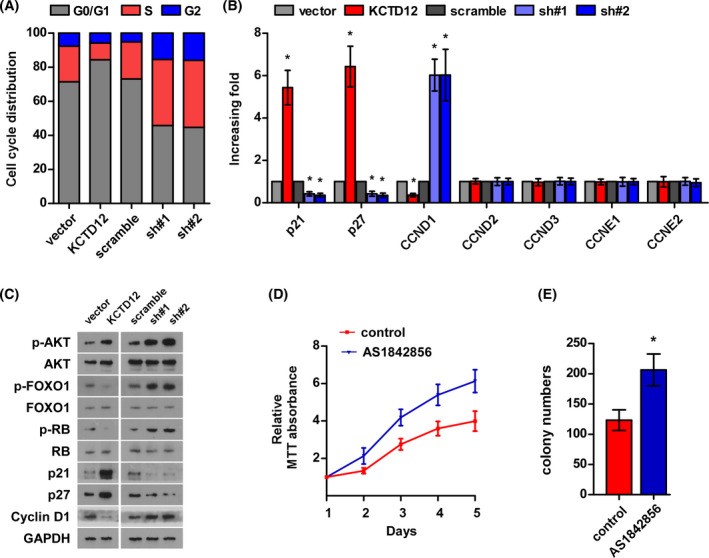 Fig.1 KCTD12 downregulation promotes G1/S transition in breast cancer cells. 1
Why Choose Us?
Creative Biolabs leads cell cycle innovation by integrating research to transform the G1/S transition from a static gate into a malleable therapeutic target. Our pioneering platform concurrently analyzes RxL-mediated cyclin-substrate interactions and UBR5-mediated Rb concentration flux, providing unmatched resolution of proliferative engines. We synthesize proprietary insights by linking transition kinetics to clinical markers, such as KCTD12 levels in breast cancer. Validated by published data, our methodologies demonstrate that inducing premature G1/S transitions via CDK8/19 or RxL disruption bypasses traditional resistance, triggering ATR-dependent programmed cell death and delivering high-stakes accuracy for drug discovery.
Experience the Creative Biolabs Advantage - Get a Quote Today
FAQs
Can your service differentiate between CDK-driven and proteasome-driven Rb inactivation?
Yes. Creative Biolabs utilizes a combined approach of phosphoproteomics and UBR5-specific ligase assays to determine whether Rb is being inactivated by phosphorylation or through concentration-dependent degradation.
How do you assess "premature" S-phase entry?
We monitor the kinetics of DNA replication markers (like MCM2 phosphorylation) relative to G1 duration. If S-phase begins before proper checkpoint clearance, we measure the resulting ATR-dependent DNA damage response.
Is this service compatible with drug-resistant cell lines?
Absolutely. We specialize in mapping "bypass" pathways, such as those used by cells that have become independent of the Cdk4/6-Cyclin D axis.
Customer Review
-
Enhanced Resistance Analysis
Using Creative Biolabs' G1/S transition activation analysis in our research has significantly facilitated our understanding of non-canonical Rb regulation. The UBR5 stability data were the missing piece in our resistance model. – Dr. Al*rt S -
Superior Interaction Mapping
The ability to visualize RxL-mediated substrate binding allowed us to design more specific macrocyclic peptides. Creative Biolabs provided a level of resolution we couldn't find elsewhere. – Sarah M*son
Related Services
CDK2/4/6 Cell Panel Screening Service
Creative Biolabs provides high-throughput CDK2/4/6 cell panel screening to evaluate compound efficacy across diverse cancer lines, identifying potent anti-cancer agents for clinical development through precise kinase-interaction profiling.
Learn More →Brain Cancer related Tumor Profiling Service
Creative Biolabs provides multi-omic brain cancer profiling, identifying biomarkers like CD133, Nestin, and UCH-L1 to overcome blood-brain barrier challenges and guide targeted, innovative therapies.
Learn More →How to Contact Creative Biolabs
Creative Biolabs provides a definitive platform for the interrogation of the G1/S transition. By mastering the nuances of the "flexible cell cycle"—including transcriptional hubs and protein stability dynamics—we empower our clients to discover more effective and resilient oncology leads.
Consult with Our Experts to Address Your Specific Research Questions - Inquire Now
Reference
- Ye, Run‐yi, et al. "KCTD12 promotes G1/S transition of breast cancer cell through activating the AKT/FOXO1 signaling." Journal of Clinical Laboratory Analysis 34.8 (2020): e23315. Distributed under Open Access license CC BY 4.0, without modification. https://doi.org/10.1002/jcla.23315
 Download our brochure