Tumor Cell Proliferation Analysis Services
Creative Biolabs provides a diagnostic framework to evaluate how compounds influence cell division via the "metabolic triad"—bioenergetics, macromolecular biosynthesis, and redox balance. By analyzing spatiotemporal tumor microenvironment (TME) dynamics, we differentiate direct mitogens from regenerative proliferation following cytotoxicity. Our mode of action (MOA) analysis bridges in vitro screening and in vivo outcomes, linking metabolic rewiring to long-term carcinogenic risk. This ensures data-driven safety evaluations before expensive animal bioassays, maintaining potency and human-relevant accuracy.
The Proliferation-Carcinogenesis Link: A Scientific Imperative
Cancer is a clonal disease originating from accumulated genetic errors in stem cells, primarily driven by two pathways: DNA-reactive carcinogenesis, which causes direct DNA damage typically following a non-threshold response, and increased cell proliferation. As a hallmark of non-genotoxic carcinogens, excessive proliferation—whether via direct mitogenesis or regenerative proliferation—increases the probability of spontaneous mutations. Crucially, proliferation-induced carcinogenesis exhibits a distinct biological threshold, unlike the linear response of genotoxic agents. Quantifying these markers early is essential for establishing "safe dose" levels and ensuring human relevance, providing a robust scientific basis for defining regulatory safety margins and assessing compound risk.
Key Deliverables and Solutions
Proliferation Index Profiling
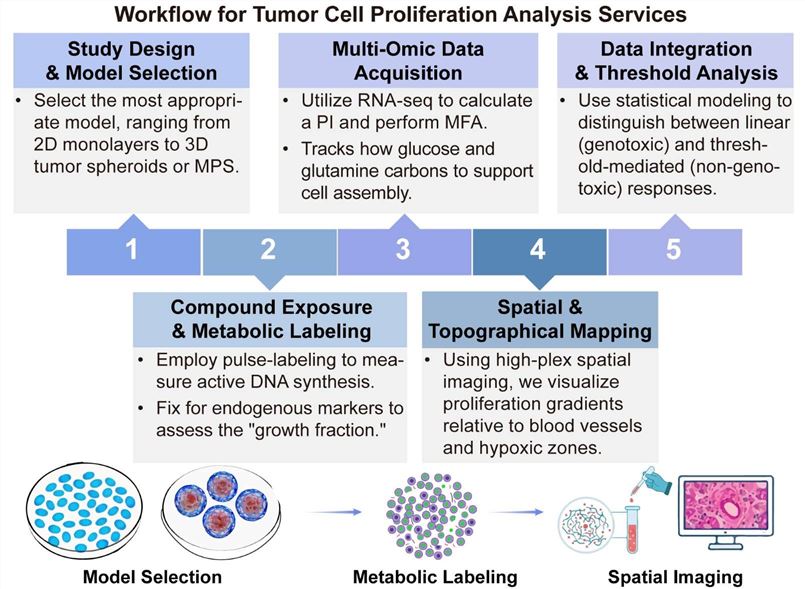
Creative Biolabs provides expert proliferation index profiling to identify carcinogenic risks. We distinguish between direct mitogenesis and regenerative proliferation, establishing critical biological thresholds for non-genotoxic agents.
Learn More →Mitogenic Signaling Activation
Creative Biolabs offers specialized mitogenic signaling Activation services to analyze carcinogenic factors. We precisely differentiate direct mitogens from regenerative proliferation, mapping metabolic rewiring to assess non-genotoxic risks.
Learn More →G1/S Transition Activation Analysis
By precisely mapping cell cycle checkpoints, we differentiate genotoxic from non-genotoxic risks, providing robust, human-relevant data for safety assessment and regulatory compliance.
Learn More →Growth Factor Receptor driven Proliferation Profiling
Our advanced assays quantify receptor-mediated signaling and cell cycle kinetics, identifying non-genotoxic mechanisms of carcinogenesis to accelerate safety assessments and drug discovery.
Learn More →Hyperproliferation Transcriptomic Signature Mapping
Creative Biolabs provides expert hyperproliferation transcriptomic signature mapping to evaluate carcinogenic risks. We analyze gene expression profiles to distinguish mitogenesis from regenerative growth, delivering high-resolution mechanistic insights that accelerate drug safety and regulatory success.
Learn More →Contact Us Today to tailor a proliferation analysis strategy that meets your needs.
Workflow
The workflow at Creative Biolabs is meticulously engineered to transform complex biological questions into actionable regulatory data.
Publication
This comprehensive review examines prognostic biomarkers of cell proliferation in colorectal cancer (CRC), spanning from classic immunohistochemical markers (e.g., Ki-67, PCNA, cyclins) to advanced molecular techniques. It evaluates genetic, epigenetic, and non-coding RNA markers, discussing their roles in tumor progression and patient survival. The article highlights the integration of traditional and modern methodologies to improve prognostic accuracy and personalize treatment strategies for CRC patients.
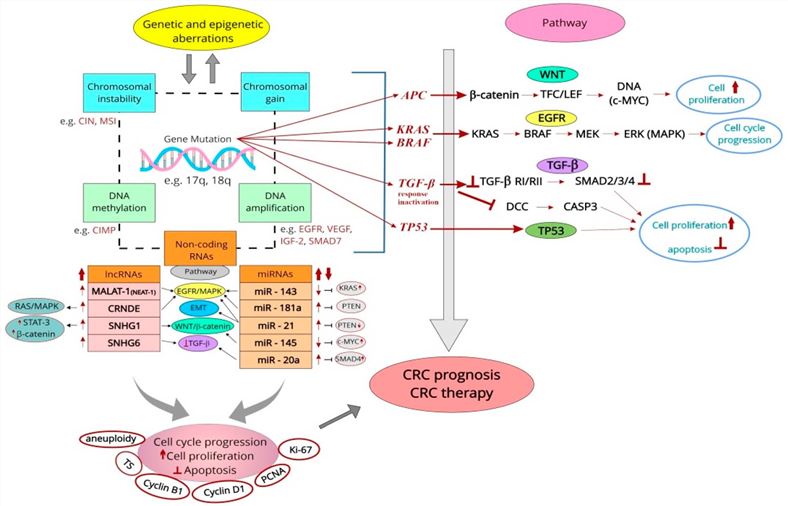 Fig.1 Dysregulated signaling and proliferative markers in colorectal cancer pathogenesis. 1
Why Choose Us?
Creative Biolabs stands at the forefront of NGTxC (non-genotoxic carcinogenicity) assessment through an integrated multi-omic approach. We combine traditional immunohistochemistry with modern transcriptomic "proliferative indexing" to provide a level of detail that standard CROs cannot match. By analyzing the "repopulation paradox" in the tumor microenvironment and adhering strictly to IATA and OECD frameworks, we ensure that the data generated is robust, human-relevant, and ready for regulatory scrutiny. Our platform allows for the early identification of "proliferation-informative" phenotypes, effectively reducing the risk of unexpected toxicity in later stages of drug development.
Experience the Creative Biolabs Advantage - Get a Quote Today.
FAQs
How does your proliferative index (PI) differ from a standard Ki-67 stain?
While Ki-67 provides a static snapshot of dividing cells, Creative Biolabs' RNA-seq-based PI provides a deeper transcriptomic signature that correlates with mutation burden and long-term survival, offering a more predictive "proliferative state" analysis.
Can you analyze proliferation in nutrient-deprived or hypoxic conditions?
Yes! Our spatial topography platform specifically maps how distance from blood vessels impacts proliferation, allowing you to study cells in the "harsh" environments typical of solid tumors.
Is it possible to combine proliferation analysis with drug sensitivity mapping?
Yes, we frequently correlate PI scores with EC50/IC50 data to help clients predict which models will be most sensitive to their therapeutic candidates. Contact our team for a custom co-analysis plan.
Customer Review
-
Superior Sensitivity in S-Phase Detection
Using Creative Biolabs' labeling and RTCA platform in our research has significantly facilitated the identification of non-genotoxic triggers that were missed by standard assays. The kinetic data provided a much clearer picture of the mitotic burst. – Dr. J*n S -
Robust Transcriptomic Indexing
Integrating the RNA-seq-based proliferative index helped us correlate mutation burden with growth rates across 12 models. Creative Biolabs' bioinformatics support was seamless and professional. – Dr. R*t K
Related Services
To achieve a complete safety and efficacy profile, Creative Biolabs recommends these complementary offerings:
Tumor Glucose Metabolic Pathway Analysis Service
Creative Biolabs provides multi-omic tumor metabolism analysis, integrating metabolomics, gene/protein profiling, and live metabolic flux to identify key regulatory enzymes and metabolites driving cancer cell progression.
Learn More →Tumor Cellular Metabolism Assay Services
Creative Biolabs provides tumor metabolism assays—including EFA, nutrient uptake, and metabolite analysis—utilizing luciferase-coupled reactions to accurately measure metabolic levels and accelerate cancer therapy research globally.
Learn More →How to Contact Creative Biolabs
Creative Biolabs provides the most advanced, mechanism-based tumor cell proliferation analysis services available today. By integrating genomic indexing, metabolic rewiring analysis, and spatial topography, we offer a "gold-standard" alternative to traditional bioassays.
Inquire with Creative Biolabs about our bundled service options.
Reference
- Kasprzak, A. "Prognostic Biomarkers of Cell Proliferation in Colorectal Cancer (CRC): From Immunohistochemistry to Molecular Biology Techniques." Cancers (Basel) 15.18 (2023). Distributed under Open Access license CC BY 4.0, without modification. https://doi.org/10.3390/cancers15184570
 Download our brochure