Seamless transition from in vitro PDO results to confirmatory in vivo efficacy studies, utilizing established animal models (e.g., xenografts, syngeneic) to validate drug activity and determine critical toxicokinetics (TK) and mass balance parameters.
Learn More →Patient derived Organoid Modeling Service
Creative Biolabs offers solutions across the entire drug development lifecycle, spanning target identification, lead optimization, and patient stratification. Our service delivers models with genuine clinical fidelity, ensuring the PDOs retain the full genetic complexity and architectural heterogeneity of the original patient tissue. We efficiently transform complex material into robust, scalable, and functional microtissues ready for high-throughput discovery and rigorous validation studies.
Introduction What We Can Offer Workflow Why Creative Biolabs Customer Reviews FAQs Related Services Contact Us
Patient-Derived Organoids Advancing Cancer Treatment and Drug Response
Organoid, globular, and 3D cell models have great potential in many applications, including disease modeling and regenerative medicine. Patient derived organoid (PDO), described as a miniature three-dimensional (3D) cell culture derived from a patient's cancer cells, has been subjected to extensive investment and experimental validation to provide potential therapeutic options for the detection of complex diseases. Creative Biolabs is dedicated to providing a variety of disease-related organ research to improve the accuracy and effectiveness of future cancer treatment and drug response.
Request a formal consultation to ascertain project suitability and initiate collaboration.
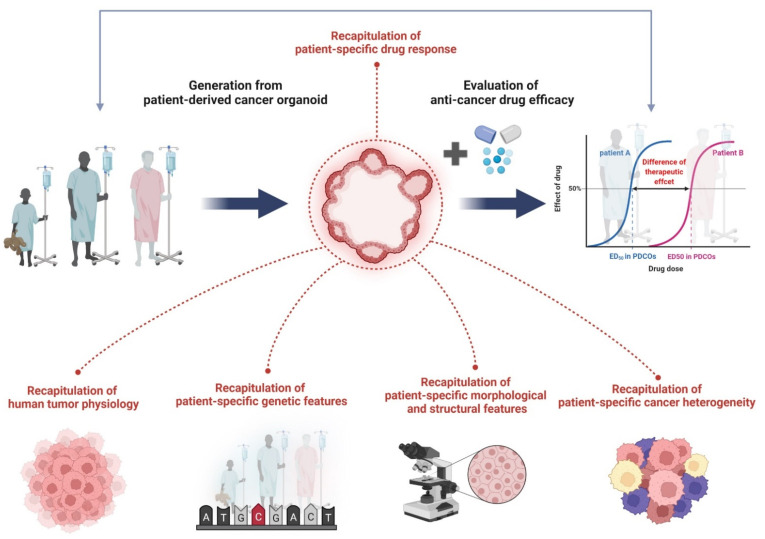 Fig.1 Possible applications using PDCOs for cancer research. 1
What We Can Offer
Our PDO Model Portfolio
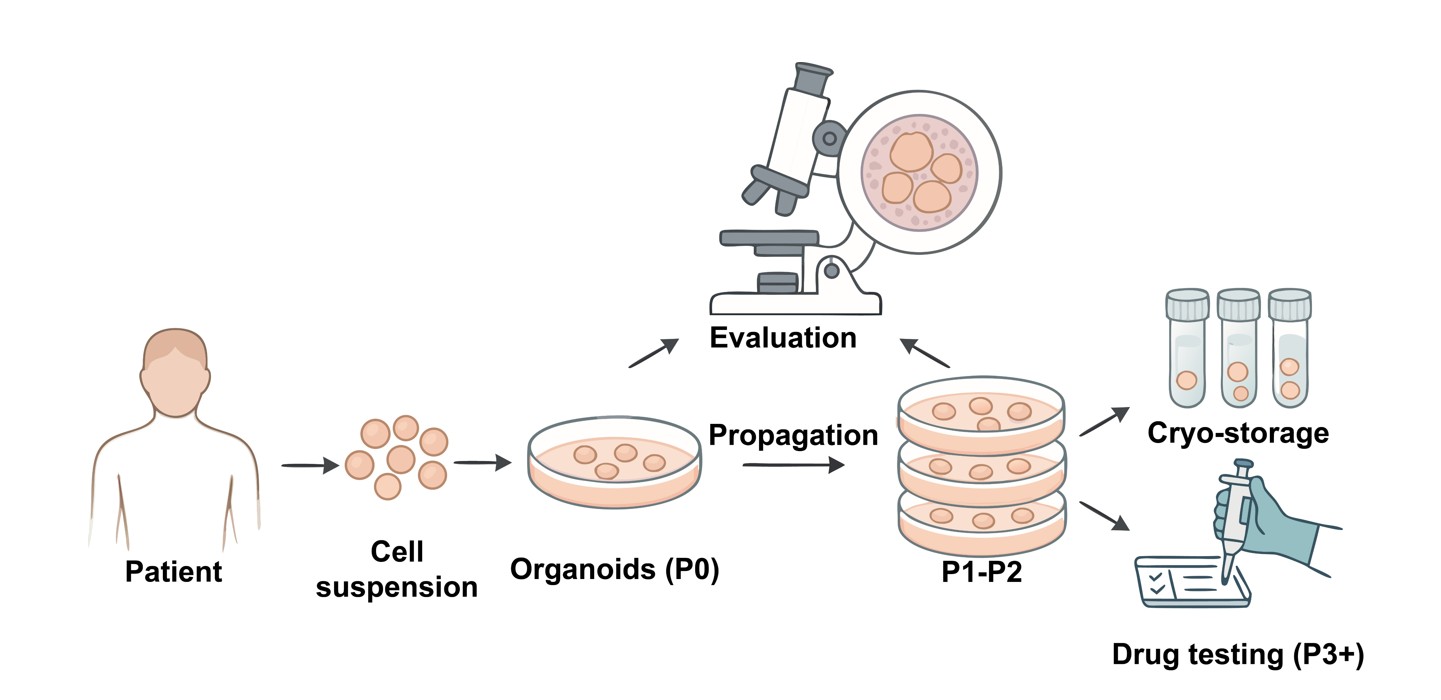
We are able to select a large number of patients as the research objects, stratify the risk according to the types and stages of tumors, and store the research results in PDOs in a biobank for future experiments.
- We can easily capture the genetic diversity of the disease through medical assistance and clinical practice.
- A well-scaled laboratory can grow a large number of patient derived organoid-like cells or tissues.
- Organoids from patient samples can be used as a model of individual cancer to guide clinical decisions.
In future clinical trials, screening of organoids can be evaluated. High-throughput screening of organoids, combined with next-generation sequencing, proteomic analysis, and other advanced molecular diagnostic methods, can make cancer treatment more effective with fewer side effects.
Our PDO Collections
Biomedical researchers are using artificial cultures to grow large numbers of organ-like cells or tissues. These include some common clinical disease treatment directions, such as colorectal cancer, pancreatic cancer, lung cancer, breast cancer, oesophageal carcinoma, and so on. As described in detail in patient derived xenografted models (PDX model), our PDO model will provide a rapid and low-cost potential tool for preclinical drug screening and prediction of individualized cancer treatment responses. Creative Biolabs is committed to providing individualized treatment for individual patients who have exhausted standard clinical protocols.
PDO Model at Creative Biolabs
Highlights
Unparalleled Success Rate
We maintain a 90%+ success rate for PDO derivation across challenging tumor types, including pancreatic, colorectal, and high-grade ovarian cancers, minimizing tissue waste and maximizing model availability.
Rigorously Validated Biobanking
Our standardized methods overcome the industry-wide challenges associated with cryopreservation and biobanking re-establishment. This ensures that every cryopreserved vial retains high viability and the original tissue's phenotypic stability across multiple passages.

Proprietary Advanced Analytics Integration
We don't just screen; we integrate critical downstream services. Our platform includes in vitro ADME/DMPK studies to better mimic native tumor perfusion, delivering earlier insight into compound properties and physiological relevance.
Immuno-Oncology Expertise
We are a leader in TME and co-culture systems, providing the only robust in vitro platform for testing complex cell-to-cell interactions relevant for next-generation immunotherapies.
To fully appreciate the Creative Biolabs advantage, prospective clients are encouraged to request a detailed project quotation.
Customer Reviews
-
Immuno‑Oncology Fidelity
Using Creative Biolabs' patient derived organoid models in our research has significantly improved/facilitated our assessment of immune checkpoint blockade agents. The T-cell co-culture system is the most reliable in vitro model we've found for functionally evaluating tumor-reactive T cell cytotoxicity. - M. B*e. -
Non‑Oncology Functional Screening
The utilization of Creative Biolabs' PDO models has accelerated our functional screening efforts for novel modulators within our program. The stability and functional viability observed in the organoids yielded rapid, conclusive results, facilitating the prioritization of therapeutic candidates. - J. S*y.
FAQs
Q: What is the required starting material, and what is your establishment success rate?
A: We primarily require fresh or cryopreserved patient tumor tissue (biopsy or surgical resection). While success rates depend on the tumor type and tissue quality, Creative Biolabs' proprietary protocols allow us to maintain a successful establishment rate of over 90%.
Q: How do PDOs compare to traditional PDX models for drug testing?
A: PDOs are significantly faster, more cost-effective, and provide higher throughput than PDX models. While both retain genomic fidelity, PDOs are amenable to automated screening and eliminate the ethical and logistical constraints of animal models.
Related Services
In Vivo DMPK Service
In Vitro ADME
Early assessment of potential liabilities, including hERG channel inhibition and other off-target toxicities, utilizing high-content imaging and functional assays to predict clinical safety profiles.
Learn More →How to Contact Us
Creative Biolabs' PDO models represent a critical step forward in preclinical research, providing the clinical fidelity and scalability necessary to overcome the translational gap. For detailed information, please feel free to contact us.
Reference
- Bae, JuneSung et al. "The Patient-Derived Cancer Organoids: Promises and Challenges as Platforms for Cancer Discovery." Cancers vol. 14,9 2144. 25 Apr. 2022. Distributed under an Open Access license CC BY 4.0, without modification. https://doi.org/10.3390/cancers14092144
 Download our brochure
Loading case studies...
Online Inquiry