
Creative Biolabs is offering the most comprehensive services for antibody development projects. With strict regulation and effective execution, we are dedicated to providing the most valuable solutions to complete your projects.
HighlightsCreative Biolabs is offering the most comprehensive services for antibody development projects. With strict regulation and effective execution, we are dedicated to providing the most valuable solutions to complete your projects.
HighlightsCreative Biolabs has established a broad range of platforms for developing novel antibodies or equivalents. These cutting-edge technologies enable our scientists to meet your demands from different aspects and tailor the most appropriate solution that contributes to the success of your projects.
HighlightsWith deep understanding in antibody-related realms and extensive project experience, Creative Biolabs offers a variety of references to help you learn more about our capacities and achievements, including infographic, flyer, case study, peer-reviewed publications, and all kinds of knowledge that can assist your projects. You are also welcome to contact us directly for more specific solutions.
HighlightsGet a real taste of Creative Biolabs, one of the most professional custom service providers in the world. We are committed to providing highly customized comprehensive solutions with the best quality to advance your projects.
HighlightsIn the rapidly evolving landscape of biotherapeutics and functional proteomics, phage display technology remains a cornerstone. While M13 filamentous phage systems are widely utilized, the T7 Phage Display System has emerged as a superior alternative for displaying complex, cytoplasmic, and non-secreted proteins. Creative Biolabs, a global leader with over 20 years of expertise in phage display technologies, provides comprehensive T7 Phage Library Construction Services. Leveraging our proprietary Platform, we deliver high-titer, ultra-high-diversity libraries tailored for demanding applications such as epitope mapping, protein-protein interaction analysis, and the identification of novel therapeutic targets.
The T7 phage is an icosahedral, double-stranded DNA virus. Unlike the M13 system, which requires the displayed protein to be secreted through the E. coli periplasm, T7 phage particles are assembled intracellularly and released via cell lysis. This fundamental difference grants the T7 system unique advantages.
Table 1. Comparison Between T7 and M13 Phage Display Systems
| Feature | T7 Phage Display | M13 Phage Display |
| Phage Structure | Icosahedral, lytic | Filamentous, non-lytic |
| Assembly Site | Cytoplasm (Intracellular) | Periplasm (Extracellular) |
| Protein Secretion | Not required | Mandatory (Sec-pathway dependent) |
| Protein Size Limits | Up to 1200 amino acids | Usually < 50 kDa |
| Folding Constraints | Minimal; supports complex folding | High; limited by periplasmic transport |
| Stability | Extreme (pH 3-10, detergents, salts) | Moderate |
| Display Valency | Multi-copy (low to high valency) | Variable (pIII vs pVIII) |
At Creative Biolabs, we utilize the most advanced T7 system vectors to ensure optimal display levels for various peptide and protein sizes.
Technical Strategies & Innovations
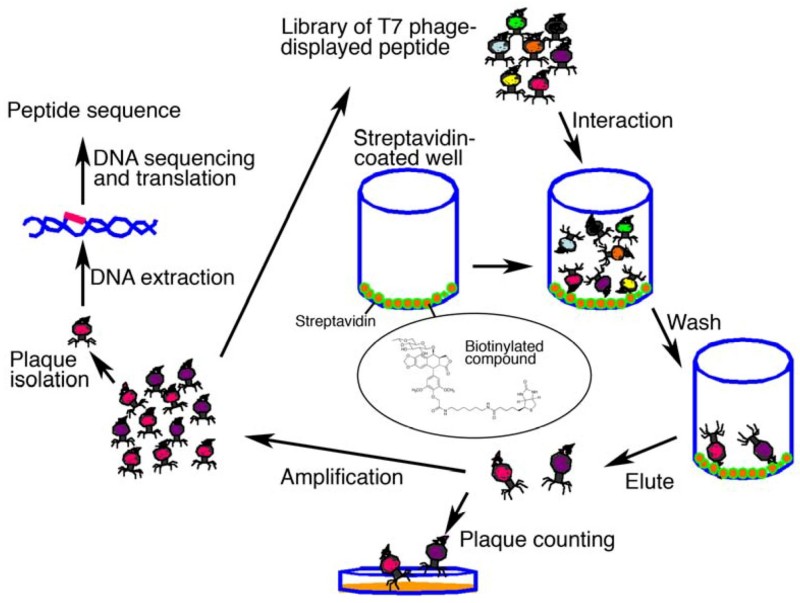 Fig. 1 Schematic representation of affinity selection using phage display technology.1
Creative Biolabs utilizes a proprietary platform to ensure the delivery of phage display libraries with unparalleled diversity and stability.
Our senior scientists collaborate with you to define the library's goals. Whether you require a cDNA library, a random peptide library, or a scFv/Fab antibody library, we customize the vector selection to match the desired display density and insert size.
We utilize high-fidelity PCR and codon optimization strategies to prepare the genetic inserts. For premade antibody libraries, we source diverse repertoires from immunized or non-immunized donors.
The optimized inserts are ligated into the T7 genome. We use high-efficiency in vitro packaging extracts to maximize the primary library size.
The primary library is amplified to create a high-titer working stock.
Integration of Next-Generation Sequencing (NGS)
Traditional Sanger sequencing only scratches the surface of library quality. At Creative Biolabs, we integrate NGS-based library profiling into our standard workflow. This allows us to:
AI-Driven Library Design
In the era of digital biology, we utilize machine learning algorithms to predict the stability and solubility of displayed peptides. This "Rational Design" approach combined with "Combinatorial Display" results in T7 Phage Libraries that are pre-enriched for developability.
High-Throughput "Mirror-Image" Phage Display
For the discovery of D-peptide therapeutics, we offer specialized T7 display services that can tolerate the harsh organic solvents used in mirror-image biopanning, a feat difficult to achieve with M13.
Choosing a partner for phage display libraries is a critical decision. Creative Biolabs stands out through:
To further your research, consider our integrated phage display library construction service modules:
Ready to accelerate your drug discovery journey? Our experts are standing by to provide a detailed quote and technical plan for your T7 Phage Library Construction project.
Reference
All listed services and products are For Research Use Only. Do Not use in any diagnostic or therapeutic applications.








