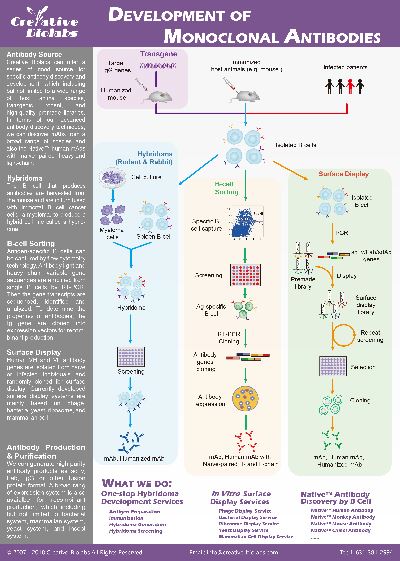
Creative Biolabs is offering the most comprehensive services for antibody development projects. With strict regulation and effective execution, we are dedicated to providing the most valuable solutions to complete your projects.
HighlightsCreative Biolabs is offering the most comprehensive services for antibody development projects. With strict regulation and effective execution, we are dedicated to providing the most valuable solutions to complete your projects.
HighlightsCreative Biolabs has established a broad range of platforms for developing novel antibodies or equivalents. These cutting-edge technologies enable our scientists to meet your demands from different aspects and tailor the most appropriate solution that contributes to the success of your projects.
HighlightsWith deep understanding in antibody-related realms and extensive project experience, Creative Biolabs offers a variety of references to help you learn more about our capacities and achievements, including infographic, flyer, case study, peer-reviewed publications, and all kinds of knowledge that can assist your projects. You are also welcome to contact us directly for more specific solutions.
HighlightsGet a real taste of Creative Biolabs, one of the most professional custom service providers in the world. We are committed to providing highly customized comprehensive solutions with the best quality to advance your projects.
HighlightsProteases are critical regulators of physiological and pathological processes, including cancer progression, inflammation, tissue remodeling, and neurodegeneration. Identifying their precise substrate preferences opens the door to targeted diagnostics, imaging agents, and therapeutic strategies. At Creative Biolabs, we offer protease substrate-based phage library screening services that allow clients to map protease cleavage specificity in a context-aware, high-resolution manner.
Unlike conventional screening platforms that focus on binding alone, our protease substrate screening leverages cleavage-driven selection to pinpoint peptide motifs and protein fragments preferentially processed by active proteases. Whether you're characterizing novel enzymes or developing protease-responsive therapeutics, Creative Biolabs delivers accurate, reproducible insights that translate into action.
Creative Biolabs provides custom protease substrate screening using tailored phage display libraries that expose substrates to active enzymes, selecting cleaved or uncleaved sequences depending on the application. Our services include:
We can perform selections with purified recombinant enzymes or complex biological samples to capture physiologically relevant substrate profiles.
Libraries are customized to fit your protease type and project goal, maximizing the diversity and functional relevance of screened peptides.
Following enzymatic treatment, enriched peptide motifs are identified and analyzed to reveal preferred cleavage sequences.
Screening can be conducted in free-solution biochemical assays or on tissue sections to mimic in vivo enzyme–substrate interactions.
Confirmed substrates are validated through detailed kinetic assays to determine catalytic efficiency and cleavage specificity.
Comparative testing against related enzymes ensures selectivity and minimizes unintended proteolysis, supporting therapeutic and diagnostic development.
We support both discovery-phase projects (e.g., unknown substrate mapping) and development-driven studies (e.g., creating protease-activated probes or therapeutics). Reach out to learn more.
Creative Biolabs follows a structured yet flexible workflow optimized for reproducibility and sensitivity:







Learn more about our services here.
The Creative Biolabs protease screening platform stands out by offering more than a generic library-cleavage workflow. Our platform integrates structural insights, enzymatic profiling, and sample-context relevance into one pipeline.
Key platform advantages include:
This platform also supports seamless integration with Creative Biolabs' other phage display and discovery tools:
We'd love to hear from you if you're interested.
We partnered with a client to accelerate their drug discovery program by rapidly identifying a high-affinity substrate peptide for their novel protease. This case study demonstrates our streamlined workflow from library screening to validated results.
Our Strategic Solution
We deployed our end-to-end Phage Display Screening platform, leveraging our proprietary peptide library.
| Service Applied | Phage Display-Based Protease Substrate Screening | |
| Platform Used | Protease-10A HiAffi™ 10-mer Peptide Library (Ready-to-use, high diversity) | |
| Methodology | 1. Rigorous Biopanning | Multi-round screening of the library against the target protease. |
| 2. Stringent Controls | Implemented a three-group design (Protease, Buffer Control, Depletion Control) to eliminate non-specific binders and ensure data integrity. | |
| 3. Multi-level Validation | Employed ELISA for initial hit validation and Next-Generation Sequencing (NGS) for comprehensive analysis and final candidate confirmation. | |
Project Highlights & Results
Our robust methodology delivered actionable, high-confidence results, significantly advancing the client's research.
| Result Category | Outcome |
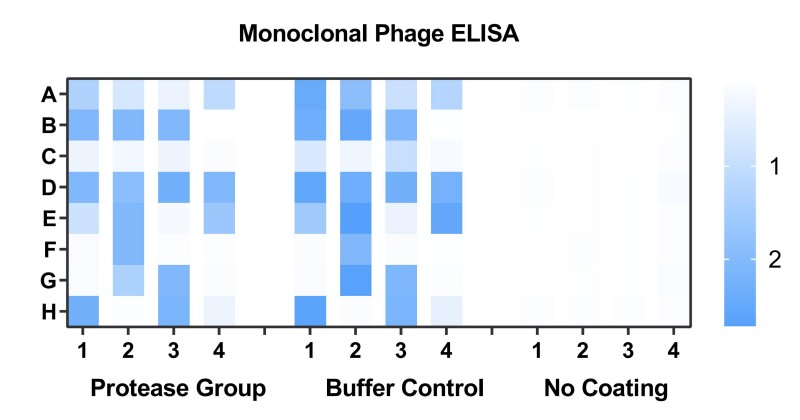
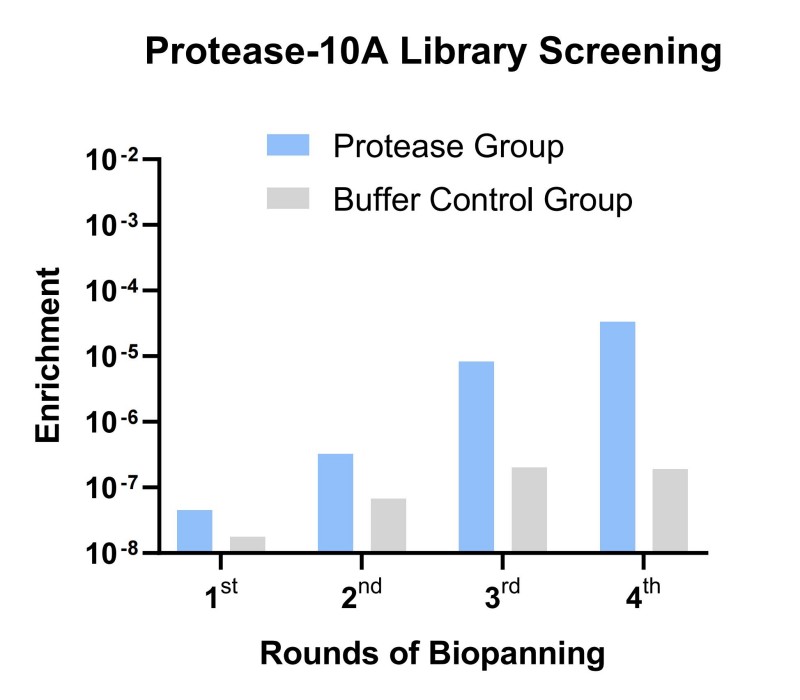 ✅ Successful Enrichment |
Achieved significant enrichment of specific phage clones after just a few screening rounds. |
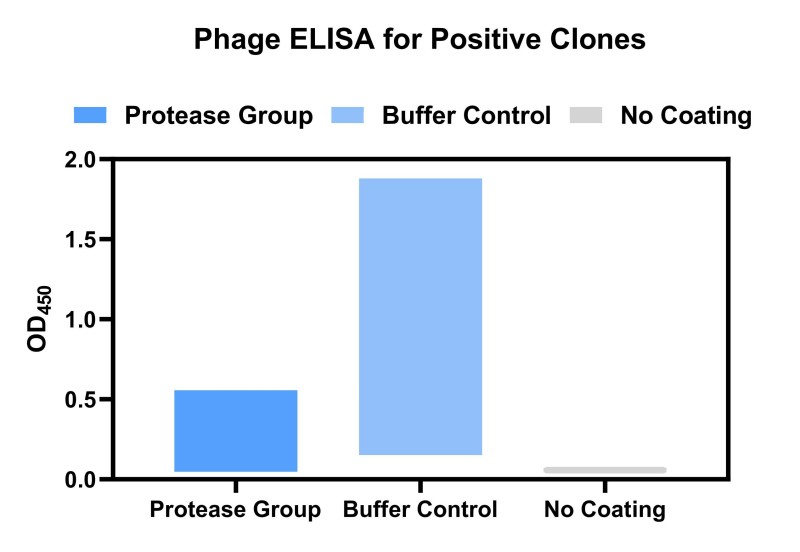
 ✅ High Hit Rate |
From dozens of clones tested, over 33% showed specific interaction with the target protease in initial validation assays. |
 ✅ Functional Confirmation |
All prioritized positive clones were functionally confirmed for both binding affinity and proteolytic cleavage, proving their validity as true substrates. |
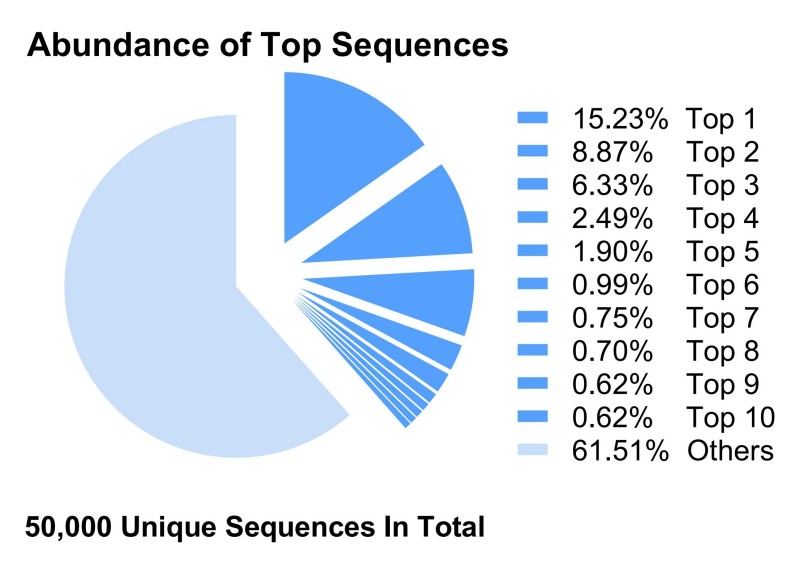 ✅ High-Confidence Deliverables |
Delivered a final, rank-ordered list of substrate peptides, with top candidates cross-validated by both ELISA and high-abundance NGS data. |
If you have any questions, we welcome your inquiries.
Clients trust Creative Biolabs because we combine advanced technology with project-specific adaptability. Here's what sets us apart:
 Deep protease biology expertise
Our scientists specialize in metalloproteases, serine proteases, cysteine proteases, and more.
Custom library engineering
Not limited to commercial kits, we tailor libraries to fit unusual substrates or sequence contexts.
Cleavage-tag innovations
Use of engineered tags (e.g., biotin switch, His-tag removal) for reliable cleavage detection.
Real-world compatibility
Our workflows accommodate biological fluids, tissue extracts, or clinical samples.
Discover more by contacting us at your convenience.
With each project, Creative Biolabs provides high-quality deliverables designed to support downstream research or development pipelines:
Whether you're exploring new protease targets, validating disease-specific activity, or engineering protease-activated payloads, Creative Biolabs' Protease Substrate Screening Services provide the foundation you need. Contact us to schedule a discovery call or request a customized quote.
Use the resources in our library to help you understand your options and make critical decisions for your study.

All listed services and products are For Research Use Only. Do Not use in any diagnostic or therapeutic applications.