
Polymer based Antisense Oligonucleotide (ASO) Encapsulation Service
Polymer encapsulated antisense oligonucleotides (ASO) use polymeric materials to encapsulate ASO to improve their stability, bioavailability, and targeting. Polymers are characterized by diverse structures, simple functionalization, and excellent stability. Creative Biolabs has extensive experience in polymer encapsulation of ASO and can provide clients with custom solutions for polymer-based delivery of ASO drugs.
Polymer based Antisense Oligonucleotide Introduction
Polymeric materials have a variety of structures, such as linear, branched, or cross-linked structures, which can be further subdivided into star, comb, and brush shapes, etc. Polymers used to encapsulate ASO are generally biocompatible and biodegradable. The surface of polymeric materials can also be enhanced by adding targeting ligands, antibodies, nucleic acids, etc. In addition to the influence of structure, molecular weight, hydrophilicity, and charge density may also influence the functionality of polymers.
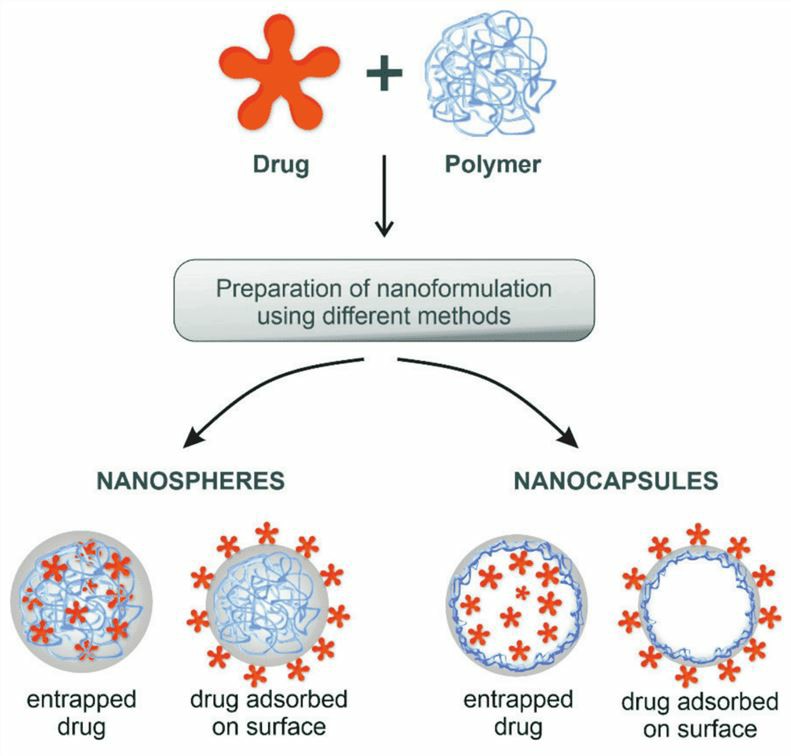 Figure.1 The polymeric nanoparticles loaded the drug.1
Polymer Synthesis
Table.1 Polymer preparation methods
| Bulk polymerization | Solution polymerization | Suspension polymerization | RAFT* polymerization | |
|---|---|---|---|---|
| Component | Monomer, initiator | Monomer, initiator, solvent | Monomer, initiator, water, dispersing agent | RAFT reagent, monomer |
| Mechanism | Follow the general mechanism of free radical polymerization | Chain transfer reaction to solvent | Follow the general mechanism of free radical polymerization | The dithioester derivatives act as chain transfer reagents to form dormant intermediates with the growing chain and control the polymerization reaction. |
| Advantage | High product purity, Simple post-processing | The product is present in the solution |
Fast polymerization rate, low cost |
Mild reaction conditions, wide selection of monomers, strong molecular design capabilities |
| Disadvantage | The heat of the reaction is not easily removed |
Low polymerization rate, environmental pollution |
Dispersants are difficult to remove | Increased toxicity of polymers |
* RAFT: Reversible addition-fragmentation chain transfer polymerization.
Our Services
"Naked" ASOs facing the bloodstream encounter immediate threats: rapid degradation by serum nucleases and filtration by the kidneys due to their small molecular weight. Furthermore, their negative charge repels them from the anionic cell membrane, severely limiting uptake. Our polymer encapsulation service transforms these molecules into distinct nanoparticles. This transformation:
- Masks the negative charge, facilitating interaction with cell membranes.
- Increases molecular weight, preventing immediate renal filtration.
- Provides a physical barrier against enzymatic attack.
ASO Encapsulation Strategies
Our scientific team employs various fabrication techniques to maximize Encapsulation Efficiency (EE) and preserve ASO integrity.
- Electrostatic Complexation: The spontaneous formation of polyplexes by mixing anionic ASOs with cationic polymers. This is a rapid, scalable method suitable for screening.
- Nanoparticle Self-Assembly: Utilizing amphiphilic block copolymers that self-assemble in aqueous media, entrapping the ASO within the core or at the interface.
- Core–Shell Nanostructures: A robust design where the ASO acts as the core, surrounded by a stabilizing polymer shell, often utilized for systemic delivery to protect against serum interactions.
- Layer-by-Layer (LbL) Encapsulation: Sequential deposition of oppositely charged polymers onto an ASO template. This allows for precise control over release kinetics and surface functionality.
- Encapsulation vs. Surface Loading: We rigorously evaluate whether to encapsulate the ASO inside the matrix or adsorb it onto the surface, depending on the project.
Applications of Our Services
Dendritic macromolecules
Dendritic macromolecules have the properties of being highly branched, symmetrical, and radiating, so that the active functional groups outside the dendritic macromolecules can be conjugated with biomolecules or contrast agents to the surface, and drugs can also be loaded inside. Therefore, dendrimers can load multiple types and large quantities of drugs, improving the solubility of poorly soluble drugs. The most common research is the delivery of nucleic acids and small molecules.
Polymer nanoparticles (PNP)
PNPs are nano-sized particles made of polymer materials, which are usually between 1 and 100 nm in size and include various forms such as spherical, rod-shaped, linear, tubular, and layered. PNPs are particles or particulate materials that have a size in one dimension that is at least in the range of 10-100 nm. PNPs provide ASO drugs with better pharmacokinetic profiles and bioavailability, reduced drug toxicity, and altered drug distribution.
Polyetherimide (PEI)
PEI is a water-soluble polycation composed of repetitive ethylenimine structural units, which contain a large number of amino groups and have a high buffering capacity; therefore, PEI has a strong agglomeration effect on ASO. High toxicity and low transfection efficiency limit the application of PEI. Hydrophobic modification is an effective means of improving transfection efficiency and reducing PEI toxicity.
Poly (lactic-co-glycolic acid) (PLGA)
The basic principle of PLGA microspheres drug loading technology is to use PLGA material to prepare small particles, and by certain methods to package or adsorb the drug inside or on the surface of the microspheres, to achieve the stable encapsulation of the drug, and by adjusting the preparation conditions and parameters of the microspheres, it is the controlled release of the drug in vivo.
Highlights of Our Services
Creative Biolabs offers a variety of delivery options based on years of experience, and our scientists provide ASO with high-quality delivery system development services to meet the customer's individual needs as best as possible. Our strengths include:
Delivery Method
Creative Biolabs has advanced ASO delivery technology, including but not limited to GalNAc, LNPs, cationic polymers, etc., to achieve efficient and accurate delivery of different types of oligonucleotide drugs and to various target tissues.
High-Quality Research Services
Creative Biolabs has a research and development laboratory in line with international standards and advanced instruments and equipment, which can provide customers with one-stop services from delivery to efficiency evaluation.
Strict Quality Control
In the development process, strict quality control standards are followed to ensure the accuracy and reliability of every step of the operation. Through perfect detection means and data analysis, the purity, stability, and biological activity of drugs are comprehensively evaluated to ensure the quality and safety of drugs.
Excellent After-Sales Services
Establish an efficient after-sales service response mechanism, timely understand customer needs and satisfaction, and improve service deficiencies.
Frequently Asked Questions
Q: How does polymer encapsulation compare to Lipid Nanoparticles (LNPs) specifically for ASO delivery?
A: While LNPs are highly effective for hepatic delivery, polymer-based systems offer distinct advantages in terms of chemical diversity and physical stability. Polymers allow for a broader range of chemical functionalization, enabling more precise tuning of the "Proton Sponge Effect" for superior endosomal escape—a critical bottleneck for ASOs. Additionally, polymer complexes often demonstrate higher shear stability and are more amenable to lyophilization (freeze-drying) without cryoprotectants compared to lipid formulations, simplifying storage and transport logistics.
Q: Can your polymer platforms encapsulate heavily chemically modified ASOs, such as Gapmers or 2'-MOE modified sequences?
A: Yes. We recognize that modern ASOs are rarely "naked" DNA/RNA and often contain backbone modifications (e.g., Phosphorothioate) or sugar modifications (e.g., 2'-MOE, cEt, LNA) to enhance stability. These modifications alter the charge density and hydrophobicity of the molecule. Our formulation scientists customize the N/P ratio (nitrogen-to-phosphate ratio) and select specific polymer block copolymers to ensure optimal electrostatic binding affinity and loading efficiency, regardless of the ASO's specific chemical modifications.
Q: Cationic polymers like PEI are known for cytotoxicity. How does Creative Biolabs mitigate this risk in formulation?
A: We address cytotoxicity through three primary strategies:
- Biodegradability: We utilize biodegradable polymers (e.g., ester-bond containing polymers) that break down into non-toxic metabolites after intracellular delivery.
- PEGylation: Shielding the positive charge of the polyplex surface with Polyethylene Glycol (PEG) reduces non-specific interaction with cell membranes and blood components.
- Molecular Weight Optimization: We prioritize the use of low molecular weight polymers cross-linked via degradable linkers, which provide high transfection efficiency similar to high-MW polymers but with a significantly improved safety profile.
Q: Is it possible to design the polymer release mechanism to respond to specific tumor microenvironments?
A: Absolutely. We specialize in Stimuli-Responsive Polymeric Carriers. We can engineer polymers with pH-sensitive moieties that remain stable at physiological blood pH (7.4) but disassemble rapidly in the acidic tumor microenvironment (pH 6.5-6.8) or within endosomes (pH 5.0-6.0). Additionally, we offer redox-responsive polymers containing disulfide bonds that cleave specifically in the presence of high intracellular glutathione (GSH) concentrations, ensuring the ASO is released only after entering the target cells.
Q: What are the typical deliverables for a Polymer-ASO Encapsulation feasibility study?
A: For a standard feasibility project, our deliverables include:
- Formulation Protocols: Detailed methodology for the optimized formulation.
- Characterization Report: Comprehensive data on particle size (DLS), Zeta potential, morphology (TEM/SEM), and Encapsulation Efficiency (EE%).
- Stability Data: Serum stability testing results over a defined period (e.g., 24-48 hours).
- In Vitro Proof-of-Concept: (Optional but recommended) Cellular uptake imagery and gene silencing efficiency data (qPCR/Western Blot) in a representative cell line.
Connect with Us Anytime!
Creative Biolabs introduces our premier Polymer-based ASO Encapsulation Service, a cutting-edge platform designed to overcome these biological barriers. By leveraging advanced polymeric nanocarriers, we ensure your research candidates achieve optimal pharmacokinetic profiles, enhanced cellular internalization, and precise tissue targeting. For further details, please don't hesitate to reach out to us for a price quote. We promise a response within 24 hours and will collaborate closely with you to devise an ideal method tailored to your project requirements.
Reference
- Madej M, Kurowska N, Strzalka-Mrozik B. Polymeric nanoparticles—tools in a drug delivery system in selected cancer therapies. Applied Sciences, 2022, 12(19): 9479. https://doi.org/10.3390/app12199479 (Distributed under Open Access license CC BY 4.0, without modification.)
