Leverage our unique, quantitative metric that translates cumulative TSG methylation burden into a predictive signature for therapeutic development, transforming complex raw data into actionable research insights.
Tumor Suppressor Gene Methylation & Epigenetic Silencing Profiling Service
Creative Biolabs provides a comprehensive, quantitative assessment of DNA hypermethylation across critical regulatory loci, encompassing tumor suppressor genes (TSGs) and TS-miRNAs. This specialized service furnishes single-nucleotide resolution data and incorporates proprietary quantitative metrics, notably the epigenetic silencing score (ESS). Consequently, researchers are provided with foundational insights essential for the precise identification of novel biomarkers, the rationalization of therapeutic development initiatives, and the objective exploration of mechanisms driving acquired cellular resistance, thereby significantly accelerating pre-clinical and translational research timelines.
Introduction What We Can Offer Workflow Why Creative Biolabs Customer Reviews FAQs Related Services Contact Us
High-Resolution Profiling of TSG Methylation & Epigenetic Silencing
Epigenetic silencing of tumor suppressor genes represents a common and fundamental oncogenic event, serving to abrogate intrinsic cellular defense mechanisms independent of DNA sequence mutation. DNA hypermethylation within promoter regions constitutes the most stable mechanism for gene silencing, even beyond histone and chromatin architectural changes. This Creative Biolabs service is designed to provide high-resolution data concerning TSG and TS-miRNA methylation. Quantitative assessment furnishes the requisite data foundation for formulating therapeutic research strategies focused on exploring the functional restoration of TSG activity.
We encourage you to contact us to discuss your specific sample type.
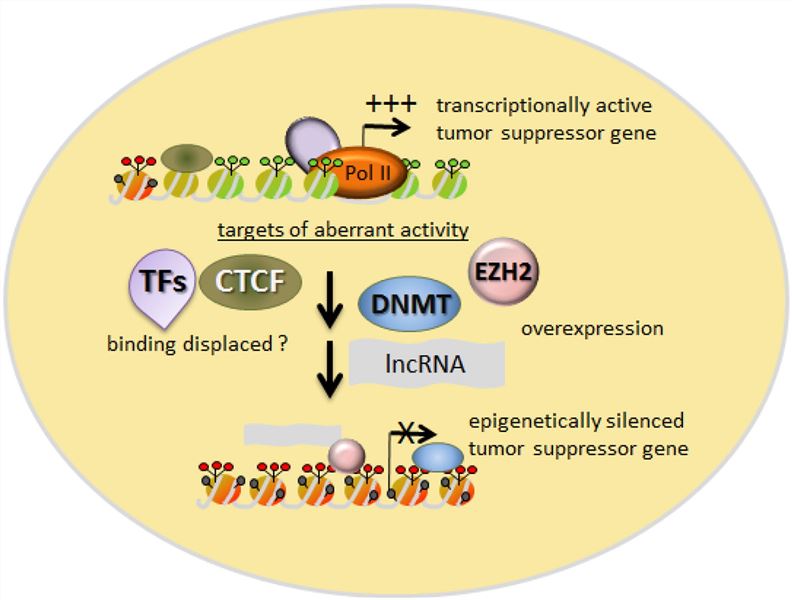 Fig.1 Schematic highlighting five potential mechanisms utilized during the oncogenic process to silence tumor suppressor genes. 1
What We Can Offer
Proprietary Epigenetic Silencing Score
Optimized Liquid Sample Protocol
Achieve unrivaled sensitivity for low-input circulating tumor DNA (ctDNA) and FFPE samples, enabling reliable longitudinal research and robust analysis of limited samples.
Customization and Flexibility for Your Project
We provide fully customized service packages, including the ability to tailor NGS panels to your specific research focus, guaranteeing the service directly addresses your unique research goals.
Data Designed for Therapeutic Research
Generate mechanistic data specifically structured to rationalize novel therapeutic strategies and precisely identify cellular models that exhibit reversible epigenetic vulnerabilities for targeted drug development.
Mechanistic Utility of the Creative Biolabs Profiling Service in Translational Oncology Research
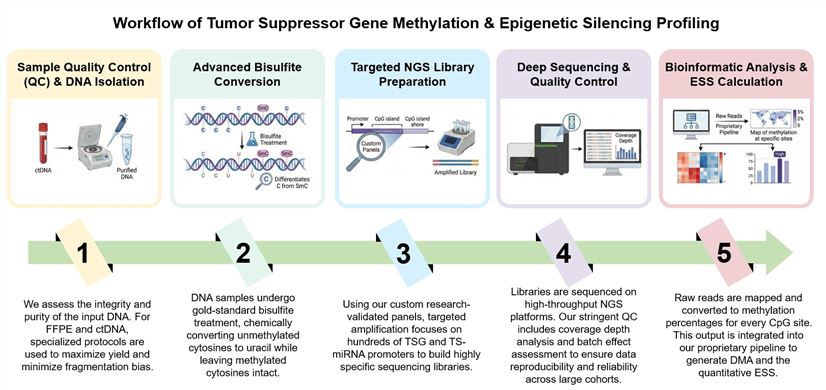
Highlights
Proprietary Epigenetic Score
The epigenetic silencing score constitutes a proprietary, quantifiable metric that transcends descriptive statistics, offering a predictive measure of functional gene silencing essential for effective therapeutic target prioritization.
Functional Silencing Prioritization
This advanced methodology is crucial for investigating intricate cellular response mechanisms, utilizing published data to establish superior predictive efficacy when compared directly against conventional methylation array methodologies.

Enhanced ctDNA Stability
Methylation markers identified within circulating tumor DNA (ctDNA) afford superior stability and specificity. These attributes are vital for the reliable analysis of cell-free nucleic acids within contemporary research models.
Unrivaled Liquid Sample Analysis
Highly optimized, bespoke protocols are employed to guarantee the acquisition of maximal signal from challenging, low-volume ctDNA inputs. This capability ensures unrivaled sensitivity for subsequent research and analytical applications.
Initiate project inquiry: request a formal consultation.
Customer Reviews
-
High Stability
Using Creative Biolabs' service in our research has significantly improved the stability of our liquid sample assays, allowing us to confidently track cell-free DNA changes, which were unreliable with mutation-based testing. - J**n S**h. -
Target Prioritization
The epigenetic silencing score provided an indispensable quantitative rationale for prioritizing epigenetic modulator candidates, saving our team months of unnecessary wet-lab validation experiments compared to standard gene expression arrays. - M**a R**z.
FAQs
What types of research models and sample materials can your service analyze?
Our targeted panels apply to all major tumor models. We are highly proficient in handling challenging samples, including low-input circulating tumor DNA (ctDNA) from plasma and degraded DNA from FFPE blocks, providing flexibility for preclinical and retrospective research studies.
How does the ESS compare to standard bulk methylation analysis?
Standard analysis only identifies regions of hypermethylation; the ESS is a proprietary, composite metric that quantifies the functional burden of silencing across multiple critical TSGs and TS-miRNAs. This provides a single, predictive score that correlates strongly with cellular phenotypes and response to experimental compounds, offering a superior research endpoint.
Related Services
DNA Epigenetic Modification targeting Therapeutic Development
Quantitative analysis of key histone-modifying enzyme activities (e.g., HDACs, KDM) to identify co-dependencies with DNA methylation patterns for synergistic therapeutic research.
Learn More →Gene Expression Profiling Service
Quantify the expression levels of the microRNAs identified as silenced by the methylation service to confirm functional inactivation and post-transcriptional dysregulation.
Learn More →How to Contact Us
Creative Biolabs provides the optimal resolution and most salient data necessary to confront the fundamental oncological challenge of gene silencing. A steadfast commitment to single-nucleotide precision and the delivery of actionable quantitative metrics ensures the optimal allocation of research capital toward strategies demonstrating the highest probability of therapeutic success. Parties interested in further details or project consultation are encouraged to contact the dedicated team.
Reference
- Kazanets, Anna et al. "Epigenetic silencing of tumor suppressor genes: Paradigms, puzzles, and potential." Biochimica et biophysica acta vol. 1865,2 (2016): 275-88. Distributed under an Open Access license CC BY 4.0, without modification. https://doi.org/10.1016/j.bbcan.2016.04.001
 Download our brochure
Loading case studies...
Online Inquiry