



We utilize a variety of immunogens (proteins, peptides, DNA, or cells) to immunize healthy donor dogs. Our proprietary adjuvants and immunization schedules are optimized to elicit a robust humoral response.
Creative Biolabs is offering the most comprehensive services for antibody development projects. With strict regulation and effective execution, we are dedicated to providing the most valuable solutions to complete your projects.
HighlightsCreative Biolabs is offering the most comprehensive services for antibody development projects. With strict regulation and effective execution, we are dedicated to providing the most valuable solutions to complete your projects.
HighlightsCreative Biolabs has established a broad range of platforms for developing novel antibodies or equivalents. These cutting-edge technologies enable our scientists to meet your demands from different aspects and tailor the most appropriate solution that contributes to the success of your projects.
HighlightsWith deep understanding in antibody-related realms and extensive project experience, Creative Biolabs offers a variety of references to help you learn more about our capacities and achievements, including infographic, flyer, case study, peer-reviewed publications, and all kinds of knowledge that can assist your projects. You are also welcome to contact us directly for more specific solutions.
HighlightsGet a real taste of Creative Biolabs, one of the most professional custom service providers in the world. We are committed to providing highly customized comprehensive solutions with the best quality to advance your projects.
HighlightsAt Creative Biolabs, we combine over 20 years of antibody engineering expertise with cutting-edge biotechnology to accelerate veterinary medicine. As a global leader in the field, we are proud to offer a comprehensive Canine (Dog) Monoclonal Antibody Discovery Service, specifically designed to generate high-affinity, high-specificity antibodies for research and therapeutic applications. Leveraging our advanced phage display immune antibody library platform, we overcome the limitations of traditional hybridoma technology, providing scientists and pharmaceutical developers with a robust solution for the construction and screening of immune antibody library tailored to the canine immune repertoire.
The demand for species-specific biologics in veterinary medicine is growing exponentially. While "caninized" antibodies (murine antibodies engineered to look like dog antibodies) have been the standard, they often suffer from immunogenicity issues and lower affinity.
Our service utilizes Canine (Dog) Monoclonal Antibody Discovery by phage display immune antibody library, a state-of-the-art strategy that isolates "native" canine antibodies directly from immunized donors. This approach preserves the natural heavy and light chain pairings found in the dog's immune system, ensuring superior developability and safety profiles.
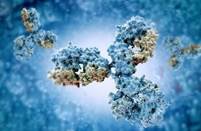
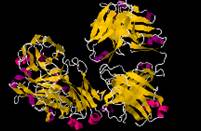
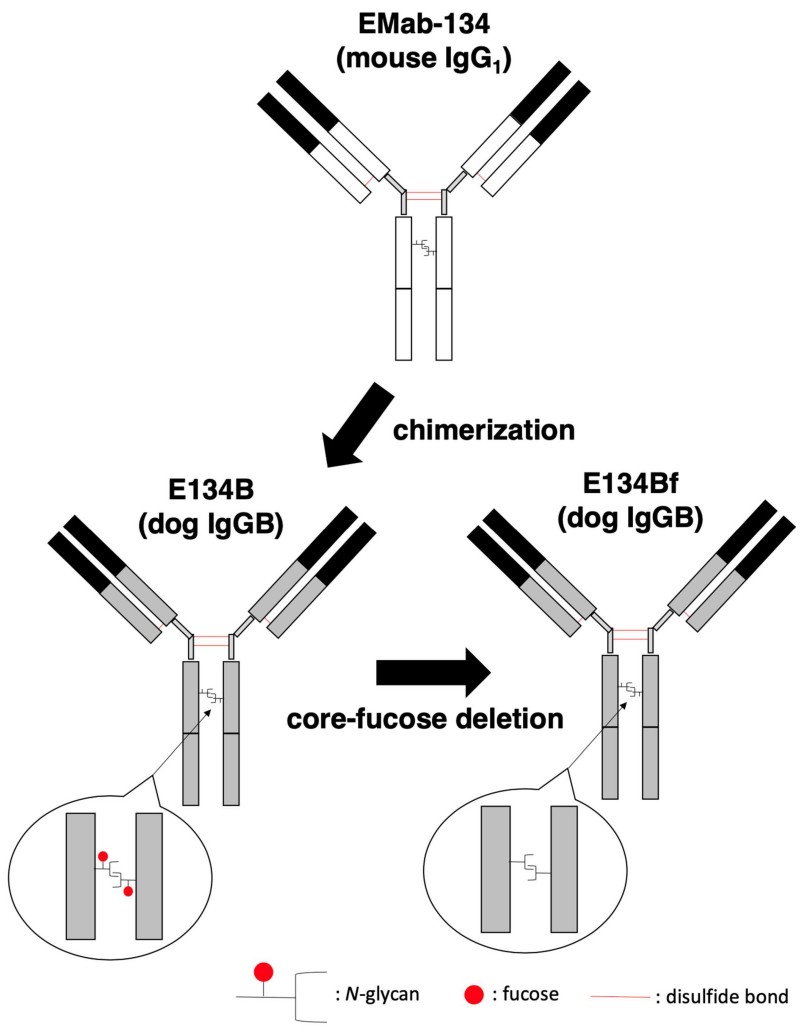 Fig. 1 Production of E134Bf (core-fucose-deficient dog IgGB) from EMab-134 (mouse IgG1).1
Why Choose an Immune Antibody Library?
Unlike naïve libraries, an immune antibody library for Canine (Dog) Monoclonal Antibody is constructed from B-cells of donors that have been actively immunized with your target antigen. This results in a library enriched with binders that have already undergone in vivo affinity maturation.
Our streamlined process ensures the delivery of high-quality Canine (Dog) Monoclonal Antibody candidates.
We utilize a variety of immunogens (proteins, peptides, DNA, or cells) to immunize healthy donor dogs. Our proprietary adjuvants and immunization schedules are optimized to elicit a robust humoral response.
We isolate Total RNA from peripheral blood mononuclear cells (PBMCs), spleen, or lymph nodes. Using specialized primer sets designed for the canine antibody repertoire, we amplify VH and VL genes and clone them into our phagemid vectors to create a high-diversity (>1010) immune antibody library.
The phage display-based Canine (Dog) Monoclonal Antibody library undergoes multiple rounds of biopanning against the target antigen. We utilize high-stringency washing steps to select for the tightest binders.
Positive clones are sequenced and converted into full-length canine IgG (e.g., IgG-A, IgG-B, IgG-C, IgG-D) for expression and further characterization (Affinity measurement, Epitope binning).
Technology Spotlight: M13 Phage Display Platform
Our platform is distinct because we do not rely on generic primer sets. We have developed a proprietary set of degenerate primers that cover the vast majority of the canine V-gene families, ensuring that the immune antibody library for Canine (Dog) Monoclonal Antibody captures the full diversity of the host's response.
While we are leaders in canine research, our expertise extends across the veterinary spectrum. Creative Biolabs is unique in its ability to handle complex species-specific discovery.
| Feature | Creative Biolabs Advantage |
| Experience | 20+ years in antibody engineering and phage display. |
| Species Expertise | Deep understanding of Canine, Bovine, Porcine, and Equine immune repertoires. |
| Platform | Proprietary vectors and ultra-high diversity libraries (>1010). |
| Success Rate | Proven track record with difficult targets (GPCRs, Ion Channels). |
| End-to-End | From immunization to stable cell line development and pilot production. |
While our phage display immune antibody library platform is a powerful engine, we offer a comprehensive suite of discovery technologies to ensure we always use the right tool for the job. Our Monoclonal Antibody Generation from Various Immunized Antibody Libraries Services:
Ready to start your project? Contact our team today to discuss your specific requirements for Canine (Dog) Monoclonal Antibody Discovery. Let Creative Biolabs be your partner in advancing veterinary health.
Disclaimer: Our products are for research use only.
Reference
All listed services and products are For Research Use Only. Do Not use in any diagnostic or therapeutic applications.
