"Creative Biolabs is committed to providing highly customized comprehensive solutions with the best quality to advance our global clients’ projects."
Advanced Donkey Monoclonal Antibody Discovery Service
Background Technology Workflow Advanced Strategy Advantage Related Services FAQ Online Inquiry
In the rapidly evolving landscape of biotechnology and biotherapeutics, the demand for high-specificity, high-affinity reagents has never been greater. While traditional rodent-based monoclonal antibodies (mAbs) have long been the industry standard, the biological limitations of these species often necessitate the exploration of alternative hosts. Creative Biolabs, a global leader with over two decades of expertise in antibody engineering, is proud to offer its premier Donkey Monoclonal Antibody Discovery Service. By harnessing the unique immunological repertoire of Equus asinus and integrating it with our world-class phage display and immune antibody library platforms, we provide researchers with a powerful toolset for overcoming the challenges of cross-reactivity and low immunogenicity.
Discuss Your Project Today
The Biological Advantage: Why Choose Donkey Monoclonal Antibodies?
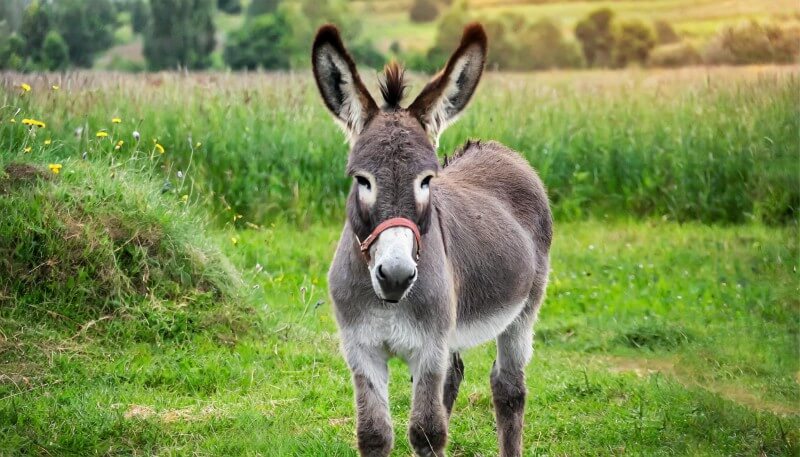
Donkeys occupy a unique phylogenetic niche that makes them exceptional candidates for monoclonal antibody discovery, particularly when mouse or rabbit hosts fail to produce a sufficient immune response.
Phylogenetic Distance
The evolutionary distance between equids (donkeys/horses) and humans, or between equids and common laboratory rodents, allows for the recognition of epitopes that are often "silent" or conserved in more traditional host species. This makes Donkey Monoclonal Antibody Discovery particularly effective for targeting highly conserved proteins across mammalian species.
Unique Immunoglobulins
Donkeys possess a complex immune system capable of generating high-affinity antibodies. While they primarily produce standard IgG structures, the diversity generated through their somatic hypermutation and gene conversion processes results in a highly varied immune antibody library.
Applications in Research and Diagnostics
-
Secondary Antibody Production: Donkey mAbs are the gold standard for multiplexed assays due to low cross-reactivity with other species.
-
Targeting Small Molecules: Excellent for haptens and small peptides.
-
High-Resolution Imaging: Ideal for IHC and IF where background noise must be minimized.
Our Core Technology: Phage Display-Based Donkey Monoclonal Antibody Discovery
At Creative Biolabs, we do not rely on traditional hybridoma technology for donkey species, as donkey-mouse or donkey-human heterohybridomas are often unstable. Instead, we utilize an advanced phage display platform to ensure the stability and diversity of the Donkey Monoclonal Antibody.
The Phage Display Advantage
Phage display-based Donkey Monoclonal Antibody discovery offers several advantages over traditional methods:
-
Direct Gene Recovery: We isolate the genetic information directly from B-cells, preserving the natural pairing or allowing for massive combinatorial diversity.
-
High-Throughput Screening: Ability to screen billions of clones simultaneously.
-
In Vitro Selection: We can control the stringency of selection (pH, temperature, salt concentration) to find antibodies that perform in specific experimental conditions.
Comprehensive Workflow: From Immunization to Characterization
The Donkey Monoclonal Antibody Discovery process at Creative Biolabs is a meticulous journey designed to maximize the probability of identifying the perfect clone.
Phase I: Antigen Design and Immunization
Success begins with the antigen. Our experts assist in designing optimal immunogens, including:
-
Recombinant proteins
-
Synthetic peptides (conjugated to KLH/BSA)
-
Cell-based immunogens
-
DNA immunization for membrane proteins
We follow a specialized immunization protocol for donkeys, monitoring the serum titer to ensure a robust immune response before proceeding to construction and screening of immune antibody library.
Phase II: Construction of Immune Antibody Library
The immune antibody library for Donkey Monoclonal Antibody is the heart of our service.
-
RNA Extraction: High-purity total RNA is extracted from peripheral blood mononuclear cells (PBMCs), spleen, or lymph nodes.
-
cDNA Synthesis: Reverse transcription using donkey-specific primers.
-
PCR Amplification: Amplification of VH and VL (for scFv format) or CH and CL (for Fab format) chains.
-
Library Assembly: The fragments are cloned into our proprietary phagemid vectors.
Phase III: Library Panning and Screening
We perform multiple rounds of biopanning to enrich for high-affinity binders.
-
Solid-phase panning: Antigen coated on immunotubes or ELISA plates.
-
Solution-phase panning: Biotinylated antigens captured by streptavidin beads to preserve native conformation.
-
Cell-panning: For targeting cell-surface receptors.
Phase IV: Expression and Characterization
Selected clones are expressed in E. coli or mammalian systems and subjected to rigorous validation:
-
Affinity Measurement: Using Biacore (SPR) or Octet (BLI).
-
Specificity Testing: ELISA, Western Blot, and Cross-Reactivity arrays.
-
Sequence Analysis: To ensure uniqueness and facilitate future engineering.
Advanced Strategies for Immune Antibody Library Construction
To achieve the best results for Donkey Monoclonal Antibody Discovery, Creative Biolabs employs several "Next-Gen" strategies:
NGS-Assisted Screening
By integrating Next-Generation Sequencing (NGS) with our phage display platform, we can monitor the enrichment of the immune antibody library in real-time. This allows us to identify rare high-affinity clones that might be missed by traditional ELISA screening.
Diversity Enhancement
We utilize proprietary "Soft-Randomization" and "Trimer Codon" technologies during the construction and screening of immune antibody library to fill the gaps in the natural donkey repertoire, ensuring we cover the widest possible sequence space.
Why Creative Biolabs?
With over 20 years in the industry, Creative Biolabs is not just a service provider; we are your scientific partner.
-
Expertise: Our scientists have successfully completed thousands of phage display projects.
-
Customization: No "one-size-fits-all." Every Donkey Monoclonal Antibody project is tailored to the target's biology.
-
Quality: ISO-certified processes and stringent QC ensure that your data is reproducible and publication-ready.
-
Global Reach: Serving the top pharmaceutical companies and academic institutions worldwide.
Creative Biolabs remains at the forefront of antibody engineering by continuously refining our Donkey Monoclonal Antibody Discovery platform. Whether you are dealing with a highly conserved target, require a specific secondary reagent, or need a high-affinity probe for complex biological assays, our phage display and immune antibody library technologies are designed to deliver. Our commitment to quality, combined with our deep understanding of equid immunology, ensures that your research has the best possible foundation. Partner with Creative Biolabs today to explore the potential of donkey monoclonal antibodies.
Explore Our Comprehensive Services
While our phage display immune antibody library platform is a powerful engine, we offer a comprehensive suite of discovery technologies to ensure we always use the right tool for the job. Our Monoclonal Antibody Generation from Various Immunized Antibody Libraries Services:
Ready to start your Donkey Monoclonal Antibody Discovery project? Contact our scientists today for a formal quote and technical consultation.
Contact Us Today for a Free Quote!
Frequently Asked Questions (FAQs)
-
Q: Why should I choose a donkey monoclonal antibody over a rabbit monoclonal?
A: While rabbits are excellent hosts, donkeys offer a different phylogenetic background. If a target is conserved between humans and rabbits (which happens more often than expected), the donkey may recognize epitopes that the rabbit immune system views as "self." Additionally, donkey antibodies are preferred as secondary reagents in multi-color staining because they have naturally low cross-reactivity with most common primary antibody host species.
-
Q: How large is the immune antibody library for Donkey Monoclonal Antibody?
A: We typically guarantee a library size of at least 108 to 109 independent clones. For challenging targets, we can scale this up to 1011 to ensure sufficient coverage of the donkey's immune repertoire.
-
Q: Can you produce Donkey Monoclonal Antibodies in full IgG format?
A: Yes. While initial discovery is often done in scFv or Fab format via phage display, we routinely convert the best-performing clones into full-length donkey IgG for expression in mammalian cells (e.g., CHO or HEK293).
-
Q: Is the library construction done with "native" or "immune" samples?
A: For most Donkey Monoclonal Antibody Discovery projects, we use "immune" libraries. This means we immunize the donkey first to allow for in vivo affinity maturation. However, we also offer "naive" library services if the antigen is toxic or if a faster (non-immunization) route is required.
Reference
-
Zhang, Jianlou, et al. "Donkey-derived anti-CDV IgG, as a passive immunotherapy agent, can effectively increase survival rates of the experimental CDV-infected dogs." BMC Veterinary Research 17.1 (2021): 266. https://doi.org/10.1186/s12917-021-02982-y