
Creative Biolabs is offering the most comprehensive services for antibody development projects. With strict regulation and effective execution, we are dedicated to providing the most valuable solutions to complete your projects.
HighlightsCreative Biolabs is offering the most comprehensive services for antibody development projects. With strict regulation and effective execution, we are dedicated to providing the most valuable solutions to complete your projects.
HighlightsCreative Biolabs has established a broad range of platforms for developing novel antibodies or equivalents. These cutting-edge technologies enable our scientists to meet your demands from different aspects and tailor the most appropriate solution that contributes to the success of your projects.
HighlightsWith deep understanding in antibody-related realms and extensive project experience, Creative Biolabs offers a variety of references to help you learn more about our capacities and achievements, including infographic, flyer, case study, peer-reviewed publications, and all kinds of knowledge that can assist your projects. You are also welcome to contact us directly for more specific solutions.
HighlightsGet a real taste of Creative Biolabs, one of the most professional custom service providers in the world. We are committed to providing highly customized comprehensive solutions with the best quality to advance your projects.
HighlightsIn the rapidly evolving landscape of biotherapeutics and specialized diagnostics, the demand for high-affinity, high-specificity antibodies has never been greater. While mouse and rabbit models dominate the monoclonal antibody (mAb) market, the Guinea Pig Monoclonal Antibody has emerged as a powerhouse for targeting antigens that are poorly immunogenic in traditional rodent models. At Creative Biolabs, a global leader with over two decades of expertise in antibody engineering, we provide a premier Guinea Pig Monoclonal Antibody Discovery platform. By integrating advanced phage display technology with sophisticated immune antibody library strategies, we deliver custom antibody solutions that bridge the gap between basic research and industrial application.
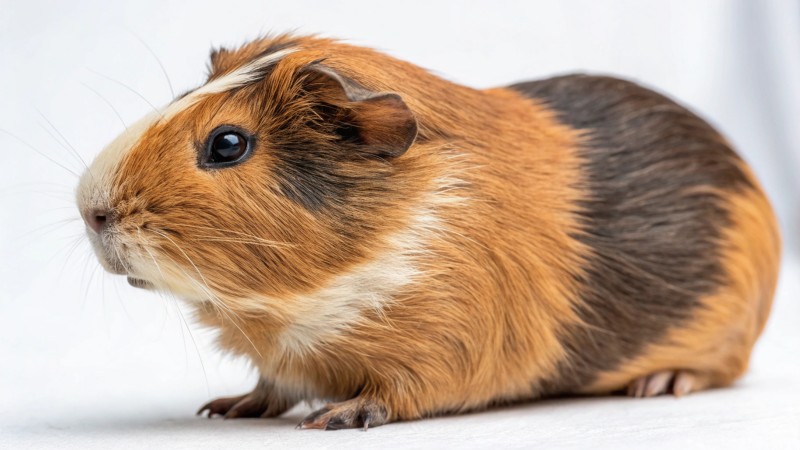
Guinea pigs (Cavia porcellus) offer a unique physiological and immunological profile. From an evolutionary perspective, they are more distant from humans than mice or rats, often leading to a more robust immune response against highly conserved human proteins.
The cornerstone of our service is the phage display-based Guinea Pig Monoclonal Antibody discovery platform. Unlike traditional hybridoma technology, which can be limited by cell fusion efficiency and the instability of guinea pig myeloma lines, phage display allows for the direct "mining" of the entire B-cell repertoire.
Phage display technology involves the expression of antibody fragments (such as scFv or Fab) on the surface of bacteriophages. This creates a physical link between the phenotype (the antibody's binding ability) and the genotype (the DNA sequence encoding it).
By utilizing phage display, we can:
Our Guinea Pig Monoclonal Antibody Discovery service is a meticulous process designed to maximize the diversity and affinity of the resulting clones.
The success of any immune antibody library begins with a potent immune response. We employ proprietary adjuvant formulations and multi-route injection protocols to ensure high serum titers.
This is the most critical phase. We extract total RNA from the spleen and lymph nodes of immunized guinea pigs to capture the expanded B-cell populations. We utilize high-fidelity PCR to amplify the VH and VL (variable heavy and light) chains. These are then cloned into our specialized phagemid vectors.
The screening of immune antibody library involves multiple rounds of "panning" against the target antigen.
Once the top candidates are identified via ELISA or Mirror-ball screening, they are expressed in mammalian systems (e.g., HEK293 or CHO cells) as full-length IgG or specialized fragments.
As experts in the field, Creative Biolabs doesn't just follow protocols; we innovate. To stay at the forefront of Guinea Pig Monoclonal Antibody Discovery by phage display immune antibody library technology, we implement the following:
By integrating Next-Generation Sequencing, we can monitor the enrichment of specific clones throughout the panning process. This allows us to identify high-affinity candidates that might be outcompeted in traditional ELISA-based screening.
For targets with known structures, we can perform targeted mutagenesis on the CDR (Complementarity-Determining Regions) of the immune antibody library for Guinea Pig Monoclonal Antibody to further enhance binding kinetics (kon and koff).
Guinea pig-derived scFvs are exceptionally stable, making them ideal building blocks for bispecific antibodies (bsAbs) or ADC (Antibody-Drug Conjugate) development.
With over 20 years of experience, Creative Biolabs has mastered the art of construction and screening of immune antibody library. We don't just provide a service; we provide a partnership.
While our phage display immune antibody library platform is a powerful engine, we offer a comprehensive suite of discovery technologies to ensure we always use the right tool for the job. Our Monoclonal Antibody Generation from Various Immunized Antibody Libraries Services:
Contact us today to discuss your project with our experts and receive a customized quote for your Guinea Pig Monoclonal Antibody Discovery needs.
Reference
All listed services and products are For Research Use Only. Do Not use in any diagnostic or therapeutic applications.








