Creative Biolabs is offering the most comprehensive services for antibody development projects. With strict regulation and effective execution, we are dedicated to providing the most valuable solutions to complete your projects.
HighlightsCreative Biolabs is offering the most comprehensive services for antibody development projects. With strict regulation and effective execution, we are dedicated to providing the most valuable solutions to complete your projects.
HighlightsCreative Biolabs has established a broad range of platforms for developing novel antibodies or equivalents. These cutting-edge technologies enable our scientists to meet your demands from different aspects and tailor the most appropriate solution that contributes to the success of your projects.
HighlightsWith deep understanding in antibody-related realms and extensive project experience, Creative Biolabs offers a variety of references to help you learn more about our capacities and achievements, including infographic, flyer, case study, peer-reviewed publications, and all kinds of knowledge that can assist your projects. You are also welcome to contact us directly for more specific solutions.
HighlightsGet a real taste of Creative Biolabs, one of the most professional custom service providers in the world. We are committed to providing highly customized comprehensive solutions with the best quality to advance your projects.
HighlightsHarnessing over two decades of expertise in antibody engineering, Creative Biolabs introduces Hyperdoma™, a revolutionary high-throughput hybridoma generation platform designed to accelerate state-of-the-art monoclonal antibody (mAb) discovery. By integrating advanced microfluidics, proprietary immunization strategies, and automated screening technologies, Hyperdoma™ transcends the limitations of traditional methods, delivering a diverse repertoire of high-affinity antibodies in a fraction of the time.
The hybridoma technique, pioneered by Köhler and Milstein, has been the gold standard for monoclonal antibody production for over four decades. Its ability to generate stable cell lines producing mAbs with naturally paired heavy and light chains remains a significant advantage. However, the conventional process is often plagued by low throughput, labor-intensive screening, and extended timelines, creating a bottleneck for modern drug discovery and diagnostic development programs.
To address these challenges, Creative Biolabs has engineered the Hyperdoma™ platform. This next-generation solution reimagines the entire hybridoma workflow, delivering unparalleled efficiency, throughput, and success rates for even the most challenging antigens.
Table. 1 Advantage of Creative Biolabs Hyperdoma™ Platform
| Feature | Traditional Hybridoma Method | Creative Biolabs Hyperdoma™ Platform |
| Throughput | Low to medium; limited by manual handling | Ultra-High; processes millions of B cells |
| Timeline | 4-6 months | As short as 8-10 weeks to positive clones |
| Screening | Labor-intensive, manual ELISA/FACS | Automated, high-content imaging & microfluidics |
| Antigen Success | Challenging for low immunogenicity antigens | Proprietary adjuvants & immunization protocols |
| Clone Diversity | Limited; potential loss of rare clones | Maximizes recovery of diverse, high-affinity clones |
| Monoclonality | Requires multiple rounds of subcloning | Confirmed early with high-throughput imaging |
| Data & Reporting | Basic endpoint data | Comprehensive, multi-parameter analysis |
The Hyperdoma™ platform is a meticulously optimized, end-to-end process that ensures quality and speed at every stage.
Success begins with a robust immune response. We employ sophisticated antigen design strategies and utilize a portfolio of proprietary adjuvants and immunization techniques, including DNA and whole-cell immunization, to elicit a powerful and diverse B-cell response, even against complex targets like membrane proteins or highly conserved antigens.
Using plasma cells from the spleen and lymph nodes of immunized animals, we employ advanced, high-throughput B-cell isolation techniques. This critical step allows us to efficiently harvest a vast and diverse pool of antigen-specific B cells, forming the foundation for a successful discovery campaign.
We replace traditional, inefficient PEG fusion with a highly efficient electrofusion method. This technology significantly increases the fusion efficiency between B cells and our proprietary myeloma partner cells, generating a large and robust library of hybridoma clones.
This is the core of the Hyperdoma™ platform. We utilize cutting-edge microfluidic droplet technology and high-throughput imaging cytometry (e.g., Celigo Image Cytometer) to screen millions of hybridomas. We can assess antibody binding and functional activity simultaneously in miniaturized assays, ensuring that rare, high-value clones are identified and preserved early in the process.
Monoclonality is confirmed using automated imaging systems that verify the presence of single-cell colonies. This automated approach replaces tedious manual limiting dilution, accelerating the timeline for identifying stable, monoclonal hybridoma lines. Isotyping is performed concurrently to characterize the antibody class.
Lead hybridoma clones are scaled up for antibody production. We offer scalable production capacities, from micrograms for initial characterization to grams for preclinical studies. Our purification protocols, utilizing Protein A/G or antigen-specific affinity chromatography, deliver antibodies with exceptional purity (>95%).
We provide a full suite of analytical services to validate your lead candidates. This includes binding kinetics analysis (SPR/BLI), affinity measurement, epitope binning, and functional assay development, ensuring your antibody meets all required specifications for its downstream application.
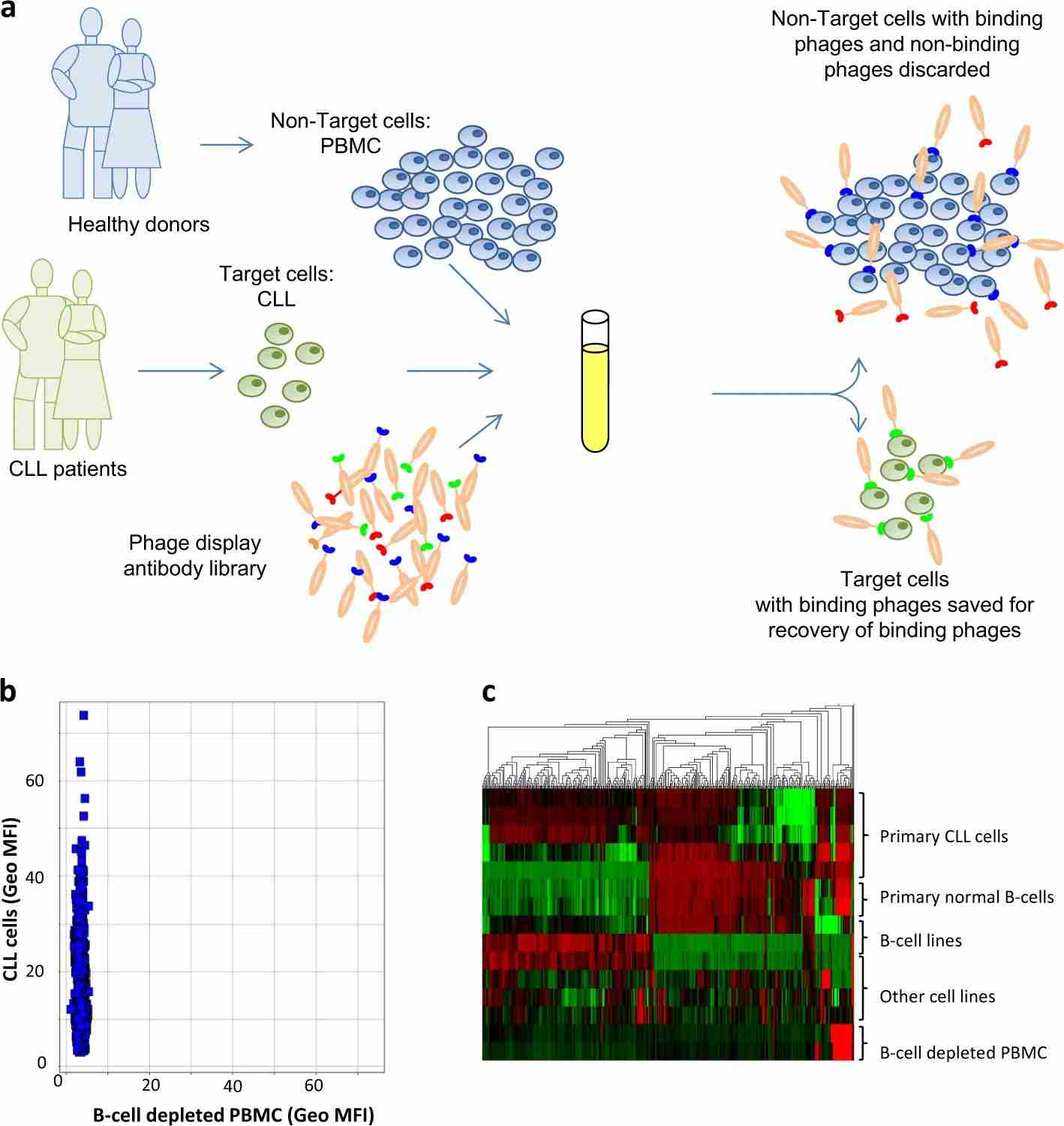 Fig.1 Generation and binding characterization of CLL-specific antibodies.1
Our platform's success is built on a foundation of cutting-edge technologies:
The high-quality monoclonal antibodies developed through our Hyperdoma™ platform are suitable for a wide range of demanding applications:
A: Our platform is highly versatile. We have successfully generated antibodies against proteins, peptides, whole cells, VLPs, DNA, and even challenging small molecules and post-translationally modified targets.
A: We utilize a combination of proprietary immunization strategies, diverse host species options (including knockout mice), and ultra-sensitive screening methods to maximize the chances of success against even the most difficult antigens.
A: While project-dependent, the Hyperdoma™ platform boasts a success rate of over 95% for standard protein antigens due to its high-throughput nature and sensitive detection technologies.
A: Absolutely. We strongly recommend our Hybridoma Sequencing Service to sequence your lead clones. This provides the genetic blueprint for secure, long-term recombinant production and further antibody engineering.
Custom Antibody & Hybridoma Services:
Creative Biolabs offers a complete, end-to-end portfolio of antibody services to support your entire project lifecycle.
Don't let traditional methods limit your discovery potential. Leverage the speed, power, and precision of the Hyperdoma™ platform to gain a competitive edge. With over 20 years of dedicated service, our team of Ph.D.-level scientists is ready to design a custom project that aligns perfectly with your scientific goals.
All listed services and products are For Research Use Only. Do Not use in any diagnostic or therapeutic applications.