Creative Biolabs is offering the most comprehensive services for antibody development projects. With strict regulation and effective execution, we are dedicated to providing the most valuable solutions to complete your projects.
HighlightsCreative Biolabs is offering the most comprehensive services for antibody development projects. With strict regulation and effective execution, we are dedicated to providing the most valuable solutions to complete your projects.
HighlightsCreative Biolabs has established a broad range of platforms for developing novel antibodies or equivalents. These cutting-edge technologies enable our scientists to meet your demands from different aspects and tailor the most appropriate solution that contributes to the success of your projects.
HighlightsWith deep understanding in antibody-related realms and extensive project experience, Creative Biolabs offers a variety of references to help you learn more about our capacities and achievements, including infographic, flyer, case study, peer-reviewed publications, and all kinds of knowledge that can assist your projects. You are also welcome to contact us directly for more specific solutions.
HighlightsGet a real taste of Creative Biolabs, one of the most professional custom service providers in the world. We are committed to providing highly customized comprehensive solutions with the best quality to advance your projects.
HighlightsHDX-MS serves as a robust biophysical method which allows researchers to analyze protein structure through assessments of their conformational changes and solvent exposure. The technique implements hydrogen-deuterium exchange which allows labile hydrogen atoms within a protein to be replaced by deuterium atoms from the surrounding solvent. Researchers can determine details about the protein's 3D shape and molecular interactions by tracking the hydrogen-deuterium exchange using mass spectrometry.
The fundamental principle of HDX-MS involves the replacement of hydrogen atoms present in protein backbone amide groups (N-H) and selected side chains such as hydroxyl, sulfhydryl, and amino with deuterium atoms from heavy water (D2O) solvent. This exchange rate is highly dependent on the local environment of the hydrogen atom:
The exchange is initiated by rapidly transferring the protein from an aqueous (H2O) buffer to a D2O-based buffer. The exchange reaction is then quenched at specific time points by lowering the pH and temperature, effectively freezing the exchange state.
HDX-MS generates dynamic information about protein structure instead of static snapshots like X-ray crystallography or cryo-EM. The HDX-MS technique determines how quickly deuterium enters different protein regions with results that show direct relationships to protein flexibility and solvent exposure.
By comparing HDX profiles under different conditions (e.g., apo vs. ligand-bound, free vs. complexed), researchers can map conformational changes induced by binding events or environmental factors.
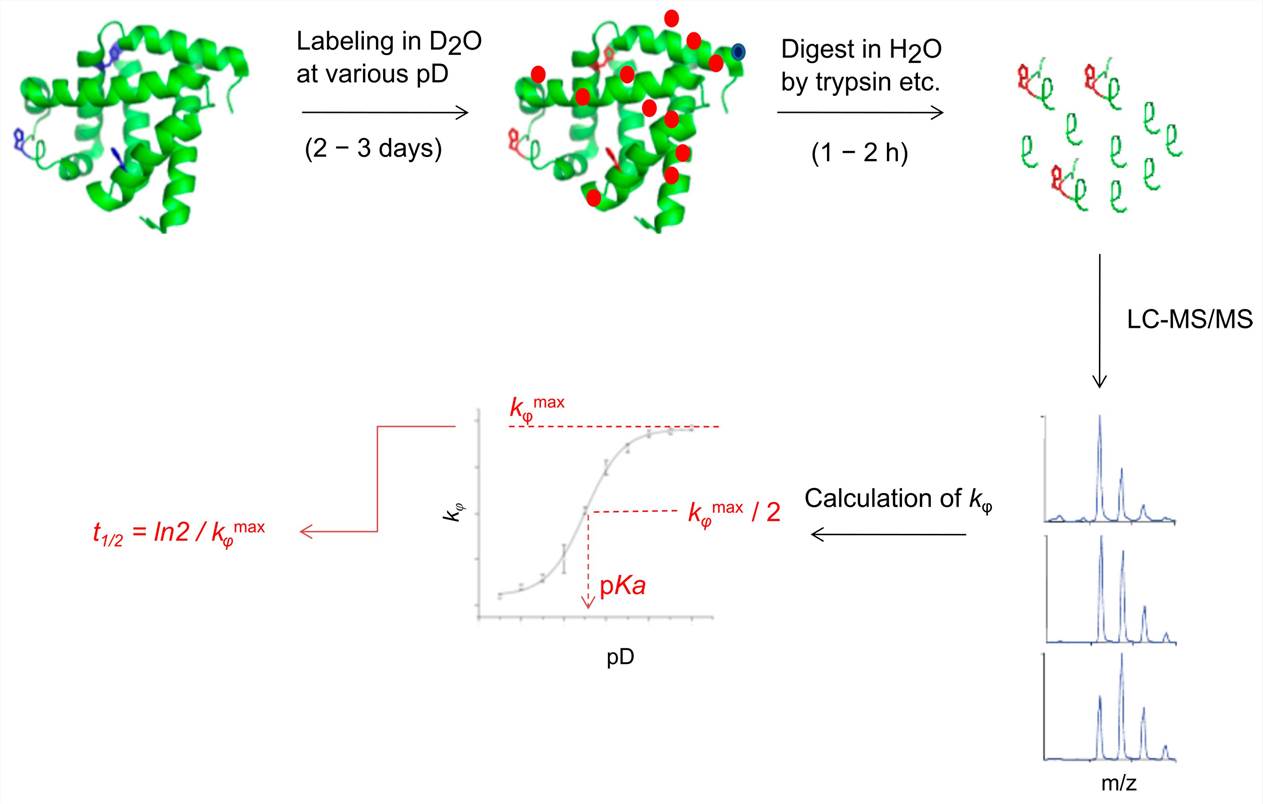 Fig. 1 General workflow of His-HDX-MS experiments.1, 3
The exchange of hydrogen atoms in a protein with deuterium from the solvent is a reversible chemical reaction. For backbone amide hydrogens, the exchange rate is primarily influenced by:
Deuterium represents a stable hydrogen isotope that contains one additional neutron. Mass spectrometry detection relies on this mass difference which measures about 1 Da. The chemical similarity between deuterium and hydrogen does not prevent mass spectrometry from differentiating between protonated and deuterated species because of the minor mass difference. The mass-to-charge ratio (m/z) of a peptide or intact protein shows a detectable change proportional to its level of deuterium incorporation.
Beyond pH and temperature, the intrinsic exchange rate of a specific hydrogen atom is modulated by the protein's local environment. Key factors include:
Mass spectrometry serves as the detection component for HDX-MS experiments. Once deuterium exchange completion occurs proteins undergo enzymatic digestion with enzymes such as pepsin at low pH to produce smaller peptide fragments. The peptides undergo separation through liquid chromatography before being introduced into a mass spectrometer.
Each peptide undergoes measurement of its mass-to-charge ratio (m/z) by the mass spectrometer. Peptides exhibit an increased mass when deuterium atoms with their approximate 2 Da mass replace hydrogen atoms which have a mass of about 1 Da. The mass shift measured in a peptide directly reflects the total count of deuterium atoms absorbed throughout the exchange period.
A typical HDX-MS workflow involves several critical steps:
Maintaining low temperature and low pH throughout the digestion and separation steps is paramount to preserving the deuterium label incorporated during the exchange.
The primary output of an HDX-MS experiment is a dataset showing the average number of deuterium atoms incorporated into each identified peptide as a function of time. This data is often visualized in several ways:
Interpretation involves correlating the observed exchange rates with structural and functional information. Regions with reduced deuterium uptake in the presence of a binding partner, for example, suggest that those regions are involved in the interaction interface or undergo a conformational change that makes them less accessible to solvent.
HDX-MS provides information about the flexibility and stability of different regions within a protein. It can reveal:
This dynamic view complements static structural data from techniques like crystallography, providing a more complete picture of protein behavior.
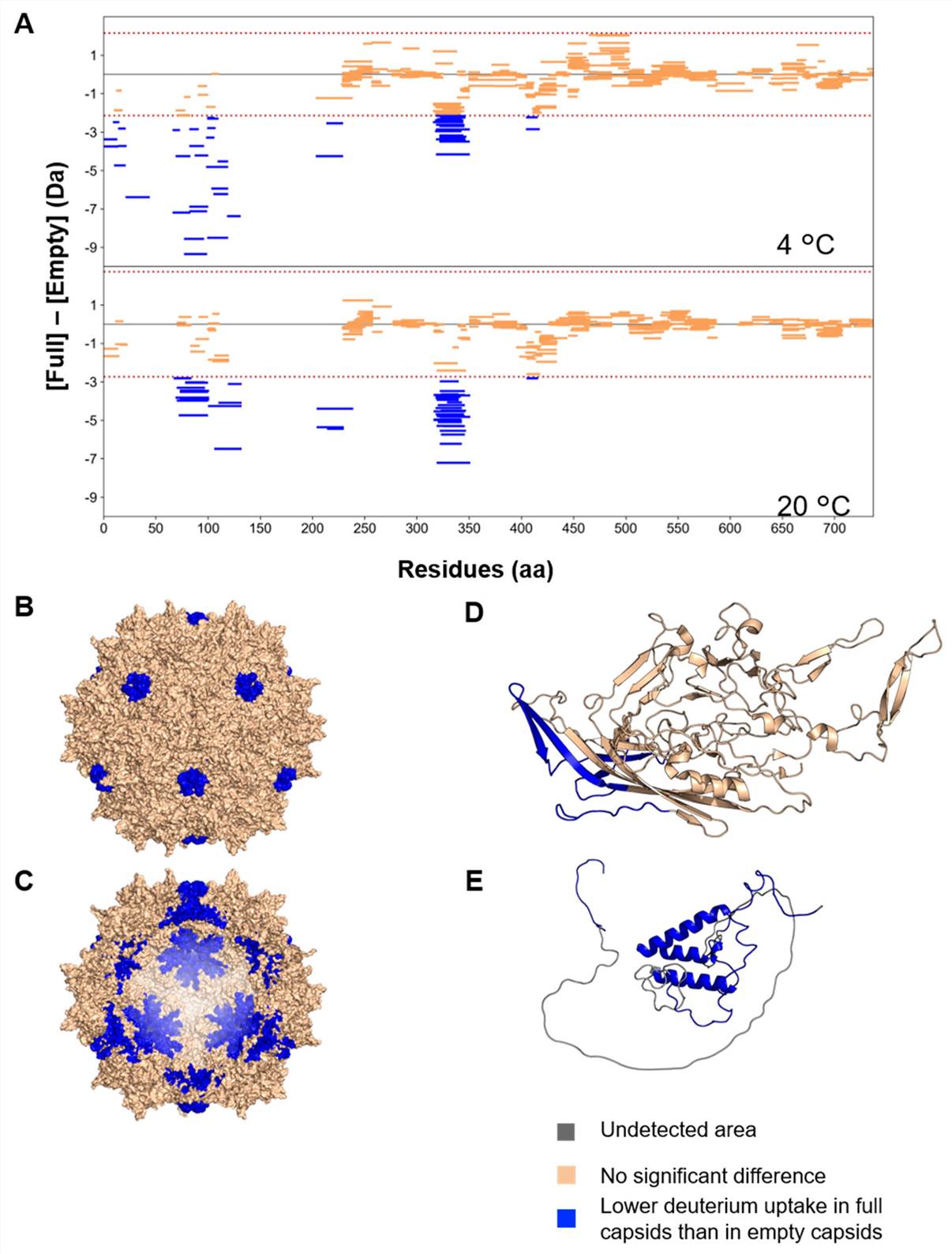 Fig. 2 Structural comparison between rAAV8 full and empty capsids by differential HDX-MS analysis.2, 3
Protein-protein interaction (PPI) mapping stands out as a profound application technique. Protein binding causes interface regions to lose solvent accessibility. The reduced accessibility of interacting regions causes deuterium exchange to occur more slowly compared to unbound proteins. Mapping interaction interfaces at the peptide level becomes possible through HDX profile comparisons between free proteins and complex-bound proteins.
HDX-MS stands out as the preferred approach for epitope mapping especially when mapping complex conformational epitopes that require the protein's three-dimensional structure. Binding of an antibody to an antigen results in protection of the epitope region from solvent exchange. The antibody binding site can be identified by analyzing the decreased deuterium uptake in peptides when comparing the HDX profile of the free antigen to the antigen bound to the antibody. Antibody drug development, vaccine design and immune response understanding all require this information. HDX-MS can distinguish between linear epitopes and conformational epitopes based on the pattern of protection observed.
HDX-MS technology enables the detection of interaction points between small molecules and proteins just as it does for protein interactions. The binding event triggers conformational changes or protects the binding site from solvent exposure which results in modified HDX rates in those regions. This is widely used in drug discovery to:
HDX-MS maintains a crucial function throughout different phases of pharmaceutical drug discovery and development processes.
From mapping protein-protein interfaces and antibody epitopes to understanding ligand binding and assessing biosimilarity, HDX-MS plays a vital role in advancing our understanding of biological systems and accelerating the development of novel therapeutics. At Creative Biolabs, we harness the power of HDX-MS, combined with our deep expertise in protein biochemistry and mass spectrometry, to deliver high-resolution epitope mapping data that accelerates our clients' R&D programs.
Learn more about Creative Biolabs' epitope mapping services:
All listed services and products are For Research Use Only. Do Not use in any diagnostic or therapeutic applications.