Mesoporous Silica Nanoparticle based Targeted Drug Delivery Solution
Mesoporous silica nanoparticle-based delivery strategies are changing how we think about controlled
and targeted drug delivery. Because these particles are small, porous, and highly tunable, they can carry a wide
range of drugs, genes, and biomolecules. In this guide, we explain mesoporous silica nanoparticles (MSNs) in clear
language, while also keeping enough scientific depth for real R&D projects.
Creative Biolabs supports researchers and companies who want to turn
MSN-based delivery ideas into working solutions, from early design to advanced targeted delivery platforms.
What Are Mesoporous Silica Nanoparticles (MSNs)?
Mesoporous silica nanoparticles are tiny particles made of silica (SiO2) that contain a network of ordered pores with sizes typically between 2 and 50 nanometers.
Because of these pores, MSNs act like tiny sponges or scaffolds that can trap and protect drug
molecules inside (Figure 1).
Fig.1
The diagrams of MSN, drug-loaded MSN, and drug release of drug-loaded MSNs.1
In simple terms, MSNs are popular in delivery strategies because they:
Have a high surface area, so they can carry a lot of payload.
Offer well-controlled pore sizes, so release can be tuned.
Allow rich surface chemistry, so we can attach many different functional groups.
Show good physical stability and reasonable biocompatibility in many systems.
Compared with some traditional carriers, such as simple polymer particles or plain liposomes, mesoporous silica nanoparticle-based
delivery strategies allow more precise control over loading, release, and targeting in one integrated
platform.
Targeted Delivery with MSNs: Mechanisms and Real Benefits
Targeting is one of the main reasons MSNs are so attractive in drug and gene delivery.
How Targeting Works
In MSN-based delivery strategies, targeting generally happens through:
Passive targeting:
Exploiting natural features like the enhanced permeability and retention (EPR) effect in tumors, where leaky vasculature allows nanoparticles to accumulate.
Active targeting:
Attaching ligands that bind to specific receptors overexpressed on target cells. For example, a peptide that binds to a tumor marker can drive MSNs to cancer cells.
Microenvironment targeting:
Designing MSNs that respond to local pH, enzymatic activity, or redox status. The particle might release its payload only in acidic tumor tissue or in enzyme-rich lysosomes.
Key Therapeutic Benefits
These mechanisms translate into real, measurable advantages:
Higher local drug concentration at the target site.
Lower exposure to healthy tissues, thus reducing side effects.
More stable protection of fragile molecules like siRNA or proteins.
Better control over the onset and duration of drug release.
For drug developers, this means mesoporous silica nanoparticle-based delivery strategies can help optimize both
efficacy and safety profiles, especially for complex payloads.
Why MSNs Are Ideal for Drug and Biomolecule Delivery?
MSNs are not just "another kind of nanoparticle". Their internal structure and surface features make them stand out
for drug and biomolecule delivery.
Key properties that support MSN-based delivery strategies include:
Uniform pore size
The pores inside MSNs can be engineered to match the size of the drug or biomolecule. This helps control how fast the drug diffuses out.
High loading capacity
Because of their large surface area and open structure, MSNs can hold a high amount of small molecules, peptides, proteins, or nucleic acids per particle.
Surface tunability
The silica surface contains many silanol groups that can be modified. As a result, we can add polymers, targeting ligands, charge groups, or "gatekeepers" that respond to pH, enzymes, or temperature.
Mechanical and chemical stability
MSNs are relatively robust. They can survive processing steps, storage, and even some harsh environments while still carrying their payload.
Biocompatibility potential
Many studies show that well-designed MSNs can be tolerated in in vitro and in vivo models when size, dose, and surface chemistry are carefully controlled.
Altogether, these properties make mesoporous silica nanoparticle-based delivery strategies ideal for achieving
controlled, localized, and smart release in complex biological settings.
For researchers looking to combine MSNs with additional targeting modules or hybrid delivery platforms, our Module Delivery Systems page provides a deeper overview of compatible
technologies.
How Mesoporous Silica Nanoparticles Are Made: Synthesis & Functionalization Techniques
To build efficient MSN-based delivery systems, it is not enough to "just" make nanoparticles. We need robust and
repeatable ways to create the right pore structure, particle size, and surface functions.
Core Synthesis Methods
Several well-established methods are used to synthesize MSNs:
Sol–gel method:
This is one of the most common routes. A silica precursor (such as TEOS) is hydrolyzed and condensed in the presence
of a structure-directing agent (surfactant or template) (Figure 2). As the reaction proceeds, silica forms around
the template.
Fig.2
Sol-gel method for MSN synthesis.2
Template-assisted synthesis:
Surfactants, block copolymers, or other sacrificial templates create ordered pore networks. After silica formation,
the template is removed (for example, by calcination or solvent extraction), leaving behind the mesoporous
structure.
M41S and related families:
Well-known mesoporous silica families, such as MCM-41 or SBA-15, offer defined pore structures and are widely used
as starting points for MSN drug delivery designs.
By adjusting the surfactant, pH, temperature, and precursor concentration, scientists can tune particle size, shape
(spheres, rods, worms), and pore size distribution.
Surface Customization for Delivery
After synthesis, MSNs often undergo surface functionalization to become true delivery platforms:
PEGylation and polymer coatings:
Poly(ethylene glycol) (PEG) or other polymers can be added to improve circulation time, reduce protein adsorption,
and adjust hydrophilicity.
Antibodies, peptides, aptamers, or sugars can be linked to the MSN surface to direct
particles to specific cells or tissues (for example, tumor cells or inflamed sites).
Stimuli-responsive "gates":
Molecular valves that respond to pH, redox conditions, enzymes, temperature, light, or magnetic fields can cover
pore openings. They remain "closed" during circulation and then "open" only in the target environment.
These functionalization strategies are the backbone of advanced mesoporous silica nanoparticle-based delivery
strategies, especially when precise spatial and temporal control is needed.
Industrial & Clinical Applications of MSN-Based Delivery Systems
Although MSNs first attracted attention in nanomedicine, their usefulness now spans multiple industries.
Key application areas include:
Cancer therapy
MSNs deliver chemotherapeutic drugs, photosensitizers, or combination payloads directly to tumors, often with improved tumor suppression and better survival in animal models.
Gene and nucleic acid delivery
MSNs can protect and deliver siRNA, miRNA, mRNA, or plasmid DNA. Their tunable pores and surfaces help solve problems of stability and cell uptake.
Imaging and diagnostics
MSNs can carry contrast agents (fluorescent dyes, MRI agents, or radionuclides), allowing combined therapy and imaging (theranostics).
Catalysis
Around 40% of industrial MSN use is in catalysis. The high surface area and ordered pores provide strong performance and easy recovery.
Environmental remediation
MSN-based materials can remove heavy metals like lead from water, sometimes achieving more than 95% removal efficiency in optimized systems.
This broad scope shows that mesoporous silica nanoparticle-based delivery strategies are relevant not only in
biomedicine but across multiple technology areas.
To explore how MSNs can be further integrated with modular delivery technologies,
visit our advanced platform overview: Creative Biolabs Module Delivery
Systems
Safety, Biocompatibility, and Regulatory Outlook
Safety is a central question whenever new delivery platforms are discussed.
Current research suggests that:
MSNs can be engineered to show good biocompatibility in many cell lines and animal models when
size, dose, and surface chemistry are optimized.
Particle size and shape influence biodistribution and clearance, with smaller
and properly functionalized MSNs often showing better in vivo handling.
Long-term fate, degradation, and possible accumulation still need more systematic study,
especially for repeated dosing.
Regulatory acceptance will depend on robust toxicology, pharmacokinetic, and
manufacturing data that match expectations for advanced therapies.
In short, mesoporous silica nanoparticle-based delivery strategies are promising, but they must be supported by
strong preclinical and manufacturing packages before wide clinical use.
Challenges & Future Directions in MSN Delivery
Even though MSNs are powerful tools, there are real-world challenges to solve.
MSN production is still more complex and expensive than bulk silica or some polymer systems. Scaling up while keeping pore structure and functionalization consistent is not trivial.
Batch-to-batch consistency:
For regulatory approval, very tight control over size, pore distribution, and surface chemistry is needed.
Complexity of multifunctional designs:
When many ligands, gates, and payloads are combined, characterization becomes harder and regulatory risk may increase.
Regulatory uncertainty:
Regulatory pathways for complex nanomedicines are still evolving, especially for smart stimulus-responsive systems.
Emerging Trends
To address these issues, several directions are gaining momentum:
Hybrid MSN platforms:
Combining mesoporous silica with polymers, lipids, or inorganic components (such as magnetic cores) to create multi-functional, modular platforms.
Greener synthesis methods:
New synthesis routes that reduce energy use and solvent consumption can offer up to 60-70% energy savings, making MSN production more sustainable.
Personalized delivery systems:
Matching MSN-based delivery strategies to the molecular profile of a specific patient or tumor type.
Theranostic MSNs:
Platforms that carry both imaging agents and therapeutic payloads, enabling treatment and monitoring in a single system.
These trends will further strengthen the role of mesoporous silica nanoparticle-based delivery strategies in next-generation precision medicine and advanced materials.
Creative Biolabs: Full-Service MSN Delivery Development
Creative Biolabs supports clients who want to turn MSN-based concepts into practical, testable, and
scalable solutions.
Design custom MSN architectures
Tailored pore sizes, particle sizes, and shapes for specific drugs, genes, or biomolecules.
Optimize surface chemistry and ligands
PEG, antibodies, peptides, aptamers, or smart gates matched to your target cells and microenvironment.
Integrate MSN-based systems into modular delivery strategies
What makes mesoporous silica nanoparticles unique for drug delivery?
Mesoporous silica nanoparticles are unique because they combine ordered nano-sized pores, high surface
area, and flexible surface chemistry, which together allow high drug loading and precise control of
release.
Are MSN-based delivery strategies safe for medical use?
Many studies show that well-designed MSNs can be safe in experimental models, but full clinical approval
still requires detailed toxicology, biodistribution, and long-term safety data.
How do MSNs control drug release?
MSNs control drug release through pore size, surface interactions, and smart gates that respond to
triggers such as pH, enzymes, or temperature in the target environment.
Are mesoporous silica nanoparticles better than liposomes or polymer particles?
They are not always "better," but they offer different strengths, especially in high loading, structural
stability, and complex surface engineering, which can complement liposomes or polymers.
Conclusion: Why MSNs Are Transforming Targeted Delivery
Mesoporous silica nanoparticle-based delivery strategies bring together high loading, smart
release, and precise targeting in a single, flexible platform. As the new synthesis and functionalization methods
mature, MSNs are becoming central to the design of next-generation drug, gene, and imaging systems.
At the same time, industry and regulators are learning how to manage safety, scale, and quality for these complex
nanomaterials.
If you are planning your next targeted delivery project and need a reliable partner to turn mesoporous silica
nanoparticles into a practical solution, Creative Biolabs is ready to help. Our dedicated module delivery system platform can support you from
concept and design through formulation, characterization, and preclinical evaluation.
Get in touch with our team today to discuss your MSN-based delivery strategy and accelerate your path from
idea to impactful data.
References
Fang, L. et al. "The application of mesoporous silica nanoparticles as a drug delivery vehicle in oral disease
treatment." Front. Cell. Infect. Microbiol. 13, 1124411 (2023). https://www.frontiersin.org/articles/10.3389/fcimb.2023.1124411/full.
2. Distributed under Open Access license CC BY 4.0, without modification.
Khaliq, N. U. et al. "Mesoporous Silica Nanoparticles as a Gene Delivery Platform for Cancer Therapy." Pharmaceutics 15, 1432 (2023). https://www.mdpi.com/1999-4923/15/5/1432. Distributed under Open
Access license CC BY 4.0, without modification.
Kesse, S. et al. "Mesoporous Silica Nanomaterials: Versatile Nanocarriers for Cancer Theranostics and Drug and
Gene Delivery". Pharmaceutics 11, 77 (2019). https://www.mdpi.com/1999-4923/11/2/77. CC
BY 4.0, without modification.
Our services are For Research Use Only. We do not provide services to individuals.
Creatibe Biolabs' custom LNP was the only solution that
successfully delivered our CRISPR-Cas9 payload across the blood-brain barrier with high
efficiency and low toxicity.”
Dr. Evelyn Reed
Postdoctoral Researcher, Leading
University
Our siRNA candidate was failing due to off-target toxicity, but
Creatibe Biolabs' team rapidly redesigned our LNP using their modular platform, rescuing our
preclinical program.”
Ben Carter
Project Manager
Achieving cytosolic delivery of our protein degrader with Creatibe Biolabs' exosome platform
was the key to unlocking our candidate's full therapeutic potential.”
Dr. Kenji Tanaka
Principal Scientist, Large
Pharma Corp
Our oncology drug's efficacy was limited by poor tumor
accumulation. Creatibe Biolabs' peptide-conjugated liposomes provided the precise targeting
we needed, dramatically increasing the drug's therapeutic index.”
Dr. Clara Schmidt
Senior Scientist, Oncology
Innovations Inc.
We required a delivery system that would only release its payload
in the tumor's acidic microenvironment. Creatibe Biolabs' pH-responsive liposomes performed
flawlessly, minimizing systemic exposure.”
David Chen
Formulation Scientist
Outstanding expertise in antibody engineering.The team's attention
to detail and innovative approaches have sianificantly accelerated our development timeline.

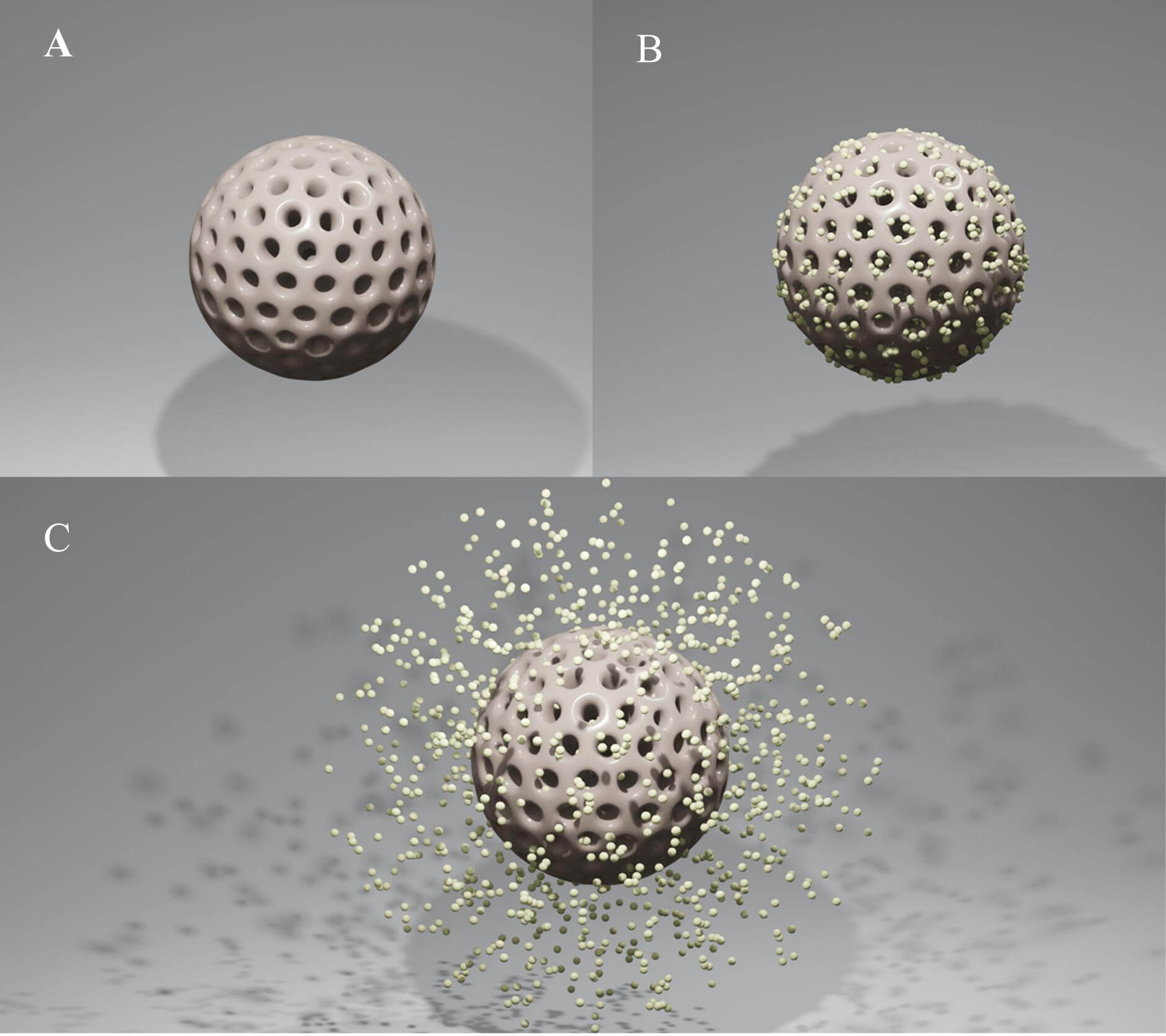 Fig.1
The diagrams of MSN, drug-loaded MSN, and drug release of drug-loaded MSNs.1
Fig.1
The diagrams of MSN, drug-loaded MSN, and drug release of drug-loaded MSNs.1
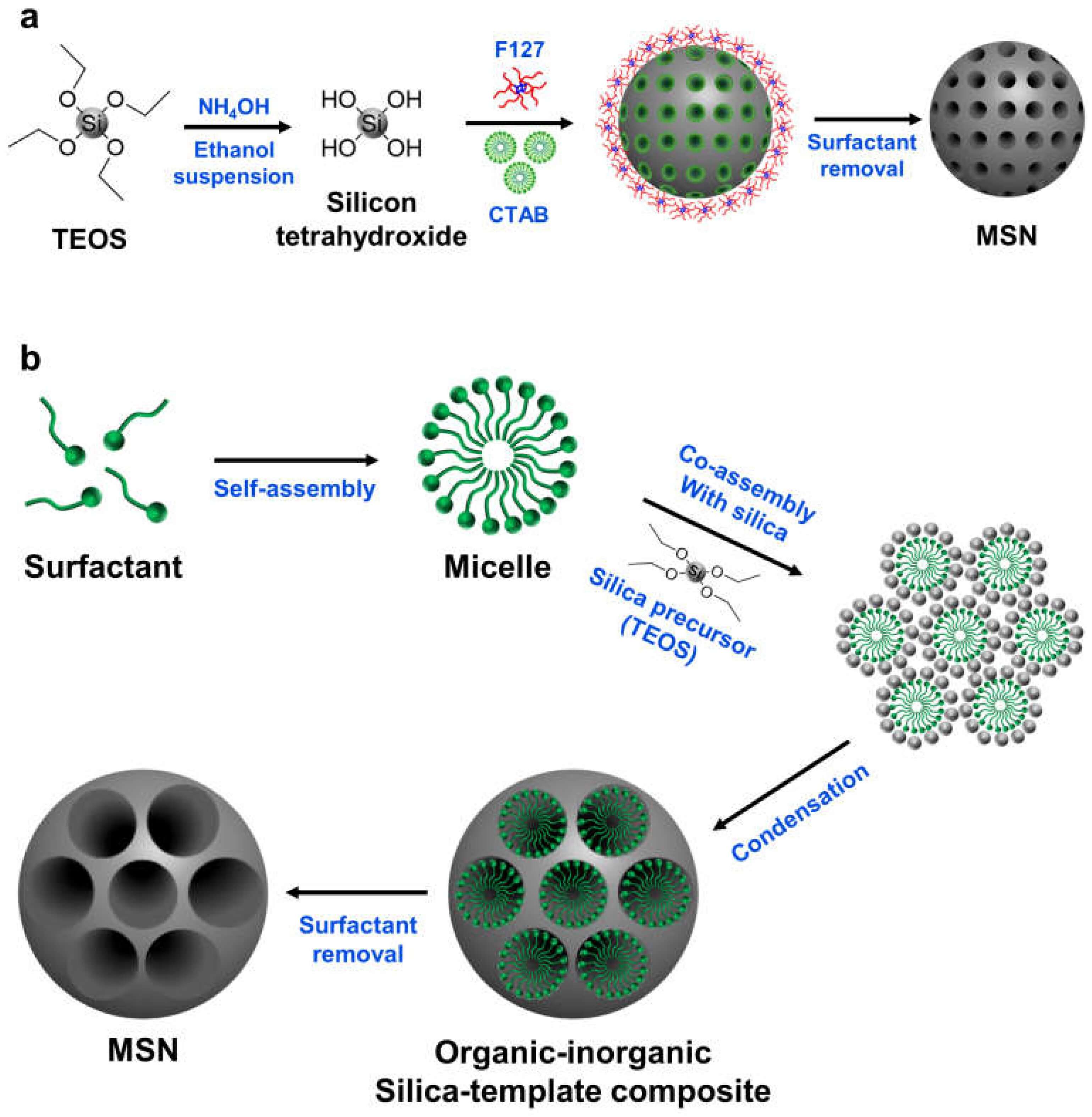 Fig.2
Sol-gel method for MSN synthesis.2
Fig.2
Sol-gel method for MSN synthesis.2