Creative Biolabs is offering the most comprehensive services for antibody development projects. With strict regulation and effective execution, we are dedicated to providing the most valuable solutions to complete your projects.
HighlightsCreative Biolabs is offering the most comprehensive services for antibody development projects. With strict regulation and effective execution, we are dedicated to providing the most valuable solutions to complete your projects.
HighlightsCreative Biolabs has established a broad range of platforms for developing novel antibodies or equivalents. These cutting-edge technologies enable our scientists to meet your demands from different aspects and tailor the most appropriate solution that contributes to the success of your projects.
HighlightsWith deep understanding in antibody-related realms and extensive project experience, Creative Biolabs offers a variety of references to help you learn more about our capacities and achievements, including infographic, flyer, case study, peer-reviewed publications, and all kinds of knowledge that can assist your projects. You are also welcome to contact us directly for more specific solutions.
HighlightsGet a real taste of Creative Biolabs, one of the most professional custom service providers in the world. We are committed to providing highly customized comprehensive solutions with the best quality to advance your projects.
HighlightsAccelerate your antibody pipeline with our premade human libraries and expert screening, delivering developable, dual-targeting candidates in weeks.
From Paired Diversity to Synergistic Function, Faster Than Ever.
A great bi-functional antibody is more than two binders in a single format. For candidates to hit or exceed expectations, they need a custom fit, a pairing of antibodies working in synergy with each other, and in the right format. Bispecific discovery is inherently more complex than traditional single-target discovery and much more of what's selected is tossed at later stages because it simply won't work, or doesn't have the kind of function needed for clinical success. Creative Biolabs service combines the vast diversity of developability-engineered premade human antibody libraries with a screening platform purpose-built to navigate this complexity, delivering high-quality, downstream-ready bispecific candidates with unparalleled speed and precision.
 Targeted Pair Screening Isolate high-affinity binders for two individual targets, then screen in parallel to find synergistic, high-activity pairs. |
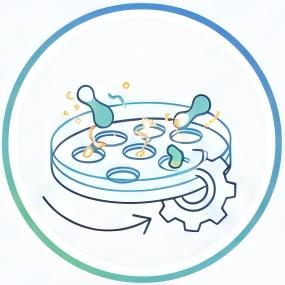 Mechanism-Driven Screening Select candidates based on mechanism-of-action relevant assays, not just binding. |
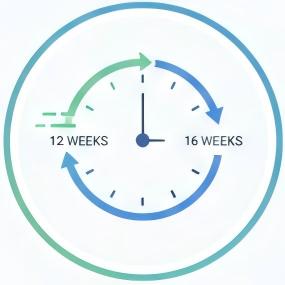 Faster Time to Proof-of-Concept From target nomination to a panel of validated bispecific leads in 12-16 weeks. |
Our phage and yeast display platforms are tuned to traverse the vastness of our premier libraries to isolate optimal binders for each arm of your bispecific molecule. Through designed parallel and sequential panning strategies, competitive selection, and early-stage functional matrix screening, we systematically eliminate non-specific binders and identify pairs that deliver the intended biological effect. We solve the core challenges of bispecific discovery to deliver candidates that survive real-world downstream pressures, reducing attrition and accelerating your path to the clinic.
Target assessment (Target A, Target B); antigen format optimization for both targets; bispecific format selection consultation; MoA-driven success criteria definition.

Independent panning campaigns against Target A and Target B; increasing stringency and off-target depletion; optional cell-based panning for native conformation binders.
High-throughput screening of individual clones against their respective targets; orthogonal specificity checks and early polyspecificity triage.
NGS-driven clonotype clustering for both arms; in silico liability screening of sequences; framework optimization paths.
Expression of binder pairs in a provisional format; high-throughput screening of combinations in MoA-relevant functional assays (e.g., cell bridging, T-cell activation, receptor blockade).
Conversion of antibody pairs into the final bispecific format; mini-panel expression and purification; biophysical profiling (stability, solubility, aggregation).
Jump directly to our diverse library options to find the perfect starting point for your bispecific arms.
| Antibody Library ID | Display Technology | Library Format | Library Size |
|
HuScL-6 ☆Highly Recommended |
pIII-fusion, Phagemid Phage Display | Naïve scFv | 2.1×10¹¹ |
| HuScL-3S | pIII-fusion, Phagemid Phage Display | Semi-synthetic scFv | >1.0×10¹¹ |
| HuFabL-4 | pIII-fusion, Phagemid Phage Display | Naïve Fab | 1.9×10¹⁰ |
| HuFabssL-1 | pIII-fusion, Phagemid Phage Display | Naïve & synthetic Fab | 1.8×10¹⁰ |
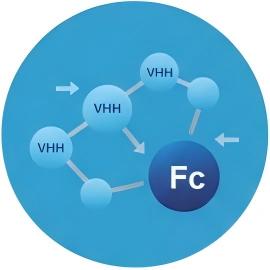
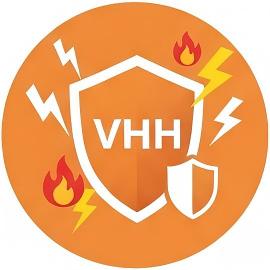
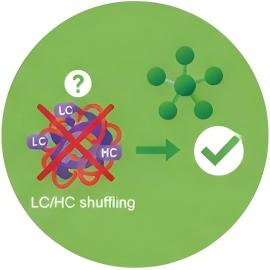
| Objective | In the rapidly evolving field of Bispecific Antibodies, the VHH (Single-Domain Antibody) format has emerged as a preferred building block. Due to their small size (~15 kDa), exceptional stability, and lack of light-chain association issues, VHHs are ideal for "plug-and-play" assembly into complex multi-specific architectures without the common chain-mispairing problems seen in traditional IgG formats. | ||||||
| Project Strategy: Strategic Consultancy & Parallel Discovery |
The client aimed to develop a novel bispecific therapeutic requiring high-potency binders against two distinct targets. Our team provided the end-to-end solution:
|
||||||
| Why Choose VHH format for Bispecific Design? |
|
||||||
| Key Results & Deliverables |
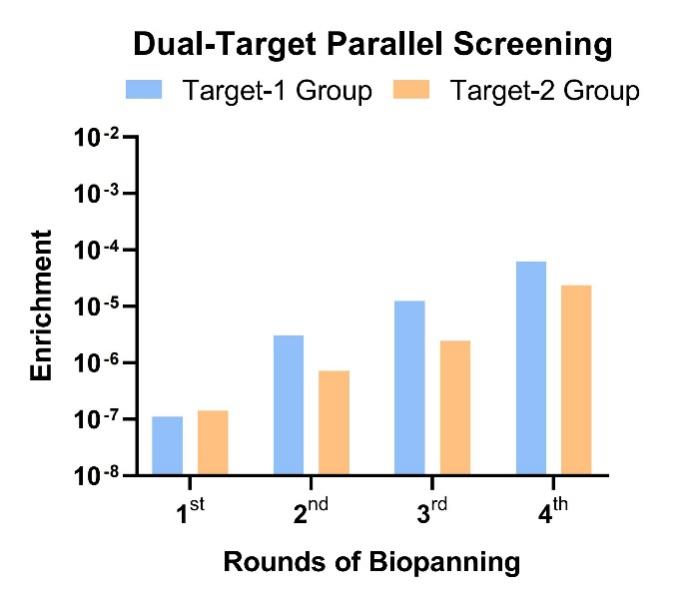
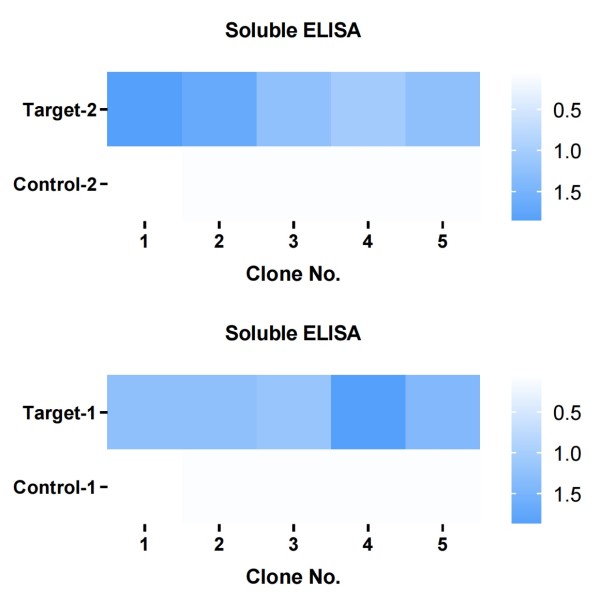
1. Rapid Identification of Positive Binders Through high-stringency parallel panning and monoclonal validation, we successfully identified multiple high-affinity VHH candidates for both target antigens.
2. Fully Data Package Beyond providing the VHH sequences, we assisted the client with:
|
Find additional antibody discovery services tailored to your specific needs.
Our dual-target screening platform is purpose-built to solve the combinatorial pairing problem. We don't just find binders; we engineer synergistic pairs from our 1011 diversity libraries.
By using optimized human frameworks and performing early liability and biophysical screening on the final format, we minimize downstream CMC surprises and reduce costly re-engineering cycles.
Our bispecific screening platform can incorporate your desired MOA directly into the discovery cascade. This allows us to select lead candidates based on validation of potent synergistic activity instead of only binding potency.

Our discovery engine has been developed to drive a shorter hit-to-lead process and includes purified, structurally and functionally validated bispecific molecules in defined format that are ready for in vivo activity confirmation in weeks, not months, compared to traditional hybridoma or internal display campaigns.

We provide complete data transparency, including NGS clonotype analysis of both arms as well as detailed biophysical characterization reports to arm you with the confidence you need to make informed decisions.

We support modular project scopes and milestone-based service engagements for maximum internal approval acceleration and program velocity.
At Creative Biolabs, we have experts ready to help you design a bispecific discovery campaign that meets your project's scientific and business objectives. To ensure we can provide you with the most accurate and detailed proposal, we ask that your inquiry includes the following information:
All listed services and products are For Research Use Only. Do Not use in any diagnostic or therapeutic applications.