
Creative Biolabs is offering the most comprehensive services for antibody development projects. With strict regulation and effective execution, we are dedicated to providing the most valuable solutions to complete your projects.
HighlightsCreative Biolabs is offering the most comprehensive services for antibody development projects. With strict regulation and effective execution, we are dedicated to providing the most valuable solutions to complete your projects.
HighlightsCreative Biolabs has established a broad range of platforms for developing novel antibodies or equivalents. These cutting-edge technologies enable our scientists to meet your demands from different aspects and tailor the most appropriate solution that contributes to the success of your projects.
HighlightsWith deep understanding in antibody-related realms and extensive project experience, Creative Biolabs offers a variety of references to help you learn more about our capacities and achievements, including infographic, flyer, case study, peer-reviewed publications, and all kinds of knowledge that can assist your projects. You are also welcome to contact us directly for more specific solutions.
HighlightsGet a real taste of Creative Biolabs, one of the most professional custom service providers in the world. We are committed to providing highly customized comprehensive solutions with the best quality to advance your projects.
HighlightsPhage display represents a molecular selection technique which presents peptides, proteins, or antibody fragments on bacteriophage surfaces. George P. Smith presented this technique in 1985 and it has developed into a key platform for research into protein-protein interactions, antibody engineering development and peptide screening efforts.
Key Benefits:
T-cell receptors (TCRs) are membrane-bound glycoproteins responsible for recognizing peptide antigens presented by MHC molecules. TCRs are heterodimers composed of an α-chain and β-chain, each contributing to antigen specificity.
| Feature | Description |
| Structure | αβ or γδ heterodimers |
| Antigen Type | Peptides presented on MHC |
| Genetic Origin | Somatic V(D)J recombination |
| Binding Affinity | Low (~μM range), unlike antibodies |
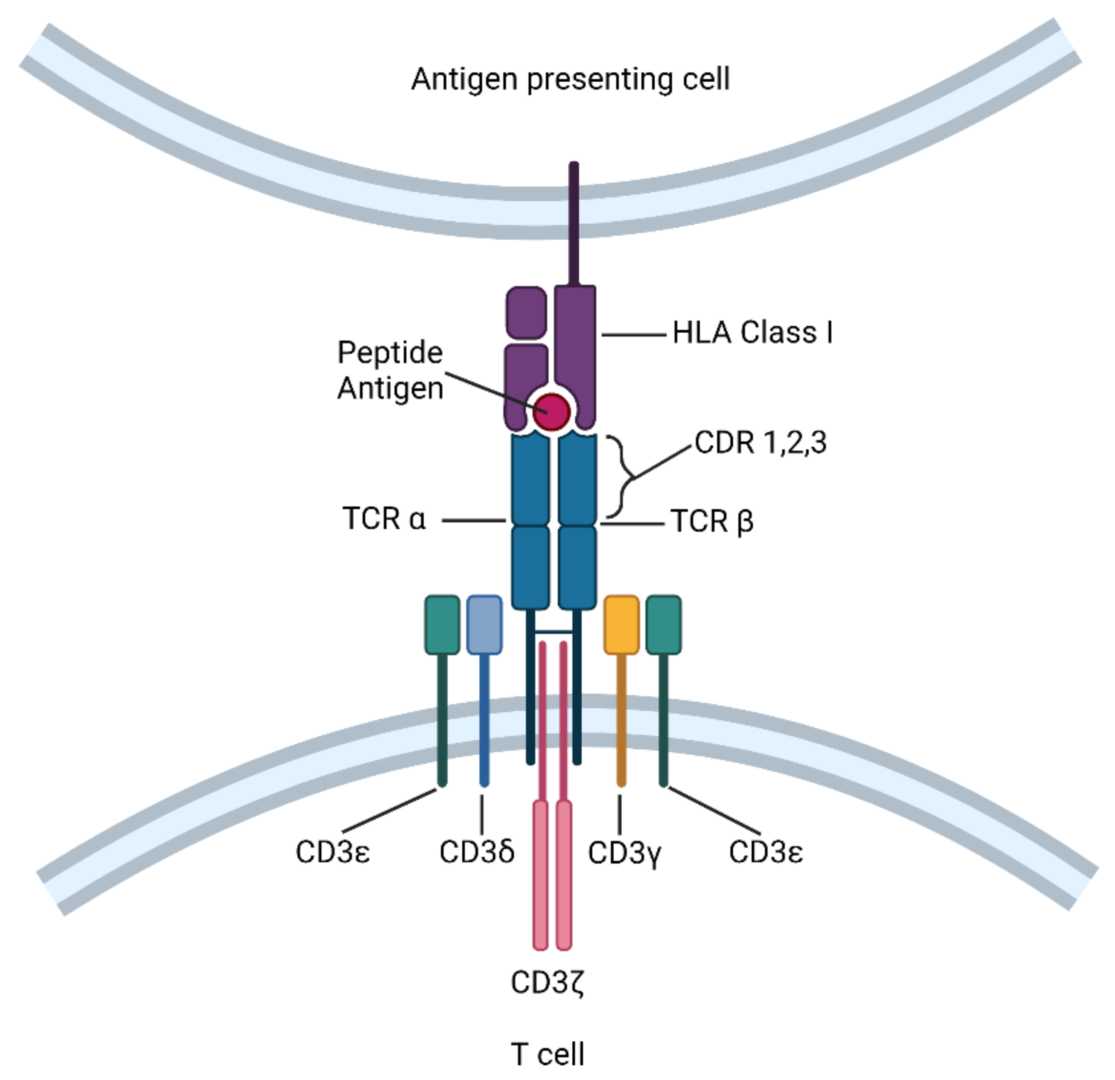 Fig. 1 The T cell receptor (TCR) structure and TCR-T cell components.1, 3
While TCRs possess high specificity for intracellular antigens, their weak affinity poses a challenge. Phage display facilitates:
Several strategies have been adopted to isolate and optimize TCRs through phage display:
| Method | Description |
| Direct display | Display of full-length TCRs on filamentous phages |
| Split TCR display | Separate display of α and β chains, followed by reconstitution |
| Single-chain TCR (scTCR) | Fusion of TCRα and TCRβ into a single polypeptide |
| Feature | Traditional Method | Phage Display |
| Throughput | Low | High |
| Mutagenesis Control | Random | Rational/targeted |
| Time Efficiency | Weeks to months | Days to weeks |
| Affinity Enhancement | Limited | Iterative rounds of maturation |
The innovative class of immunobiological tools known as T-cell receptor-like antibodies or TCR-mimic antibodies merges TCR antigen specificity with the beneficial biochemical properties of antibodies. Phage display technology serves as an essential tool for their development by allowing researchers to efficiently screen numerous binders that exhibit specific recognition of peptide-major histocompatibility complex (pMHC) structures with both high precision and affinity.
TCR-like antibodies have the ability to recognize peptides originating from within cells because they bind to these peptides when they are displayed on cell surfaces by MHC class I or II molecules. The breakthrough capability fills a vital gap in disease targeting for cancer and viral infections through its ability to reach antigens that conventional antibody formats cannot access.
Key Characteristics of TCR-Like Antibodies:
The production of TCRm antibodies via phage display involves multiple key steps, ranging from antigen generation to binder optimization.
A soluble, stable, and biotinylated pMHC complex is synthesized, incorporating: a target peptide (often tumor- or virus-derived), a selected HLA allele, and tags for immobilization and detection (e.g., biotin, His-tag).
Libraries (scFv, Fab, or VH/VL domains) are screened via biopanning on immobilized pMHC: positive selection against target pMHC, negative selection against irrelevant or non-peptide-loaded MHC, and multiple rounds (typically 3–5) to enrich high-affinity binders.
Lead clones are subjected to: directed evolution (e.g., error-prone PCR, CDR mutagenesis), off-target testing to rule out MHC-restricted but peptide-unspecific binders, and functional testing in cytotoxicity, ELISA, and flow cytometry assays.
TCR-like antibodies demonstrate clinical promise through their capacity to target intracellular proteins which are typically unreachable by current therapeutic methods thereby enabling new precision immunotherapy approaches.
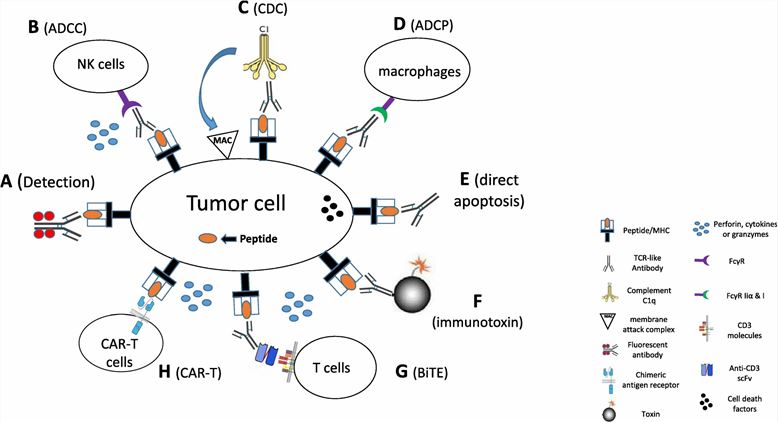 Fig. 2 The molecular mechanisms of TCR-like antibodies against tumor cells.2, 3
Phage display libraries of T-cell receptors (TCR) serve as essential tools for studying TCR-pMHC interactions and engineering TCRs that exhibit improved specificity, affinity, and stability. Creative Biolabs focuses on building these libraries with purpose and implementing them in therapeutic discovery as well as immuno-monitoring and target validation processes.
Designing a functional TCR phage display library requires a deep understanding of TCR structural biology, display systems, and selection stringency. Below are the core considerations.
Once constructed, TCR phage libraries undergo iterative screening (biopanning) against target pMHC complexes, designed to enrich for high-affinity, highly specific TCRs.
Despite its promise, constructing effective TCR libraries poses several technical hurdles.
Table 1. Challenges in TCR Phage Display and Strategic Solutions
| Challenge | Root Cause | Solution |
| Poor expression or folding | TCR instability in E. coli | Use of molecular chaperones and optimized frameworks |
| Chain mispairing | Non-cognate Vα-Vβ recombination | Engineering of single-chain formats with optimized linkers |
| Low display efficiency | pIII fusion affecting folding | Use of signal peptides and codon optimization |
| Insufficient diversity | Limited input repertoire | Integration of synthetic and semi-synthetic CDR variants |
| Off-target selection | Cross-reactivity with irrelevant pMHCs | Multi-round counter-selection with negative pMHCs |
Phage display has revolutionized the field of TCR discovery and engineering by offering a robust, high-throughput, and tunable platform for identifying and optimizing TCRs and TCR-like antibodies. As Creative Biolabs continues to innovate at the intersection of immunology and biotechnology, phage display remains a cornerstone for generating next-generation T-cell targeting therapeutics.
Learn more about Creative Biolabs' phage display and TCR-related services:
All listed services and products are For Research Use Only. Do Not use in any diagnostic or therapeutic applications.








