
Colloidosomes represent a rapidly expanding field with various applications in microencapsulation. They are used as an advanced tool for encapsulation of various materials such as drugs, dyes, and other biomaterials. As a leading service provider in the world, Creative Biolabs is professional in the field of lipid-based drug delivery. Based on our advanced platform and extensive experience, now we can provide both individual colloidosomes construction service and commercial delivery products for our clients.
Colloidosomes are microcapsules whose shells are composed of colloidal particles. Physical properties of colloidosomes such as permeability, elasticity, mechanical strength, and biocompatibility can be precisely controlled through the proper choice of colloids and preparation conditions for their assembly. Briefly, the preparation of colloidosomes requires a mechanism for shell reinforcement at the interface to convert the Pickering emulsion precursor into robust microcapsules that can survive removal of the water/oil template. Normally, the colloidosomes are classified on the basis of emulsion used: water-in-oil emulsion based colloidosomes, oil-in-water emulsion based colloidosomes, and water-oil-water emulsion based colloidosomes.
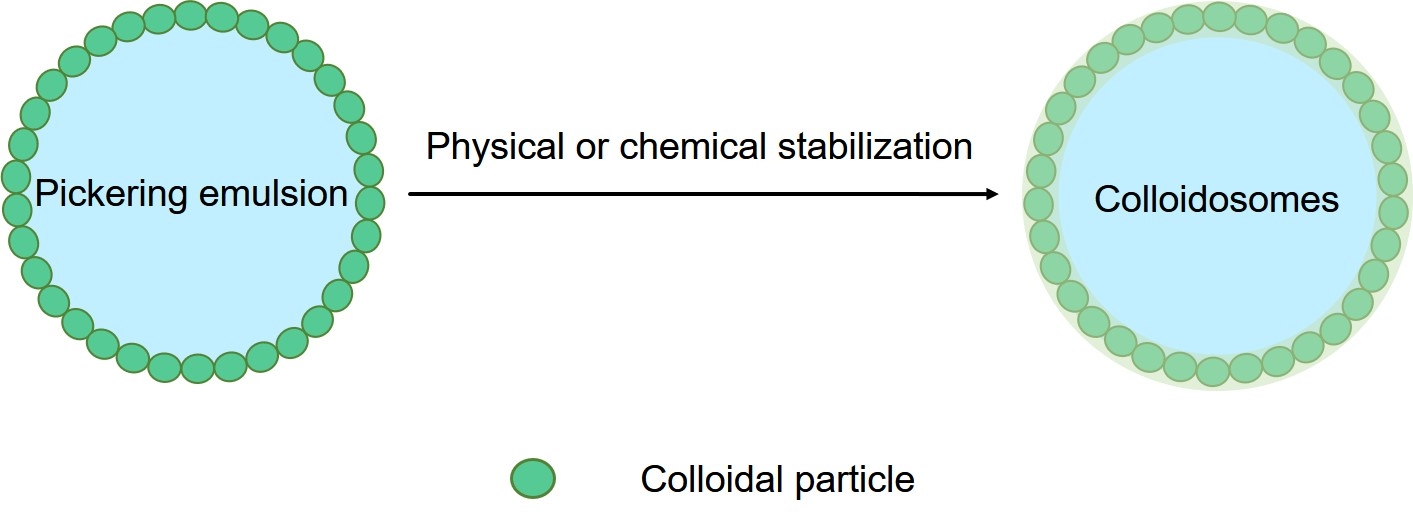 Fig.1 Structure of colloidosomes.
Because of the ability to finely tune colloidosome properties, such structures can be engineered to efficiently encapsulate (absorb) and deliver (release) various cargoes in a controlled fashion. Studies show that colloidosomes can be employed as an effective encapsulation tool for drug delivery or protection of components. Colloidosomes can be used for the following range of therapeutic and pharmaceutical applications: as drug/protein delivery carrier, for controlled and sustained drug release, for enhanced drug solubilization, for altered pharmacokinetics and biodistribution, for encapsulation of enzymes, in tumor therapy, in antimicrobial, antifungal and antiviral therapy, ocular drug delivery, brain delivery, DNA delivery and in enzyme immobilization.
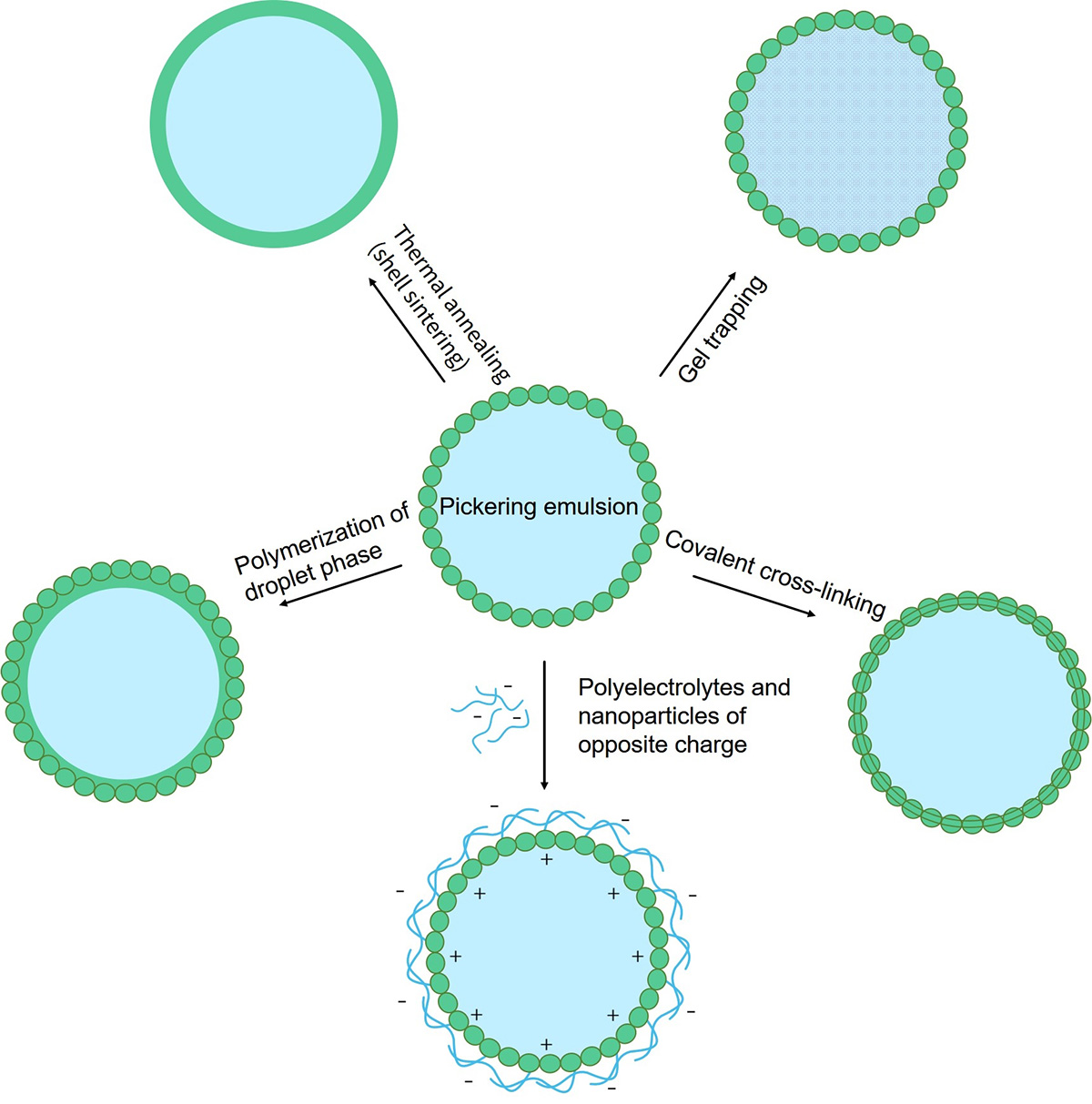 Fig.2 Summary of the various routes investigated for the preparation of colloidosome microcapsules.
Aided by our well-established platforms and experienced scientists, we can provide comprehensive colloidosomes services, varying from lipid-based drug delivery characterization, delivery system construction services to in vitro efficacy validation, in vivo PK/PD validation. A wide spectrum of customized delivery products is available for your choice.
In the series of vesicular system developed by Creative Biolabs, colloidosomes is one of the advanced tools in drug delivery with broad potential applications in diverse fields. We also provide other lipid-based drug formulation. If you are interested in our drug delivery system, please contact us for more information.
 For Research Use Only. Not For Clinical Use
Supports
Online Inquiry

Creative Biolabs is a world-leading liposome provider with extensive experience in liposome preparation, custom formulation development, and characterization.

© 2026 Creative Biolabs. All rights reserved.